
On July 8, 2022, the Belgorod, Russia’s first strategic torpedo nuclear submarine equipped with the Poseidon nuclear torpedo (unmanned underwater vehicle), was delivered to the Russian Navy; in early October, some media reported that "the Belgorod has disappeared from its base in the White Sea and may have gone to the Kara Sea to conduct relevant tests on the Poseidon." These news have attracted much attention in the global context of the strong atmosphere of confrontation between Russia and NATO and Western countries led by the United States, making Russia’s strategic nuclear deterrence force "out of the circle" again, and also reflecting the differences between the United States and the Soviet Union/Russia in the development of sea-based strategic nuclear submarines.
Strategic nuclear submarines and the nuclear weapons they carry are an important part of the "three-in-one" nuclear strike force of each nuclear power. Their main combat mission is to maintain normal offensive against hostile countries. Sea-based strategic nuclear deterrence is used to carry out nuclear strikes on important strategic targets and facilities of the enemy in wartime, or to give the enemy a nuclear counterattack after the land-based and air-based nuclear forces suffer devastating blows from the enemy. At present, only the United States, Russia, Britain, France, China, India and other countries in the world have strategic nuclear submarines. Among them, the United States and the Soviet Union/Russia are the countries with the earliest development of nuclear submarines and submarine-launched nuclear weapons, the most advanced technology, the largest number, and the greatest assault power in the world. So, which one is better, the strategic nuclear submarines and submarine-launched nuclear weapons of the United States and Russia? This article analyzes and compares from four aspects.
Development status
At present, the most prominent characteristics of the United States’ sea-based strategic nuclear forces compared with Russia can be summarized as follows:
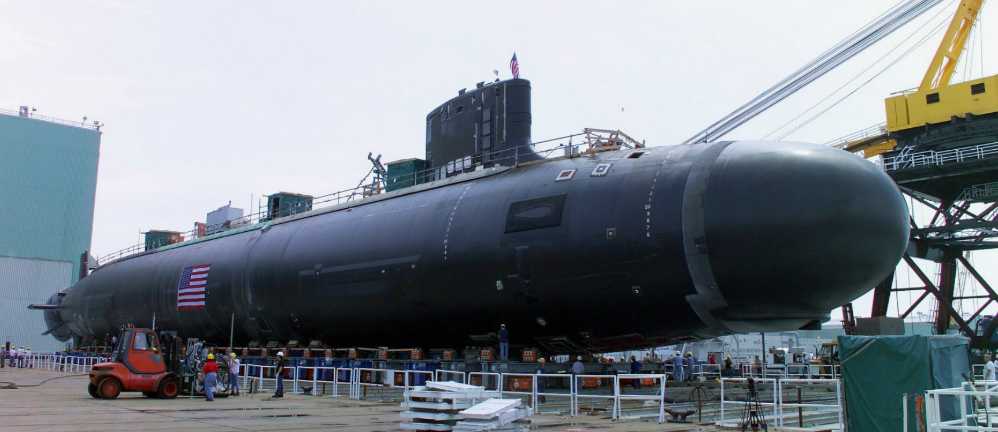
There is only one type of active strategic nuclear submarine Ohio class; one "Trident" II D5 submarine-launched missiles, the Ohio class can carry 24 "Trident" II D5, each missile can carry up to 12 independently guided nuclear warheads, a total of 288 warheads (unrestricted), is the real king of the world’s strategic nuclear submarines.
The first generation of strategic nuclear submarines in the world, the George Washington class, was built and commissioned in 1959. A total of 5 ships were built. The first ship "Washington" was built by adding a strategic missile compartment of about 40 meters in the middle of the hull of the second boat "Scorpion" of the Skipjack-class attack nuclear submarine. Since then, strategic missile nuclear submarines and attack nuclear submarines have constituted a unique strategic and tactical branch of the US Navy, and have also led the world’s naval submarine development and new combat mode. So far, the United States has developed four generations of strategic nuclear submarines, including the second generation Ethan Allen class, 5 ships in total; the third generation Lafayette class, 31 ships in total; the fourth generation Ohio class, 18 ships in total, 4 of which have been converted into cruise missile nuclear submarines.
The characteristics of the development trajectory of the US strategic nuclear submarines are that the technical development of each generation of nuclear submarines and weapons and equipment is fully demonstrated, the weapons are highly compatible, and they can achieve strategic deterrence missions against major combat opponents. At the same time, each generation will have obvious technological progress and combat effectiveness leaps compared to the previous generation, and always adhere to the standard configuration of one type of boat, one type of missile and one type of torpedo weapon. Half of the active nuclear warheads in the United States are carried by strategic nuclear submarines.
Russian strategic nuclear submarines have many models compared with the United States. There are Delta IV-type, Borei-class strategic missile nuclear submarines and Belgorod strategic torpedo nuclear submarines; there are also many types of submarine-launched strategic missiles, including R-30 Bulava P-29M Light Boat intercontinental missiles and Poseidon strategic nuclear torpedoes. At present, the Russian Navy has a total of 12 strategic missile nuclear submarines in service (5 Delta IV-type, 5 Borei-class, 1 Delta, 1 Typhoon), which is 2 fewer than the number of active strategic nuclear submarines in the United States.
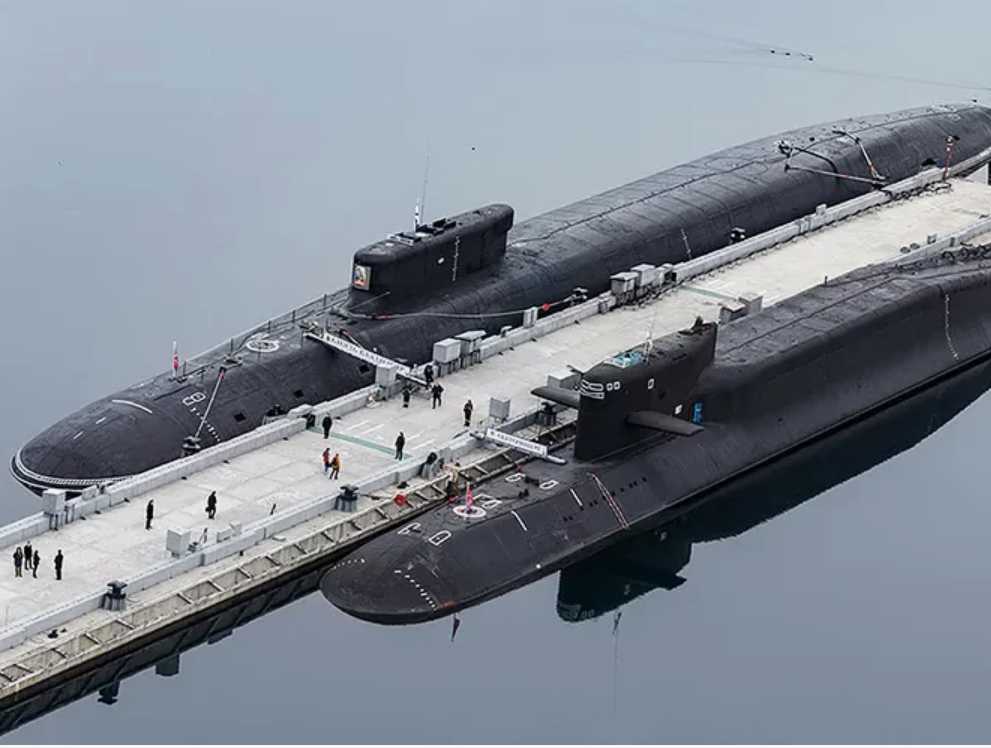
As early as the Cold War, in order to compete with the United States for maritime hegemony, the Soviet Union formulated a development strategy of "controlling the sea with submarines" and paid more attention to the development of strategic nuclear submarines. In the late 1980s, the Soviet Union had 110 strategic nuclear submarines, while the United States had only 35 at the same time. After the disintegration of the Soviet Union, Russia inherited all of the Soviet Union’s sea-based strategic nuclear forces. The Soviet Union has developed four generations of strategic nuclear submarines so far, of which 34 Y-class submarines have been built and all have been retired; the "Delta" series has built 43 submarines of four types, of which 7 "Delta" IV-type submarines have been built and 6 are currently in service, which is the highest combat readiness rate among Russian strategic nuclear submarines; the Borei-class is the fourth generation of strategic nuclear submarines, and 10 submarines are planned to be built.
From the perspective of Russian strategic nuclear submarines and weapons and equipment, the third and fourth generation technologies jointly support Russia’s sea-based strategic nuclear forces. On paper, although it has the ability to compete with Western forces led by the United States, the development of Russian sea-based nuclear force technology is not mature and reliable enough. In addition, Russia’s economic strength is not strong, and it is difficult to put more new nuclear submarines and nuclear missiles into service in a short period of time. Of course, strategic nuclear torpedoes are more difficult to defend than submarine-launched intercontinental missiles, and they are more destructive to coastal cities and military bases. However, they have a long underwater range and are greatly affected by complex hydrological environmental factors. There are many uncertain nuclear control risk factors. Once they are used uncontrollably, they may cause great damage to innocent countries. We must attach great importance to the relationship between deterrence, actual use and reliable control.
Technical features
The United States attaches importance to quietness, stability and assault capabilities
The Ohio-class hull adopts a cylindrical teardrop-shaped single-hull design, with the front elevator located on the command room enclosure and the cross-shaped tail rudder adding two small vertical rudders at the end of the tail elevator. The bow and stern of the hull are non-pressure hulls, and the middle part is a pressure hull. The entire pressure hull is divided into only four large compartments: command compartment, missile compartment, reactor compartment and main and auxiliary engine compartment. The length of the strategic missile launch tube protrudes from the pressure hull, so there is a superstructure on the upper part of the hull, extending from the bow to the rear section of the hull, fully integrated into the hull line without destroying the streamline; its turbine equipment is placed on the vibration-damping raft, with 2 sets of steam turbine systems, one set is used when sailing at high speed, and the other set is used when sailing at low speed, with excellent quietness.
The Ohio class is equipped with an S8G pressurized water reactor with a core life of 500 days (full power operation and a nuclear fuel replacement cycle of more than 15 years. It does not use the main circulation pump when sailing at medium and low speeds, which reduces a major noise source. In the event of a power outage or a failure of the main circulation pump, it can export decay heat, enhancing safety. In addition, it adopts many noise reduction, sound absorption materials, and mechanical vibration suppression measures, so the radiated noise is low, only about 110 decibels. The Columbia class has made a breakthrough in the use of an integrated electric propulsion system, which is conducive to noise reduction and optimization of the overall layout of the submarine, achieving higher propulsion efficiency. At the same time, the Columbia class’s full life cycle has been extended to 42 years, greatly reducing the pressure and cost of nuclear submarine renewal.
The Ohio class itself can carry 24 "Trident" II D5 missiles, with a maximum of 288 warheads. At the end of 2019, the United States also transferred some of the "Trident" II D5 The W76-2 nuclear warheads are replaced. This low-yield nuclear weapon helps control the power of nuclear strikes. It is mainly used to destroy high-value targets such as enemy underground fortifications, missile silos, command posts, airports and ship formations to avoid the outbreak of a global nuclear war. The Columbia class uses 4 universal launch modules, each of which can be loaded with 4 missiles. This not only reduces the difficulty of design and manufacturing, but also facilitates daily maintenance and missile loading, further reducing the cost of use. The "Trident" I DSLE can carry up to 14 W76 sub-warheads, 224 warheads in the whole boat, which not only achieves a precise and controllable strike effect, but also remains the "king" of the world’s strategic nuclear submarines in terms of quantity.
Russia focuses on performance improvement and diversity of strike methods
The Russian "Delta" IV strategic nuclear submarine adopts a double-hull structure and a teardrop-shaped design, with a high "turtleback". This type of submarine adopts dual-axis dual-propeller propulsion and applies the most advanced noise reduction technology at the time. The Borei-class further optimized the hull structure, and the "turtleback" on the upper part of the missile compartment has basically been integrated with the hull. The "Delta" IV has a surface displacement of 10,800 tons and an underwater displacement of 13,600 tons; a surface speed of 15 knots and a maximum underwater speed of 25 knots; a working depth of 320 meters and a maximum diving depth of 400 meters; and a self-sustaining capacity of 80 days. The surface displacement of the Borei-class is 14,720 tons and the underwater displacement is 17,000 tons; the surface speed is 16 knots and the maximum underwater speed is 27 knots, with a maximum diving depth of 450 meters. Judging from the basic data, the performance indicators of the Borei class have been improved.
The Delta IV is equipped with 16 P-29PM three-stage liquid-fuel ballistic missiles, each of which can carry 4 to 10 independently targetable nuclear warheads; the Borei class is equipped with 16 missile launch tubes, which can carry 16 Bulava intercontinental missiles, each of which can carry up to 10 independently targetable nuclear warheads.
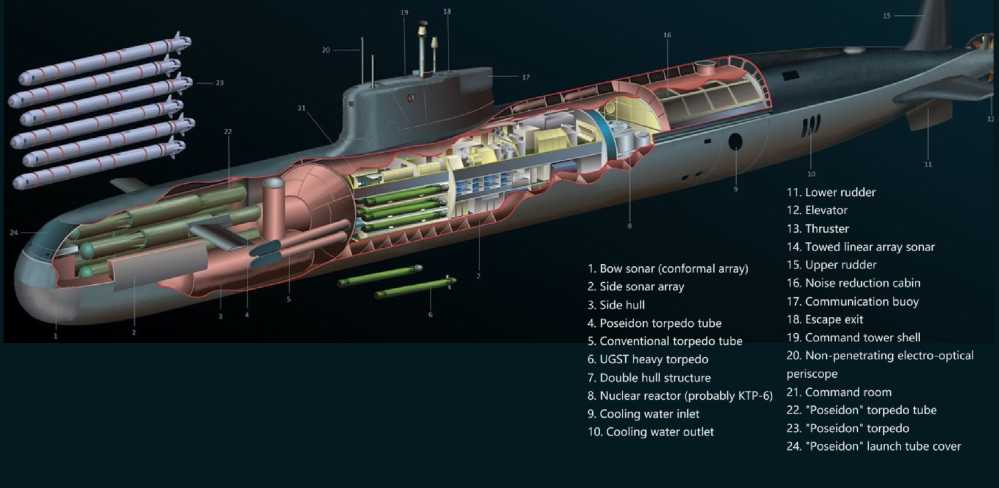
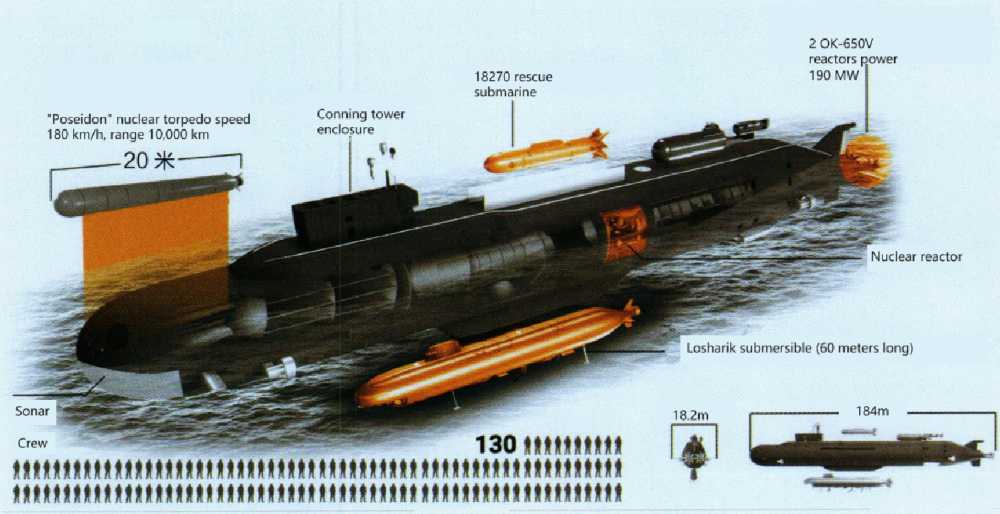
In addition to ballistic missile nuclear submarines, Russia’s strategic nuclear submarine family also includes the "Belgorod" which can carry nuclear torpedoes. The nuclear strike form of this submarine is the first in the world. It was the last of the "Oscar" II cruise missile nuclear submarines. To meet the needs of new tasks, the middle of the submarine has been redesigned, the missile compartment has been removed, and it has been converted into a compartment for carrying "Poseidon" nuclear torpedoes and special equipment. In addition, Russia is building a specially designed nuclear torpedo submarine Khabarovsk class, which is based on the Borei class and is improved and reduced. It can carry 6 "Poseidon" torpedoes. The length of this type of torpedo is 24 meters, the diameter is 1.6 meters, and the weight is 40 tons. It carries a nuclear warhead with a TNT equivalent of 2 million tons, a range of 10,000 kilometers, and a diving depth of 1,000 meters.
The use of US strategic nuclear submarines
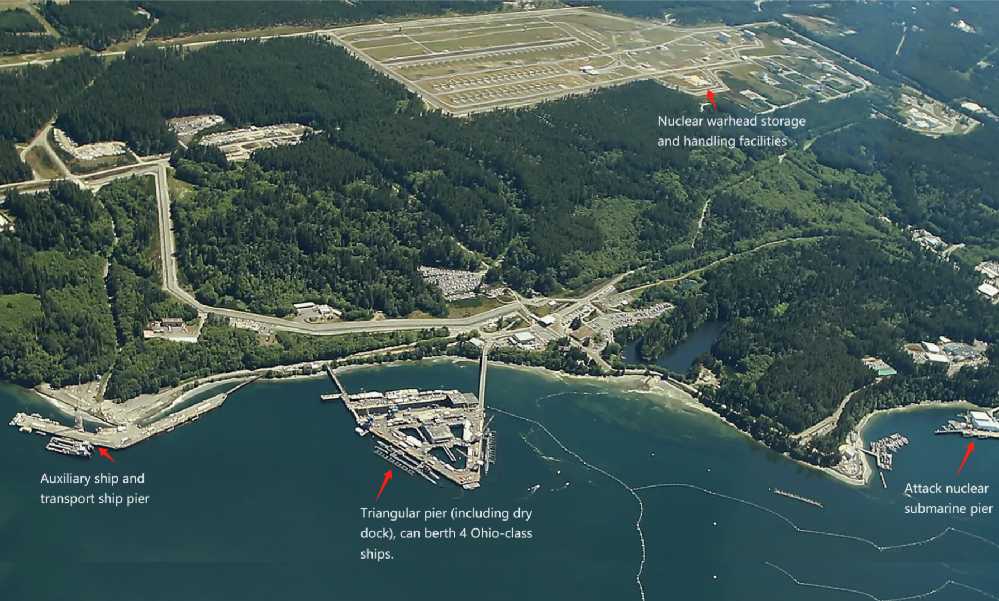
Combat deployment in two oceans At present, the US Navy’s 14 Ohio-class ballistic missile nuclear submarines are deployed in the Pacific Fleet and the Atlantic Fleet respectively. Among them, 8 belong to the 17th Strategic Nuclear Submarine Squadron of the 9th Submarine Group, deployed at the Pacific Fleet’s Guisap (Bangor) Naval Base; 6 belong to the 16th Strategic Nuclear Submarine Squadron of the 10th Submarine Group, deployed at the Atlantic Fleet’s Kings Bay Naval Base. US strategic missile nuclear submarines adopt a 15-month (455-day) cycle deployment system, that is, 73 days of sea deployment duty-21 days of crew shift change, 73 days of sea deployment duty-21 days of crew shift change-73 days of sea deployment duty-21 days of crew shift change-73 days of sea deployment duty-73 days of sea deployment duty-21 days of crew shift change-73 days of sea deployment duty Equipment maintenance 100 days. Two sets of crews are deployed and on duty at sea in turns. Each crew team goes to sea twice, 73 days each time, for a total of 146 days (3504 hours), and 2 to 4 strategic missile nuclear submarines can be deployed at sea at all times.
According to the new Strategic Arms Reduction Treaty, the United States will deploy no more than 240 ballistic missiles on strategic nuclear submarines after 2018. Therefore, while the size and tonnage of the Columbia class have increased, the missile launch tubes have been reduced from 24 of the Ohio class to 16, and the number of 12 ships built is also less than the Ohio class, which is equivalent to reducing the number of deployable submarine-launched ballistic missiles from 336 to 192. The U.S. Navy, the U.S. Department of Defense and Congress all support this. They believe that by scientifically arranging submarine training, deployment, and maintenance plans and adjusting the number of nuclear warheads carried by submarine-launched ballistic missiles, a balance between the capabilities, costs, and flexibility of use of strategic nuclear submarines can be achieved.
Normalization of live-fire launches As the core of the US sea-based nuclear force, the Trident II D5 is a three-stage solid missile. It began to be developed in 1983, first tested in January 1987, first underwater launched in March 1989, and formed combat capability in March 1990. On June 19, 2022, four Trident II D5s were tested. The four missiles flew almost across the Pacific Ocean and finally landed accurately in the designated waters near Guam. After completing the test launch of four missiles, the US military’s Trident II D5 has achieved 188 successful test launches.
It can be seen that even after more than 30 years, the “Trident” II D5 It is still the world’s top submarine-launched strategic nuclear missile, which is enough to prove its superior reliability and stability. The United States continues to test submarine-launched missiles. The purpose is to demonstrate nuclear deterrence and nuclear strike capabilities in a normalized manner; the second is to continuously test the advancement and stability of the entire weapon system; the third is to train submarine personnel to have proficient control capabilities and levels of weapon systems. To this end, the U.S. Navy often designates a submarine from the duty force to conduct missile tests. The submarine leaves the combat patrol area and arrives at the designated reserve position according to the order, and replaces the nuclear warheads of 2 to 3 missiles with inert warheads with telemetry instruments. After the submarine arrives at the designated position, it launches the missile according to the order. The U.S. Navy attaches great importance to the launch of missiles by nuclear submarines on duty in the state closest to actual combat, so as to obtain the most realistic and reliable tactical and technical indicators and missile system operation data.
Command and control integration
As the most important weapon of the country, strategic nuclear weapons have always been directly commanded by the supreme commander, especially the navy’s ballistic missile nuclear submarines. The United States Strategic Command is responsible for the command and control of the US strategic forces to achieve strategic national security goals and provide the president and the secretary of defense with a series of strategic means to choose from. The main tasks of the command include: full-spectrum global strikes, aerospace operations, computer network operations, Department of Defense information operations, strategic early warning, integrated missile defense, global CISR to counter weapons of mass destruction, and provide professional forces to joint combat forces.
The sea-based nuclear deterrence force units within the United States Strategic Command include: TF-134, Task Force 134 (Pacific Strategic Missile Nuclear Submarine), which is concurrently served by the Commander of the Pacific Fleet Submarine Force; TF-144, Task Force 144 The Task Force (Atlantic strategic missile nuclear submarines) is concurrently headed by the Commander of the Atlantic Fleet Submarine Force, and is directly commanded, controlled and launched by the President through the Minister of Defense and the Commander of the Strategic Command.
The use of Russian strategic nuclear submarines
Combat deployment "fortress"
Russian strategic missile nuclear submarines are deployed in the "fortress area" near the Northern Fleet and the Pacific Fleet. At present, the Russian Navy’s Northern Fleet has deployed a total of 6 "Delta" IV-type ships and 2 Borei-class ships; in January 2018, the Northern Fleet deployed the 29th of the 31st Submarine Corps. A deep-water division was formed on the basis of an independent submarine detachment, stationed in Gazhiyevo. Strategic torpedo nuclear submarines such as the Belgorod belong to this division, and the Borei-A and Khabarovsk-class submarines will be deployed later.
In normal times, the strategic nuclear submarines of the Northern Fleet are mainly deployed in the underwater "fortress areas" of the White Sea and the Barents Sea. For combat readiness training, they will also be deployed to the Arctic Ocean and the North Atlantic Ocean, ready to launch nuclear strikes or nuclear counterattacks against enemy countries at any time according to the president’s orders. The strategic nuclear submarines of the Russian Pacific Fleet are stationed at the Vilyuchinsk Submarine Base on the Kamchatka Peninsula. They mainly perform missions in the "fortress area" of the Sea of Okhotsk. They will also be deployed to the northern Pacific Ocean, mainly targeting strategic targets such as Hawaii on the west coast of the United States and important military bases in the Asia-Pacific region. The Russian Navy’s strategic nuclear submarines are deployed in the east and west directions of the Northern Fleet and the Pacific Fleet. The purpose is to form a strategic pattern of complementary advantages, risk dispersion, and balanced distribution, and to constitute a nuclear countermeasure and nuclear containment against the NATO military group led by the United States. The Russian Navy’s strategic nuclear submarines also adopt a double crew system, and each crew team is on duty at sea once. 70 days, after returning home, it will be handed over to the next crew team, and the combat efficiency is relatively high.
Rapid missile salvo
The ability to rapidly salvo ballistic missiles is an inevitable requirement for the development of strategic nuclear submarines, and it is of great significance to improve strategic nuclear deterrence and nuclear strikes. On May 22, 2018, the Russian Borei-class "Yuri Dolgoruky" fired 4 "Bulava" missiles in a salvo in the White Sea. The missiles flew 5,800 kilometers and landed at the designated target range, indicating that the Borei-class has formed a complete and effective combat capability. The White Sea is Russia’s inland sea. Conducting launch tests here can avoid interference from NATO reconnaissance forces as much as possible.
As early as August 6, 1991, the Soviet Union conducted an exercise code-named "Hippo II". The "New Moskovsk" nuclear submarine fired 16 "Light Boat" missiles at a time. The interval between each missile launch was 14 seconds. In 224 The launch was completed within seconds, setting a world record for the most and fastest salvos of submarine-launched intercontinental missiles. Only the first and last of the 16 missiles hit the target range, and the other 14 were destroyed in mid-flight. The "Qingzhou" missile has a range of more than 8,000 kilometers. Each missile can carry 4 nuclear warheads. The 16 missiles are equivalent to 16 million tons of TNT equivalent, which is a devastating force for any country. Therefore, the exercise is also called the "Doomsday Rehearsal". So far, this is the only time in the world that a single boat has fired 16 missiles at once, indicating that the Soviet Union’s sea-based strategic nuclear strike capability at that time was at the top of the world.
On December 12, 2020, Russian President Putin personally directed the "Trinity" pull-up exercise of Russia’s strategic nuclear forces. In the early morning of the same day, the Borei-class nuclear submarine "Grand Duke Vladimir" fired four "Bulava" missiles in a row from the Sea of Okhotsk in the Far East to the target range in Arkhangelsk Oblast in northwestern Russia in 22 seconds, with a missile launch interval of only 7.5 seconds, which is a great test for submarine control and balance, and also conveys a strong deterrent signal to potential opponents. Firing a large number of missiles in a short period of time shortens the exposure time of the submarine and puts great pressure on the enemy’s anti-missile interception system. At present, there is no news that the missile launch interval of strategic nuclear submarines in the United States, Britain, France and other countries is so short.
Command and control case
Compared with the United States, Russia is geographically closer to the Arctic Circle and has a long ice-covered period all year round. Therefore, it is more difficult for the Russian Navy’s strategic nuclear submarines to receive command information, and it takes longer to prepare for the launch of missiles by breaking through the ice. It is inevitable that its command and control case is required to be real, and a letter or number represents a set of nuclear strike plans.
In December 2010, the strategic and tactical command organs of the Russian armed forces underwent a major reform. After the reform, the Northern Fleet and the Pacific Fleet successively established submarine commands to replace the original squadron organization. All nuclear submarines are under the organization of the two fleet submarine commands, but the corps is still the basic component unit. In order to unify the command of strategic rocket forces, sea-based strategic nuclear forces, long-range aviation and aerospace forces, the Russian army has also established a strategic command. In wartime, according to the intentions or orders of the president, the defense minister, the chief of the general staff and the general staff, command and control are implemented over strategic nuclear submarines.
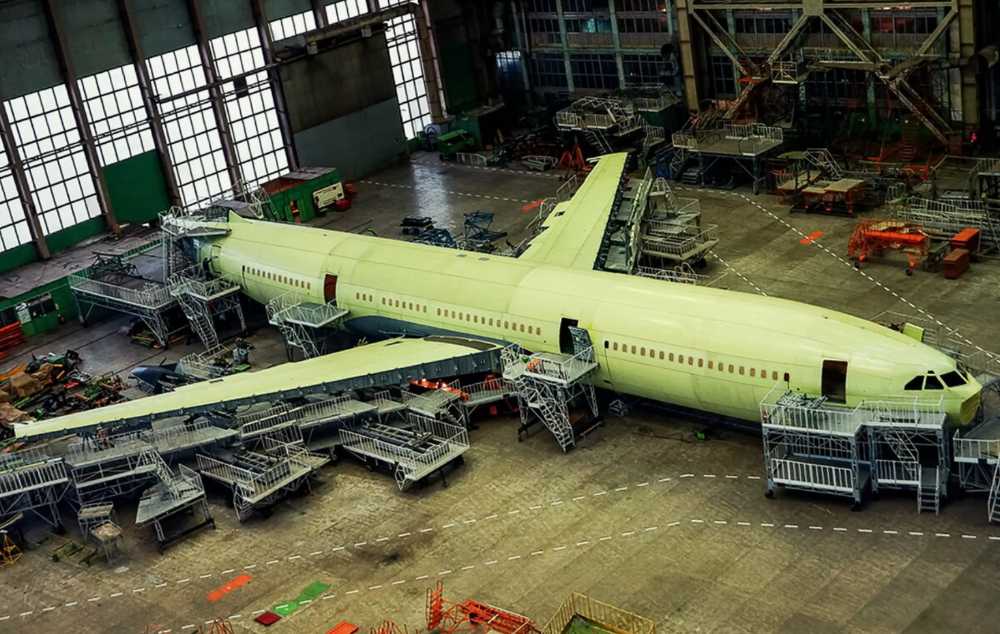
In order to meet the requirements of effective command and control of strategic nuclear submarine maritime operations, the Russian Navy has built multiple shore-based long-wave, ultra-long-wave, extremely long-wave communication and low-frequency underwater acoustic communication base stations on the northern and eastern coasts. At the same time, submarine command can also be implemented through space-based communication satellites and airborne command aircraft. The Russian air command aircraft will be replaced by the "Il-96-400M" produced in 2021. This aircraft will replace the current "Il-80" command aircraft. When the ground and satellite submarine command and communication systems are destroyed, the president and the defense minister and other command agencies can implement submarine command in the air.
The command process is: the president issues instructions to the commander of the strategic command through the minister of defense, the chief of the general staff and the general staff; the commander of the strategic command and its command agencies directly command the nuclear submarines waiting for battle at sea through the submarine command system in accordance with the president’s instructions. After receiving the order, the ballistic missile nuclear submarines waiting for battle will float to the predetermined launch depth, and the ballistic missile nuclear submarines under the Arctic ice will break the ice and surface to complete all launch preparations and missile launch tasks. If it is a strategic torpedo nuclear submarine, after receiving the nuclear strike order, it will complete the "Poseidon" nuclear torpedo launch preparation 60 meters underwater and launch it at the enemy’s naval base or port to achieve the goal of strategic nuclear strike or nuclear counterattack.
Summary
Based on the above-mentioned strategic nuclear submarines of the United States and Russia, the nuclear weapons they carry, and their combat applications, it is clear that the United States is more advanced and stable in comprehensive technology and has better application effects than Russia, whether in terms of development concepts or the number, scale, quality and efficiency of nuclear submarines. As for Russia, it may be related to the Russian defense industry system. There are many submarine and weapon design and development units, resulting in a large number of models and types. This is not only true for strategic nuclear submarines, but also for Russian attack nuclear submarines, conventional submarines, and tactical missiles and torpedoes. However, in the case of insufficient military expenditure, Russia can basically counter the nuclear deterrence of the United States through the diversification of strategic nuclear submarines and the missiles and torpedoes they carry, and the asymmetric development and application model, coupled with the bold decisions of the leadership. Recently, Russia has continuously conveyed information on the launch test and combat deployment of the "Bulava" missile and the "Poseidon" nuclear torpedo, which is to implement asymmetric nuclear deterrence and nuclear containment against NATO.