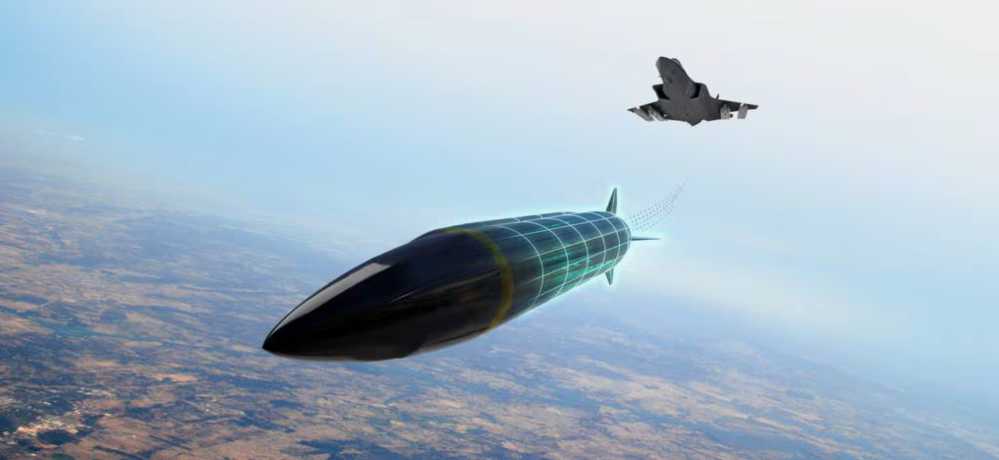
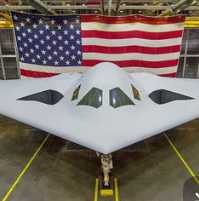
The generation gap of ammunition in fifth-generation aircraft
For a long time, the development of fifth-generation aircraft represented by F-22 and F-35 has attracted much attention. However, people seem to have overlooked such a basic fact: no matter how advanced the fighter is, it is still essentially a weapon-carrying platform. Only by matching it with advanced airborne weapons and ammunition can it more effectively exert its combat capabilities and complete its combat mission.
The United States still leads the world in the research and development of fifth-generation aircraft, but the generation gap between combat platforms and weapons and ammunition is becoming increasingly prominent. To this day, many weapons used by the US Air Force have hardly changed compared with the 1990s and the early 21st century. Some can even be traced back to before the Gulf War in 1991. Even the most advanced fifth-generation aircraft are still using airborne weapons and ammunition developed for fourth-generation aircraft.
What makes the generation gap problem even more serious is that the combat situation faced by the US Air Force is more complex and difficult. Since the "Desert Storm" operation, the air defense capabilities of potential US opponents have changed dramatically. In the 30 Years ago, it was hard to imagine that air defense weapons could effectively intercept high-speed artillery shells, rockets and missiles, but today’s advanced air defense systems can use electromagnetic interference, laser weapons, anti-missile missiles and other soft and hard killing methods to deflect enemy weapons from their targets or directly destroy them. "Rising adversaries" are equipped with a large number of high-precision long-range air defense radars and new interception ammunition, making it more difficult for the US Air Force to strike heavily defended targets. Therefore, if the US military wants to strengthen its modern offensive capabilities and form deterrence, it needs a new generation of precision-guided weapons-"fifth-generation ammunition", the so-called "fifth-generation ammunition"

What is "fifth-generation ammunition"?
What is "fifth-generation ammunition"? The US military has not given a precise definition. Kelly believes that the fifth-generation combat aircraft represented by the F-22, F-35 stealth fighter and B-2 stealth bomber have strong situational awareness capabilities thanks to their stealth design and integrated sensor systems, but they are still using ammunition based on the fourth-generation aircraft design, so the US Air Force needs new ammunition to maximize the effectiveness of modern stealth fighters.
Brig. Gen. Jason Bartolome, director of the US Air Force weapons program and director of the Armaments Bureau, did not give a clear definition of "fifth-generation ammunition" in a media interview in January 2023, but he said, "We are currently studying (how) to ensure that our weapons can effectively meet mission requirements. It is difficult for me to describe any specific attributes of the fifth-generation ammunition, but since ancient times, weapons have been developed and evolved based on the three attributes of speed, lethality and suddenness. With the development of weapons technology and the progress of opponents, the requirements for the fifth-generation ammunition have long included the connotation and extension of these three basic attributes.
Retired Air Force Colonel Mark Gunzinger, director of future concepts and capabilities assessment at the Mitchell Institute for Aerospace Studies of the U.S. Air Force and former deputy secretary of defense, believes: "The U.S. Air Force has a real problem: the fleet is too small, the airframe survivability is poor, and the ammunition range is too short and the lethality is low to meet today’s combat readiness needs. Therefore, the U.S. military is trying to find a suitable match between short-range fighters, long-range bombers, and autonomous collaborative combat aircraft, including the number, payload, range, survivability, and most importantly, the use of corresponding ammunition in combination with mission objective requirements. In addition, the same problem also plagues the ratio of weapon types. The current stockpile of precision-guided munitions is too small, has poor survivability, and has a relatively short range if used in conflicts with opponents of equal size. The U.S. Air Force must find a balance between the range, lethality, survivability, speed and cost of precision-guided munitions."
2021 In November 2016, Gunzinger published an article titled "Attractive Prices, Plenty of Quantities," proposing that the U.S. Air Force should develop a series of affordable next-generation medium-range (50-250 nautical miles) air-to-ground munitions that can be carried in large quantities by fifth-generation fighters and stealth bombers.
The above remarks from senior U.S. military officials have roughly outlined the future development path of U.S. Air Force weapons and munitions. According to senior U.S. military officials, civilian think tanks, and industry experts, fifth-generation munitions may have the following key features:
A more stealthy appearance
In order to penetrate modern air defense systems, weapons must have low-visibility features or use electronic means to achieve stealth, and must also be able to resist electronic attacks and deception from cyberspace.
Faster speed
Some fifth-generation munitions will be able to reach extremely high speeds, making it difficult to effectively intercept them before they hit the target even if they are discovered by the enemy. "The only way to defeat martial arts in the world is to be fast" This is the basis of the hypersonic weapons currently being developed.
Longer range
In order to be able to launch beyond the range of enemy weapons and avoid the launch platform entering a high-threat environment, the fifth-generation ammunition needs to have a longer range than existing weapons and strike from a longer distance.
More compact product structure
In order to maintain concealment, stealth fighters must place weapons and ammunition in the internal bomb bay. Limited by the size of the bomb bay, to increase the number of ammunition carried, it is necessary to make a fuss about the volume and weight of the ammunition itself. Microelectronic components and new propulsion methods can make new ammunition smaller and lighter, thereby increasing the amount of ammunition carried by a single aircraft and enhancing firepower density. Smaller weapons are also crucial for the US Air Force to develop cooperative combat aircraft. Autonomous unmanned wingman aircraft are more compact than manned aircraft, and small weapons can meet the payload requirements.
Digital design
Modern digital design and modeling technology will enable the Air Force to find the best option from thousands of design solutions and options, and achieve a balance between cost and output.
Synergy
Some fifth-generation ammunition can work together to launch attacks in the most effective order, making the opponent’s defense system lose sight of one thing and another, and ultimately destroy those targets that are protected by layers. It can also increase the survivability of the weapon itself. The concept of "swarm attack" that the US Air Force is studying is based on this. The new generation of ammunition can collect real-time battlefield information on the way to the target and share it with the entire combat system.
Modularity
The US Air Force has proposed the concept of modular weapons to the industry. Component modules such as hybrid guidance mode seekers, warheads, and propulsion devices can be used for different types of weapons and ammunition. Modular design may improve productivity, reduce production costs, and achieve flexible manufacturing. Different warheads can be selected according to different mission types.
“Fifth-generation ammunition” is already under development
The U.S. Air Force is currently developing a series of new air-to-air and air-to-ground weapons to enrich the various strike methods from direct-fire ammunition, beyond-area ground attack ammunition to long-range air-to-air missiles. Although not all weapons under development will eventually be equipped and put into service, some modular weapon components can also be used. The following list of fifth-generation ammunition is compiled based on interviews, industry reports and budget documents. There are other weapons development projects outside the list that are still confidential.
Air-to-air missiles
AIM-260 Joint Advanced Tactical Missile (JATM): Developed by Lockheed Martin, it is the same size as the current AIM-120 (AMRAAM) missile, but the range is greatly improved, and it can hit farther than China’s PL-15. Active radar guidance. First exposed in 2019, live-fire tests in 2020 and 2021.
Long Range Engagement Weapon (LREW): Developed by Raytheon, replacing AIM-120 and AIM-260, it is larger than AIM-260 and can only be carried on the external rack of a fighter to shoot down the opponent’s early warning aircraft, tanker or bomber at a very long distance.
Modular Advanced Missile (MAM): Developed by Boeing, it replaces the AIM-9X combat missile. The thruster is modular and can be stacked. Interchangeable seeker. Some of the technology can also support other Boeing projects, such as the Compact Air-to-Air Missile (CAAM), Extended Range Air-to-Air Missile (ERAAM) and Long Range Air-to-Air Missile (LRAAM), and the latter two may be competitors of Raytheon’s LREW.
"Peregrine Falcon" missile: Developed by Raytheon, it has the capabilities of the AIM-120 missile, with a longer range and only half the size of the AIM-120. In December 2022, it received funding from the U.S. Air Force Research Laboratory.
CUDA: Developed by Lockheed Martin, it is also half the size of AIM-120. The concept began in 2019 and belongs to the "Small Advanced Capability Missile Project".
CUDA: Developed by Lockheed Martin, it is also half the size of AIM-120. The concept began in 2019 and belongs to the "Small Advanced Capability Missile Project".
Hypersonic Missile
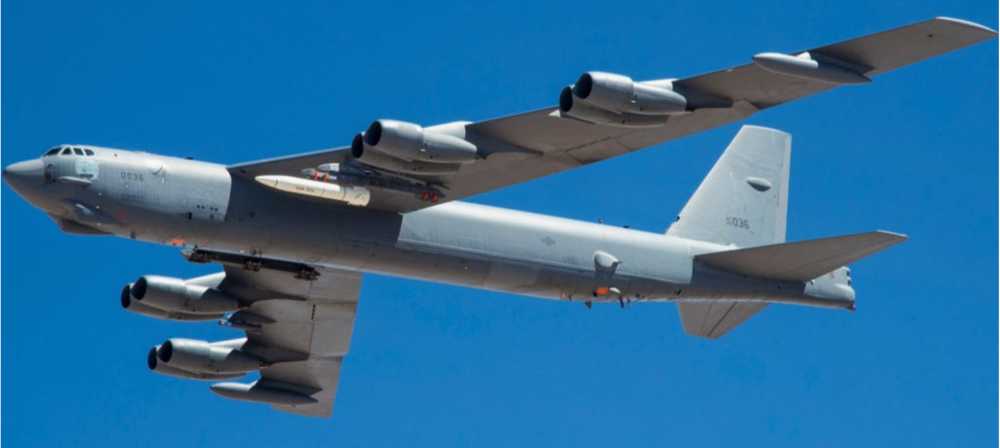
AGM-183A Air-Launched Rapid Response Weapon (ARRW): Developed by Lockheed Martin, a hypersonic missile with a waverider warhead, used to attack high-value or mobile targets, can be mounted by aircraft such as B-52, B-18 and F-15EX. The flight test was successful in 2022, and the number is confidential. The contract requires affordable production costs.
Hypersonic Attack Cruise Missile (HACM): Developed by Raytheon, it is a ground attack weapon equipped with a jet engine and is sized to be carried by fighter jets. Based on the hypersonic jet weapon project jointly launched by the US Air Force and the Defense Advanced Research Projects Agency (DARPA). Won the bid in September 2022 and is expected to have initial operational capability around 2027.
Ground Attack Munitions
Stand-In Strike Weapon (SiAW): L3 Harris Technologies, Lockheed Martin and Northrop Grumman bid. Replaces the "HARM" high-speed anti-radiation missile to suppress and destroy enemy air defense systems, as well as time-sensitive targets such as ballistic missile launchers. Can be carried in the F-35’s bomb bay. Bid in May 2022, expected to have operational capability in 2026.
Stand-Out Strike Weapon (SoAW): The developer is unknown, a low-cost stand-off strike weapon that fills the firepower gap between the AGM-158 extended-range missile and its AGM-158C long-range anti-ship missile. The bidding plan will be announced in September 2022, and it is clearly stated that multiple suppliers are being sought to participate in the final production.
Global Precision Strike Weapon (GPAW): The developer is unknown, replacing the GPS-guided JDAM bomb, which is small, light, and cheap, and is used to strike hardened ground targets or underground targets. The weapon platform software has an open architecture design, and old fighters only need to upgrade the software. The new fighters are pre-installed with software programs for the corresponding ammunition before leaving the factory, and the pilot can choose the warhead type of ammunition according to the mission requirements on the cockpit control interface. It has an advanced sensor system and a certain degree of autonomy. The project was made public in the fall of 2020.
Fifth Generation Missiles" Development Roadmap
In December 2021, U.S. Air Force Secretary Frank Kendall proposed the "Seven Priorities for Development" to cope with great power competition, clarifying the capabilities required by the Air Force to enable it to reliably deter opponents and lay the foundation for winning wars when necessary.
Kendall also identified three capabilities that support the above seven priorities: air transport capabilities, electronic warfare capabilities, and new ammunition, and called them "cross-domain facilitators." They involve almost all Air Force missions and cannot be considered separately. The U.S. military has assigned its own operations and procurement teams to each of the three capability development projects to cooperate with the U.S. Air Force to promote the planning, organization and integration of the seven major operational priorities.
Bartolomé is one of the leaders of the weapon function integration team and is also responsible for procurement. Colonel Christopher Buckley, the director of Air Force weapons development and future procurement needs, is in charge of the team’s operations. The main task of this team is to organize cross-domain ammunition development work, determine the development priorities of various new ammunition, and coordinate the research and development and production progress of the "fifth-generation missile", and plans to provide relevant budget information starting from fiscal year 2024. In addition to truly integrating operations and procurement, the research and development of the "fifth-generation missile" depends to a large extent on the cooperation of contractors and the scientific and technological community, who need to inform the Air Force of the technical feasibility. The team’s goal is to determine the effectiveness and quantity of ammunition required for the US Air Force to complete the mission. According to Bartolomé, the ammunition roadmap is a dynamic concept that will be adjusted as various projects progress, budgets and threat levels evolve. In addition, breakthroughs are coming in sensor technology, propulsion technology, and warhead technology, which need to be closely watched. The long-term goal of the roadmap is to develop corresponding capabilities against known great power opponents such as China in the next five years.

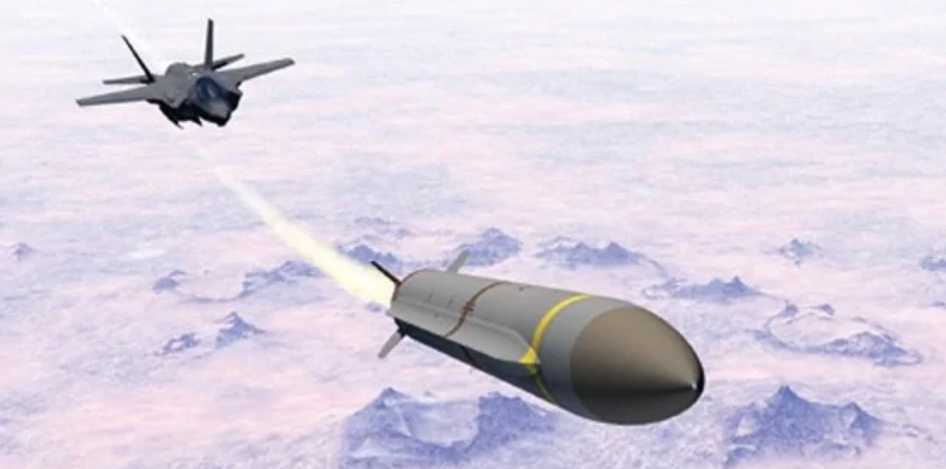
Modularity as the standard
Bartolomé believes that it is necessary to modularize the three main parts of ammunition-seeker, propulsion and warhead as the development standard of the "fifth-generation missile". It is a very valuable concept to deal with various types of targets through the conversion combination of various module components. He envisions that future weapon systems should have better compatibility and modular attributes.
Currently, the focus of the US military and industry is on how to truly achieve modularization of weapons by subdividing technical systems and integrating system interfaces, which will also help the industry improve its ability to mass-produce ammunition. Modularization makes it possible for more "universal" weapons to emerge, and "universal" weapons can not only deal with small-scale high-value targets but also strike large-scale low-value targets.
In addition, modularity also increases the competition opportunities for more component manufacturers in the ammunition manufacturing field, which may attract new suppliers to enter the market, expand the production base and gain the ability to increase production in a large number of crisis situations. The Russian-Ukrainian conflict has highlighted the dangers of the United States in emergency ammunition production. Most of the weapons provided by the United States to Ukraine come from the US military’s combat readiness inventory, and the resulting inventory gap will not be quickly filled because weapons production is time-consuming and labor-intensive. If some key components have been discontinued, new weapons cannot be manufactured, and replenishing inventory is even more difficult to achieve.
More suppliers can also prevent the emergence of "supplier lock-in", that is, the upgrade and consumable supply of a certain system or weapon can only rely on a single contractor. Therefore, the US Air Force is working to transition from "proprietary vendor-locked solutions" to "digital engineering, open system architecture, and agile software development." "Digital engineering" is an integrated digital approach that uses authoritative sources of system data and models as a continuum to support full life cycle activities from concept proposal to abandonment, which is similar to the concepts of "Industry 4.0" and "digital transformation" proposed by my country; "open systems" have the portability and tailorability of application systems, interoperability between nodes on the network, and an architecture that is easy to obtain software from multiple parties; "agile development" is to divide a large project into multiple interconnected but independently run small projects, and complete them separately, and the software is always in a usable state during this process.
The United States plans to improve its basic industrial capabilities to meet inventory requirements, maintain reserves of weapons and ammunition, and ensure that it can project sufficient firepower throughout the entire combat process when a conflict occurs with an opponent of equal size.

Affordable price and sufficient quantity
Timothy P. Grayson, special assistant for overseeing operational priorities and cross-domain cooperation in the team of Air Force Secretary Kendall, said that expanding the military’s ammunition inventory is crucial when talking about the supply of ammunition. Gunsinger also believes that in a war in the Pacific region, the US Air Force may need to strike tens of thousands of targets and must have affordable and sufficient weapons and ammunition. For example, the unit price of some standoff strike weapons is $2 million, the unit price of air-based hypersonic weapons is $14 million, and the unit price of land-based hypersonic missiles is expected to be as high as $40 million to $50 million, so it is not economically feasible to rely on these weapons for large-scale firepower projection. High-cost missiles may be suitable for striking high-value time-sensitive targets, but they are unlikely to become the main solution for campaign firepower projection.
Gunzinger estimates that the US Air Force’s ammunition inventory is only enough to sustain 10-14 days of medium-to-high-intensity strikes. In addition, a certain amount of ammunition reserves must be retained to prevent the outbreak of another conflict. The key to the problem is that the ammunition inventory must be expanded. According to his analysis, the most cost-effective solution to the inventory problem is to expand the inventory of medium-range weapons. The moderate price, sufficient quantity and just the right range can allow the US military to maintain sufficient firepower density to exert continuous pressure on the enemy. If a strike can only be carried out every 48 hours, the opponent will have a breathing space and gradually restore its resistance. Only continuous strikes can maintain or even increase pressure until the enemy’s defense system can no longer withstand the pressure and collapses, thus prompting the end of the conflict. To realize this vision, the ammunition inventory must be large-scale. Grayson believes that the ammunition inventory also needs an appropriate combination and ratio. Low-cost, general-performance, and sufficient ordinary ammunition is matched with high-cost, excellent-performance, and limited special ammunition, so that the US military can have enough firepower to defeat opponents of the same size. This combination must be maintained over time to avoid gaps in performance or quantity when developing new weapons. Therefore, the military should use forums, industrial exchanges or other occasions to dialogue with the industry, which will help verify assumptions, determine development and deployment schedules, and gain a realistic understanding of production capabilities and maintenance needs to help the US Air Force make the "right" decision.

The problem of mass production
William Laplante, the Pentagon’s equipment procurement and maintenance director, believes that in order to meet the estimated wartime ammunition needs, ammunition production needs to be reconsidered. Speaking at the Potomac Officers Club in October 2022, he said that the Pentagon recently received timely weapons supplies because only weapons procurement can be easily approved when the budget is tight in a "pseudo-peace" environment. Only by producing a sufficient number of weapons and ammunition can a reliable deterrent be formed against China.
Laplante believes that the United States and its military partners and allies should have multiple factories capable of mass production of weapons. Weapons are not only interoperable, but also interchangeable. The United States and its allies cannot rely on factories or suppliers that may have "single points of failure" in outsourced supply chains (Note: that is, failure of this node, resulting in failure of the entire system). Weapons with more modular designs help avoid this risk. Thanks to a more open procurement system and unified manufacturing standards, the more weapons manufacturers there are, the easier and cheaper it will be to produce weapon components. In addition, Laplante also warned against too much "paper talk" without actual production, because experimental weapons cannot constitute an effective deterrent. Gunzinger agrees with the above statement and believes that the production of "fifth-generation missiles" requires everyone to participate. If weapons produced by NATO and other partners are based on modular characteristics, with unified specifications and standard interfaces, then weapon modules can be used by any US ally on different battlefields.
Although the Pentagon and Congress agree that the production capacity of existing weapons and ammunition must be expanded, it must also be paid for by the national treasury, which also means purchasing weapons that the army may not eventually use. But only by "betting on both sides" can we avoid the situation where there are no bullets available.

Increasing production and preparing for war, time is running out
At present, the US military builds ammunition stocks based on the assumption that there are 6 months before the official start of the war to urgently expand ammunition production, complete combat deployment and reserve sufficient ammunition. However, Gunzinger believes that this assumption is no longer applicable. Because in modern warfare, potential opponents will not only not leave time for the US military to assemble and prepare, but may also launch large-scale operations at any time, which will cause the most serious reduction in personnel to the US military since World War II. What makes him "worry" is that the current United States not only lacks the explosive power to increase ammunition production capacity, but also lacks the "sense of urgency" to prepare for war. As a potential opponent, China can not only see through the problems facing the United States, but also win through a war of attrition. As far as the US military situation in the world is concerned, the fact that the United States must invest heavily in ammunition is well known, and the US military can do this "wisely". Gunzinger believes that the US Air Force should maximize the purchase of existing "shelf products" to replenish ammunition stocks, namely stealth beyond-visual-range strike weapons and medium-range weapons. Although these measures can solve the urgent needs of the US military in the short term, the research and development and production of the "fifth-generation missiles" should not be "postponed until the last second before the future war." Obviously, the decision-makers of the US Air Force have reached a consensus on developing the next generation of advanced ammunition.