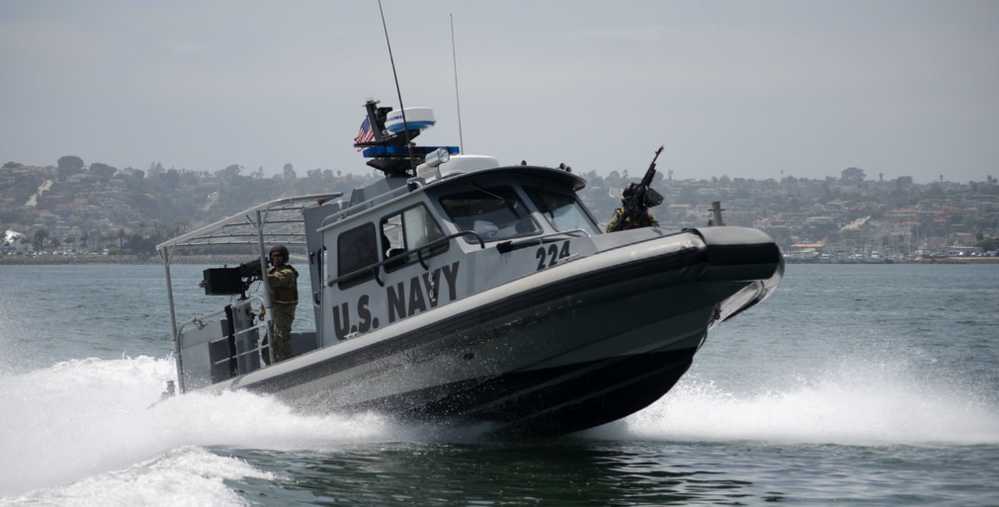

The large and medium-sized ships of the US Navy are well known to many people, but there are also some inconspicuous but important and technically advanced "little guys", namely various small combat speedboats. With their small size, shallow draft and flexible maneuverability, they are active in rivers, inland waters and coastal ports around the world, and are responsible for special operations and alert escort on the water. According to the practice of the US military, boats with a length of 100 feet/about 30 meters or less are generally called boats or crafts (boats). Generally, they are not classified by displacement, but by length "xx feet". At present, standardization and serialization have basically been formed. Here are some of the main combat boats in service for your reference.
Users of small boats
The users of small boats in the U.S. Navy are mainly divided into three categories: the first is the Coastal River Force (CORIVFOR) under the Naval Expeditionary Combat Command (NECC); the second is the Special Boat Force (SBT) under the Naval Special Warfare Command (NSWC), which mainly supports the operations of special forces such as the "SEAL" (SEAL); and the third is various types of small boats scattered in the hands of other naval users.
Coastal River Force (CORIVFOR)
The main responsibility of the Coastal River Force is to provide 24-hour all-weather water security protection for the Navy’s high-value targets, including main combat ships, auxiliary ships, anchorages, high-value offshore facilities, inland ports, coastal ports, important canals and waterways, etc., to avoid incidents such as the attack on the anchorage of the destroyer "Cole" in 2000. Especially in overseas areas where the US Navy expeditionary forces often operate, the coastal river forces have become the most important "personal bodyguards and "sentinels" of the deployed fleet. Their activities cover coastal areas around the world and inland waters within a certain distance. At the same time, according to orders, the coastal river forces can also support the military operations of land forces in inland waters and coastal areas. According to the practice of the US military, the coastal river forces are also deployed in both oceans. There are currently two battalions with more than 100 boats and more than 2,600 troops.
The first coastal river group (CORIVGRU1) in the Pacific direction, the battalion headquarters is located in San Diego, California, and it has training and evaluation units, Guam detachments, active 3 squadrons, and reserve 1 and 11 squadrons.
The second coastal river group (CORIVGRU 2) in the Atlantic direction, the battalion headquarters is located in Portsmouth, Virginia, and it has training and evaluation units, Bahrain detachments, active 2.4 squadrons, and reserve 8 and 10 squadrons. Squadron.
Special Boat Force (SBT)
It is affiliated with the Naval Special Operations Command. Together with the famous "Navy SEALs", it mainly supports the "Navy SEALs" and other US special operations units in coastal and river special operations. The boat team is called SBT and the crew is called SWCC. At present, all of them belong to the Naval Special Operations Brigade 4, which has 3 SBT boat teams and 750 members, and are dispatched globally as needed.
SBT-12 boat team, headquartered at the Coronado Naval Amphibious Operations Base in California; SBT-20 boat team, headquartered at the Little Creek Naval Amphibious Operations Base in Virginia, SBT-22 boat team, headquartered at the Stennis Space Center in Mississippi, focuses on river operations and is currently the only boat team equipped with SOC-R boats; there is also a naval small boat training school, also located at the Stennis Space Center, which specializes in providing various training and evaluations.
Other users of the Navy
In addition, there are special warfare boats scattered in other units of the Navy and Marine Corps, including various types of security patrol boats, 7-meter and 11-meter rigid inflatable boats, 16-foot/about 4.9-meter inflatable combat boats, etc.
Small boats
"Sea Ark": 34-foot patrol boat
Also known as the Dauntless class security patrol boat, the third generation of this series is currently in service, and it is also one of the four main forces of the coastal river forces, and it appears frequently.
Its basic mission is security and defense against various terrorist attacks. Its main missions include water patrol, blockade, protection of high-value targets at anchor and in sail, port defense, coastal surveillance, and participation in joint operations; its secondary mission is to cooperate with land forces in infiltration, evacuation, search and rescue, explosive disposal, diving support, etc.
The identification characteristics of the "Sea Ark" are very obvious. It has an all-aluminum alloy hull with a cab and no inflatable enclosure. The heavy machine gun position at the bow of the boat is a semi-sunken battle position with a guard wall, which can provide good defense for the shooter.
Therefore, this type of boat is more like a security patrol boat. It was originally used by the Navy’s coastal combat unit IBU and is not a regular river combat speedboat. It’s just that the Navy later merged the coastal port security force IBU with the river speedboat force, and as a result, this large number of patrol boats were also incorporated into the coastal river force and became one of the four main boat types at present. Each squad usually has 4 "Sea Arks"
"Sea Ark" has two versions. The subsequent version has improved hull and replaced with "Hamilton" water jet propulsion, which improves maneuverability and reduces maintenance costs.
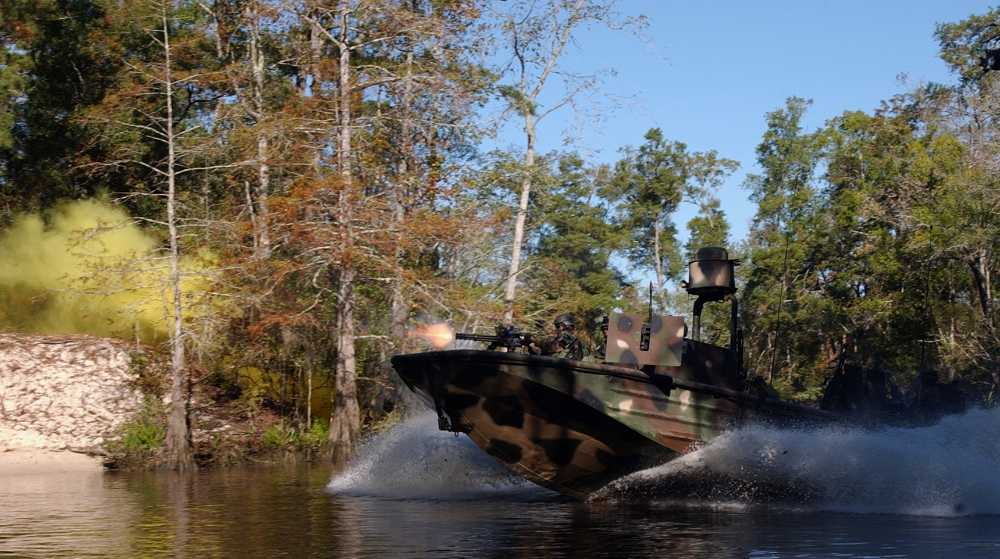
"Fire Hedgehog": 33-foot River Assault Boat (RAB)
Also known as SOC-R River Special Warfare Boat, it is the most frequently seen river combat speedboat. It is equipped by coastal river forces and special warfare speedboat forces. It is the protagonist in the movie "Act of Valor".
The main purpose of this type of boat is to support special warfare forces in short-distance infiltration and evacuation operations in coastal and river waters. Its history can be traced back to the 25-foot small river patrol boat (PBL) during the Vietnam War. It adopts V-shaped bottom planing boat design, water jet propulsion, aluminum alloy hull, no rubber inflatable side, and a swimming platform flush with the water surface at the tail, which is convenient for special forces in the water to climb.
Its small size, light weight, shallow draft and good maneuverability make it suitable for activities in narrow river areas. And it has strong firepower. The 5 weapon stations can provide 360° firepower coverage, especially supporting GAU-17 "Minigun" multi-barrel machine guns that require external power supply. In the movie "Brave Action", it is like a "fire hedgehog" pouring bullets on the enemy, which is impressive. And the aluminum alloy hull of the RAB boat has a certain armor protection capability, and there are additional bulletproof walls that can be turned up, which is very suitable for performing fire support and blocking tasks.
Its size allows tactical transport aircraft such as C-130 to transport it by air, and even CH-47D helicopters can lift people and boats vertically. When the CH-47D helicopter uses the Maritime External Air Transportation System (MEATS) to lift the speedboat for deployment, the personnel are in the cabin and go directly to the boat along the rowing line. When evacuating, the speedboat is hung on the helicopter with a steel cable, and the personnel use the ladder to get on the plane.
Long history: 39-foot river patrol boat (RPB)
This is also a river combat speedboat with a long history. It was originally called SURC (Small Unit RiverineCraf). Its basic tasks are to defend against terrorist attacks and provide troop defense, mainly including patrolling, blockade, protection of high-value targets at anchor and sailing, port defense, coastal surveillance, and participation in joint operations; secondary tasks are infiltration, evacuation, search and rescue, explosives disposal, diving support, reconnaissance, logistics transportation and anti-drug, etc. It is mainly used by coastal river troops and the Marine Corps.
It uses a rigid aluminum alloy hull, but unlike the RAB, it is surrounded by a solid bulletproof foam plastic ring, which can increase buoyancy and reduce impact, and also has a certain bulletproof effect. It is generally used as a bulletproof armed patrol boat. Compared with the powerful RAB, the RPB has only three weapon stations, but it is larger in size and has a stronger carrying capacity. There is also a landing springboard at the bow, which can allow special forces to get on and off quickly after forcibly rushing to the beach, avoiding excessive exposure to enemy firepower. Therefore, it is more responsible for the transportation of special forces.
In addition, despite its large size, it has good maneuverability. It can complete a 180° U-turn within 15 seconds at a speed of 25 knots, and only requires the width of the river surface of three hulls, which is very suitable for operations in narrow rivers.
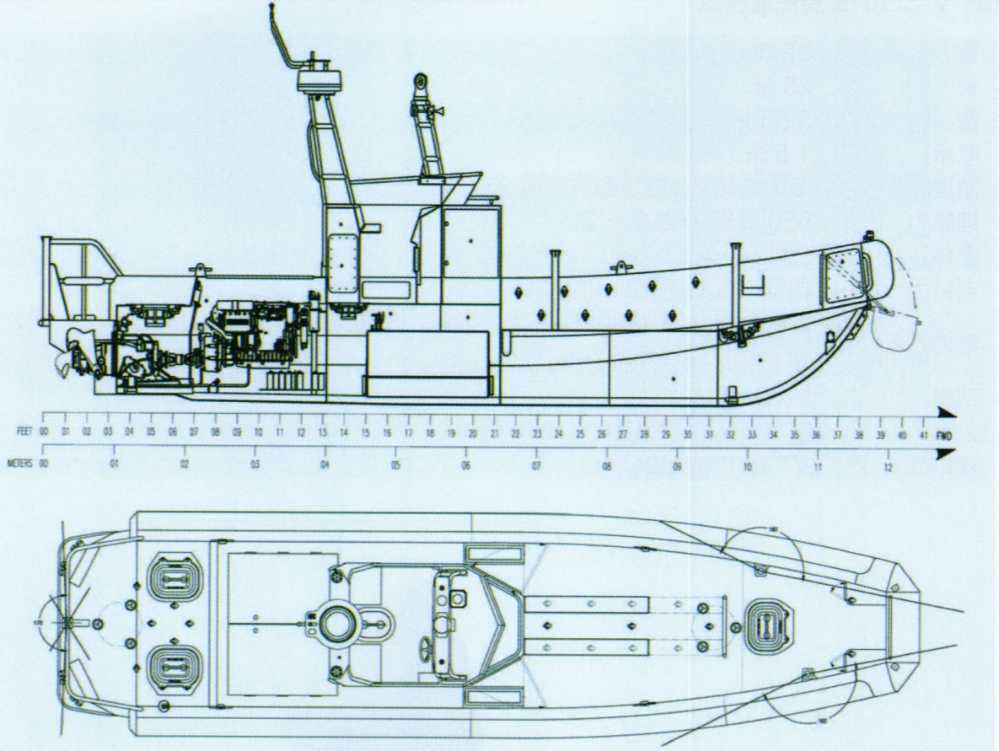
It can be transported by C-130, C-17, C-5 and other transport aircraft, or by helicopters such as CH-53E, or by ship or trailer.
The hull is built by International Safety Boat Company, which is also a partner of the famous arms giant Raytheon, and the system integration is completed by the latter’s Naval Maritime Integrated Systems Department. The production exceeds 100 ships, and it is also provided to the allies of the United States. For example, in 2013, some SURCs were handed over to the Philippine Marine Corps for use.
Swedish origin: 52-foot River Command Boat (RCB)
This is the protagonist, the River Command Boat, which was detained by Iran in the Persian Gulf in January 2016. It is actually a Swedish CB-90H speedboat produced under license by the United States.
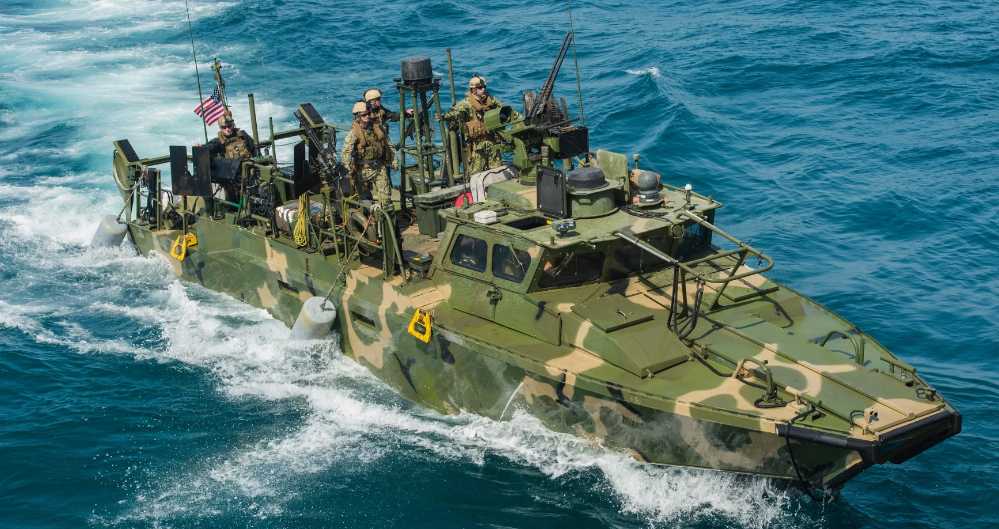
Sweden is not a big country, but its ship technology is very powerful, especially in various small ships for special purposes. The CB-90H was designed and built by the Swedish Dockstavarvet company in the 20th century to replace the Swedish Navy’s old Tpbs 200 attack boats. 90 represents its service years, and Japan means that it can carry half a platoon of combatants. In the 1990s, it received an order for 120 ships from the Swedish Navy. Later, with its unique design and excellent performance, it received orders from more than 20 countries including Denmark, Norway, Germany, Greece, Malaysia, Russia, the United Arab Emirates, the United Kingdom, Vietnam, Thailand, Brazil, etc.
In July 2007, after careful comparison, the US Navy Expeditionary Force selected the CB-90H as the command boat for the coastal riverine force. However, considering the face problem and the "Buy American Act", it could not import in large quantities, so it designated the International Safety Boat Company in Washington State for authorized production, and the first "clone" prototype cost 2.8 million US dollars.
Compared with the open-top RAB and RPB, as the command boat of the boat team, the RCB is much more advanced in terms of size, comfort and performance.
The all-aluminum alloy hull has a certain light weapon defense capability, high-speed bilge, reverse sheer arc, low profile, shallow draft, and a strengthened bottom. It can forcibly land on the beach without preparation and use the water jet propulsion to push back into the water.
There is a low, fully enclosed cockpit, the interior is very similar to the cockpit style of an aircraft, with 2 comfortable driving seats and 1 foldable seat. Behind the cockpit is a fully enclosed crew cabin that can carry 21 fully armed soldiers or 4.5 tons of cargo, or it can carry communications and command equipment to become a maritime command post. The crew cabin passes through the passage below the cockpit, and there is a single-person-wide corridor and a retractable landing springboard at the bow, which allows members to quickly and concealedly get on and off the boat after a strong beaching. There is also a door at the rear of the crew cabin, which can go up to the upper deck to arrange various weapons or carry supplies and other equipment. The stern is a closed power compartment, where two "Scania" diesel engines drive two water jet propulsion units, allowing the boat to soar to 45 knots, making it the fastest special warfare boat in active service in the US Navy.
Due to its large size, the RCB is equipped with multiple weapon stations, including a circular anti-aircraft machine gun mount on the top of the upper deck, which can fire 360 degrees and carry various light and heavy machine guns, grenade launchers, etc. of the US military. The Swedish version even has twin M2 heavy machine guns, mines, depth charges, "Amos" 120mm mortars and "Hellfire" anti-tank missiles fixed to the bow.
The RCB produced in the United States was launched in 2007. It began to be delivered to the US Navy’s coastal riverine forces in 2010 and began to be deployed in the Western Pacific and Persian Gulf in 2013.
The fragile "Scud": 82-foot MkVSOC special warfare boat
The MkVSOC boat was once a special warfare boat that the US Navy special warfare forces had high hopes for. It is more than twice as large as other riverine special warfare boats, and its seaworthiness and self-sustaining ability in the near sea are much stronger. It is mainly used as a mother boat, carrying the "Seal" commandos and their inflatable rubber boats, and conducting medium-distance infiltration and evacuation operations in medium-to-low threat environments; it can also be used to support the operations of other small boats in coastal areas, and perform limited coastal patrols and blockades in medium-to-low threat environments.
Mk v SOC attempts to replace all previous "Seal" infiltration mother boats, taking into account both high speed (its speed is up to 50 The design of the special warfare boat is based on the characteristics of the ship, which is the fastest special warfare boat at present, but it also lays the root of the problem), long range, good seaworthiness, fire suppression and survivability under medium threat, and can accommodate multiple special warfare members and their equipment. At the same time, the weight and size must be strictly controlled to meet the carrying requirements of the C-5 transport aircraft. The initial design included three options: Kevlar composite monohull, aluminum alloy monohull, and aluminum alloy catamaran. The aluminum alloy monohull was finally selected. In order to be suitable for the infiltration and evacuation of special warfare forces, this type of boat adopts a certain stealth design, such as angled planes and low shapes to reduce radar echoes and make it difficult to detect; the V-shaped bottom improves seaworthiness; shallow draft, only 1.2 meters at low speed; using two MTU diesel engines, powerful, reliable and safe; using K50S water jet propulsion device, maneuverable and flexible, strong resistance to water objects and destructiveness, and the wake is not obvious.
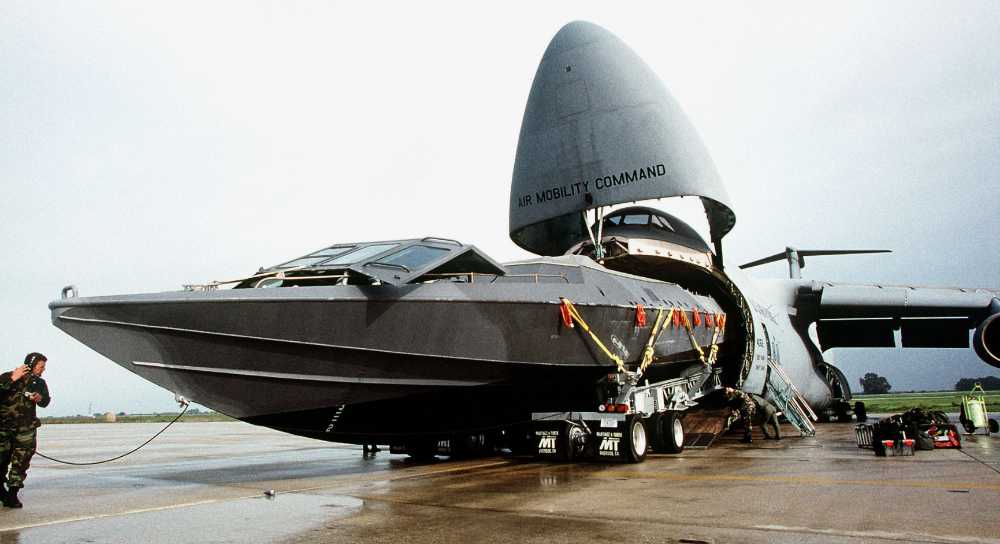
The original builder was VT Holt Ship Company in Mississippi, which put the Mk y SOC into production in just 18 months of research and development. Since 1995, the first batch of 20 ships has been delivered at a unit price of US$3.7 million.
After the first batch was put into use, a series of problems were exposed: first, the structural damage caused by the impact of waves. After sailing at sea, the repeated impact of waves will cause fatigue damage to the cockpit windshield and even the entire cab. Improvements were made later; second, the turbulence caused by high-speed sailing will cause damage to the crew. In training and operations, it was found that the aluminum alloy hull is rigid and will transmit more wave impact energy to the crew than the composite hull. Even after the vibration reduction design, the speedboat can still generate a 20g impact when sailing on the waves. It should be noted that the gravity acceleration limit that fighter pilots can withstand is only 9g, and the wave impact is continuous. These impacts will cause a lot of injuries to the crew, including ankle sprains, broken teeth, back and neck injuries, etc. In particular, special forces need to ride on speedboats for several hours. Even if they are not injured, the long-term bumps will make them exhausted, not to mention combat. Therefore, modular cushioning and vibration-reducing seats were added to all members, which became the standard configuration of the US military’s high-speed boats later.
In order to fundamentally solve the problem, the US Navy carried out a redesign. On January 11, 2008, the US Navy demonstrated a new version of the Mk y SOC, named Mk V.1. The main improvement is to minimize the damage and discomfort caused by wave impact to the crew. A carbon fiber hull was used, nicknamed MAKO, and then a series of tests began. The MAKO boat was designed by Maine Marine Manufacturing Co., Ltd. The hull is made of multi-layer carbon fiber, foam filling, and the exterior is reinforced with Kevlar material. The overall weight is lighter than the original Mk V. The improved Mk V SOC boat can carry 16 fully armed "Seal" team members, each with a comfortable vibration-reducing seat.
The wide hull deck can carry four 16-foot CRRC inflatable rubber boats and six inflatable boat engines, two of which are in a disassembled state as backup. The stern of the boat adopts a slide design, which allows the "SEAL" team to quickly release and recover the CRRC inflatable boat, which is very suitable for infiltration and evacuation missions. Later, there were even attempts to take off and land the "Scan Eagle fixed-wing drone" on the rear deck, providing various guarantees and support for the "SEALs,
The Mk V SOC boat has five weapon stations supporting M2 heavy machine guns, M240 light machine guns, and Mk 19 automatic grenade launchers, which can provide 360° firepower coverage; there are also "Stinger" portable air defense missile launch positions; support for GAU-17 multi-barrel machine guns was added later, and even Mk 95 twin-mounted heavy machine guns, Mk 38 or Mk48 25mm machine guns can be installed. In addition, this type of boat also has radar, infrared optoelectronics and advanced navigation and communication systems.
In use, two MkySOC boats are organized into a special operations support boat team as a basic combat unit, including: 2 Mk V SOC special operations boats, each equipped with 5 SWCC special operations boat crews; 2 M916A1E1 trucks and speedboat trailers for land mobility; 4 M1097 Hummers equipped with S250 bulletproof components for other personnel; 2 M1083 5-ton trucks for carrying 90 days of logistical supplies; 1 5-ton forklift for material loading and unloading; 1 8-person maintenance support team to provide technical and maintenance support during the mission.
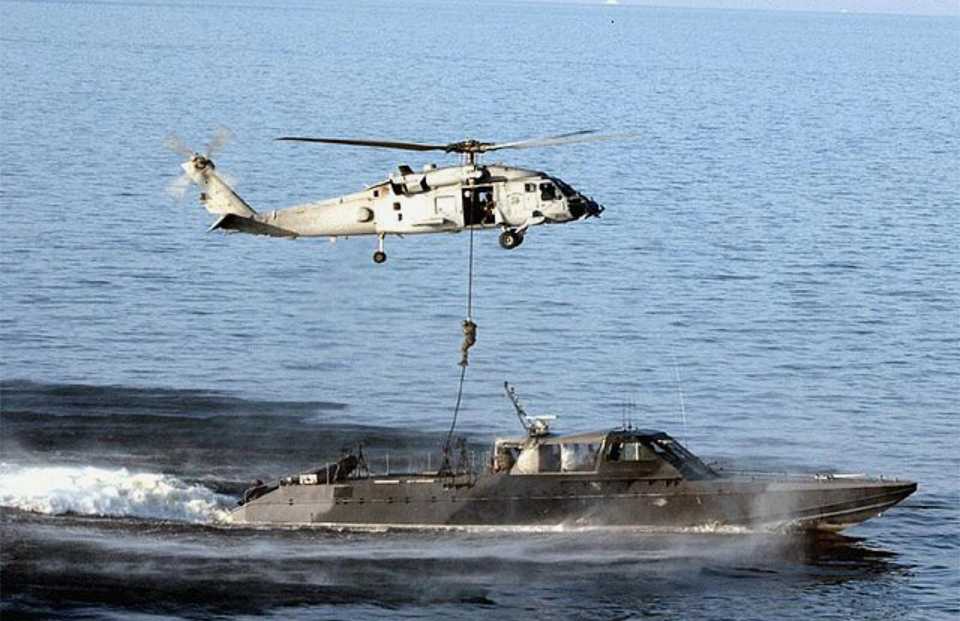
Such a special operations support boat team can be airlifted and deployed to all parts of the world by two C-5 transport aircraft within 48 hours, and can be put into use within 24 hours after arrival; it can also be transported by sea or by road by other large ships, or even by its own power.
Navy Special Warfare Group 3 was once equipped with 12 boats, headquartered in Coronado, California; Navy Special Warfare Group 4 once had 8 boats headquartered in Little Creek, Virginia, and made a high-profile appearance in the battle of chasing yachts at sea in the movie "Act of Valor".
But the structural weakness of the Mk v SOC in pursuit of C-5 air transport capability has always existed, and finally all of them were retired in 2013, and the 963rd one is preserved in the U.S. Navy "SEAL" Force (UDT-SEAL) Museum in Fort Pierce, Florida. Its mission is replaced by the more sturdy 85-foot Mk VI CCB boat.