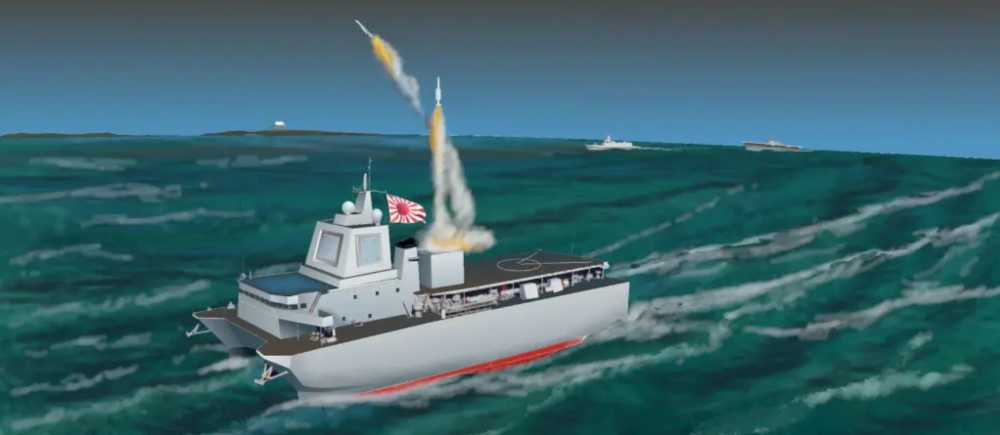

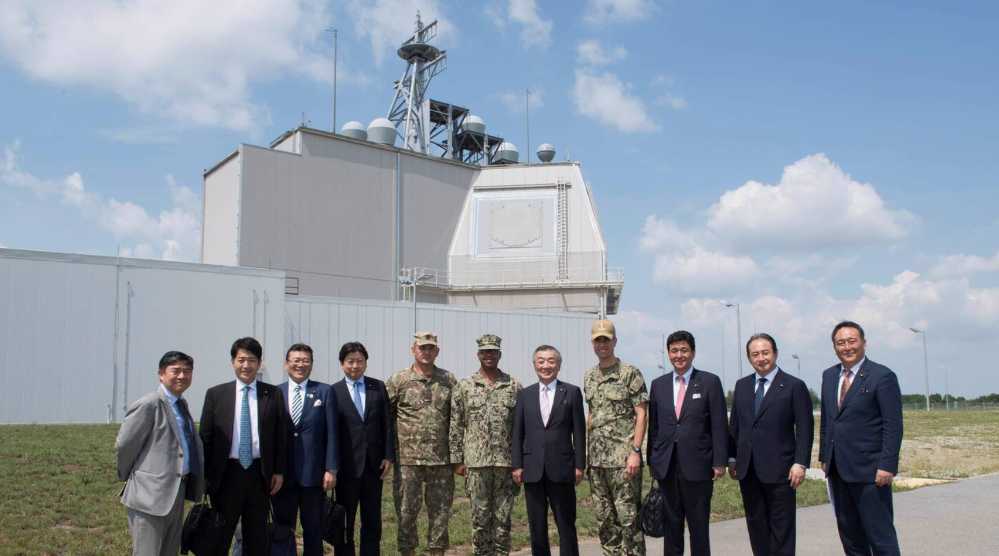
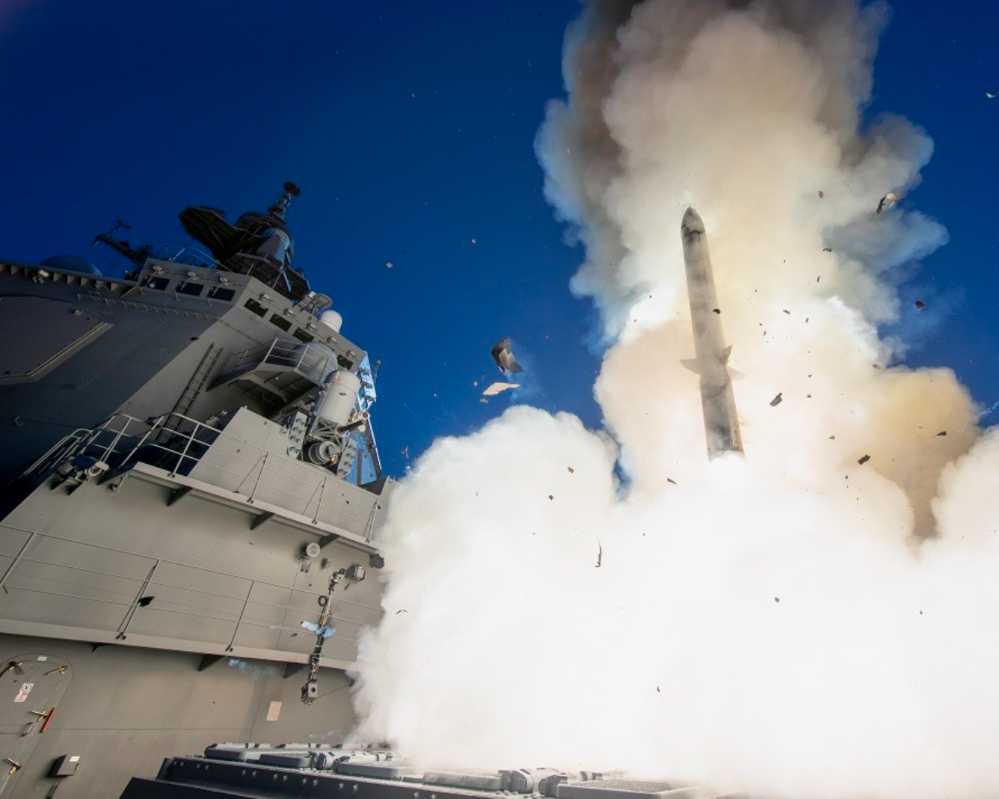
Located in the "Outer Crescent Zone", Japan, influenced by the dual confrontation thinking of land and sea, often shows sensitivity and vigilance towards the East Asian continent. On November 21, 2022, the official social media of the Maritime Staff Office of the Japanese Ministry of Defense released an intriguing message: With the joint support of the U.S. Missile Defense Agency and the U.S. Navy, the Maya-class destroyers "Maya (DDG-179) and "Haguro" (DDG-180) successfully completed the "7th Flight Test Mission" (Japan Flight Test Mission-7, JFTM-7) at the U.S. Navy Pacific Missile Range in the waters around Kauai, the northernmost island of the Hawaiian Islands, from November 16 to 19 local time. The test subjects included medium-range and short-range ballistic missile interception, cruise missile interception, and coordinated anti-missile. Unlike before, the interim results of this test are quite eye-catching: the two ships launched "Standard" 2 Block ⅢA and Standard" 3 Block Ⅱ respectively. B. The three types of Standard 3 Block ⅡA missiles successfully responded to three types of targets; the Standard 3 Block ⅡA, Aegis Baseline 9C2 and BMD5.1, in which Japan was deeply involved, conducted their first live-fire operations; and the two Aegis ships coordinated to complete complex multi-target anti-missile missions. In terms of building anti-missile capabilities, Japan’s enthusiasm is probably second only to that of the United States. This is not only reflected in its in-depth cooperation with the United States in related system and platform technologies, but also in its independent plans based on its own strategic judgments, including the so-called "missile defense ship" project revealed in August 2022.
Sudden whim?
Missile defense ships are with the On August 31, 2022, the Japanese Defense Agency released the 2023 defense budget. It was not long ago. The source of demand was the emergency plan temporarily launched by the Ministry of Defense after the cancellation of the land-based "Aegis! The system was cancelled. The first ship is planned to be delivered in 2027: such a large and complex surface ship engineering project will be completed in just 5 years. It feels that this plan is somewhat "suddenly imaginative".
Is it really like this? The earliest related concept proposed by Japan can be traced back to the missile defense-related documents passed at the cabinet meeting in December 2020, which mentioned that "as an alternative to the land-based missile interception system ’Land-based Aegis’ plan, two new ’Aegis’ ships will be built." That is to say, before it was officially clarified, the demonstration work of the missile defense ship had been carried out for at least nearly 2 years, and at least 2 stages had been planned.
In August 2021, the Ministry of Defense included the funds for the "Aegis-carrying ship" demonstration project in the 2022 defense budget, and signed demonstration contracts with three companies including Mitsubishi Heavy Industries: the demonstration period is from April 2022 to March 2023, when the Ministry of Defense will screen the preliminary demonstration plans formed by each company. This shows that the preliminary demand demonstration carried out by the Self-Defense Forces in the early stage has been completed, and the conditions for proposing technical requirements to the industrial sector have been met. Some of the information revealed in 2022 should be part of the results of the previous stage.
To sum up, the main tasks of missile defense ships include:
Cancel the situation that the existing 8 "Aegis" ships must perform ballistic missile defense tasks exclusively, and strengthen their ability to prevent maritime invasion in the southwest region;
Can perform saturation anti-missile tasks (50~100 batches), with the ability to detect and intercept long-range (mid-course), medium-range (mid-course), short-range (terminal) ballistic missiles and cruise missiles, and hypersonic ammunition;
Can perform tasks to strike enemy bases, with the ability to launch 12-type extended-range anti-ship missiles and future hypersonic surface attack ammunition;
Can perform drone attack tasks, with the ability to carry attack drones.
Of course, the effect of this argument is really confusing.
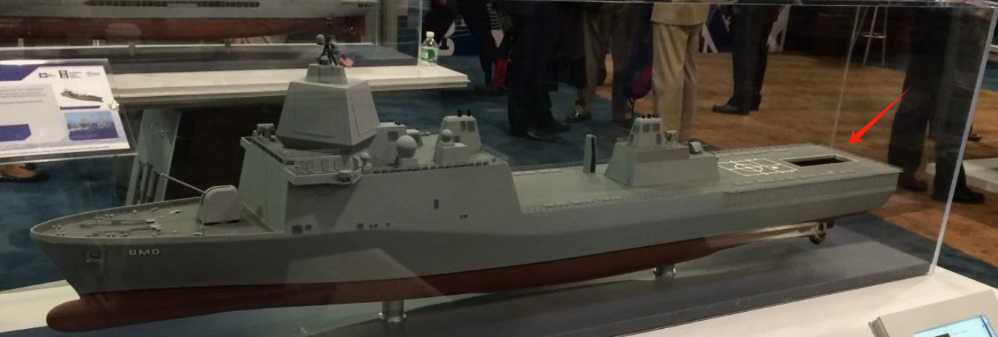
The Ministry of Defense estimates that the preliminary size data of this type of ship is less than 210 meters in total length, less than 40 meters in width, and a standard displacement of about 20,000 tons. The author roughly estimated what kind of ship type has a length-to-width ratio of only 5.25--a catamaran? A small waterline catamaran? There are really renderings of this form, but the "Aki" acoustic measurement ship commissioned by the Maritime Self-Defense Force in March 2021 has a total length of 67 meters, a beam of 29.9 meters, and a standard displacement of only 2,900 tons. The world’s largest small waterline catamaran "Beidiao 996" designed and built by my country has a displacement of only 6,000 tons. In addition to solving the structural problems of key parts such as the connecting bridge, a 20,000-ton catamaran also has a question mark as to whether the relatively small payload can meet combat requirements.
Large-scale monohull? It seems more reasonable, and the renderings of this form have also appeared. It adopts a rearward-inclined wave-piercing ship with good radar stealth characteristics and a simple integrated superstructure. However, after further observation, it is found that the superstructure of this scheme is a bit too "developed" relative to the positioning of this type of ship. The power part occupies most of the space, so that the vertical launch unit for launching interceptor missiles can only be arranged on the front deck, and its number is inconsistent with the positioning of responding to saturated anti-missile missions.
With Japan’s usual rigorous style, it is unlikely to be so casual. If the matching progress of the AN/SPY-7 active phased array radar is not taken into account, the missile defense ship will have at most more than 2 years of design and development time. Such a vague state can only be understood as a "smoke bomb" strategy to cover the main technical route from external interference.
Piece by piece
Low-key is often important. Since it is a "smokescreen", the actual status is unlikely to be made public. This also explains why there has not been much news about missile defense ships in recent months. We can only use "piecemeal" methods to sort out some information.
How is the missile defense ship positioned? Readers who pay attention to the Maritime Self-Defense Force must have experienced the process from envy to comparison in the past 20 years, just like the author. For a long time, the equipment strength of the Maritime Self-Defense Force has remained at the forefront of the world, especially with the maritime integrated air defense and anti-missile system composed of 8 "Aegis destroyers" as the core. After the completion of JFTM-7 in November 2022, it means that Japan already has 8 large combat ships with anti-missile capabilities (each ship has different interception capabilities). Why should we develop missile defense ships again?
The final determination of the missile defense "ship has gone through a multi-faceted consideration process.
On the surface, the land-based "Aegis" system was cancelled due to public opposition. In essence, Japan’s strategic anxiety about "major threats" such as "transfer, proliferation and performance improvement of weapons of mass destruction and ballistic missiles as carriers" (2013 Japan National Security Council) has been further escalated. With the continuous upgrading of long-range strike weapon technology in the surrounding areas and the acceleration of the "national defense army" process of the Self-Defense Forces, the difficulty and intensity of the tasks faced by the Japanese defense system are no longer the same as when Japan started missile defense construction in 1998. The two Aegis ships configured in each of the four escort groups need to undertake multiple battlefield tasks such as fleet regional air defense and anti-missile at the same time. Due to the performance of the existing AN/SPY-1 radar system and the payload, energy and firepower sustainability of the ship platform, once entering actual combat, it is difficult to balance various tasks, especially the anti-missile mission, which will take up a lot of effective combat time, which is similar to the situation encountered by the Korean KDX-Ш destroyer. Therefore, using dedicated anti-missile ships to liberate the main warships can cope with greater threats. Another saying is that the Japanese side has signed a contract with Lockheed Martin to purchase two sets of ANSPY-7 radar systems. It is very troublesome to cancel the order in domestic and foreign procedures, so it decided to change to sea use.
Another factor is the concern about the survivability of fixed anti-missile facilities. Under the threat of hypersonic ammunition and long-range multi-path strike weapons, the land-based Aegis system may become the first target. Changing to a mobile platform is obviously also a choice to escalate the "anxiety" of threats, and the public opposition problem may just happen to be an external reason. From public information, we can see that in the first phase of the Ministry of Defense’s re-examination, three alternatives were compared: full system installation (even a barge plan), launch (on the ship) + detection (on land) separate installation, and "Aegis" ship upgrade. Finally, the full system installation plan with the best comprehensive combat effectiveness was selected, that is, the current missile defense ship plan.
In addition, this project is also a "stepping stone" to break through the principle of "exclusive defense". The task of attacking enemy bases was first proposed in the ship mission of the Maritime Self-Defense Force. Whether it is a practical long-range cruise missile or a drone, the missile defense ship can no longer be defined as a "self-defense" ship.
Full-time anti-missile, mobile survival, counterattack deterrence, combining these three elements, it can be said that Japan’s "missile defense ship" is inevitable, and her positioning is clear. So how will she use it?
The Eye Beyond the Shield
Starting in 1954, based on the need to defend against Soviet aviation, the U.S. military built a multi-point surveillance radar system along the narrow and long territory of Japan to the northeast. After the Air Self-Defense Force took over, it was called the Aviation Warning and Control Force and gradually replaced it with domestic equipment. After the missile defense project was launched, the Air Self-Defense Force, while further strengthening the construction of the radar warning system, gradually introduced and deployed the terminal anti-missile interception system based on the Patriot 3, and gradually formed the current cross-service "Japan Aerospace Defense Ground Environment System (JADE)" as the command center node, extending from Hokkaido to the southernmost Yaeyama Islands.
Among them, the aviation warning and control force has 4 regiments and a total of 28 radar stations. There are 5 types of radars deployed: J/FPS-2 (successively replaced by J/FPS-7), J/FPS-3 modified, J/FPS-4, J/FPS-5, and J/FPS-7. The anti-missile monitoring radars are mainly J/FPS-5 (ballistic missile takeoff warning) and J/FPS-3 Modified (ballistic missile tracking). The land-based terminal missile defense system consists of 16 sets (124 missiles) of Patriot 3 air defense missile systems (32 imported from the United States and 92 produced by Mitsubishi Heavy Industries of Japan) deployed at 11 bases, including Iruma Base in Saitama Prefecture, Narashitake Base in Chiba Prefecture, Takeyama Base in Kanagawa Prefecture, Kasumigaura Base in Ibaraki Prefecture, Hamamatsu Base in Shizuoka Prefecture, Gifu Base in Gifu Prefecture, Enniwano Base in Shiga Prefecture, Hakusan Base in Mie Prefecture, and Tsuki Base, Ashiya Base, and Koradai Base in Fukuoka Prefecture. It mainly defends key targets such as the metropolitan area around Tokyo, other large cities, and nuclear power plants. In the future, Patriot 3 missiles may also be deployed at the Naha Base in Okinawa. In addition, the Terminal High Altitude Area Defense (THAAD) system deployed by the US military in Japan in Aomori Prefecture and Kyoto in 2017 is responsible for interception in the high altitude and outside the atmosphere, and is also part of Japan’s land-based anti-missile defense system.
The core of the command and control system is the "Japan Aerospace Defense Ground Environment" system developed on the basis of the Air Self-Defense Force’s "Base Air Defense Ground Environment" (BADGE) automatic warning and control system. The system is mainly composed of the Air Self-Defense Force Command System and the Tactical Data Exchange System. It can directly receive information from the Joint Tactical Ground Station and transmit it to the Aegis and Patriot 3 missile defense systems. It is the "brain" of Japan’s current anti-missile defense system.
The basic coverage of the national territory, the basic four-dimensional space means of sea, land, air and space (quasi-zenith satellite early warning), Japan’s missile defense shield woven on the mainland has added two more missile defense ships, indicating that its missile defense construction is extending beyond the mainland, seeking independent and complete strategic deterrence, and making the two ships the "eyes outside the shield" of the missile defense system. Japan uses mobile platforms to carry out missile defense tasks, which can not only flexibly supplement possible loopholes, but also expand the depth of forward warning defense in a timely manner. This is similar to the idea of missile defense ships proposed by the US Navy.
Speculation
After roughly understanding the positioning of Japan’s missile defense ships, it is worthwhile to speculate on its plan based on existing information
Basic configuration system
AN/SPY-7 radar + matching "Aegis" system, Mk 41 universal vertical launch system, UAV system.
Unlike Canada and Spain, the AN/SPY-7 radar ordered by Japan should be a fully functional model, and its array size should be close to the 20-foot (6.096-meter) specification of the AN/SPY-6 radar expected to be equipped on the US Navy’s ballistic missile defense ship (BMD LPD). Considering a certain installation margin, the installation size of a single array is about 6.7x4.27 meters. Since the scale space of this ship is relatively sufficient, in order to ensure the detection range and reaction speed, a four-sided array is installed at an angle, and each array is mainly responsible for the 90° azimuth space.
Mk41 universal vertical launch quantity is configured according to the interception limit of 100 batches and the number of "2 interception 1", and the cruise missile unit is configured according to the number of "1 hit" of the 12-type or "Tomahawk" cruise missiles launched in counterattack operations. At least 300 units. If three groups of vertical launch are arranged on the front deck, each with 96 units, there is still room for expansion.
In terms of helicopters or drones, referring to the concept image of missile defense ships on the Internet, this type of ship seems to be equipped with tilt-rotor aircraft such as CV-22B "Osprey" for regular rotation and transportation of personnel and materials, so a relatively large take-off and landing deck is reserved, and the hangar can store SH-60J/K helicopters and large unmanned helicopters that may appear in the future.
Ship type layout
Since this type of ship does not need to follow the fleet to directly perform combat missions, it can refer to the layout of the US ballistic missile defense ship or choose a suitable medium and low-speed ship type. However, the LPD ship type is not conducive to the arrangement of a sufficient number of vertical launch units, so it can be considered to be similar to the French BRF type integrated supply ship with a vertical bow + drag-reducing bulbous nose bow square tail monohull ship type, with a total length of about 220 meters, and a more suitable type width of about 27 meters, with a draft of about 6.6 meters and an estimated displacement of about 21,900 tons. The superstructure is arranged near the power system area to simplify the power relationship and the layout of the mechanical compartment. The large area of the front deck is used to arrange the weapons, and the rear deck is mainly used as a helicopter/UAV hangar and take-off/launch area.
Power and power system
In order to meet the needs of continuous alert and saturated anti-missile of AN/SPY-7 radar, it is possible to consider configuring a comprehensive power system based on multiple gas turbines (2 units), diesel generator sets (2 units) and medium-voltage distribution networks; it can have sufficient fuel economy and certain maneuverability under the premise of fully guaranteeing power demand. For this reason, the maximum speed can be considered not to exceed 20 knots, and the self-sustaining capacity can be maintained for about 90 days based on the mission mode of the German F-125 frigate, and then two groups of crew members will rotate regularly. If it does not return to the base, it can be regularly replenished and rotated by a comprehensive supply ship or helicopter.
Main weapons and equipment Japan is deeply involved in the "Standard" 3 Block Ⅱ A for mid-course interception, the "Standard" 6 series for terminal interception, and the "Standard" 2 series for terminal interception and air defense. In addition, it is possible to develop cruise missiles or purchase "Tomahawk" cruise missiles. Other speculations Considering that Japan is developing electromagnetic guns and hypersonic missiles, it is also possible to equip these two types of weapons. A large-caliber electromagnetic gun system is installed in the reserved position in front of the vertical launch; it is not clear whether the hypersonic missile is compatible with Mk 41. For the time being, a special launch device is considered, which can be arranged on the front deck or installed on both sides of the flight deck.
Wild ambitions
As the "eye outside the shield" and a mobile rear combat platform, if built, the missile defense ship should be under the command of the "Japan Aerospace Defense Ground Environment" system, and cruise in the waters from Hokkaido to Kyushu for a long time. If necessary, it can also reach the waters near the Yaeyama Islands and even the South China Sea to carry out activities. Its target is no longer limited to the threat of North Korean missiles.
The emergence of missile defense ships indicates that the multi-path design in Japan’s missile defense plan has gone beyond the defense range, and we can see a highly offensive logical coordination. The conjecture in this article can only preliminarily describe its outline, and its progress needs to be tracked later.
Japan has experienced three decades of economic recession. In the early 1990s, it was able to maintain its ambitions for East Asia. But today, the Japan Maritime Self-Defense Force is as sluggish as the Japanese economy. Japan should cheer up. It is of no use relying solely on the Seventh Fleet.