
Reckless actions create a dilemma
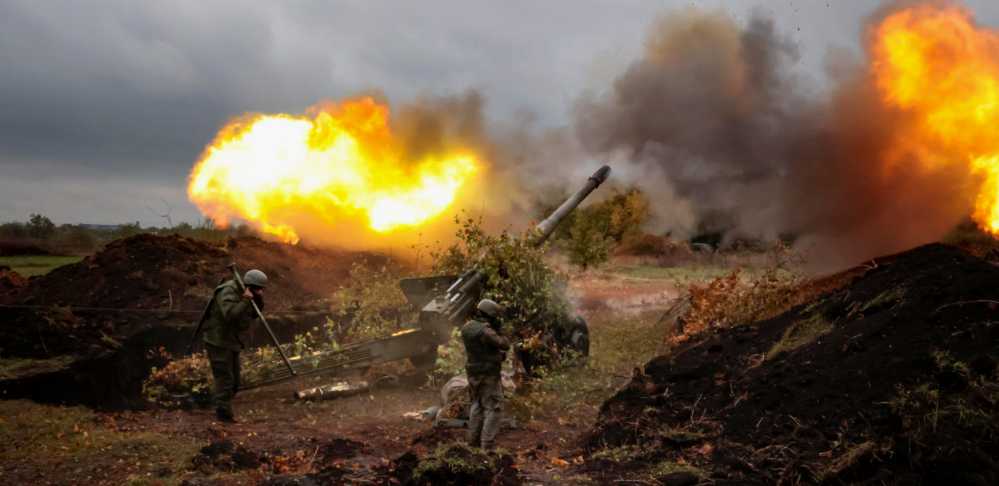
On February 24, 2022, the Russian government hoped to launch a limited-scale special military operation, but this hope was quickly shattered. Its subjective hopes were inconsistent with the actual situation of the objective object. They entered Ukraine, which was firmly resisting with the support of NATO, and ushered in the first total war in the 21st century.
On October 1, Ukraine’s counterattack in the Kharkov region, especially the successful capture of the Red Liman, meant that Russia’s military defeat was superficial, and it became more obvious with the retreat of the Russian army in Kherson. Russia is facing the biggest military crisis since World War II, which has been presented in different forms in the three stages since the war began.
In the early days of the war, the Russian army attempted to seize strategic points and transportation routes in Ukraine from Kiev to the northeast, east, and south with a synthetic tactical group composed of elite airborne troops and contract soldiers, exerting general pressure on all parts of Ukraine to weaken its will to resist, and occupying some territories and nuclear power plants in areas with good communication with local forces in Ukraine. Ukraine’s military reforms and ideological education since 2014 have enhanced the military strength and will to resist the strategic offensive of the whole society, and successfully resisted Russia’s strategic offensive, forcing the Russian army to withdraw from the northern battle direction with Kiev as the core. At this stage, the Russian side failed to achieve the goal of destroying Ukraine’s will to resist, and did not completely open up the situation, and its initial strategic optimal pursuit was broken.
In the subsequent stalemate stage, the Russian side relied on its firepower advantage and achieved certain results in the battles such as the capture of Mariupol, but did not have a clear enough overall strategic goal. It was only satisfied with occupying land to show its "victory", hoping to drag down Ukraine through a certain intensity of attrition war. This "political battle" instead consumed Russia’s elite forces, giving Ukraine time and opportunities to mobilize and receive more Western military aid. During this stage, Russia gained some territory in vain, and its strength declined relatively. Ukraine gained time to accumulate strength and figured out the characteristics of the Russian army’s combat methods.
Ukraine then began to counterattack. After obtaining military aid, supplementary troops trained by the West, and mobilizing a large number of people, Ukraine’s counterattack was relatively successful. Russia lost a large number of personnel, equipment, and a large area of occupied areas, especially the key areas such as Hongliman and Kherson that were previously promoted as results of the war. At this stage, Ukraine formed a source of growth in strength by relying on military mobilization and Western aid. The power comparison between the two sides intersected, and Ukraine began to take the initiative in the war.
Overall, Russia’s military crisis has not changed the comparison of national power between Russia and Ukraine, and the forms of participation of Russia, Ukraine, the United States, Britain and European continental countries in the war have not changed fundamentally. The stalemate of the war is still continuing. The crisis has not yet constituted a change in the entire war, but it has brought widespread impact.
Russia’s military activities in Ukraine, the Fed’s interest rate hikes, and China’s response to the COVID-19 pandemic are the central challenges facing major countries at present. Changes in the war in Ukraine affect the overall situation. In the field of international politics, Ukraine’s advantageous situation has brought rich political benefits to the political forces in the United States and Britain that designed the Ukrainian war, especially in the results of the US mid-term elections in November 2022. The crisis has caused new discussions among political forces that oppose the war and are friendly to Russia, and has a considerable impact on the positions, strategic choices, and internal political forces of various countries.
In the military field, countries are eager to study Ukraine’s success or failure in national defense mobilization and the use of advanced equipment and information resources in military assistance. Military orders in the United Kingdom, the United States, and many countries on the European continent have increased rapidly, and the status of the military in contemporary political themes has risen significantly.
The crisis has had a major impact on Russia’s domestic politics. Russia’s military-based superstructure has been shaken, the Putin government’s strategic choice space has been greatly reduced, and the power distribution of politicians and the military armed personnel have undergone structural reorganization. These influences are very important for the future of the Russian-Ukrainian conflict and even the entire world pattern, because Russia is still the party with more potential in the war and is a real great power. Its victory, defeat, survival and extinction have broad world significance. Whether Russia’s potential can be converted into available strength under the mobilization of the superstructure is a key suspense. Therefore, analyzing Russia’s military foundation and superstructure is an important task that cannot be avoided.
Russian military foundation and military superstructure
Russia’s military crisis exposes a series of problems in its military foundation and superstructure.
A real society must have its economic foundation, and the economic foundation will inevitably derive the social ideology built on it and the corresponding political and legal system and facilities. Superstructure. Under the support of the economic foundation, major social needs such as military, epidemic, and anti-crisis will lead to the expansion of special social activities. The society facing military challenges or even war will therefore give birth to a corresponding military foundation, which is realized through the military superstructure composed of relevant military ideology, systems, facilities, etc.
Observing Russia’s political and economic foundation, military foundation and military superstructure, we can find deep contradictions in its military and even society, which are all in the blind spot of mainstream analysis.
The political and economic status of the Putin government and its current contradictions
Before the outbreak of the Russian-Ukrainian conflict, the author analyzed the dilemma of Russia having to go to war with Ukraine after losing its strategic freedom, and pointed out that Putin is actually a conservative nationalist.
Why is Putin both conservative and nationalist? Behind this position is the political and economic status of Putin and his supporters.
Many scholars who study Russian politics often talk about the fact that Putin became Yeltsin’s designated successor because he was trusted and recommended by St. Petersburg Mayor Sobchak, and then regard Putin as a miracle of "crow turning into phoenix" who rose to fame without any foundation. Putin’s career began when he joined the KGB in 1978: This has led other researchers to focus on his legendary and mysterious career, believing that he relied on the support of the Soviet intelligence system to gain power. These erroneous conclusions cannot point out the mystery of Putin’s power source and position.
The Soviet Union itself was an industrial-centered country until the 1960s. Since the Helsinki Agreement in 1975 and the formation of a stable energy trade relationship with the West, the Soviet Union and later Russia have continued to transform into a post-industrial resource country, realizing their own reform and opening up, and international oil and gas trade has become the mainstay of the Soviet Union/Russia. On the other hand, using the foreign exchange obtained from international trade in oil and gas, international smuggling trade and domestic black market trade outside the official Soviet system have developed greatly, and a group of economic groups and new rich people with power or unique channels have emerged. They operate arms, automobiles, steel, cement, light industrial products, etc., and use the price differences and product differences between the Soviet/Russian economy and the Western economy to arbitrage. This economic structure remained highly stable between 1975 and 2022, and it was not shaken even after the disintegration of the Soviet Union.
Putin caught the trend and became a member of this kind of economic group. After joining the KGB in 1978, he became a local "long-sleeved and good at dancing" figure in Leningrad (St. Petersburg). Because of his extensive network of contacts, he was sent to work in East Germany from 1985 to 1990. This was an important position for the KGB to use its own power to exchange interests with the West, and not everyone could be selected. Before the collapse of the Soviet Union, Putin returned to St. Petersburg to join the team of liberal Sobchak, which was not purely accidental. Yeltsin’s trust in him was undoubtedly closely related to his background.
Putin has never left this group. His "conservatism" is the conservatism of protecting the economic structure since 1975, and the conservatism of liberalism and maintaining power. In his ruling process since 1999, Putin’s domestic economic policy has been extremely dependent on European technical resources, capital and markets. People around Putin are often exposed to hold a large number of European assets and have companies and business activities in Europe. Because of this, he always has considerable reservations about the toughness of the West. The second-in-command politicians he appointed, Kasyanov and Medvedev, are both very liberal.
Putin has to implement a nationalist line. This involves the military and colonialist economic group that has been formed in Russia since the Tsarist Russia. This group is based on Russian territory and has established its own strength by trading in the territory and sphere of influence of the Tsarist Russia. The "socialism in one country" system established by Stalin is to a certain extent connected to this economic group. The current main composition of this group is the group based on the development of local oil and gas and the agricultural economy: it has an important influence on Russia. Putin has to win the support of this group. On the other hand, he was born in a military family and was deeply influenced by the patriotic education of the Soviet Union for many years. We should also see that during the period of the disintegration of the Soviet Union, the West betrayed a series of agreements, did not provide the promised economic assistance and security guarantees for Russia’s transformation, incorporated Central and Eastern European countries into NATO and promoted the color revolution in the CIS region, which greatly hurt Russia’s strategic interests and national sentiments. Because of this, nationalism has become an important issue in Russian politics, and Putin’s nationalist behavior is an important way to gain public support.
Conservative nationalism is in a passive defensive position in the face of Western geopolitical offensives, which has caused public dissatisfaction and stimulated the development of radical nationalism. Putin and other politicians had to cater to the claims of radical nationalism to a certain extent, and finally the Crimea incident occurred in 2014, which led to a fundamental change in its relationship with the West.
This change accelerated the confrontation between Putin and his supporters’ conservative and nationalist tendencies, and intensified the conflict after the war with Ukraine in February 2022. It is no longer possible for Russia and the West to operate in the mode arranged since 1975, especially the explosion of the Nord Stream pipeline in late September 2022 further shattered the remaining illusions. The balance of power in Russia is undergoing a major change. Russian liberal representatives may be silenced when they go abroad, and conservatives have suffered a heavy blow. A considerable part of Russia’s trade with the West has begun to return to the smuggling and gray state of the peak of the Cold War, and the corresponding trade groups have to transform. In this process, nationalist economic groups have received government subsidies and have relatively stable market channels, which reflects their adaptability. The gap in interests between the two sides has widened, and Putin’s difficulty in governing has greatly increased, but there is not enough support for deep reforms, and he can only let the economic situation continue to deteriorate. There is currently no prospect of peacefully suspending this contradiction. The development of the contradiction will inevitably lead to further deterioration of the economy and may lead to regime change.
Russia’s military foundation
The main military foundation that the Russian government relies on is the Russian Federation Armed Forces inherited from the Yeltsin government, especially the Taman Division, which participated in Yeltsin’s counterattack against the Emergency Committee and the "bombardment of the White House" and other events, and is controlled by liberal military talents who abandoned the Soviet system and surrendered to Yeltsin. In a series of struggles against the Soviet system, they used politicians as intermediaries and were bribed by smuggling groups to achieve integration with the economic base and the regime. This also brought about the system and culture of the Russian government relying on bribery to maintain the loyalty of the army and the operation of the army in corruption in recent decades.
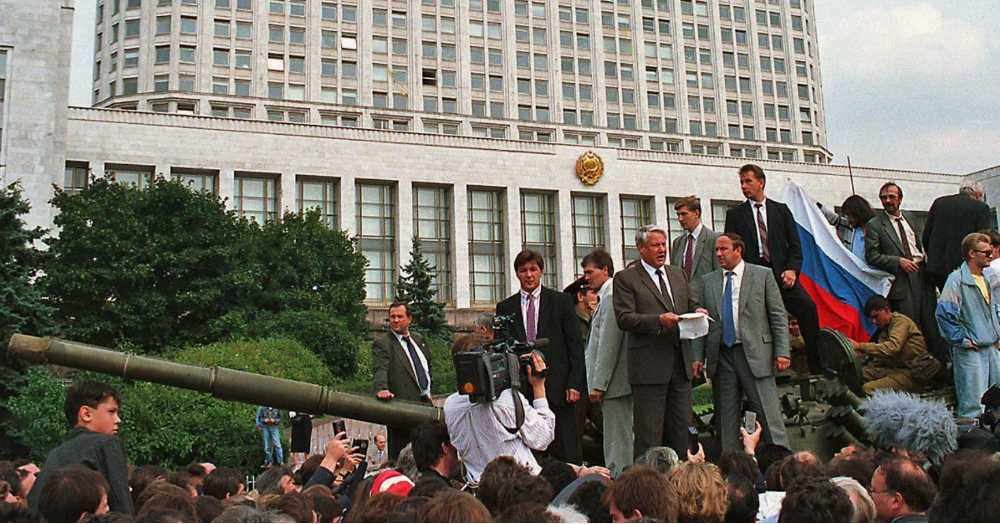
The economic groups focusing on the local area are also integrated with the Russian army. The army and security forces responsible for protecting the oil fields have close relations with the oil and gas groups and have their own positions. Chernomyrdin, who served as prime minister for a long time during Yeltsin’s rule, is a representative of this military-economic group. Politicians from the Tyumen and Siberia regions, who have risen in Russian politics, have actively supported the expeditionary troops stationed there in this war.
After the collapse of the Soviet Union, the social status of soldiers continued to decline, their treatment was difficult to improve, and the supply of weapons and military supplies was unsatisfactory. A group of officers who cherished the Soviet Union were born in the Russian army, which echoed the ideology of Russian society’s nostalgia for the Soviet Union. In this Russian-Ukrainian conflict, some troops raised the flag of the Soviet era, which was related to this trend of thought.
Radical nationalists have a great influence in the army, especially in the troops stationed in the conflict zone. General Lebed (who participated in the Afghan War and stood on Yeltsin’s side in the "August 19" incident. In 2002, he died in a helicopter crash after vowing to compete with Putin for the presidency) fought in the Dniester River region of Moldova in 1992. The experience aroused the depressed national sentiment after the collapse of the Soviet Union. Many famous radical nationalists, including Strelkov, were soldiers who followed Lebed.
The above four forces within the Russian military are currently under the unified leadership of the government. They are all subject to different degrees to Russia’s political and economic situation and the institutional culture of the Russian military. We will see later that under the pressure of the military crisis, the relationship between the parties has deteriorated.
At the same time, the military personnel are divided into contract soldiers with certain military experience and conscripted soldiers during the reform. Only contract soldiers have the legal right to go abroad to fight. The difference in status between the two constitutes a certain micro-contradiction
The relationship between the Russian military and the Russian military-industrial complex is helpless. Russia is a post-industrial country with backward technology and insufficient scale. Its military industry has plummeted since the disintegration of the Soviet Union, and most of it is owned and managed by the state. Its military-industrial complex is relatively weak among major powers, but due to the inertia of the Soviet system, interest hijacking and nationalism, the Russian army has to rely mainly on this complex to obtain equipment. This unsmooth relationship is particularly reflected in the fact that when the Russian army urgently needs equipment, weapons and ammunition during the war, the military-industrial complex cannot meet this demand, and when the Russian army hopes to import equipment from China and other countries, the Russian military-industrial complex will express great dissatisfaction.
When you jump out of the mainstream academic perspective, you can understand that the army and the state-owned military industry are not the entire military foundation of Russia.
The Caucasus ethnic minority areas represented by the Chechen armed forces under Kadyrov have many military organizations. Some of these armed forces exist in the form of official troops of the local republic, and some are completely civilian groups. Putin won their support in the Second Chechen War. These military armed forces are not comprehensive national armies, but they have quite good combat effectiveness and support for Putin personally.
Putin relies on the Wagner Group as his grip on the front line of the war. Founded in 2014, the "Russian Wagner Group" was established by Russian oligarch Yevgeny Pugozhin and former Russian Army Lieutenant Colonel Dmitry Utkin. During the Syrian war, they organized some veterans with combat experience to complete Russian tasks. This force basically does not obey the orders of the Russian Ministry of Defense, but obeys the boss, who is more obedient to Putin.
Radical nationalists, neo-Nazis and other forces have solid organizations in the vast Russian-speaking areas inside and outside Russia through the National Self-Defense Force and other forms. These organizations conduct some military training on a daily basis and have weapons. They have shown amazing potential in a series of events such as the first and second Chechen wars, the Georgian war, and the Armenian and Azerbaijani conflicts. In particular, in 2014, radical nationalists relied on civilian armed forces to become the decisive force in recovering the Crimean Peninsula. This organization has maintained a considerable distance from conservative nationalists and has its own economic existence model and political propositions.
In addition, the militia forces in the Donbas region that joined the Russian military in the Russian-Ukrainian conflict are of special significance. These militias have deep ties with radical nationalists. They have experienced more than eight years of war. In this war, there are only two choices: victory and death. They are the most active promoters of the war and have suffered the largest proportion of casualties.
Contradictions in Russia’s military superstructure There are considerable contradictions between the different forces within the Russian military base, which directly affect the war situation. This contradiction is reflected in the operation of Russia’s military superstructure.
First, the Russian army uses its main position to compete for credit and shirk responsibility, which has become an important factor in the current Russian military operations not being carried out according to military laws.
After the Crimea incident in 2014, the Russian Chief of General Staff Gerasimov was portrayed by the official media as a great hero who applied the new military theory to regain Crimea, completely obliterating the role played by radical nationalists in it. This behavior of calling a deer a horse seriously affected the government’s prestige and had an adverse impact on military reform.
In the preparation and launch phase of this special military operation, the Russian Ministry of Defense and the General Staff completely dominated the operation process, and the radical nationalists who knew the situation in eastern Ukraine best and had a deep mass base were completely excluded. The outbreak of war did not repair the rift between the Putin government, the Russian army and radical nationalism, and the loss of the help of radical nationalists brought great losses. Strelkov’s prescient suggestions on high-level mobilization in advance, concentrating more than one million troops, and clarifying the war goals were not taken seriously. In the first stage of the war, the Russian army entered various regions and obviously did not get the cooperation of local forces.
Since the second stage of the war, the relationship between the Russian army and the Wagner Group, Chechen armed forces, and Donbass militias has not been coordinated. The Russian army assigned a considerable part of the most difficult tasks to other forces, and did not show better combat effectiveness, which widened the contradictions between different armed forces.
Second, with the internal division of Putin’s government in politics and economy, the pro-Western liberal officers have the ability and opportunity to use their military status to influence the development of the war.
At the beginning of the war, the author was puzzled by the fact that the Western Military District troops represented by the Taman Division were entrusted with important tasks. In the communication with colleagues, I mentioned: "The Taman Division is a force that participated in the disintegration of the Soviet Union from top to bottom and has a strong liberal color. How could Putin and the Russian Ministry of Defense send such a force out to perform key tasks?" In the military crisis that began at the end of August, the author’s confusion was partially fulfilled.
We observed: "Before the incident, the Western Military District’s troop deployment in the Kharkov region was extremely weak and empty. In the Balaklia area, there were only two Donetsk militia regiments and new recruits of the National Guard who had just been rotated in. The main forces with strong combat capabilities were all transferred away from the front line or returned to the rear for rest. If it is said that most of the 20th Army, whose headquarters had been near Kupyansk, was transferred to the Izyum area to prepare for a new campaign, it can be understood from a military perspective, but it is difficult to explain from a military perspective that there was basically no main force to defend the Kupyansk-Izyum Grand Passage, which was related to the survival of this battle group. Especially considering Considering that the Ukrainian army had launched counterattacks near Balaklia many times before, trying to threaten the Russian army’s logistics channels, the Western Military District had fought back and forth with it and was very familiar with the relevant situation. During the incident, the Western Military District’s command action did not conform to military logic. The huge battle group of nearly 20,000 people in the Izyum area was in a state of preparation for a new battle. They were well-equipped and had sufficient logistics. Faced with the Ukrainian army, which was obviously inferior in scale and equipment, they collapsed and collapsed in disorder at the first touch, claiming to be "ordered to retreat." On the front line of combat, although the National Guard stationed in Balaklia was not the main force of the regular army, facing the Ukrainian army, which was obviously stronger in number and equipment, they still held on for 3 About a day, and then retreated in a relatively orderly manner with the support of other troops. Compared with the direction of the southern campaign, the troops of the Russian Southern Military District faced the "Kherson Counterattack" commanded by Ukrainian President Zelensky himself. Under the conditions of difficult logistics, insufficient troops and weak equipment, they not only did not collapse, but also annihilated the Ukrainian army’s living forces on a large scale, basically defeating the "Kherson Counterattack". Therefore, it can be considered that the "Kharkov collapse" is not a reflection of the actual military capabilities of the Western Military District troops."
The military interest group with the Taman Division as the core is undoubtedly opposed to the Russian-Ukrainian conflict that damages trade with the West, and tries to safeguard its own interests under the new situation, and does not hesitate to take the initiative to expose flaws to the enemy. The contradictions between the various military districts within the Russian army and between the government and the army provided Ukraine with a good opportunity to counterattack, and the Southern Military District and the Central Military District, which tried to fulfill their military obligations, were also deeply affected. In the end, the front-line commander Lapin was held responsible as a "conservative", but this was only the nutrient for the continued growth of contradictions.
Third, since September 2022, in order to cope with the military crisis and unfavorable situation, Russia has made several changes, each of which shows its intention to deal with internal problems and its inability to solve the stalemate of internal problems.
The first change is regional referendum. On September 20, four regions of Ukraine under the control of the Russian army launched rapid referendums in succession and subsequently joined the Russian Federation, including Luhansk Oblast and Donetsk Oblast in the eastern region, Zaporizhia Oblast in the central region and Kherson Oblast in the southwest. The occupied areas became Russian territory through referendums, allowing Russian conscripts to legally enter and showing Russia’s red line. The two operational goals of demilitarization and de-Nazification of Ukraine announced by the Putin government were also broken at the same time, which actually showed the purpose of competing for territory. The four-state referendum and the recognition of the referendum results by the Russian Duma echoed the demands of radical nationalism and solidified the situation of Russia’s struggle with the West. The effect of blocking the Ukrainian army through legislation is limited and has also aroused national sentiment in Ukraine.
The second change is mobilization. On September 21, the Russian side finally admitted its previous misjudgment and lack of strength. Russian President Putin announced the launch of "partial mobilization" to mobilize about 300,000 reserve troops to the Ukrainian battlefield. This belated decision has been criticized. For example, Strelkov believes that the mobilization force is too low to form a decisive force, and the mobilization method reflects the weakness of the Putin government. Citizens who are closer to the liberals have widely opposed it, and some young and middle-aged people even choose to flee to neighboring countries.
The third change is to establish a deputy commander-in-chief. The Russian Ministry of Defense issued an announcement on October 8 that General Surovikin will serve as the commander-in-chief of Russia’s special military operations. This is an important appointment comparable to Stalin’s appointment of Zhukov as the Supreme Deputy Commander of the Soviet Army. Putin no longer presents himself as a military strongman as in previous propaganda, but instead hands power to the military top brass. It is worth noting that General Surovikin came from the Taman Division during the Soviet period and was one of the key figures in the "August 19" incident. This appointment, to a certain extent, means that Putin not only cannot trace the responsibility for the defeat in Kharkov, but also has to acknowledge the strength and interests of the interest groups in the Western Military District centered on the Taman Division, and hand over the future of this military operation to them.
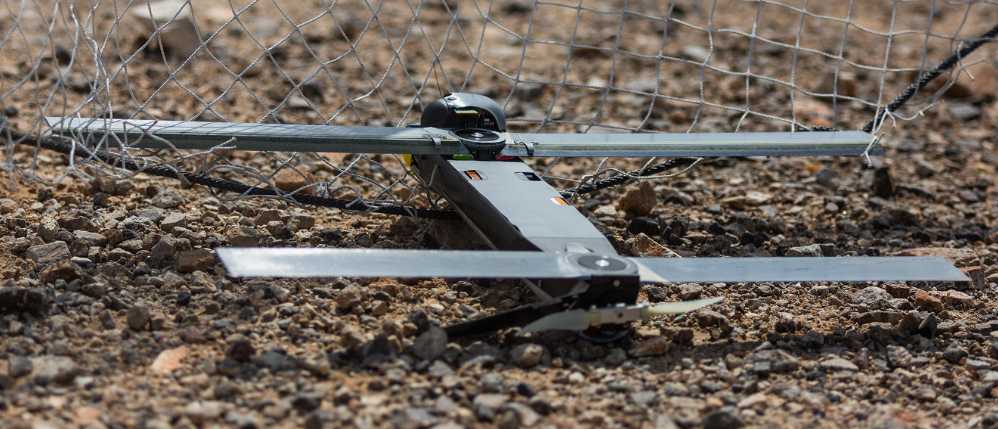
The fourth change is reflected in the strategy. In September, some senior Russian officials and some think tanks issued voices to use nuclear weapons to deal with military crises, but this voice was not entirely for military purposes. Through retrospective review, we can see that some forces want to push Putin to take responsibility for the use of nuclear weapons and thus achieve regime change. Putin adopted a clever strategy and planned to delegate the decision-making power of using nuclear weapons to the Ministry of Defense and the General Staff Headquarters, which made the military bureaucrats dare not take responsibility, put nuclear weapons on the shelf, and prevented the political conspiracy from launching. After the nuclear weapons craze cooled down, Surovikin adopted a new tactic, using air force bombing, missiles and suicide drone strikes to attack Ukraine’s infrastructure, trying to deprive Ukraine of energy and electricity supply, causing industrial shutdowns, and then losing its war potential. In order to achieve a strategic shift, Putin and Surovikin persuaded Russia’s military-industrial complex to import a large number of drones from Iran, introduce weapons from North Korea, and re-establish a military supply chain. However, Ukraine did not rely on its own industry to fight this war, but mainly relied on a large amount of Western aid. Russia’s new strategy of total war cannot cut off Western aid, and it is difficult to achieve the effect of total war.
Russia frequently changed the goals of its military operations, which dealt a heavy blow to the morale of the Russian front line. From the declaration of taking over the entire Ukraine at the beginning of the war, to the confrontation along the Dnieper River in eastern Ukraine, to taking over Donbass, and then retreating to control the four referendum states, to keeping the Russian-controlled areas of the four referendum states, and since November, it has become a request for the West to pressure Ukraine to negotiate, etc. The Russian soldiers are at a loss, fearing that they will fight bravely but in vain, and the Donbass civilian armed forces are even more worried about being abandoned.
The fifth change is that Putin has made new coordination with all parties in Russia, trying to adjust the military foundation he relies on. Putin appointed Surovikin as the commander-in-chief of the special military operation, which gave the Russian army a relatively unified voice and persuaded Kadyrov to increase the forces invested in Ukraine and give the Wagner Group power to make its role in the war more important. At the same time, Putin began to improve relations with radical nationalism. His assistant Medvedev continued to make speeches with radical nationalist colors. His confidant Dmitry Rogozin announced the establishment of the "Tsar Wolf" group with a distinct radical nationalist color to fight in Donbass. He reached a certain tacit understanding with Strelkov, allowing him to lead his troops to the front again, and the radical nationalists represented by Strelkov specifically stated that they would not overthrow the current government. Although these changes temporarily stabilized the front line, they could not reverse the overall situation. The Russian military’s unsuccessful military activities have increased its influence on the government and policies. Non-military military forces have taken advantage of the situation to grow and expand in the fields of ideology and political power. The Putin government, as the political center, has been weakened, and Putin’s political life and personal safety are threatened. In general, Russia’s adjustments have not stimulated domestic potential. The war of attrition with Ukraine is making Russia increasingly declining. Russia can certainly try to exhaust Ukraine, hope that Western aid will be reduced, and hope to gain assistance from industrial powers to achieve strength growth. However, if you want to hold your destiny in your own hands, you can only reverse this situation that concerns the survival of the nation as soon as possible by integrating the military foundation and reforming the military superstructure.
Military alienation: an important contemporary military issue
The poor operation of Russia’s military foundation and superstructure during the Russian-Ukrainian conflict can be called a military alienation phenomenon. The military needs of society make the superstructure build a certain military foundation. The impact of the military foundation on society continues to increase, but it cannot meet the military needs of society driven by the superstructure.
In the military field, alienation occurs in four areas:
With the support of the military needs of contemporary society, the national army occupies most of the resources in the military foundation, and derives its own interests and needs, which affects the military capabilities of the army.
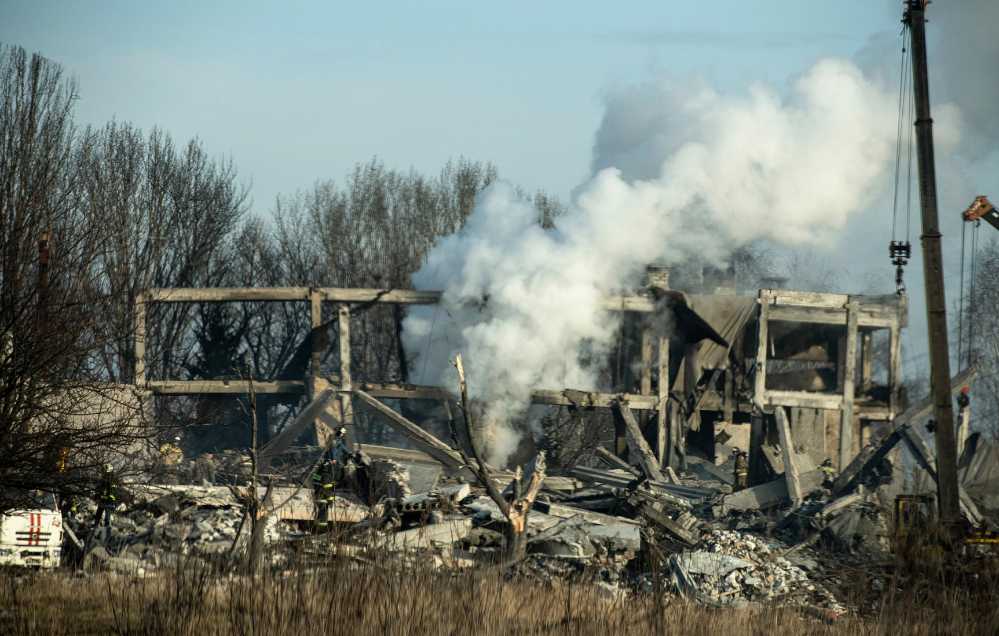
The state builds the army, and the army is part of the superstructure. On the one hand, the army, active and retired soldiers need to be protected and benefited in political and economic activities. Under a relatively smooth system, the contemporary civilian government supports and constrains the existence of the national army through budgets, and satisfies the interests of the army and soldiers from the perspectives of wages and honors. An army with sufficient salaries and social respect can have a strong combat effectiveness. On the other hand, the army is a larger organization in society, with unique influence in politics, violence and other fields. It has its own personnel, property, production, storage, and logistics systems, its own rules and unique political influence, and can seek special interests through its own resources and means. This space allows the army to become a powerful conqueror like the East India Company’s armed forces, or it may become corrupt and lose its combat effectiveness.
The origin of Russia’s military superstructure is part of the Soviet army that was bought during the disintegration of the Soviet Union. Its military capabilities are obviously constrained by the systematic corruption that ran through the pre-war and war. Once the military action phase begins, the government’s actual control over the military will be greatly reduced, and military commanders will have a higher voice in their professional fields, further expanding their ability to act in their own interests. The Putin government is unable to deal with this alienation, and even has to recognize and even promote its representatives. In the wars in Afghanistan and Syria, the US participating troops also reflected similar phenomena.
Second, contemporary globalization determines the breadth and diversity of military challenges faced by major countries. It requires the military to have global capabilities, but also provides a breeding ground for the growth of non-state armies, affecting the degree of nationalization of the military.
After the disintegration of the Soviet Union, Russia faced a wide range of military challenges from Europe to Asia, but the Russian army did not have the ability to fully respond to these challenges, which gave rise to the other military forces mentioned above. These military forces have already taken root and have different pursuits from the Putin government and the Russian army. The US military also reduced the number of casualties on the books by using military contractors, which became a force it relied on very much. The alienation of the military foundation requires the government and the national army to face up to the existence of other military forces and study how to adjust their relationship. The existence of non-state military forces has broken the regime’s monopoly on violence and brewed new political risks. The Putin government and the Russian army have allowed this alienation to develop and are ultimately constrained by it.
Third, when the first alienation phenomenon is too deep, the military superstructure may resist change for its own interests and act according to existing inertia rather than military laws.
The technological revolution in contemporary society is surging, and the power comparison of the comprehensive national strength of various countries is changing rapidly. The popular mainstream military theory has not faced up to the challenges, and most of them are aimed at specific areas such as tactics and battlefields, as if the research is completed as long as the use of new weapons is found or integrated into the system. The bureaucratic military superstructure is more likely to add departmental interests, stereotypes, personal interests, etc. into decision-making. Russia fell in such a contradiction. Gerasimov "embezzled" the credit of the radical nationalists in Crimea and put forward a set of theories that were only for show but not put into practice, showing that the Russian army was already lagging behind in terms of ideology and theory. The initial plan he led to formulate tried to act in accordance with certain principles of the Soviet or American army, ignoring the fact that Russia was no longer an industrial power, and naturally it was impossible to achieve the goal.
Fourth, under the impetus of several alienations, the individuals who constituted the military foundation were at a loss, and the military armed capabilities as an organization weakened.
The alienation of the military superstructure and military foundation brought about the alienation of the logic of military operations, which inevitably resulted in unreasonable and unsuccessful military operations, exacerbating the alienation of military personnel. The incoordination between several different military forces in special military operations and the frequent changes in the war objectives by the highest command level required patriots who joined the military operations to become machine parts that executed orders, and made contract soldiers, volunteers, mobilized soldiers, militia, mercenaries and other different forms of combatants feel that the command level was low, the logistics were unfavorable, and the goals were uncertain. The resulting low morale accelerated the military crisis. Putin’s use of improving treatment, speeches, and medals to appease the officers and soldiers involved in the war cannot really solve the contradictions.
These alienation movements stem from the political and economic lines and general military policies implemented by the Putin government for many years, and constitute the factors for the failure of the Russian army. The alienation of Russia’s military foundation and superstructure is not unique to it. The powerful US military failed to defeat the Taliban in Afghanistan, and the Saudi army with advanced weapons failed to defeat the Houthi armed forces in Yemen, which are all related to the phenomenon of military alienation. In the current era of rapid changes in social productivity, military alienation is particularly prone to occur.
In the central challenges of the contemporary era, major countries generally face similar phenomena. Special departments established to meet huge social needs sometimes act for their own interests in the process of performing their duties. Such departments often consume huge social resources and are more likely to stimulate social conflicts and confrontations.
Relying on temporary means, unilateral efforts, and the inertia of not making changes in the face of huge and continuous challenges cannot last long. The root cause of the alienation phenomenon lies in the failure of society to govern social needs and special departments. To achieve governance against such alienation, we should not only be satisfied with taking action, but also think about it. We must conduct social debates to make social needs clearer; through the consensus of the whole people, we can activate the corresponding social foundation and make the behavior of meeting social needs sustainable; through explanatory theories, we can determine the boundaries of meeting social needs and establish more scientific human, financial and material systems and practical mechanisms to meet social needs.
Enlightenment
Nothing can make people reflect more than a huge failure. The Russian military crisis has given people a good opportunity to think more deeply about military theory.
In the era of total war, people forget the benefits of indirect struggle and local games, and they are obsessed with the total national war. In the long period of peace, people forget the horror of total war, but can’t stand the benefits of peace and the low cost of indirect struggle and local war. These two one-sided understandings need the stimulation of reality to wake up. In the turning point of the great changes that have not been seen in a century, it is necessary to portray multiple possibilities in the future. The Russian military crisis and its inherent military alienation phenomenon emphasize the extreme importance of conducting research beyond the operation itself. Through the analysis of Russia’s military foundation and military superstructure, the author believes that the military theory to cope with contemporary challenges cannot only be about combat, but should be a theory about how to build, maintain and use social force. It needs to have the following capabilities:
First, military theory should be coordinated with the mission and structure of the national politics on military forces, and serve to establish an excellent military superstructure.
Second, it should predict, judge and design the future military situation and war form. Third, it should drive the entire political and economic foundation to form a certain military foundation, prepare for possible wars and successfully organize wars and other types of military struggles and paramilitary struggles.
Fourth, it must be coordinated with the internal and foreign policies of the country. In order to maintain this coordination, it is necessary to reach a philosophical level of consistency.
Fifth, it should judge the resources that can be mobilized based on factors such as the ownership structure and labor conditions of the society, and influence these factors when necessary.
Sixth, based on the technology roadmap and industrial chain roadmap adapted to local conditions, dynamically provide corresponding materials and information for military forces, and maintain the ability to achieve a balance with social economy.
Seventh, it can be compatible with different possible alliance states, various forms of armed forces and paramilitary organizations.
These capability requirements also mean that military theories must be established based on an overall understanding of society and even the world, and that they must be based on a certain meta-philosophy and military philosophy to conduct in-depth thinking and research. These thoughts and research should not be done behind closed doors, but should be supported by a large number of contemporary military experiments and military observations. The Russian-Ukrainian conflict is a live drama and a treasure trove that should be continuously studied. Russia has many problems, but the weakness of its opponents has prevented it from falling, and Russia’s military foundation and superstructure are still trying to get out of this military crisis.