The United States is still intensively testing hypersonic weapons, but Russia’s 3M22 "Zircon" hypersonic missile has already arrived and will soon be equipped on the "Gorshkov frigate. All of this is clearly mentioned in Russia’s public propaganda.
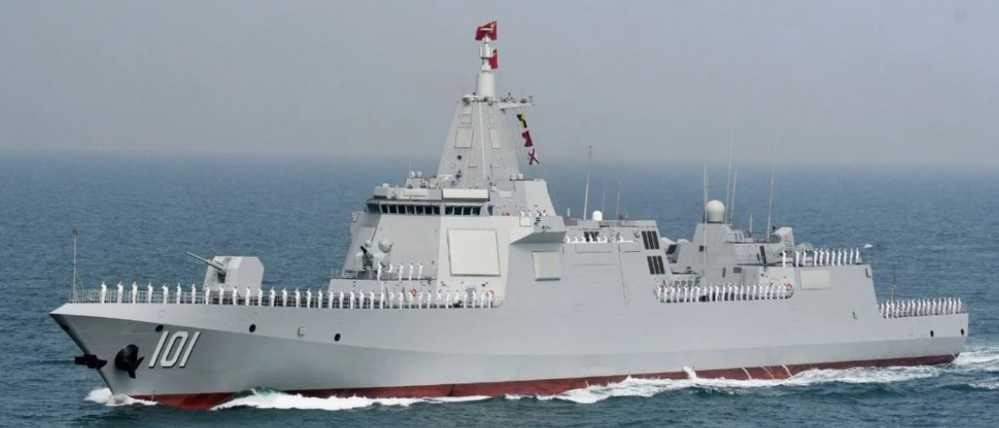
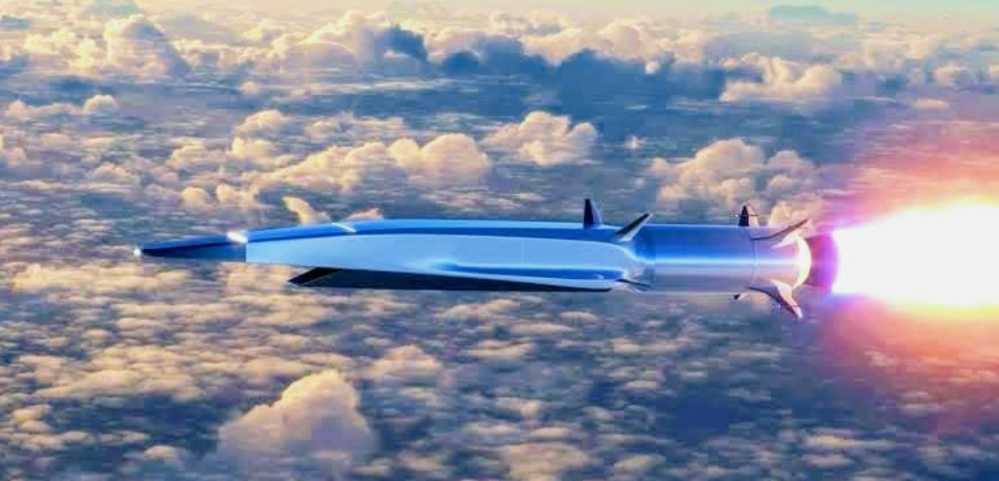
"Zircon" is a hypersonic missile powered by a scramjet engine. Unlike a boost-glide hypersonic aircraft powered by a rocket engine, it uses an air-breathing jet engine for continuous propulsion and always maintains a high flight speed. To get the scramjet engine to work, the missile needs to use a rocket booster to accelerate to supersonic speed. For example, the US X-51 "Waverider" directly moved the solid booster of the ATACMS Army Tactical Missile to achieve initial acceleration. In this way, the size of a hypersonic cruise missile is usually not too small because it must carry additional rocket boosters. It is reported that the length of "Zircon" is about 8 to 10 meters, such a size can be installed on medium-displacement or even smaller ships, and its maritime combat capability is very outstanding. "Zircon" is compatible with the 3S-14 vertical launch system, which means that medium-displacement surface ships such as "Gorshkov" and "Grigorovich" that have this system can use "Zircon". The Kirov-class cruiser "Nakhimov", which is undergoing modernization, will also be equipped with "Zircon". In addition, "Zircon" users also include the "Yasen" class nuclear submarines, which are amazingly quiet underwater.
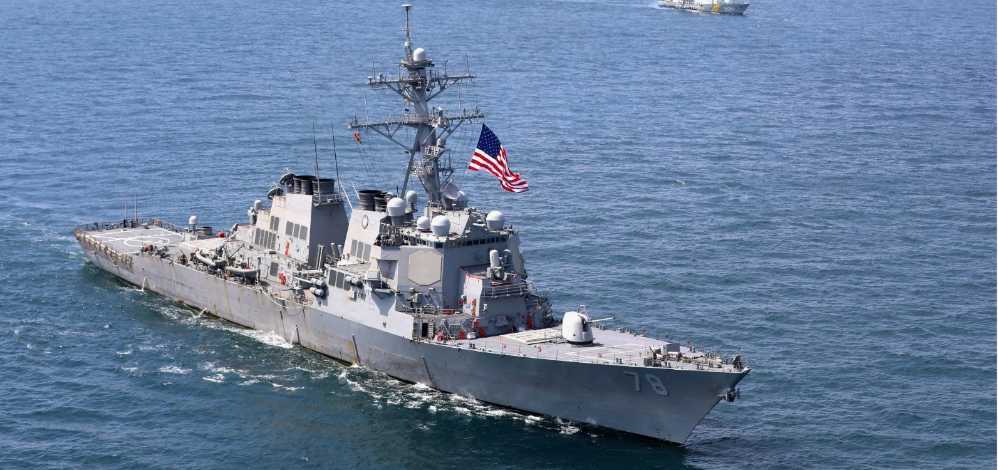
The service of "Zircon" has obviously brought new challenges to high-value surface combat platforms and important land facilities in Western countries. At sea, the radar and electronic sensors of Western destroyers can detect low-flying missiles at a distance of 12-14 nautical miles, but for hypersonic missiles such as "Zircon", ships only have 15 seconds of reaction time. A small number of Zircon missiles can pose a serious threat to an organized surface ship formation, and the reliance on traditional saturation attacks has been significantly reduced. When dealing with ground targets, Zircon can also destroy solid targets with the kinetic energy given by its extremely high speed.
However, the combat effectiveness of the Zircon missile currently also has some "gray areas". The intense friction between the missile and the surrounding air at hypersonic speed generates a high temperature enough to ionize the air. The ionosphere that covers the missile will strongly absorb electromagnetic waves, which will make it more difficult for the outside world to detect the missile, but will also put external guidance data transmission and active homing devices such as radar on the missile to a huge test. The missile is likely to rely on an inertial navigation system for most of the cruise phase. At the end of the flight, Zircon may need to slow down appropriately - some commentators believe that Zircon may slow down to below Mach 5 to reduce the impact of the ionosphere and ensure that the on-board sensors can accurately "stare" at the target, especially the maneuvering target. Secondly, in order to maintain the intake pressure of the scramjet engine, the hypersonic cruise missile needs to maintain an altitude of 20,000 meters most of the time. It is not clear whether Zircon will adopt a low-altitude sea-skimming trajectory when it finally pounces on the target. It can provide ship-borne optical infrared sensors with a longer detection range during the cruise phase, but the radar detection capability will be greatly reduced due to the ion layer outside the missile body.
According to Russian official news, as of 2018, Zircon has conducted 10 flight tests. In 2019, President Putin said that Zircon has a flight speed of up to Mach 8 and a range of 1,000 kilometers. In January 2020, Zircon was launched from the 22350 Gorshkov frigate, and a total of 4 times in 2020. In October 2021, the Yasen submarine conducted the first Zircon launch test. In 2022, Russia officially decided to equip Zircon.
The US defense intelligence agency also has doubts about the performance of the Zircon missile. "Zircon’s service may not have much direct effect on the war Russia is currently facing. On the one hand, as a highly advanced combat weapon, the Zircon missile has not yet completed enough test firings to ensure sufficient combat effectiveness. On the other hand, there is no clear evidence to prove whether the actual combat performance of the Zircon missile is as claimed by the Russian Ministry of Defense. Finally, even if the Zircon is powerful, as a weapon that has just been developed, its production cost is bound to be high, and the number of equipment will be very limited. At present, the Russian-Ukrainian war requires not only performance but also scale for long-range precision-guided weapons.
In the 1980s, facing the threat of Soviet bombers such as the Tu-22M3 equipped with cruise missiles, the United States began to equip F-14 fighters that could launch AIM-54 "Phoenix" air-to-air missiles to create an "equal threat" for the opponent’s bombers. In response, the Soviet Union developed cruise missiles with a longer range, forcing the US Navy to develop "Aegis" warships with efficient air defense interception capabilities. The current deployment of hypersonic cruise missiles can be seen as the latest round of actions in this long-lasting technological confrontation. There is no end to technological competition, but before a new balance is reached, hypersonic weapons may indeed change the battlefield situation, even if it is temporary.