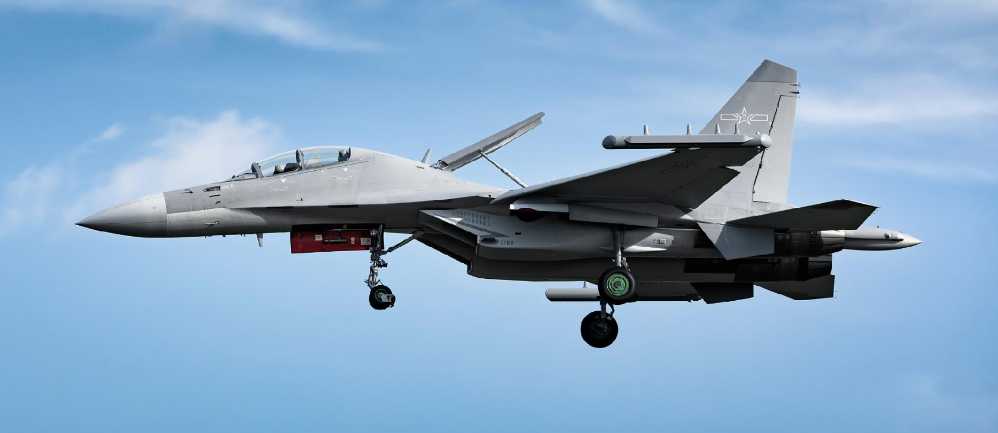

The J-16D, also known as the "Growling Wolf", is China’s first dedicated accompanying electronic warfare aircraft independently developed. It is one of the most advanced electronic warfare aircraft at present, and is comparable to the main US electronic warfare aircraft EA-18G "Growler". From the appearance, the J-16D is quite different from the J-16. In order to carry a large number of dedicated electronic warfare equipment, the J-16D has cancelled the aircraft gun and forward-looking infrared search equipment, installed electronic equipment cabins on the wingtips, and added many electronic equipment antennas to the fuselage. Due to confidentiality requirements, although the J-16D and some of the electronic warfare pods it carries were statically displayed at the air show, no more information about its electronic warfare performance was disclosed. The most important information obtained by the outside world from the appearance is that the Chinese Air Force emblem on the vertical tail of this type of aircraft indicates that it is already in service, which also indirectly declares that the J-16D has officially entered the People’s Air Force combat sequence.
There are two main points of concern to the outside world about the J-16D: First, what is the electronic warfare capability of the J-16D? The J-16D is positioned as an accompanying electronic warfare aircraft that accompanies the front-line combat aircraft group, which is at the same level as the US EA-18G. Obviously, its performance indicators will also be on par with the EA-18G, but how strong it is is still unknown; second, what new changes will the service of the J-16D bring to the combat capability of the Chinese Air Force?
For a long time, China’s electronic warfare capability has lagged far behind that of Western countries. Although China has modified some aerial electronic warfare platforms based on platforms such as the H-5 and H-6, its overall electronic warfare capability is still far behind that of the US military and even the Soviet Union/Russia. In the 1990s, the US Air Force carried out electronic warfare deterrence against China’s southeastern coast, which caused a major air situation incident in southeastern China, which left a deep impression on the Chinese people. After entering the new century, although the Chinese Air Force used new carrier platforms such as the "Flying Leopard" to carry electronic warfare pods as guest electronic warfare aircraft, its electronic warfare capabilities have never been comparable to those of the US military’s dedicated electronic warfare aircraft. From this perspective, the emergence of the J-16D has enabled the Chinese Air Force to have the same level of strength as the US military in terms of accompanying electronic warfare aircraft for the first time. How the Chinese Air Force will use this capability to enhance its combat effectiveness has also been the focus of attention of various countries after the appearance of the J-16D.

EA-18G technical and tactical analysis
During the Cold War, the US military developed a variety of accompanying electronic warfare aircraft, including the Air Force’s EF-111A, F-4G and the Navy’s EA-6B. Now the main electronic warfare aircraft of the Air Force and the Navy have been replaced by EA-18G. The EA-18G is a modified F/A-18E/F "Super Hornet" carrier-based aircraft. It adopts a two-seat design, with the front seat for the pilot and the back seat for the electronic warfare equipment operator. The weapons and equipment on the fuselage have been removed and replaced with various types of electronic warfare systems.
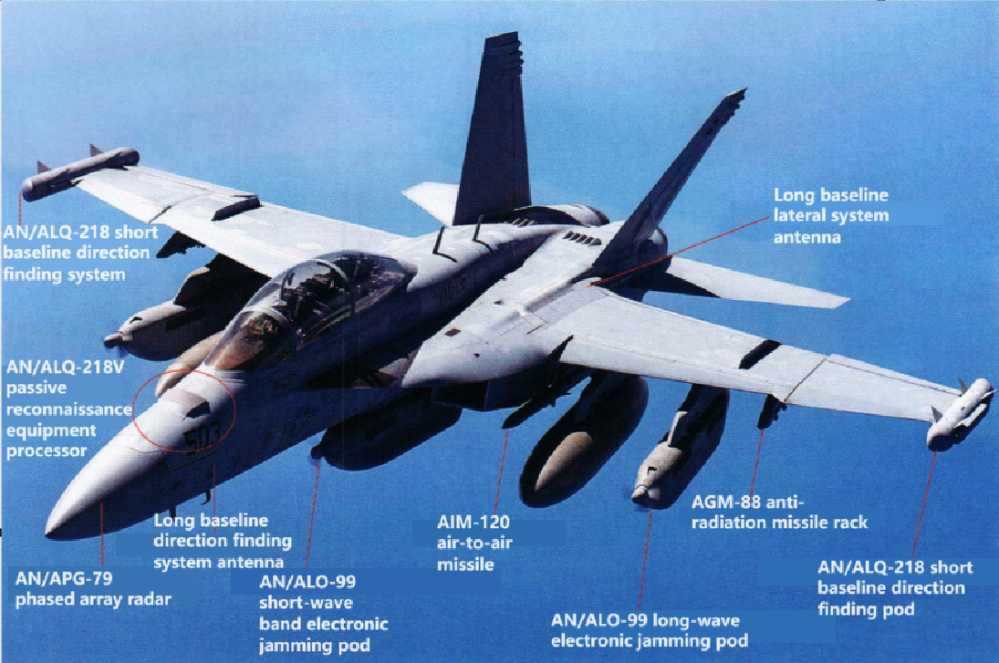
Compared with the F/A-18EF, the EA-18G has cancelled the cannon, bomb bay and cannon opening, and replaced with the main processor of the AN/ALO-218 passive electronic reconnaissance equipment; the wingtip missile rack has been changed to a fixed electronic warfare pod, and the AN/ALO-218 is installed. The short baseline direction finding system has two antennas of a long baseline direction finding system placed on the sides of the nose and tail. The reason for this design is that for the radio direction finding system, the longer the baseline length between the two direction finding antennas, the higher the direction finding accuracy. Therefore, by matching the two sets of direction finding systems, the AN/ALQ-218 can use the short baseline system to quickly and roughly find the direction of suddenly appearing electronic signals, and can also use the long baseline system to accurately find the direction of stable signals. The system can quickly and accurately find the direction of enemy radio systems 300 kilometers or more away, with an azimuth accuracy of 2° and a distance accuracy of 5%~10%. The data can be shared with other electronic warfare equipment. Even if the enemy radio system uses frequency agility and other technologies, the parameters after the frequency change can be quickly obtained to continue tracking the enemy. This combination has now become the standard configuration of advanced electronic warfare aircraft.
The upgrade space behind the electronic warfare equipment operator’s seat is equipped with The main body of the AN/ALO-227 communication countermeasure system, with the system antenna placed on the back of the fuselage. The system can detect, record and analyze the enemy’s radio communication system, and can also share the detection data with other equipment. It is also responsible for maintaining smooth radio communication when the jamming system is working. The system is equipped with active cancellation technology, which can automatically receive the radio interference signal emitted by the enemy, superimpose it with the received signal of the enemy, and separate the effective signal from the noise. It can implement electromagnetic suppression on the enemy while still ensuring unimpeded communication of the enemy.
EA-18G’s radar is upgraded to ANAPG-79 radar, which adopts a phased array electronic scanning system and has nearly a thousand TR units. Each unit has the ability to independently transmit and receive signals. Through computer control, the T/R unit can accurately control the waveform and delay of the transmitted signal, so that the radio waves interfere in the air, forming a high-power radar wave to illuminate the target. The radar does not need to mechanically rotate the transmitting antenna to detect targets at a considerable angle, so the reaction speed is extremely fast, and multiple T/R can be allocated at the same time. The unit tracks a large number of targets, or tracks the air while mapping the ground. With the information support of other electronic warfare equipment, some T/R units can also be separated to transmit jamming signals to targets to perform a certain degree of electronic warfare tasks. This type of fighter is also equipped with a multi-task advanced tactical terminal (MATT), a small data link device that can automatically share intelligence data with surrounding fighters, allowing crew members to see the detection targets of other fighters or platforms.
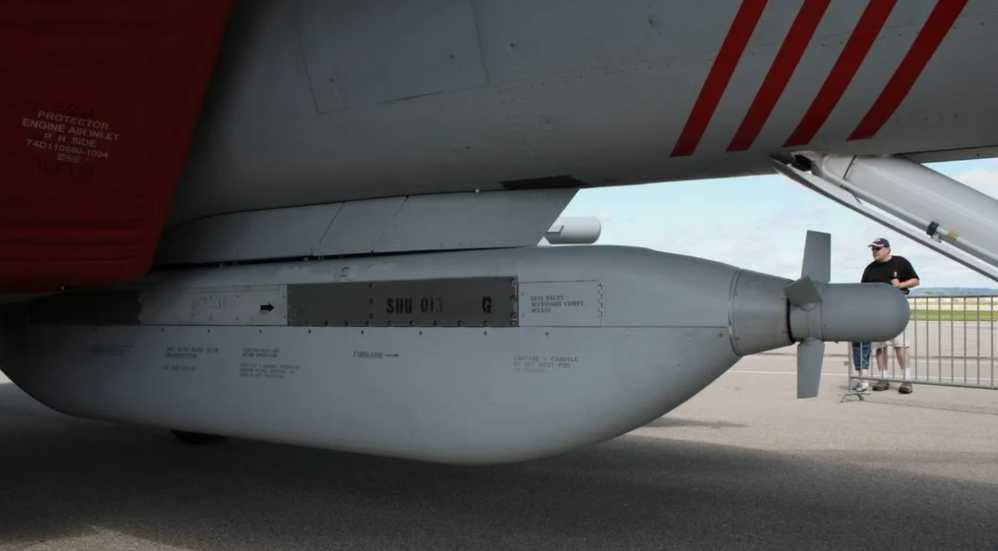
EA-18G The rest of the electronic warfare equipment is mainly carried in the form of pods. The current electronic warfare pods are mainly AN/ALQ-99 systems. This type of electronic warfare pod has multiple working modes and 10 optional frequency bands. Each pod is equipped with two directional transmitting antennas, which can interfere with two targets at the same time. When working with the AN/ALQ-218 system and the AN/ALQ227 system, the jamming pod can obtain the parameters of the enemy’s radio system through the two, generate the most suitable jamming signals in a targeted manner, and use the antenna to transmit in a directional manner. Because it uses directional antenna transmission, the power density of the jamming signal is high, and the effective distance and effect are good.
This type of pod is equipped with a ramjet turbine at the front, which can generate electricity with the help of the aerodynamic force generated by the fighter jet. When the speed exceeds 350 kilometers per hour, one jamming transmitter can be started; when the speed exceeds 407 kilometers per hour, two transmitters can work at the same time.
The signal range covered by this type of pod is extremely wide and can be divided into 10 bands. Band 1 covers 64 MHz to 150 MHz, Band 2 covers 150 to 270 MHz, Band 3 covers 300 MHz to 500 MHz, Band 4 covers 500 MHz to 1 GHz, Band 5 covers 1 to 1.7 GHz, Band 6 covers 1.7 to 2.4 GHz, Band 7 covers 2.5 to 4 GHz, Band 8 covers 4 to 7.75 GHz, Band 9 covers 7.75 to 11 GHz, and Band 10 covers 12 to 18 GHz, basically covering the operating frequency bands of most mainstream radio communications and ground-to-air radars in the world.
Since the jamming pod can change the operating frequency band by replacing parts, but cannot be changed in the air, the EA-18G usually carries one low-band pod and two high-band pods for combat, and can carry five pods of different operating frequency bands at the same time when necessary. Within the working frequency band, the pod can quickly change the frequency of the transmitted signal based on the data obtained by other equipment reconnaissance, and implement tracking jamming on frequency agile radar or frequency hopping radio. In addition, when necessary, the EA-18G can also carry optical reconnaissance pods such as the AN/ASO-228 infrared pod of the FA-18E/F.
In addition to relying on electronic warfare equipment to soft-kill the enemy’s radio system, the EA-18G also has the ability to hard-kill. The outer pylons on both sides of the wings of this type of fighter can carry AGM-88 "HARM" anti-radiation missiles. For example, when performing missions in a war zone, if a high-value time-sensitive target is found, the "HARM" missile can be used to attack it directly. When performing standard combat missions, the EA-18G is configured with 3 AN/ALQ-99 electronic jamming pods, 2 "HARM" missiles, 2 AIM-120 air-to-air missiles and 2 auxiliary fuel tanks. The working frequency band of the jamming pod is selected according to the enemy’s electronic system. By using these advanced electronic warfare equipment in combination, the EA-18G can be called the most advanced accompanying electronic warfare aircraft in the world. The various types of electronic warfare equipment it carries can be effectively linked and coordinated.
In order to cope with the more severe war situation in the future, the US military is promoting the replacement of the AN/ALO.99 jamming pod Research and development of the AN/ALQ-249 pod. This type of pod will use the most advanced technology, including the latest digital circuit system and transmitter; adopt a new antenna design so that each jamming pod can perform jamming tasks in several frequency bands at the same time; use phased array antennas to increase the multi-target jamming capability of the jamming pod; replace the external ramjet turbine generator with an internal ramjet generator to increase the power generation capacity, etc.
In terms of tactics, the current Joint Airborne Electronic Attack System (JAEA) of the US military consists of four tactical levels and multiple types of electronic warfare aircraft. According to the different distances from the enemy’s air defense network, the four tactical levels are divided into "outside the defense zone", "mitigation accompanying interference zone", "penetration accompanying interference zone" and "inside the defense zone", and the fighters performing tasks in each level are also different: "outside the defense zone" mainly performs combat missions with large-scale long-range support electronic warfare aircraft, such as EC-130H "Compass Call" and EC-135; "mitigation accompanying interference zone" mainly performs tasks with EA-18G and EA-6B Special accompanying electronic warfare aircraft; "Infiltration accompanying interference zone" is close to the edge of the range of the enemy’s air defense system and is already within the combat radius of the enemy’s air force. Therefore, it is mainly performed by F-35 stealth fighters using airborne electronic warfare equipment, but EA18G will also enter this level to perform tasks when necessary; "Inside the defense zone" is already within the range of enemy air defense missiles. The combat mission here is more dangerous and is mainly undertaken by drones and air-launched tactical decoys. By inducing the enemy’s air defense system to start up, it creates strike opportunities for electronic warfare aircraft and stealth fighters outside the defense zone. At present, the US military is developing low-cost air-launched drones that can automatically detect enemy radar signals and automatically implement interference. In the future, they can perform electronic interference tasks in the defense zone. At the same time, EA-18G can also follow the strike aircraft group into the defense zone to perform tasks according to needs.
It can be seen that in the U.S. military’s airborne electronic warfare system, in addition to large-scale long-range electronic warfare platforms, the EA-18G appears the most frequently in performing combat missions, and can be said to be the backbone of the U.S. military’s airborne electronic warfare. Before the war, the EA-18G can fly alone and use two types of passive detection equipment, ALO-218 and ALQ-227, to conduct electronic reconnaissance of enemy radio systems and obtain frequency band parameters in advance. During combat, the EA-18G uses the AN/ALO-218V system to detect and find the direction of enemy radio signals, determine whether the hostile signals are radio communications or radar detection signals, classify and identify them, and share the data with other fighters in the fleet. When it is discovered that the enemy radar is trying to detect or lock the fleet, the EA-18G will decide how to implement countermeasures based on the nature of the mission and the type of target, and use the direction-finding data of the passive receiver to set the parameters of the AN/ALQ-99 jammer pod, implement targeted noise or deception interference on the enemy radar, and prevent the enemy radar from detecting the fleet. If the enemy has launched a missile, the missile radar or ground fire control radar will be interfered with. If necessary, the "HARM" missile can be used to directly kill the enemy radar. When the fleet is about to arrive at the target defense area, the EA-18G can temporarily leave the formation and stay in a safe area to remotely suppress the enemy radar and cover the fleet to launch an attack. If necessary, it can also accompany the formation to perform the task. If the enemy threats are large in number and the battlefield situation is complex, the EA-18G’s active phased array radar can also allocate some T/R units to perform confrontation tasks. In theory, each fighter can suppress 10 frequency bands at the same time.
Technical and tactical analysis of the J-16D
Conventional fighters need to undergo a lot of modifications to be converted into electronic warfare aircraft. Just like the F/A-18E/F was converted into the EA-18G, the J-16D also underwent a series of modifications compared to the J-16. Judging from the J-16D that appeared at the air show, the nose of this type of aircraft has been significantly changed. The cannon, bomb bay and cannon firing port of the J-16 have been cancelled and covered with skin. The infrared search and tracking device (IRST) in front of the cockpit cover has also been cancelled, and the remaining space may be installed with electronic warfare equipment; a new wave-transparent skin has been added in front of the cockpit cover, and a new friend-or-foe identification device antenna may be buried inside; the nose radome and the internal radar have been moved forward for a distance, but the total length and diameter of the nose have not changed significantly. It may be replaced with a slightly smaller new radar, and the remaining space and the space increased by the forward movement of the radar are used to place the newly added electronic equipment; the position of the avionics equipment maintenance window in the nose has been greatly changed compared to the J-16, and the number and size have increased significantly, which also confirms the speculation that a large number of new electronic equipment have been added to the nose.
The J-16D has also undergone modifications to other parts of its fuselage. The color of the leading edge of the wing strip has changed compared to the J-16. A new electronic warfare equipment antenna may be installed on the leading edge of the skin; an antenna of unknown purpose has been added to the side of the leading edge of the air inlet below the fuselage, which may be used for long baseline measurement; a blade antenna for electronic warfare equipment has been added to the back of the fuselage; the radar warning antenna on the vertical tail has been removed, and its function may be replaced by a new electronic equipment added to the fuselage; the position of the hanging point under the wing has been greatly adjusted compared to the J-16, which may be to meet the requirements of electronic warfare pod mounting. After all, the electronic warfare pod needs to obtain power and data connection from the fighter, and it must be coordinated with the wiring layout in the wing.
The J-16D, like the EA-18G, has the most prominent feature of an electronic warfare aircraft in appearance, that is, fixed electronic equipment pods are installed on both wingtips, which are mainly used for short-baseline rapid direction finding of enemy signal sources. Four blade antennas are densely installed on the upper part of the pod, which can be used for medium-wave band measurement. A pair of antennas protected by radomes are installed at the front and rear ends for short-wave band interference direction finding. A large area of long-wave band antennas are installed on the side of the pod for direction finding of long-wave radio equipment.
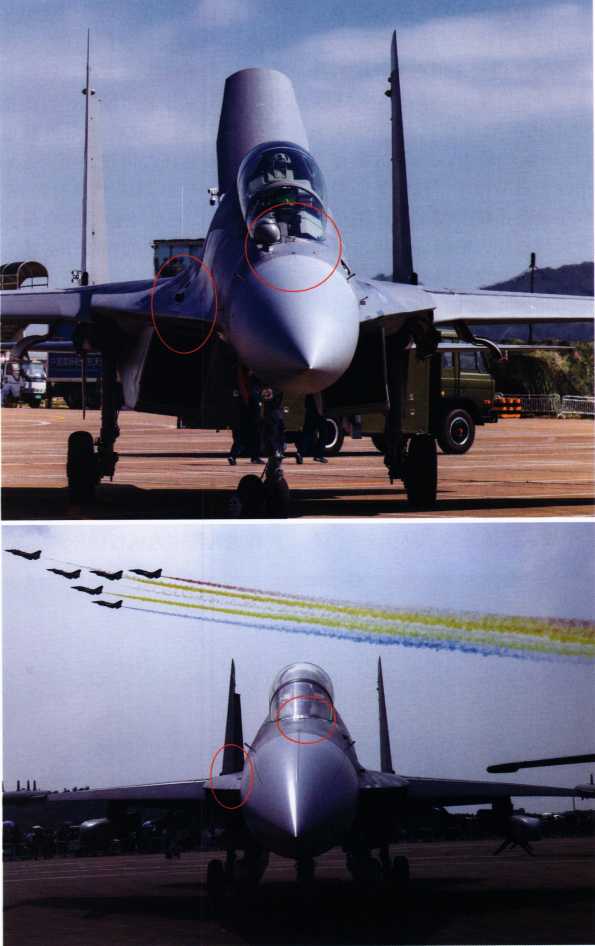
Overall, the modification idea of the J-16D is basically the same as that of the EA-18G, that is, the modification of the fighter body is the basic condition for the whole machine to perform electronic warfare tasks. The addition of advanced electronic warfare-specific passive detection equipment can quickly and accurately measure the distance and direction of enemy signal sources. In this way, even if the fighter does not carry an electronic warfare pod, it can have basic electronic reconnaissance capabilities, leaving more payload space for the pod that performs attack missions. At the same time, the fire control radar is replaced with a model dedicated to enhancing electronic warfare performance. It not only has sufficient detection capabilities, but can also interact with other equipment and use the advantages of phased array technology to perform a certain degree of electronic interference tasks.
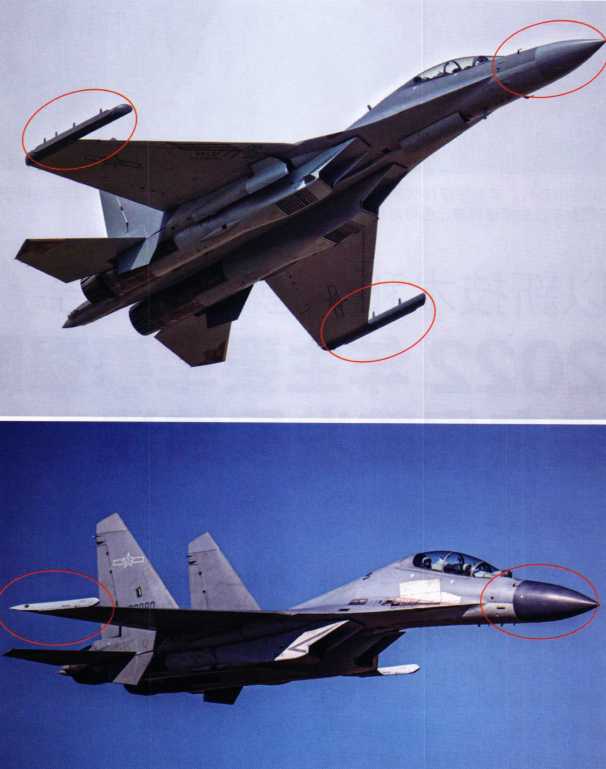
The J-16D has added antennas of unknown purpose to the fuselage, such as the leading edge and side strips of the wing. Considering that the J-16 is a heavy fighter, it has a larger body space and power supply capacity than the medium-sized F/A-18EFF, and China’s technological progress in the field of electronic warfare has been rapid in recent years. These newly added antennas may mean that the J-16D is also equipped with more built-in electronic warfare equipment, such as built-in small and medium-power jammers, so that it can perform electronic jamming tasks without carrying electronic warfare pods. This can give the J-16D great tactical flexibility. For example, when performing low-intensity tasks such as territorial waters patrols, it can choose not to carry pods and only carry basic self-defense weapons, extending the flight time and saving the life cycle of the body and pods.