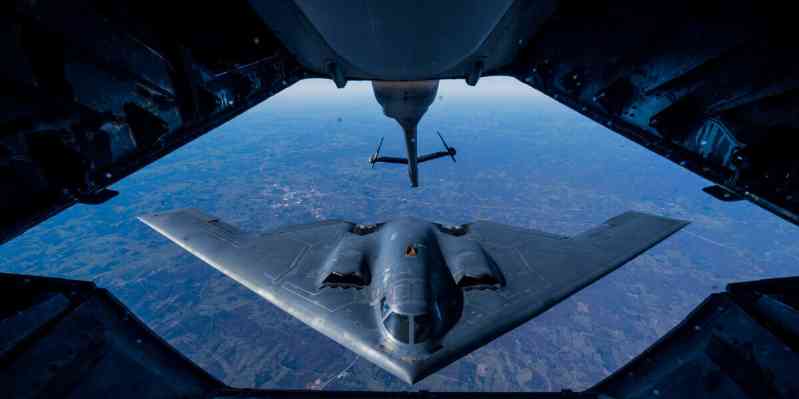

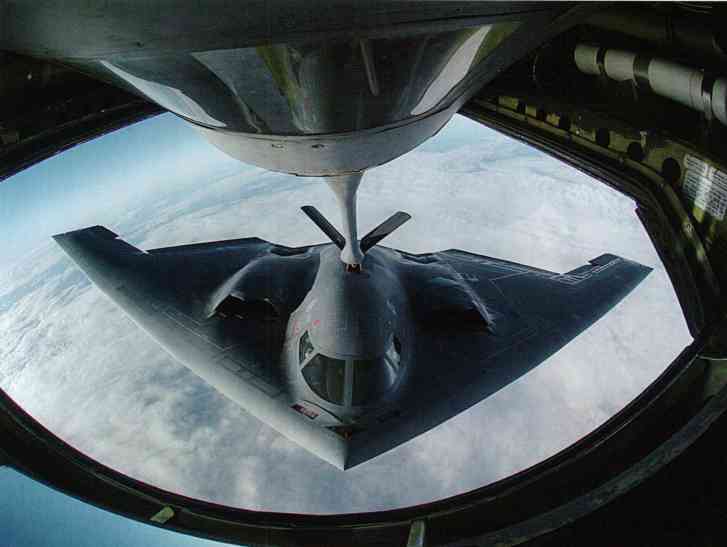
B-2 "Ghost" is the only stealth strategic bomber in service in the world. It adopts a flying wing layout to reduce the radar reflection area. The US military believes that its low detectability is enough to penetrate the opponent’s air defense system.
In the 1980s, the Northrop and Boeing teams defeated the Lockheed and Rockwell teams and won the US Air Force’s advanced technology bomber program. With the assistance of scientists from the Massachusetts Institute of Technology, the B-2 aircraft was established for development. Born during the Cold War, the B-2 was mainly designed to penetrate the Soviet Union’s radar air defense network and launch a deadly attack on strategic targets.
B-2 is expensive. According to data from 1997, including development, engineering and testing, each aircraft costs $2.13 billion! By weight, the unit price is two or three times that of gold! Even the generous "tycoon" US Air Force is cautious in purchasing. Between 1987 and 2000, only 21 B-2s were produced.
On February 23, 2008, a B-2 stealth bomber "Spirit of Kansas" deployed by the U.S. Air Force at Andersen Air Force Base in Guam crashed on the runway shortly after takeoff.
The disaster started in Guam
89-0127 B-2 strategic bomber "Spirit of Kansas" had been deployed in Guam for 4 months. This "Ghost" belonging to the 393rd Bomb Squadron of the 509th Bomb Wing of the U.S. Air Force was preparing to return to Whiteman Air Force Base in Missouri, USA on February 23, 2008.
Andersen Air Force Base is located in the north of Guam, like a lone boat in the vast Pacific Ocean. The base has two runways, 06L/24R with a length of 3,218 meters and 06R/24L with a length of 3,409 meters. This is the most important US Air Force base in western Hawaii and the home of the 36th Wing of the US Pacific Air Force. Its main mission is to participate in US military operations in the Pacific and Indian Ocean regions.
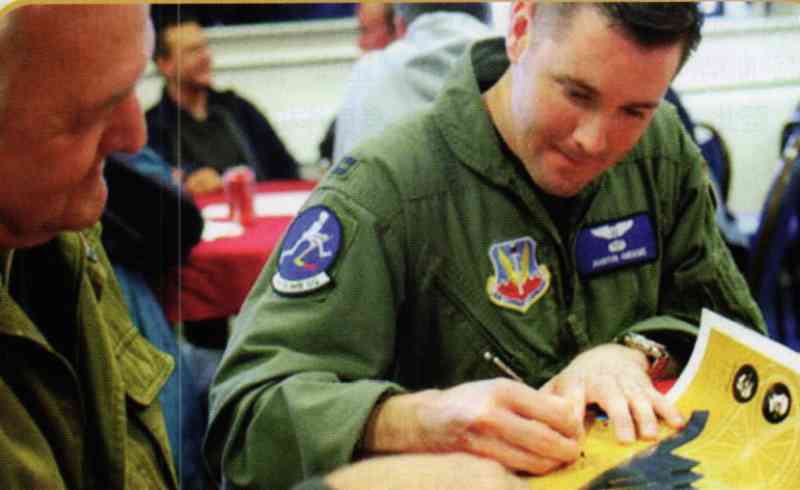
The "Spirit of Kansas" will return to the main base in the United States, Whiteman, with a range of 11,265 kilometers and will fly continuously for 16 hours. Therefore, it is planned to receive aerial refueling over Hawaii and California. The "Spirit of Kansas" was officially put into service on February 17, 1995, with a total of 5,100 flight hours. The aircraft is in good technical condition. The pilots who fly the B-2 bomber are the elite among the elites of the US Air Force. After rigorous screening, about 300 pilots have the flight qualifications of the B-2. The captain of the "Spirit of Kansas" flight mission was Major Ryan Link, who had more than 2,500 hours of flying experience, and the co-pilot was Captain Justin Grieve. The pilot completed the pre-flight check. After the tower’s permission, the "Spirit of Kansas" quickly entered the runway and prepared to take off. Driving this flying wing stealth bomber must be done with extreme caution. If the aircraft accidentally rubs against the outside world, the stealth coating is damaged or falls off, the stealth performance of the aircraft will be greatly reduced, and the B-2 will lose its application value.

When the "Spirit of Kansas" was aligned with the runway and prepared to accelerate for takeoff, the main alarm system of the flight control system (FCS) in the cockpit suddenly lit up a yellow warning light, but it soon disappeared. The aircraft quickly accelerated to the decision speed, but shortly after leaving the ground, the nose began to pitch up sharply, almost in a vertical climbing posture. After the pilot discovered the abnormality, he opened the full throttle, but he was unable to restore the aircraft to a normal attitude!
The dilemma faced by the crew was extremely urgent. They were subjected to an overload of about 1.6g, and at this time the aircraft was only 24 meters from the ground, and the speed was constantly dropping, and the fuselage was also shaking violently, just a stone’s throw away from stalling. Then, the left wing of the plane began to tilt toward the ground! The crew thought the plane was about to hit the ground, so they immediately activated the seat ejection! In an instant, the "Ghost" fell to the ground and caught fire, with thick smoke billowing into the sky.
After the tower controller saw the plane crash, he immediately activated the Level 1 alarm and called the fire department for rescue.
The data is wrong, every step is wrong!
As of the year of the accident, the B-2 has been in safe service for 19 years, participated in three regional local wars, and countless innocent people have died under its wings, but the aircraft are all intact. How could the "Spirit of Kansas" accidentally capsize in a calm environment this time? It took firefighters two days to completely extinguish the fire in the wreckage of the B-2. Before finding out the cause of the accident, the US Air Force immediately stopped the flight activities of the entire B-2 fleet in order to avoid a similar disaster.
Major General Floyd L. Carpenter was responsible for the accident investigation. The airport camera captured the entire process of the accident, which is of great help to the investigation of the accident. The video shows that the whole process from the abnormal attitude of the aircraft to the crash and explosion was very short. After the pilot ejected, Captain Link was slightly injured and was not seriously injured. Griff suffered a compression fracture of the spine during the ejection and was hospitalized for treatment.
Investigators began to study the wreckage of the aircraft and soon found that all the control systems of the aircraft were working normally at the time of the accident. The abnormal takeoff attitude made them begin to pay attention to whether the aircraft’s load was balanced. The B-2 can carry 18 tons of ammunition, but the "Spirit of Kansas" did not carry any bombs or any other heavy objects, so there was no load imbalance problem on this aircraft.
The B-2 adopts a flying wing design and has no vertical tail. Its control core is the onboard computer system, that is, the flight control system (FCS). Without the help of this system, the pilot cannot control the B-2 stealth bomber at all, so obtaining accurate data is crucial. The flight data recorder (FDR) of the aircraft showed that the aircraft’s airspeed, climb angle and altitude data were all wrong. What happened?
When the "Spirit of Kansas" aircraft was taxiing, it accelerated to about 100 knots (about 185.2 kilometers per hour), and the yellow main warning light was briefly on the cockpit. After the main warning light went out, the aircraft had accelerated to 145 knots (about 268.5 kilometers per hour). As soon as the aircraft left the ground, the onboard computer detected "abnormality" and believed that the nose was facing down - the pitch angle was -8°, so it began to automatically output instructions for the aircraft to look up, which caused the aircraft to stall.
The pilot’s subsequent handling was completely in line with the regulations, but it still could not avoid the aircraft stalling and crashing, and he had to choose to eject to escape. Compared with the normal taxiing distance of the B-2 aircraft, the "Spirit of Kansas" was 457 meters shorter. Investigators decided to ask the pilots involved for more information. The pilots said that shortly after the aircraft engine started, they received a rare reminder message-"Atmospheric data needs to be calibrated."
Difficult review
People began to re-examine the details before the B-2 accident. Before the accident, the "Spirit of Kansas" experienced a blizzard at Whiteman Air Force Base in Missouri, which caused a one-day flight delay. At Andersen Air Force Base in Guam, it was hit by heavy rain and was soaked in the rain for a long time.
B-2 is usually only parked in the hangar, and the designers did not expect the impact of heavy rain on the aircraft. From Whiteman to Andersen Air Force Base, B-2 faces different climate environments. Especially after a heavy rain, water vapor is likely to invade the B-2’s precise sensors. Investigators decided to conduct a water test on the sensors. Everyone found that these instruments did need to be recalibrated after the heavy rain.
Combined with the pilot’s statement, the investigators began to suspect that there was a problem with the pitot tube of the crashed aircraft sensor.
The B-2 has 24 sensors installed at the nose of the aircraft that continuously monitor the air pressure, generating 4 sets of continuous data streams. The onboard computer obtains data from these sensors and calculates the aircraft’s altitude, speed and angle of attack. If there is a conflict between the data streams, the computer will select two different sets, automatically exclude the wrong set by comparing with the other data streams, and keep the correct one. At this time, if a sensor is judged to be abnormal by the computer, the cockpit instrument will light up a yellow light alarm to remind the pilot to calibrate the atmospheric data. Then, the onboard computer will compare the data by itself, complete the calibration, and the warning yellow light will automatically go out.
But, the problem lies here! No one would have thought that after water vapor entered the pitot tube, it caused 3 pitot tubes to fail in a row! Among the 4 sets of data streams obtained by the computer, 3 sets were problematic. The onboard computer analyzed the 2 different data streams and compared them with the rest of the data. As a result, the "correct" data that was "consistent" with the other data was automatically left. Then, the onboard computer calibrated the sensor according to the "correct" answer. After the warning light went off, the pilot thought the "minor problem" had been solved and decided to take off. 12 seconds later, the "Spirit of Kansas" crashed under the "correct" control of the onboard computer. At this point, the cause of the crash of the world’s most expensive B-2 stealth bomber was revealed.
There are big problems with communication
The B-2’s pitot tubes are designed with heating devices. Turning them on can prevent the pitot tubes from condensing or freezing at high altitudes, which will affect the accuracy of sensor readings. However, when the B-2 is at Whiteman Air Force Base in the United States, it rarely needs to recalibrate the sensors. However, during an operation in Guam in 2006, the maintenance staff found that the B-2’s sensor data had problems and needed to be recalibrated. They began to consult engineers about technical issues. The final solution given by the engineers was not complicated: first try to heat the pitot tube to evaporate the water vapor entering the sensor, and then use the onboard computer to calibrate the data. The problem was solved, and the method was simple and effective.
Regrettably, this method was not officially adopted. If the data obtained by the sensor is inconsistent, US military pilots are still accustomed to using the onboard computer for automatic calibration first. If the method of heating the pitot tube first and then calibrating it was included in the standard processing procedure at that time, the tragedy in 2008 could have been avoided.
Somehow, the safety hazard of the "Spirit of Kansas" was buried. On the surface, this was a loophole in the processing logic of the onboard computer. But in fact, the poor internal communication of the US military was also an important reason for the crash of the B-2 bomber. Good practices and good habits have not formed universal operating standards.
The investigators have one last question: Under the circumstances at that time, was the pilot able to save the plane?
Flight data showed that when the B-2 lifted its head sharply, the pilot pushed the joystick forward and increased the throttle to the maximum. When the aircraft began to yaw and flip to the left, the pilot began to push the stick to the right. This means that the pilot was trying to save the aircraft, but the altitude and speed of the aircraft were too low at the time, and no matter how skilled the pilot was, he could not save the situation. The investigators entered similar data into the simulator and conducted hundreds of tests, all of which ended in failure, without exception. It can be seen that if the crew of the "Spirit of Kansas" had delayed activating the ejection seat for a moment, they would have died.
This was the first and only loss of a B-2 bomber in service, and it also caused the most expensive aircraft crash in the history of the US military. For this reason, the US military grounded all B-2s for a time, and they were not gradually unsealed until April 15, 2009. The two pilots involved soon returned to the sky, engineers redesigned the onboard computer program, and the US Air Force manual also added a "heated pitot tube" link and revised the "correction of atmospheric data" program.