

From Tabriz to Tehran, every corner is filled with grief and respect. Crowds gathered on the road like a tide to bid farewell to President Raihi and Foreign Minister Aman Dulashyan. Eight coffins covered with Iranian flags were carried by trucks and slowly passed through the crowd. Amid the sound of mourning music, everyone stretched out their hands to the coffins and bid a final farewell to the great souls who had passed away. Iran handled the Lehi air crash relatively low-key and did not blame it on the conspiracy of hostile forces. Iran has launched the election process for a new president and disclosed a lot of details about the Lehi air crash, allowing us to get a glimpse of the inside story of this air crash that is destined to have far-reaching impact.

Fatal 67 seconds
Comprehensive analysis of the details disclosed by the Iranian authorities, news reports from the United States, the West and Iran, and interviews with the parties involved, the full picture of the Lehi air crash has been gradually restored.
On the morning of May 19, Lehi took a helicopter to the Gizkarasi Joint Dam. The local weather conditions were good when they set off in the morning, meeting the flight conditions. Lehi’s fleet consists of a US-made Bell-212 and two Russian-made Mi-171s. The Bell-212 Lehi took was introduced during the Pahlavi dynasty and is more than 30 years old. After being modified for VIPs, it is more comfortable than the ordinary Bell-212. The other two Mi-171s carrying entourage and security forces were introduced from Russia after entering the 21st century.
After completing the dam unveiling ceremony, at around 1 pm local time, the Lehi fleet took off under the media camera and flew to Tabriz to attend the unveiling ceremony of a refinery project. When the fleet took off, the weather conditions were still good, but the weather forecast showed that a cloud group was slowly approaching in the east, but it would not affect the fleet for the time being.
The departure point is 130 kilometers away from the ceremony site. On the way, it needs to fly over the mountains. The route chosen is also to fly along the river valley in the mountains. Two Mi-171s were in front and behind, and the Bell-212 was in the middle, forming a column.
According to Gholam Hussein Esmaili, the director of the presidential office who was on the Mi-171, the weather was good after takeoff. When the fleet was about to fly out of the mountains after about 45 minutes of flying, it encountered clouds and visibility decreased. The pilot of the presidential plane Bell-212 was the commander of the entire flight formation. After encountering the clouds, he ordered the fleet to climb to the top of the clouds through the radio. However, more than 30 seconds later, the two Mi-171s flew above the clouds, but did not see the Bell-212 in the middle, and there was no response to the radio call. The records published later showed that there were only 67 seconds from the last radio contact to the loss of contact. After discovering that Bell-212 had lost contact, the two accompanying Mi-171s kept calling through the radio, turning around and circling to search for the presidential plane, but due to the obstruction of low-altitude clouds, no trace was found. After flying away from the mountains, the two Mi-171s immediately decided to land at a nearby copper mine to try to contact the crew of Bell-212. After calling the captain several times, someone answered the phone, but the person who answered the phone was not the captain himself, but Ali Hashim, the imam of the Tabriz Mosque who was on board. The call was very exciting, but the optimism did not last long. Hashim obviously did not know what happened or his specific location. He only knew that he was in the woods. He said on the phone that he did not feel well. At least he got in touch with the crew of the special plane. The Iranian side did not realize the severity of the accident at first, so the first report of the Iranian National News Agency was "the helicopter had a hard landing" and "contacted the crew on board." Judging from the situation at the time, this report was not fake news. No one realized that the helicopter had more than just a "hard landing."
Hashim was unable to clearly explain his location, and after three hours he was unable to make a call. In addition, in the mountains, Hashim’s phone could only connect to one base station, so it was impossible to determine the signal location through triangulation.
The weather in the mountains was extremely bad at this time, and the thick fog reduced visibility to less than 100 meters. As night fell, the fog turned into heavy rain, and ground search and rescue was extremely difficult. Iran requested Turkey to send aircraft equipped with thermal imaging night vision equipment to participate in the search and rescue, and Turkey immediately sent Bayer’s "Lancer" drone.
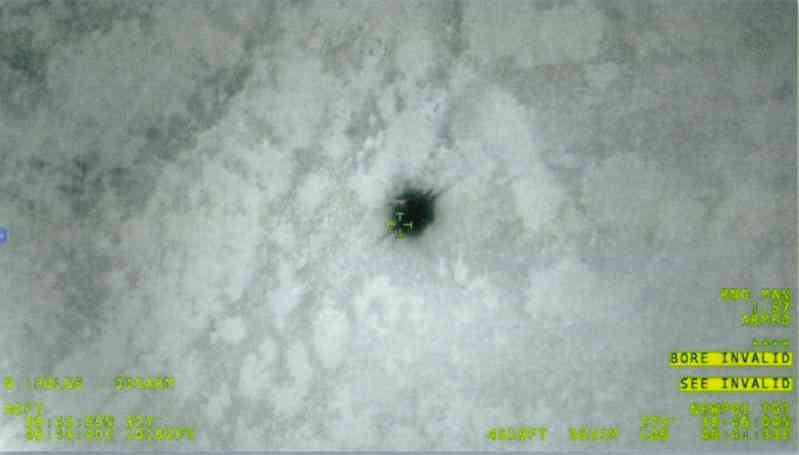
The "Lancer" drone launched the search operation at night and found a fire point on the hillside that was suspected to be the crash site of the helicopter. It transmitted the coordinates to Iran and returned. Iran later discovered that the Turkish drone gave the wrong coordinates, and Iran used a domestic drone equipped with synthetic aperture radar to search again, and found the real crash site of the helicopter-the two locations are 9 kilometers apart.
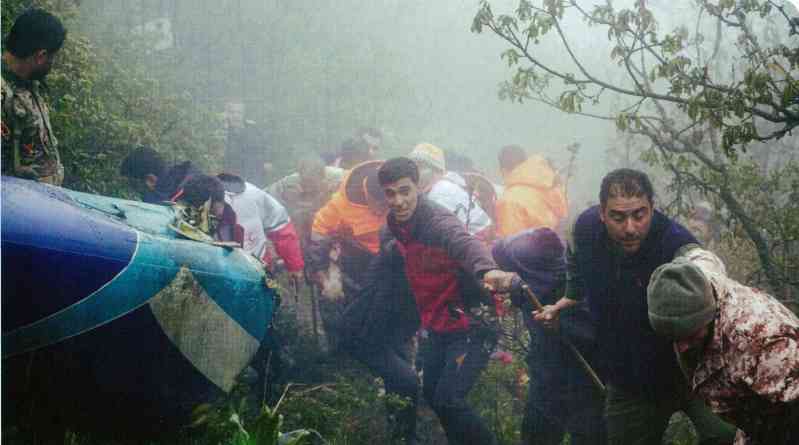
The next day (May 20), the search and rescue team approached the area where the Iranian drone was located, and visually confirmed the wreckage of the helicopter through a multi-axis drone, and finally found the crashed wreckage of the Bell-212 that President Lehi was riding. No one survived the accident scene, and Imam Hashim, who had answered the phone earlier, did not wait until the rescue arrived, and all 8 people on board died.
The imperfect presidential plane
The United States has blockaded Iran for more than 40 years, and the embargo involves fixed-wing aircraft and helicopter parts. Therefore, at the beginning of the accident, some people believed that the helicopter crashed due to disrepair. The accident happened to be one month after the Iran-Israel conflict, and there was a precedent that Iranian dignitaries were assassinated by foreign intelligence agencies. Some people also suspected that the hostile forces interfered and caused the plane to crash.
All these suspicions are reasonable, but it is difficult to establish the Lehi air crash. Iran has its own aviation industry. As early as the Pahlavi dynasty, Iran established an aircraft overhaul plant, which can not only overhaul the Bell-212, but also produce Bell-212/412 on a small scale. The Bell-212 is a classic model with a large output and is widely used around the world. It is not difficult for Iran to obtain the required parts through special channels. Moreover, as a special aircraft for the head of state, maintenance and guarantee must be of the highest standard, and the possibility of mechanical failure due to disrepair is not great.
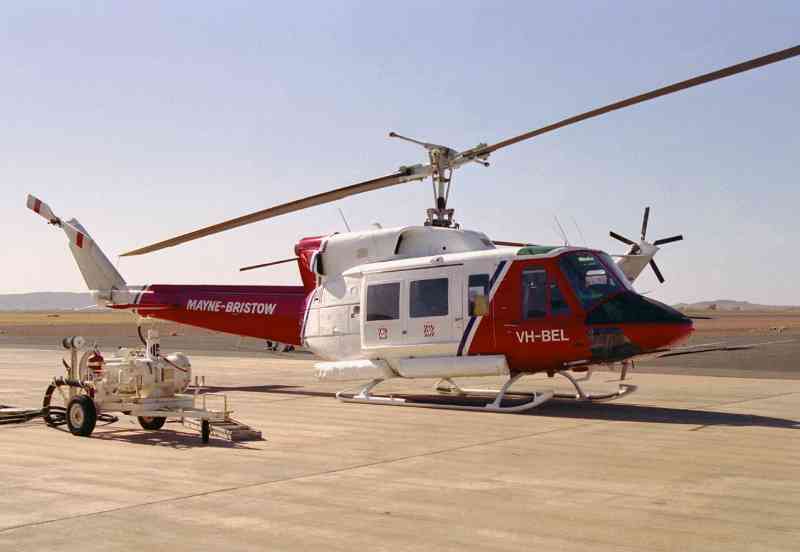
cross the low-altitude clouds, and the Mi-171 flying with it was safe and sound
As for the electronic interference causing the helicopter crash, there is even less evidence. The research and development of the Bell-212 began in the 1960s. It uses mechanical control and has good reliability. Whether it is mechanical control or fly-by-wire control, external electronic interference is extremely difficult to work. It is even more incredible to cause it to crash by interfering with the navigation system or communication system: electronic interference cannot interfere with a single aircraft in the middle of the fleet without affecting the helicopters in front and behind. Moreover, the flight was visual along the river valley at the time, so what would be the use of interfering with the onboard GNSS system? When reporting on the investigation of the air crash, Iran stated that after careful inspection of the helicopter’s maintenance and repair records, no defects that could have caused the accident were found. In addition, the helicopter maintained communication for 67 seconds before the accident, eliminating the possibility of interference with the communication system and no electronic warfare was found. Iran’s report can be considered to be in line with objective conditions and can withstand inspection through analysis.
The Bell-212 has no problem flying normally if properly maintained, but its performance is far behind the times. Although it has been modified, the improvement is mainly the cabin comfort, not the installation of advanced avionics systems or the improvement of flight performance. As for the weather radar and terrain following radar that are essential for today’s advanced helicopters, the presidential aircraft is not equipped. Hardware conditions limit the Bell-212 to fly in the mountains based on visual flight rules. This is why the Leahy fleet needs to fly along the river valley in the mountains, obviously using the river valley as a natural reference landmark.
After encountering the cloud group, the commander ordered the fleet to climb through the clouds, and there was nothing wrong with this decision. The meteorological conditions in the mountains are changeable, and the pilots do not have enough knowledge of the situation in the clouds. The safe approach is to maintain instrument flight, but the Bell-212 obviously does not have the ability to fly instruments in the mountains under extreme weather conditions. The visibility during the cloud penetration process is extremely low, and it is very likely that the pilot will suffer from spatial orientation disorder, which will be even worse if wind shear is added. Flying at low altitude in the mountains with extremely low visibility is a severe challenge to the pilot’s adaptability and helicopter performance.
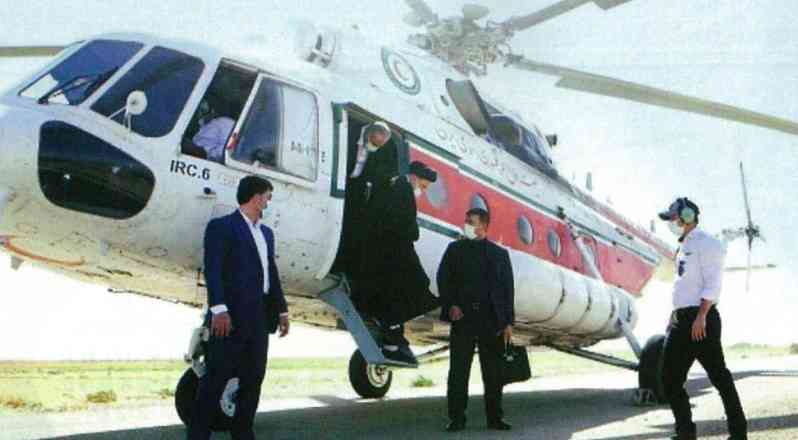
Analyzing the situation at the scene of the accident, the wreckage of the Bell-212 was in a "top-up" state, with the tail facing the top of the mountain and the nose facing the valley. The survivor Hashim could not see the wreckage of the helicopter or the casualties of the crash, which means that he was thrown out of the helicopter and away from other people. Preliminary judgment shows that the helicopter did not hit the mountain directly, but suddenly lost control during the process of passing through the clouds. It is possible that the pilot got lost during the process of passing through the clouds. Faced with the sudden appearance of the hillside, the pilot failed to make an emergency avoidance, and the fuselage hit the trees, causing the aircraft to lose balance and overturn longitudinally, hitting the mountain.
This kind of danger is not uncommon. On January 26, 2020, retired NBA star Kobe Bryant and his daughter took an S-76 helicopter from Orange County Airport to Mamba Academy and suddenly encountered heavy fog. In the fog, the pilot continued to fly based on visual rules, and eventually got lost and could not tell the direction. At the last moment of the accident, the pilot reported to the air traffic control that he was climbing, but radar data showed that the helicopter was rapidly descending and eventually crashed into the mountain.
Both air crashes have the following characteristics
1 Suddenly encountered heavy fog/clouds while flying in the mountains, and visibility was greatly reduced.
2 The helicopter did not have the instrument flight conditions required to pass through the clouds and forced to pass through the clouds.
3 The passengers on board had special identities, and the pilot actively or passively forced to complete the flight mission.
4 Flying reluctantly resulted in the destruction of the aircraft and the death of people.
Why are helicopter accidents so frequent?
After the Lehi air crash, many readers asked whether helicopters are less safe than fixed-wing aircraft. This question is not absolute and should be viewed dialectically.
Helicopters can take off and land vertically and can hover. They occupy a unique ecological position in aircraft and are favored by dignitaries from all countries. However, since their invention, the accident rate of helicopters has always been higher than that of fixed-wing aircraft. According to statistics from the US NTSB, in the non-scheduled flights in the United States in 2019, the accident rate of helicopters was 1.3 times per 100,000 hours, while the accident rate of fixed-wing aircraft was 0.7 times per 100,000 hours. Helicopters are indeed higher than fixed-wing aircraft.
There are many reasons for this phenomenon, among which the most critical factors are the complex structure and use environment of helicopters. First, the mechanical structure of helicopters is more complex than that of fixed-wing aircraft, and the operating environment is also very harsh.
Secondly, the operation difficulty of helicopters is also much higher than that of fixed-wing aircraft. Pilots need to control multi-axis and multi-degree-of-freedom operations at the same time, which is much more complicated than fixed-wing aircraft. Especially at temporary take-off and landing sites, the take-off and landing operations of helicopters are more difficult.
In addition, in adverse weather conditions, especially when facing strong crosswinds and wind shear, the difficulty of helicopter control will increase significantly, requiring pilots to have strong adaptability and rich flying experience.
Helicopters often fly at low altitudes and often need to face complex environments such as cities, mountains, and forests. The airflow in low-altitude areas is changeable, greatly affected by meteorological conditions, and there are many terrain obstacles, which is a greater test for pilots. If performing search and rescue or emergency rescue missions, the risk factor will increase further.
Once the engine of a fixed-wing aircraft stops, it can also rely on gliding to find a flat ground for forced landing, increasing the chances of survival of the passengers. When the engine fails, the helicopter can only reduce the descent speed by rotating the rotors, and increase the survival rate of the passengers by passive measures such as strengthening the fuselage structure. Various factors lead to the survival rate of passengers in helicopter accidents being lower than that of fixed-wing aircraft.
Which helicopter is better, the US or Russia?
After the Lehi air crash, Putin said that the helicopter Lehi was riding was made in the United States, while the helicopter his entourage was riding was made in Russia, implying that the United States could not do it, but Russia could. The objective result was that the US-made Bell-212 crashed while the Russian-made Mi-171 was safe, but we need to see the reason behind the Mi-171’s safe crossing of the mountains.
After all, the Bell-212 is a civilian helicopter with a history of more than 50 years, while the Mi-171 is a military helicopter with improved power systems and avionics configurations in the 1990s for mountain and plateau flights. The performance of the two is incomparable.
For helicopters, mountain flying is a severe challenge. The ups and downs of the mountains cause drastic changes in airflow, resulting in frequent and unpredictable wind shear. A helicopter encountering strong wind shear is equivalent to a small boat in big waves, which is difficult to maintain stability and is prone to serious accidents.
Helicopters flying in mountainous areas are restricted by the terrain and often do not have sufficient space and time to change their flight attitude. Even if the pilot makes the correct operation, the helicopter’s flight attitude will not change immediately. Even the best helicopters need time to respond to control commands and negotiate with the existing flight attitude and wind direction before they can adjust their flight attitude.
Helicopters are limited by their ceilings. When flying over mountains, they often do not increase their altitude to avoid the top of the mountain, but fly along the valley or river valley, resulting in insufficient flight altitude and less room for error.
Civilian helicopters generally choose good weather conditions to fly, but military helicopters often have to perform missions in bad weather. The Mi-171 is powerful, with two TV3-117VM engines providing about 4,000 horsepower (1,471 kilowatts). It is equipped with a relatively complete avionics system including DISS-32-90 Doppler navigator, AGK77 main automatic horizon, BKK-18 automatic horizon attitude monitor, A-037 radio altimeter, A-723 long-range navigation equipment, 8A-813 weather radar, etc.
With a large number of advanced avionics equipment, abundant power and a 13-ton helicopter body, the Mi-171 is more capable of handling adverse weather conditions in mountainous areas. This may be the reason why the Mi-171 accompanying the Lehi fleet was safe and sound. After all, better equipment means higher safety in complex environments.
Although Putin ridiculed the crash of the US-made helicopter, we must realize that the United States does not lack helicopters that can perform flight missions in complex mountainous environments. The US military MH-6OM helicopter, with its terrain tracking radar, electro-optical and infrared cameras, degraded visual environment pilot system (DVEPS), the latest T700-GE-701D engine and other luxurious configurations, makes it at the world’s top level - this is also the confidence of the US special forces to perform difficult low-altitude infiltration missions in mountainous areas.