In recent years, the role of military drones in conflicts around the world has become increasingly important. Turkey, a NATO member spanning Europe and Asia, has gradually promoted the development of its own drone industry, from initially undertaking tasks for the US and European aviation industries to copying and transforming drones from Israel and other countries.
In the "Spring Shield Operation" launched by Turkey against the Syrian government forces in 2020, Turkey’s domestically produced "Anka" S and TB2 "Flagship" two reconnaissance and strike drones performed well, inspiring Turkey’s confidence in selling domestic drones to foreign countries. Since the outbreak of the Russian-Russian conflict in February 2022, Ukraine has used TB2 drones many times to thwart the attacks of Russian ground forces, making TB2 famous again. Its designer Hanerhouk: Bekta said that after seeing the situation in Ukraine, "the whole world is competing to buy TB2 attack drones." "Turkey is becoming a rising star in the global drone market
What is TB2?
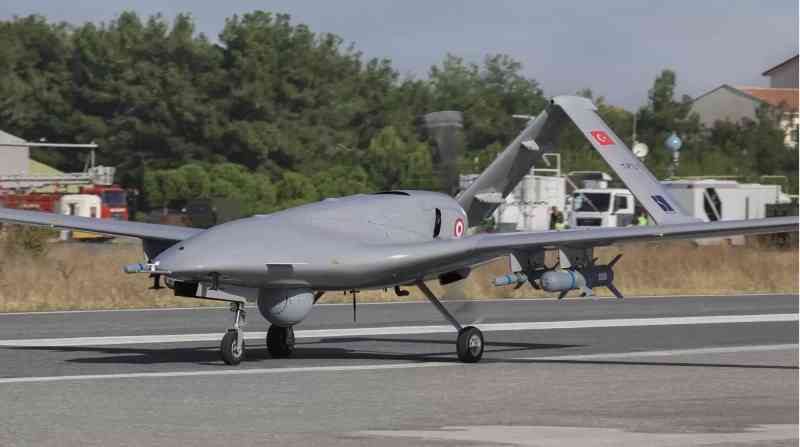
The TB2, which became famous in the Russian-Ukrainian battlefield this time, is a 600-kilogram medium-sized long-endurance reconnaissance and strike integrated drone developed by Turkey’s Beka Defense Company. It can perform intelligence, surveillance, reconnaissance and armed attack tasks. Due to the restrictions of the US ban on the export of armed drones to Turkey, the Turkish military required Beka Defense Company to develop a more advanced armed drone after receiving the first tactical drone TB1 in 2011. TB2 made its first flight in August 2014, and began to conduct weapon delivery tests in 2015. It was then equipped to the troops and put into actual combat.
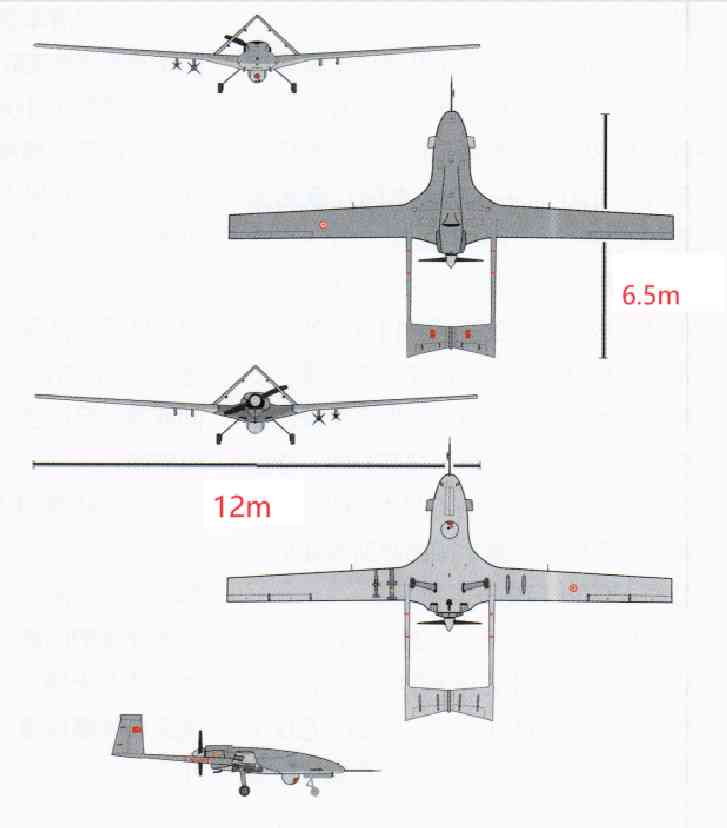
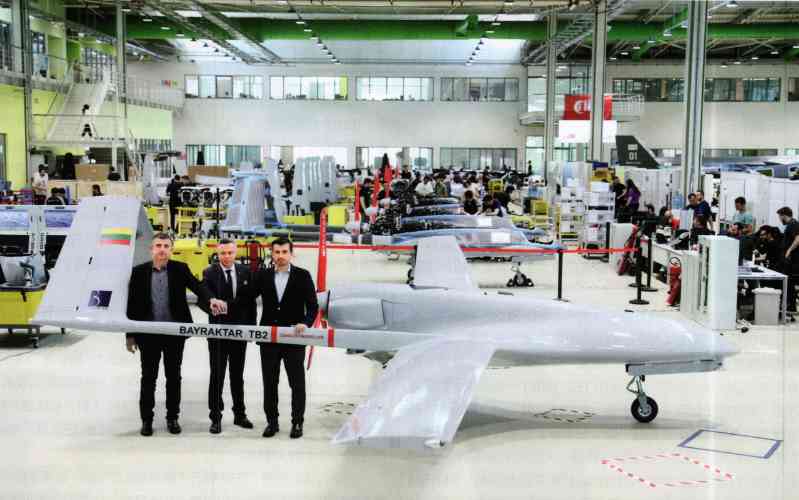
TB2 adopts a V-shaped hybrid tail configuration, powered by a 75-kilowatt RO-tax912-iS piston engine, and the main body of the fuselage uses carbon fiber composite materials. TB2 It adopts a triple redundant flight control system and has functions such as autonomous start, take-off, cruise, and landing; the ground control station adopts NATO standards and is equipped with a cross-redundant command and control system. The flight mission of one drone is performed by three members: the pilot, the payload operator, and the mission commander. The price of each TB2 drone system is about US$5 million, which is only about a quarter of the US "Predator" attack drone. In 2019, the TB2 drone proved its value in local conflicts in Syria, Libya and other places. The low price enabled TB2 to obtain a large number of orders in the international military trade market long before the Russian-Ukrainian conflict. Many Asian and African countries such as Qatar, Libya, Azerbaijan, Turkmenistan, Morocco, and Ethiopia have purchased it. Poland ordered 24 in 2021, becoming the first NATO and EU country to purchase this drone.
In the Russian-Ukrainian conflict that broke out in 2022, Ukraine used TB2 The drones successfully destroyed Russian command posts, military vehicles, surface-to-air missile systems, howitzers and radar systems, and even destroyed two Russian fuel trains, patrol boats and helicopters. Although TB2 also suffered losses in the conflict, its achievements are enough to prove its value. Some international media even said that Turkish drones have become Ukraine’s "secret weapon" against Russia. The "success" of the TB2 drone in the Russian-Ukrainian conflict has brought it greater business opportunities, and it has even been given the mission of "promoting the cornerstone of Turkey’s defense industry exports."
The international "status" of Turkish drones
There are currently two major drone manufacturers in Turkey. Beka Defense Company and Turkish Aerospace Industries. The former’s main products are the TB2 "Flagship" medium-sized drone and the "Asinchi" large drone, and the latter’s "Anka" and "Aksungur" drones.
For a long time, the United States and Israel have dominated the global military drone market. But with the popularization of drone technology, many countries around the world have embarked on this new track of aviation military trade in the 21st century. According to statistics and analysis by relevant institutions, from 2006 to 2019, Turkey’s total drone exports ranked 8th in the world. Turkey has rapidly opened up the international market with the amazing performance of TB2 in the battlefield used by Azerbaijan and its good cost-effectiveness; the eye-catching performance in the Russian-Ukrainian conflict has opened up a new round of growth opportunities for Turkey’s drone exports.
Where there is praise, there is criticism. According to relevant Russian reports, as early as May 2022, at least 90 Turkish-made drones had been shot down in the conflict, not counting the number of drones that were directly "scrapped" in ground hangars under the attack of high-precision cruise missiles. There are also military commentators who believe that although Ukraine has achieved some results using TB2, overall, its performance is not as good as similar Western equipment, and it is more difficult to maintain and maintain. Even Ukrainian President Zelensky has publicly stated that Turkish drones have almost no effect on the results of the war because "Russia has missiles, artillery and air defense systems." TB2 drones are very useful for weakly equipped armies, such as in Nagorno-Karabakh (a disputed area between Azerbaijan and Armenia) or other parts of Africa, but facing regular troops, TB2 is a large aircraft model that can cause some damage, but it can’t play a role in determining the direction of the war. However, Turkey is obviously unacceptable to the negative comments about the TB2 drone from the outside world. The Turkish side has denied many accusations against TB2, including those from Ukraine, and believes that the problem lies in the poor training of the Ukrainian army in the application of drones.
Although Beka Defense’s TB2 UAV has received good international orders, the special status of the company’s founder, Baylakta, has raised a question mark about the technical value of the TB2 UAV. Another identity of Beka Defense CEO Baylakta is that he is the son-in-law of Turkish President Erdogan. Although he has an MIT education background, it is generally believed that as a UAV designer, he did not rely on his real technical strength, but on his status as a "son-in-law" to obtain military orders. Baylakta’s Beka Defense Company also has some "historical problems". In 2007, the company won a military tender with a small 4.5 kg UAV, which involved family interests.
In fact, in the field of international military armed UAVs, Turkey’s TB2 UAV is indeed not a product that is outstanding in all performance indicators. Other advanced drones with similar positioning include the US MQ-1 Predator, China’s Wing Loong 2 and Rainbow 3, which are all leaders in the field of reconnaissance and strike drones and each has independent and complete intellectual property rights. However, many subsystems of the TB2 drone, including power, are imported rather than self-developed, which has hindered TB2’s further expansion into the international market.
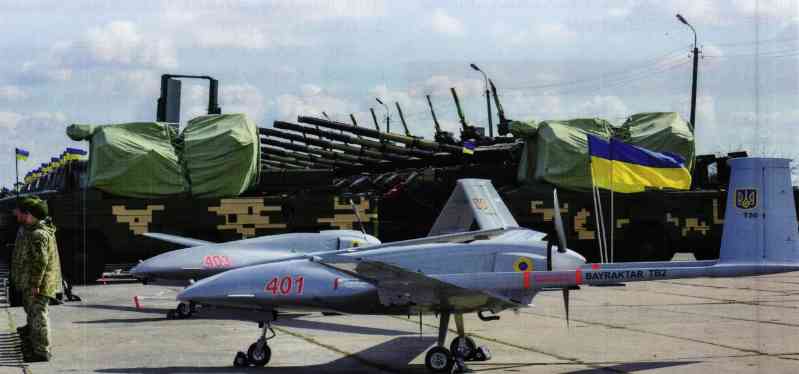
But it is undeniable that TB2 has been tested in the Russian-Ukrainian war, has a low cost, and has performance and quality close to NATO standards. Alda Mevlutoglu, an independent defense affairs analyst working in Turkey, said that the sale of drones will be able to help Turkey establish sustained military trade relations with foreign countries, which in turn will help Turkey expand its military, diplomatic and economic influence in the recipient countries and their surrounding areas. Turkey sees Africa as a big market because President Erdogan has witnessed the demand firsthand. During his visit to Angola, Nigeria, Togo and other countries in October 2021, Erdogan said: "Wherever I go in Africa, people will ask about Turkish drones. The international status of Turkish drones is gradually improving.
One step forward
On December 14, 2022, the "Red Apple" military drone developed by Turkey’s Beka Defense Company made its first flight. The aircraft is part of the Turkish Combat Unmanned Aircraft System (MIUS) project and was originally scheduled to make its first flight in 2023. The early progress shows that Turkey has opened up the research and development system of advanced drones and entered a stage of rapid development. For a long time, Turkey has had a dream of developing a fifth-generation aircraft, but due to the weakness of domestic aircraft manufacturing technology, the fifth-generation aircraft research and development project has not made substantial progress. What is even more frustrating to Turkey is that the United States removed Turkey from the F-35 in 2019. fighter project. In order to break the situation of "absent fifth-generation aircraft", Turkey will devote more energy to the stealth unmanned fighter project. The Turkish president once publicly stated that "Turkey will become the first country with fully artificial intelligence-driven unmanned fighters, and plans to complete the design in 2023." Such determination has made the first flight of the "Red Apple" stealth unmanned fighter come true ahead of schedule.
The "Red Apple" unmanned fighter is a brand-new unmanned fighter. It is the most potential stealth unmanned fighter developed by other countries or regions except the United States, Russia, China and the European Union. The maximum take-off weight of the "Red Apple" is 6,000 kg, the payload is 1,500 kg, the practical ceiling is 11,000 meters, the endurance is 5 hours, and it is equipped with AESA The radar has good stealth performance. Turkey plans to deploy the aircraft on amphibious assault ships in the future to achieve a wider range of applications.
Previously, the results of Turkey’s drone research and development were mainly concentrated on subsonic long-endurance reconnaissance and strike models. However, the technical requirements of the aerodynamic shape, flight control, airborne equipment and other systems of this drone are completely different from those of unmanned fighters. The difference between the two in terms of technical span and system complexity is far greater than the difference between traditional manned fighters and unmanned fighters. Once the "Red Apple" unmanned fighter was unveiled, it also attracted widespread attention from Chinese military fans, but the public discussed more about it not the leapfrog development of Turkish drones, but its familiar appearance-the "Red Apple" drone is quite similar to China’s J 20. Whether looking from the side or looking down, it is like the Turkish design team got the design drawings of the J 20. Both use a canard aerodynamic layout, an outward-inclined double vertical tail and a wing-body fusion design, especially the transition section between the canard and the fuselage. It can be inferred that Beka Company has a good understanding of the J 20. The vortex generation mechanism of the aircraft was studied and imitated. The detailed design of the fuselage surface also implements the principle of low detectability, and a large number of zigzag designs are adopted. The internal bomb bay design can further enhance its stealth performance.
But it should be pointed out that the success of the J 20 is based on decades of accumulation of China’s aviation industry, with full industrial chain production and manufacturing capabilities and completely independent intellectual property rights. Turkey’s "Red Apple" unmanned stealth fighter can only be regarded as a downgraded imitation of the J 20’s appearance. To truly maximize combat performance, it is probably necessary to concentrate on cultivating internal strength. It requires a deep theoretical foundation of aerodynamics and rich experience in the application of fly-by-wire flight control engineering to fully exert the flight performance of the canard-type layout fighter. There are also some other design details, such as the parallel design principle to reduce radar echoes, embedded antennas, sensors and other "Red Apple" There are still many details that need to be optimized. There are many factors that restrict the success of the "Red Apple" stealth unmanned fighter, such as the engine. Turkey needs a turbofan engine with afterburner, which is completely different from the light piston engine selected by TB2. Without a high-performance engine, the stealth unmanned fighter will never be mass-produced. In addition, there are many subsystems such as avionics, fire control, and communications. For Turkey, which has no experience in developing manned fighters, it is indeed a long way to go to develop a stealth unmanned fighter with generational attributes.
Therefore, it is too early to talk about whether the "Red Apple" is an advanced unmanned fighter jet, but it can be seen that after the success of the TB2 UAV project, Turkey is making a concerted effort to launch an impact on the mid-to-high-end of the aviation manufacturing field.