The United States immersed in low-intensity conflicts
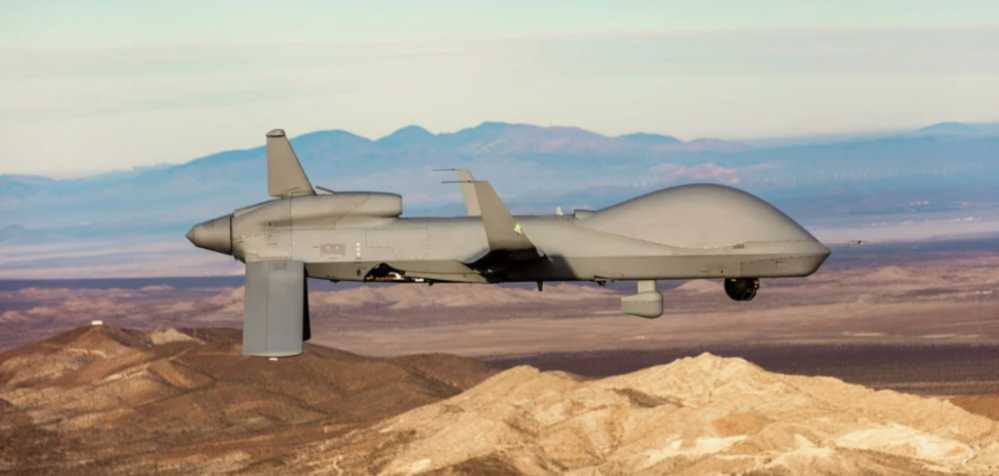
The United States is the first country in the world to use reconnaissance and strike drones in actual combat, especially in various "decapitation" strike operations and ground support operations. The reconnaissance and strike drones currently in service and equipped by the US military include MQ-1 "Predator", MQ-1C "Gray Eagle" and MQ-9 "Reaper", all of which are products of General Atomics Aeronautical Systems.
MQ-1’s predecessor, the RQ-1 "Predator" drone, made its first flight in 1994 and was first used for aerial reconnaissance. Later, General Atomics installed the AGM114 "Hellfire" anti-tank missile for it in early 2001, and successfully hit the tank target in the test, marking the birth of the first reconnaissance and strike drone. This type of drone was deployed in Afghanistan in 2001, mainly equipped with the US Air Force and the CIA, of which the US Air Force deployed it in squadrons.
MQ-9 is the largest number of reconnaissance and strike drones in service in the US Air Force. In 2007, the first attack squadron was established in Nevada, and in September of the same year, it was sent to the battlefield in Afghanistan to perform precision strike missions.
In 2010, the improved version of MQ-1, MQ-1C, was put into the battlefield and equipped in the UAV company of the U.S. Army Division Combat Aviation Brigade. Since 2015, all MQ-1Cs ordered by the U.S. Army have been GE-ER upgraded.
The U.S. military was the first to put drones into actual combat and has rich experience in using them. For example, in Afghanistan, at least 41 strike operations have been carried out since 2016, and as of 2021, there have been about 13,000 records of use, killing about 4,138 targets. The US military uses reconnaissance and strike drones very frequently. It believes that whether it is a simple reconnaissance mission or a land strike operation, the use of drones can minimize casualties and improve the efficiency of the strike.
The Air Force focuses on assassination and relies on accurate intelligence
The United States is very good at using reconnaissance and strike drones for assassination operations. For example, on April 1, 2018, it killed the local Taliban leader Mullah Mohammed and On January 3, 2020, Iranian General Soleimani was assassinated in Iraq. For example, US President Biden announced on August 1, 2022 that the US military killed the leader of al-Qaeda, Ayman al-Zawahiri, in an airstrike on July 31.
In early 2022, the US intelligence agencies obtained intelligence and discovered that Ayman al-Zawahiri was hiding in a community in Kabul, the capital of Afghanistan. Since the United States has withdrawn its troops from Afghanistan and has not yet reached a joint counter-terrorism agreement with neighboring countries, this strike operation is very likely to use a long-range drone that took off from an Arab country, which can basically be determined to be the CIA’s MQ-9.
However, the United States’ ability to successfully use drones to complete assassination missions is still highly dependent on human intelligence, and the whereabouts of the targets are mostly provided by local informants. This also leads to whether drone attacks will cause collateral casualties or accidental strikes, which often depends on whether the intelligence is accurate. For example On August 29, 2021, a U.S. drone attacked a car near Kabul Airport, claiming that the car was equipped with a bomb. After the attack, it was said that the car had a secondary explosion. But in fact, the car was driven by an American aid worker. In this attack, a large number of casualties were caused, and the United States later admitted the mistake.
In fact, the U.S. Air Force attaches great importance to intelligence collection. As early as 2008, it signed an agreement with Northrop Grumman to develop signal intelligence (SIGINT) payloads for active reconnaissance and strike drones. But it was not until 2020 that the outside world saw the signal intelligence pod on the rack of the U.S. military MQ-9, and its developer has become L3 Harris. We have no way of knowing what happened in the past 12 years, but it can be seen that the U.S. military is not in a hurry to develop this type of pod, contrary to its usual practice.
Exploration of air-to-ground support mode
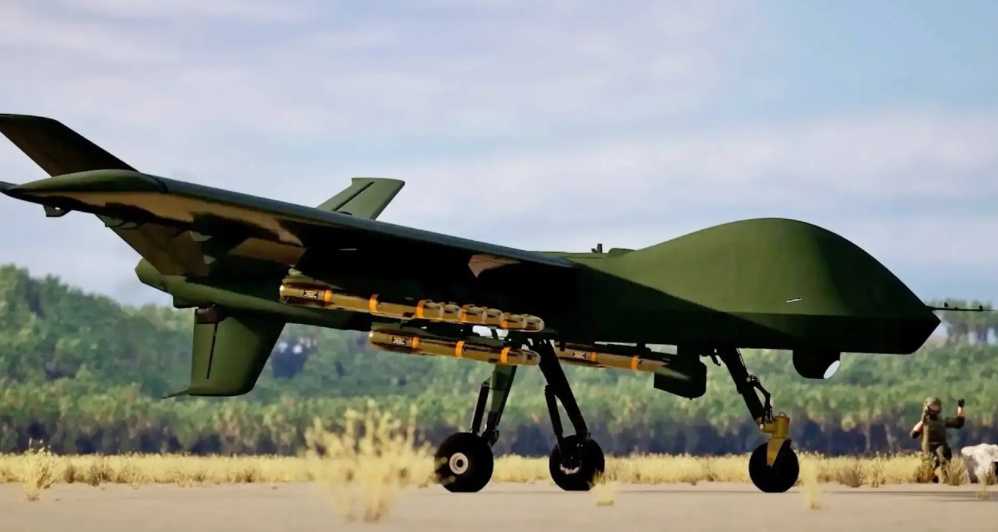
The application of the United States’ reconnaissance and strike drones also includes ground support operations. The first documented drone ground support operation took place on March 4, 2002, in Afghanistan to support the "Rangers" in helicopter recovery missions.
During this mission, two US CH-47 "Chinook" transport helicopters were attacked by militants and forced to land. One of them was forced to land in a more dangerous position and was severely damaged. Therefore, after weighing the pros and cons, the US military decided to only recover the other helicopter. When the Rangers arrived at the latter’s location, there was a US Navy F/A-18 fighter, an Air Force MQ-1 drone and several A-10 attack aircraft on standby in the air to provide support. During the entire operation, the MQ-1 only fired one missile, but provided the Rangers with a crucial battlefield situation and helped them evacuate quickly.
In the above battle example, as a special forces unit, the Rangers can easily call for fighter support. The US Army realized that if its conventional forces can also get support from drones, its combat capabilities will be greatly improved. So the US Army launched a drone bidding that year, and the MQ-1C won, and was later equipped in various US Army divisions in 2009. In 2013, the 160th Special Operations Aviation Regiment serving the special forces also obtained the MO-1C drone company.
In the field of air-to-ground support, the US Air Force and the US Army have different views, and the main difference lies in the speed of drones.
The US Air Force often mentions the case of supporting militias to defeat extremist organizations in the Libyan city of Sirte in 2016. In this battle, the US Air Force only deployed MQ-9 to achieve comprehensive surveillance of the battlefield and carried out more than 600 strikes. The drone operators involved in this operation believe that the slower speed of the drone allows it to carefully observe the street conditions, accurately strike targets on the bottom floors of high-rise buildings to avoid friendly harm, and will not bring any danger to the operator. Its longer hovering time can also allow the US military to wait for ground troops to arrive, and provide continuous support after the battle starts to control the rhythm of the battlefield. Therefore, the US Air Force believes that MQ-9 can replace some of the close air support functions of the A-10 attack aircraft in the future.
However, in the view of the US Army, the most unsuitable task for drones is close air support missions. The MQ-1C needs a runway to take off and land, and its maximum speed is similar to that of the "Apache" attack helicopter. Its low noise is not conducive to intimidating the enemy. Combined with the characteristics of the drone’s slow flight speed, the US Army believes that it is more suitable for pre-planned tasks, such as escorting convoys or sweeping strongholds.
Especially compared with the missiles mounted on the MQ-1C, the reconnaissance equipment plays a greater role. Therefore, the US Army believes that drones can improve the ability of division-level commanders to use technical equipment for combat in battlefield reconnaissance and land strike operations. The arms most affected by it are artillery, reconnaissance, air search forces, infantry and Army special forces. In a low-intensity conflict environment, reconnaissance and strike drones are difficult to realize their potential.
Ground forces increasingly focus on drones
The US Marine Corps, which has not been mentioned in the previous article, does not want to purchase and equip reconnaissance and strike drones, but the procurement plan it proposed has not been approved for a long time. Only the 1st UAV Squadron (VMU-1) has leased two contractors’ MQ-9A since 2018 to accumulate experience. It was not until 2020 that the US Marine Corps changed its strategic thinking and carried out reforms including the elimination of tanks. Its financial situation became slightly more flexible, and the two leased drones were officially purchased. In 2023, the US Marine Corps may purchase another 6 MO-9A drones.
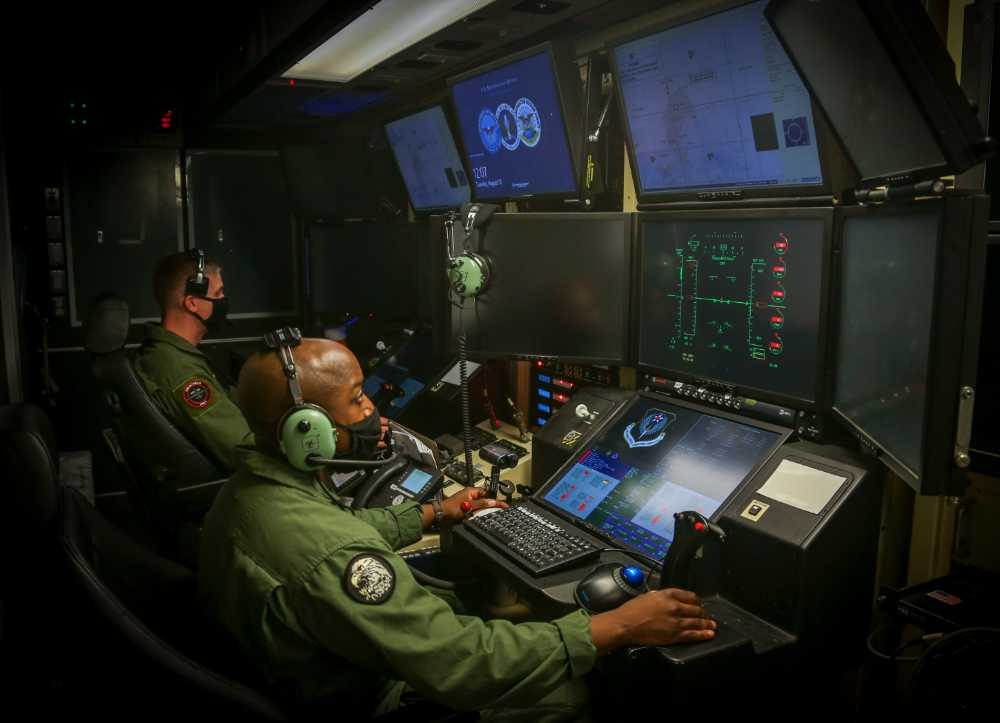
Since the US Air Force’s MQ-1 has been retired, the US Army is also actively seeking a replacement for MO-1C. The solution given by General Atomics is the "Mojave" drone. The development of this type of drone began around 2018 and its first flight was in the summer of 2021. Its most prominent highlight is the ability to perform short takeoff and landing (STOL). With its 330-kilowatt M250 turboshaft engine, low aspect ratio wings and widened and reinforced floating tires, it can take off from a field airport runway as short as 152 meters or even a dirt road in the lightest configuration.
Of course, with such a strong power, if short takeoff is not considered, this type of drone can carry up to 16 "Hellfire" missiles or carry radar missile warning pods, jamming pods and flare chaff strips and other equipment to improve its sustained combat capability and survivability.
It can be seen that the development idea of "Mojave" is to increase power and strengthen the body to cope with various harsh environments, and to improve adaptability and concealment in high-intensity conflict environments. The biggest disadvantage of this type of aircraft is that it is expensive, so improving survivability is the top priority. In addition to the US Army, the US Marine Corps is also very interested in this type of aircraft, because its short-range take-off and landing capability is expected to be converted into ship-borne take-off and landing capability, which is in line with the US Marine Corps’ combat concept from sea to land.
Iran focuses on its own needs
Iran’s research and development of drones can be traced back to the Iran-Iraq War in the 1980s. During this period, the loss of fighter jets was very high, and drones naturally became a low-cost substitute for fighter jets.
Although Iran’s aerospace industry is not strong, it still independently developed a series of drones. For some parts that Iran is unable to produce or have high costs, Iran will not hesitate to choose to obtain them through market means. For example, its reconnaissance and strike drones are equipped with Rotax series engines produced in Austria, electronic components produced in South Korea and Malaysia, and optical lenses made in Japan and the United States, but the overall design and production of this type of aircraft are completed in Iran.
Iran’s drone development work is very pragmatic. If it has the opportunity to come into contact with excellent designs from other countries and believes that it has the ability to imitate them, it will implement reverse engineering. When Iran successfully intercepts or shoots down the US RO-170 Firebee and MQ-9 drones, it will immediately start imitating them and then come up with products that are similar in aerodynamic appearance. Although similar appearance and comparable capabilities are two different things, it is an indisputable fact that Iran’s drone design and production level has been gradually improved through long-term reverse engineering accumulation.
At present, Iran has a complete drone industrial system. Although there is a considerable gap in technology with other drone powers, its unique "magic weapon" is its extremely high cost-effectiveness. The hovering time of Iran’s small and medium-sized drones is often more than 20 hours. Most of the components in the aircraft are cheap commercial components. Through reverse engineering, the R&D cost is reduced. At the same time, it has strategically developed a relatively complete family of small weapons suitable for drone equipment, ranging from glide bombs to anti-tank missiles.
Iran’s drones are designed according to the country’s actual needs and combat environment. Actual combat has proved that they can complete the task well. Iran does not necessarily want an extremely powerful drone system, but rather a system that any drone operator in Iran and its allies can quickly master.
The Mohajer series was originally a reconnaissance drone. It was developed and put into use in large quantities during the Iran-Iraq War. The latest model in the series, the Mohajer-6, has evolved into a reconnaissance and strike drone. The Mohajer-6 has also been widely exported, with countries such as Iraq and Ethiopia being users of this type of aircraft, and its low operating difficulty has been widely praised. In addition, during the Russian-Ukrainian conflict, at least one Mohajer-6 equipped with Ghaem-5 TV-guided munitions was provided to the Russian Navy for trial.
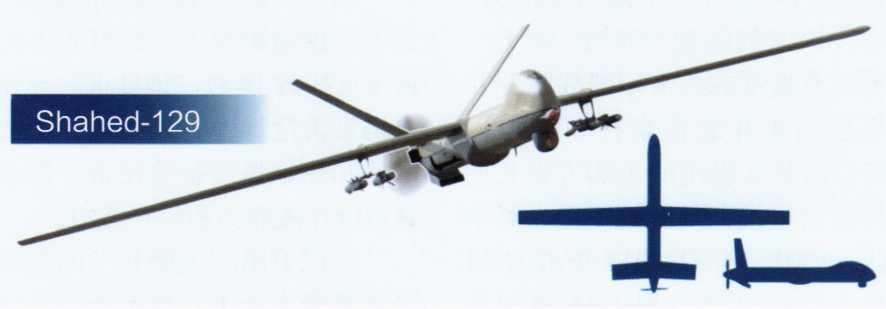
The Shahed-129 drone is similar to the Israeli Hermes 450 and is one of Iran’s most powerful drones, but the total production is relatively small. Therefore, once this type of drone appears on the battlefield, it is usually regarded as a sign of Iran’s military presence.
According to the data disclosed by the Iranian government and documentaries shot in recent years, we can get a glimpse of the combat methods and mission efficiency of Iran’s reconnaissance and strike drones through the combat records of the Shahed-129. As of the end of 2020, this type of drone has carried out 129 strike missions in eastern Iran, Syria and Iraq, with a single drone flying more than 800 times, and an average flight cost of only $2.6 per hour. As can be seen from the documentary, this type of drone has low requirements for take-off sites, can take off from roads, and its combat method is relatively extensive: multiple drones take off in sequence at planned time nodes, carpet search enemy gathering areas, and immediately bomb after finding the target. This type of action can basically ensure that at least one drone will not return empty-handed, consume the enemy’s manpower at a lower cost, and even if there is a loss, no compensation will be paid.
If the recovery of drones is not considered from the beginning, Iran has also developed the Samad-4 drone. This type of drone is relatively rare, and its main users are the Houthi armed forces. It can carry two bombs totaling 25 kilograms. It is said that the flight distance is up to 2,000 kilometers, and the attack range can cover the entire Gulf region and the entire territory of Israel. The bombs it carries have basically no guidance capabilities and are only suitable for attacking fixed targets. It is not ruled out that this type of drone was involved in the 2019 Saudi Aramco oil field attack.