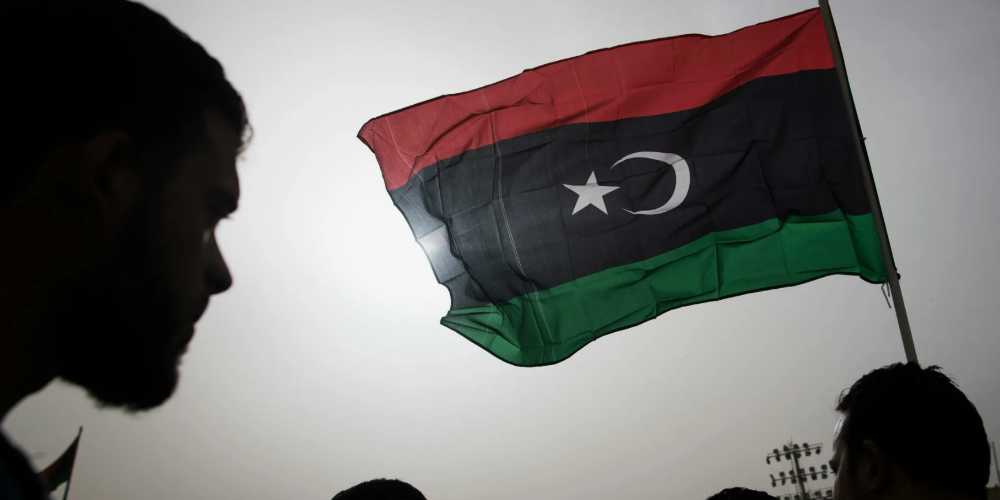

This is a force that once challenged the US Navy Air Force over the Mediterranean Sea. It is a considerable air force in the entire North Africa and the Middle East: When the civil war in Libya reached its peak in the early spring of 2011, the Libyan Air Force also ushered in the final moment of struggle and tearing.
Drop the bomb
For more than 40 years, Libya has been under the strong control of Colonel Muammar Gaddafi. However, this seemingly stable country has accumulated too many cracks, and finally in 2011, it led to an armed confrontation between the two forces supporting and opposing Gaddafi. As the most technologically advanced branch of the government army loyal to Gaddafi, the Libyan Air Force has continuously increased its operational intensity since the outbreak of the civil war, reaching its peak after entering March, and then stopped in the summer.
That chaos In the first few days of March, the Libyan Air Force base in Gurdabia was extremely busy. Many Su-22 attack aircraft and Su-24 fighter-bombers were dispatched from here to carry out multiple rounds of air strikes on military bases and ammunition depots in Agdabiya and Mursa el Brega, which were occupied by opposition forces. However, although most of the attacks were launched from low altitude, the destructive effect was not ideal, and most of the bombs were said to have deviated from the target.
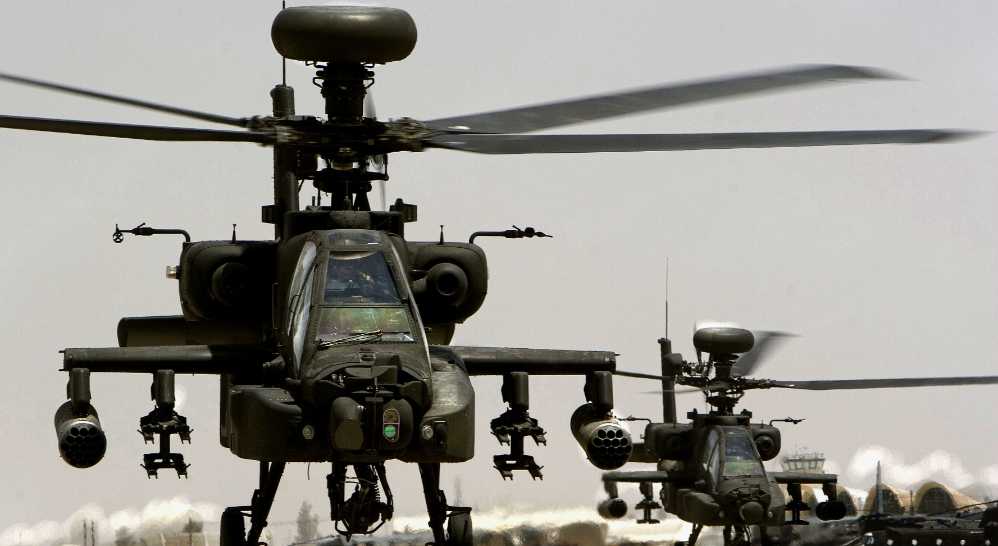
MiG-23 fighters and Czech-made L-39 "Albatross" trainer/light attack aircraft from Mitiga base, as well as Mi-24 armed helicopters stationed at other airports, also took turns to attack opposition armed strongholds in towns such as Az-Zawiya, Misrata, and Zintan.
In the week ending March 6, the Libyan Air Force carried out such missions almost uninterruptedly, and also suffered losses in the process. One of the most eye-catching examples was the downing of the Su-24MK with fuselage number 38 on March 5. The Sukhoi fighter was shot down by "a 50-year-old middle-aged man with no battlefield experience at all". Only one barrel of the ZPU-4 quadruple anti-aircraft machine gun operated by him was in a usable state. However, it was this remaining barrel that ended the "fencer", and the two crew members on board were killed on the spot.
While attacking in the air, forces loyal to the Gaddafi regime successfully dismantled the siege of the Misurata Air Force Academy by the opposition forces in early March, allowing several training aircraft parked there to be put to use, including at least two Mi-24s and five G-2A "Seagull" jet trainer/light attack aircraft.
In order to improve the accuracy of ground attacks, the Libyan Air Force changed its combat methods since March 6. First, send An-26 turboprop transport aircraft or drones purchased from Austria’s Schiebel Company to the target area, which provide target parameters, and then let Su-22 and Su-24 go to drop bombs. The effect of this is obvious. For example, several oil facilities in the Ras Lanuf area have been severely damaged.
In the name of "freedom"
It should be pointed out that the air operations in the Libyan civil war were not "unilateral" from the beginning. In fact, pilots loyal to Gaddafi sometimes even had to fight with their former comrades-in-arms-when the last moment came, the Libyan Air Force was torn apart.
At the beginning of the civil war, the opposition forces occupying eastern Libya captured a number of military aircraft, including two Mi-24 attack helicopters, 3-4 Mi-14 anti-submarine helicopters, several MiG-23MF/ML fighters, two MiG-23UB two-seat trainers and no less than 20 MiG-23BN fighter/attack aircraft (most of which were in a state of abandonment).
From late February to early March, at least five government pilots chose to change sides. They went to Benina to join the opposition forces, from where they flew two usable MiG-23ML fighters and an old MiG-21bis to fight their former colleagues. During the same period, the opposition forces seized at least 10 MiG-23MF/UBs (five of which were in a usable state) and several helicopters elsewhere. Now that they have found themselves with "enough" aircraft and helicopters, the forces that aim to overthrow the Gaddafi regime formed the "Free Libyan Air Force", with Colonel Mohammed Omar Kadiri as the "Air Force Commander"
Then, more active pilots, technicians, and retired officers and non-commissioned officers joined this banner, allowing Colonel Kadiri to organize his first "Fighter Squadron" in Benina. This squadron is equipped with several previously captured MiG-23BN and MiG-23MF, and the ground crew tries to maintain the attendance rate of available fighters by dismantling parts from other similar aircraft.
At the same time, the "Free Libyan Air Force" also formed a "Helicopter Squadron", which initially had only one Mi-24 available, but with the help of former Air Force technicians who joined the opposition armed forces, the squadron’s strength was quickly improved. On March 3, a Mi-14 from this squadron sneaked into Solluchi, about 50 kilometers south of Benghazi, and transported away eight British "diplomats" who appeared there. These people were actually members of the Special Air Service (SAS)
On the second day of this unique "search and rescue" operation, Colonel Kadiri took action again. He sent two Su-24 fighter-bombers to attack a government ammunition depot near Benina. The attack accurately hit the warehouse, and the huge explosion caused serious damage and killed more than 20 people.
At this point, the Libyan Air Force had to regard the "Free Libyan Air Force" as an opponent that could not be ignored.
Suicide attack?
On March 15, the government forces that continued to advance achieved an important victory, recaptured the important town of Ajdabiya, and further strengthened the peripheral control of Benghazi, the base of the opposition armed forces. On the same day, the air forces of both sides actively dispatched to try to take the initiative.
Libyan Air Force fighter-bombers, attack aircraft and armed helicopters took turns on the 15th to directly support the offensive of the ground forces. During the battle, a Mi-24 was shot down, and the pilot who died was not a Libyan, but a senior pilot from Syria, Colonel Ahmed Fuduri. His body was then transported back to his homeland, and the commander of the Syrian Air Force, Major General Issam Harah, personally presided over his funeral.
The "Free Libyan Air Force" put its precious fighter squadron into the battle of Agdabiya. The MiG-23BN dispatched no less than 7 sorties on the 15th. These "whippers" also used 23mm twin-barreled machine guns and 57mm rocket pods to attack government transport ships. After returning, the pilot claimed to have hit 3 ships, two of which were "sunk", but the government army issued a statement saying that only one ship was damaged.
Colonel Kadiri’s men continued to go out on the afternoon of the 15th. First, two Mi-24s attacked a government convoy approaching the western suburbs of Agdabiya. Then, two MiG-23BNs fired rockets at Hurdabia Airport before sunset, which reportedly caused the local runway to become bumpy."
When the anti-Gaddafi air force attacked Hurdabia Airport again in the late afternoon of the 16th, a very controversial incident occurred. It is said that the pilot who participated in the airstrike, Mohammed Mukhtar Osman, did not return after the mission, but flew his MiG-23BN directly to Tripoli, the headquarters of the government forces, and crashed into the Aziziya Barracks where the Gaddafi family was located.
After that, foreign news reported that there was indeed a "large-scale explosion and exchange of fire" at the Aziziya Barracks around 20:00 that night, with heavy casualties, and Gaddafi’s 7th Khamis Gaddafi, the son of the Libyan leader, died of severe burns in the attack...
However, this so-called suicide attack is still shrouded in mystery. A few days later, the semi-official newspaper of the opposition armed forces published a long report on the "Free Libyan Air Force", which listed the names of three "martyred" jet fighter pilots, but "Mohammed Mukhtar Osman" was not among them.
On March 29, Khamis Gaddafi, who was previously believed to have died in the explosion of the Aziziya Barracks and held military power, appeared on a TV program, thus breaking the rumors in the Western media that he had been killed - but 5 months later, Khamis was killed in Tarhuna after all
External upheaval
After determining that the opponent used Benina as its main base, the Libyan Air Force launched a fierce attack on Benina at noon on the 17th. At least two Su-22 formations of four aircraft launched attacks one after another. The runway, apron and warehouse of Benina Airport caught fire in many places. Two civilian Yak-40 regional transport aircraft were hit and black smoke rose.
A Su-22 was shot down under the orderly anti-aircraft fire of the defenders. The pilot was captured after parachuting. It is said that he is an Algerian. In response to the air strikes of the government forces, the "Free Libyan Air Force" urgently launched a MiG-21, but the fighter crashed near Solluchi soon after, killing the pilot. The outside world believes that the MiG was probably shot down by "friendly fire". From the 17th to the 19th, the intensity of the Libyan Air Force’s operations increased to an unprecedented level. In order to support the ground forces landing near Gorgola to outflank Benghazi, several Libyan Air Force squadrons worked together to attack Benina and other places in multiple waves, and also destroyed important facilities such as the main power station in the Benghazi area.
It seems that the forces loyal to Gaddafi are gaining the upper hand in the civil war, but the external environment has changed dramatically in the past few days. Under the promotion of the United States, Britain, France and other countries, the United Nations passed Resolution 1973 on March 17, deciding to establish a no-fly zone in Libya. On the 19th, France first launched an air strike on Libya as a "vanguard", and then more NATO countries followed up, and an "Odyssey Dawn" operation to fully suppress the current Libyan regime from the air was launched.
On the morning of the 19th, just a few hours before the French fighters began to act in accordance with the spirit of the UN resolution, the Libyan Air Force fighter-bombers had just launched a new round of strikes on Benghazi, and the attacked party also sent its own fighters into the air, triggering an air battle.
For the opposition forces, this aerial interception became a tragedy. A MiG-23ML piloted by former government pilot Major Fakhruddin Ali Assur suddenly lost control in the sky outside Benghazi. Some observers saw a "bright orange explosion" on the upper right side of the plane, followed by the destruction of the plane and the death of the people. At that time, many people took pictures of this scene with their mobile phones, but no one could tell what happened to the MiG-23. Some people thought that the plane had a technical failure, some claimed that the plane was hit by an air-to-air missile launched by the Libyan Air Force MiG-23, and some believed that Assur was actually hit by Benghazi ground fire by mistake.
The next day, when a government Mi-24 helicopter gunship returned from a sortie and landed at Misrata Airport, the Libyan Air Force’s combat operations in the civil war came to an end. On this day, NATO multinational military air operations escalated again, and the Libyan Air Force was no longer the controller of its own airspace.