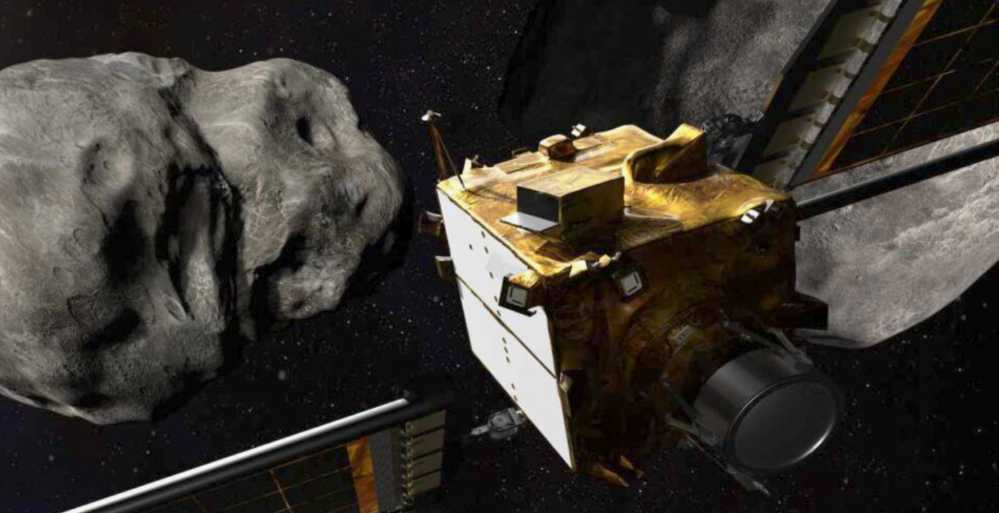

In November 2022, astronomers discovered an asteroid named 20224P7, which is 2.3 kilometers in diameter at its widest point and is likely to cross the Earth’s orbit, making it the largest potentially dangerous object discovered since 2014, and a "planet killer". Of course, 2022AP7 is by no means an isolated case, and more and larger "planet killers" will be discovered in the future, so targeted planetary defense organizations have become very necessary. On September 26, the DART impactor of the National Aeronautics and Space Administration (ASA) successfully hit the Dimorphos asteroid, changing its orbital period by 32 minutes, and preliminarily verifying the key technology of planetary defense.
The first step is to search
The earlier a potentially threatening near-Earth object is discovered, the more options there are for defense. In addition to asteroids, comets also pose a threat to the Earth - the return of Halley’s Comet in 1910 caused panic. However, the probability of a comet hitting the Earth is much lower than that of an asteroid - about 1% of an asteroid, so astronomers put more energy into discovering and monitoring asteroids. In 1900, the first near-Earth asteroid was discovered, and by 1950 a total of 13 near-Earth asteroids were discovered. By 2000, this number had grown to 879. Since then, due to technological advances and the boom in planetary defense, great progress has been made in the search for near-Earth objects. As of 2021, a total of more than 25,000 large near-Earth objects have been discovered. Large here is defined as an object with a diameter greater than 140 meters, and the impact of such an object will cause significant damage to the Earth.
The second step is tracking
Discovering a near-Earth object does not determine whether it will hit the Earth, and it is necessary to track it in depth and map and calculate its precise orbit. To do this, astronomers need to conduct thousands of telescope observations over days, months, and years, each of which helps to improve the prediction of the future path of the comet or asteroid. If it is not tracked in time after discovery, the target may be lost. Because the orbit of near-Earth objects is very uncertain, and they are small and dim, it is very difficult to track.
The third step is analysis
For asteroids or comets that have a certain probability of hitting the earth, in-depth research is needed to prepare for planetary defense. The spin rate, composition, physical properties, and companion stars of near-Earth objects need to be considered to better formulate planetary defense plans.
The fourth step is to reduce the threat
There are many ways to reduce the threat. In principle, there are two main categories, one is deflecting the orbit, and the other is "breaking" the asteroid. Deflecting the orbit means deflecting the orbit of the asteroid so that it will not hit the earth. "Breaking" the asteroid means smashing the asteroid into pieces small enough to burn up in the atmosphere. However, the size of asteroid fragments is difficult to control accurately, and any fragments larger than 35 meters in diameter cannot be completely burned up in the atmosphere. Therefore, deflecting the orbit is more reliable. There are many ways to deflect the orbit, which can be divided into kinetic energy, electromagnetic energy, gravity, solar energy and nuclear energy from the energy source. Among them, the kinetic interception/deflection strategy is the simplest, the technology is relatively mature, and the effect is immediate. However, there is a problem that many near-Earth objects have very loose structures, and kinetic impacts may cause them to disintegrate, and produce a lot of threatening fragments. Therefore, it is very important to accurately calculate the impact path and impact energy. Relatively speaking, gravitational pulling, installing rocket engines and other technologies are more difficult and more difficult to implement.
The fifth step is coordination
Defending against near-Earth object impacts requires international cooperation. From decision makers to emergency management departments to the public, they all need to fully understand the threats and countermeasures of near-Earth objects.
DART impactor, the first attempt
As early as In 2015, NASA and the European Space Agency (ESA) reached a mission plan called the Asteroid Impact and Transfer Assessment (AIDA). According to the plan, ESA will launch the AIM orbiter in December 2020, and NASA will launch the DART impactor in July 2021. However, due to insufficient budget, ESA abandoned the development of the AIM orbiter in 2016. NASA chose a binary system as the impact target. The larger "Dimos" asteroid has a diameter of about 780 meters, and the smaller "Dimophos" asteroid has a diameter of about 1.160 meters. The DART impactor will hit the smaller "Dimophos" and change its orbital period. The effect of the impact will be evaluated by observing the change in the orbital period. In June 2017, NASA completed the preliminary design of the DART impactor. In August 2018, NASA began to assemble the impactor. On April 11, 2019, NASA announced that it would use SpaceX’s "Falcon" 9 to launch DART. DART is long 1.2 meters long, 1.3 meters wide and 1.3 meters high, it is equipped with two huge solar arrays, each 8.5 meters long when fully unfolded. DART launched with a mass of 610 kg, and its mass dropped to 570 kg due to propellant consumption during impact. In the final flight phase, DART will hit Dimophos at a speed of 6.1 km/s
DART is not the first space impactor of mankind. As early as July 4, 2005, the US "Deep Impact" probe released a 372 kg impactor to hit the "Tempel" 1. Comet, releasing 19 gigajoules of energy (equivalent to 4.8 tons of TNT equivalent) and creating an impact crater with a diameter of 150 meters. However, the purpose of "Deep Impact" is to analyze the internal composition of the comet through the debris flow generated by the impact. DART, on the other hand, is designed to change the orbit of celestial bodies, and the two purposes are completely different.
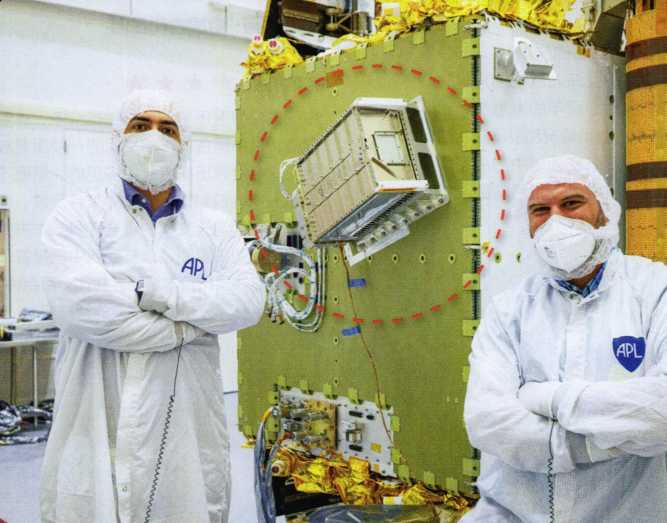
Because it is an impactor, DART does not carry a scientific payload, only navigation equipment. DART’s main navigation equipment is a star tracker and a 20-centimeter optical navigation camera. The optical navigation technology used in the impact originated from the US anti-missile program. DART will use the images taken by the camera to calibrate the final trajectory and fly to the target accurately. Another difficulty of this impact mission is that "Dimophos" is in a binary star system and DART needs to accurately distinguish between the two asteroids. To this end, NASA designed a complex guidance and control system called Small Body Maneuvering Autonomous Real-Time Navigation (SMART Nav) to enable DART to identify and distinguish between the two asteroids and target the smaller one.
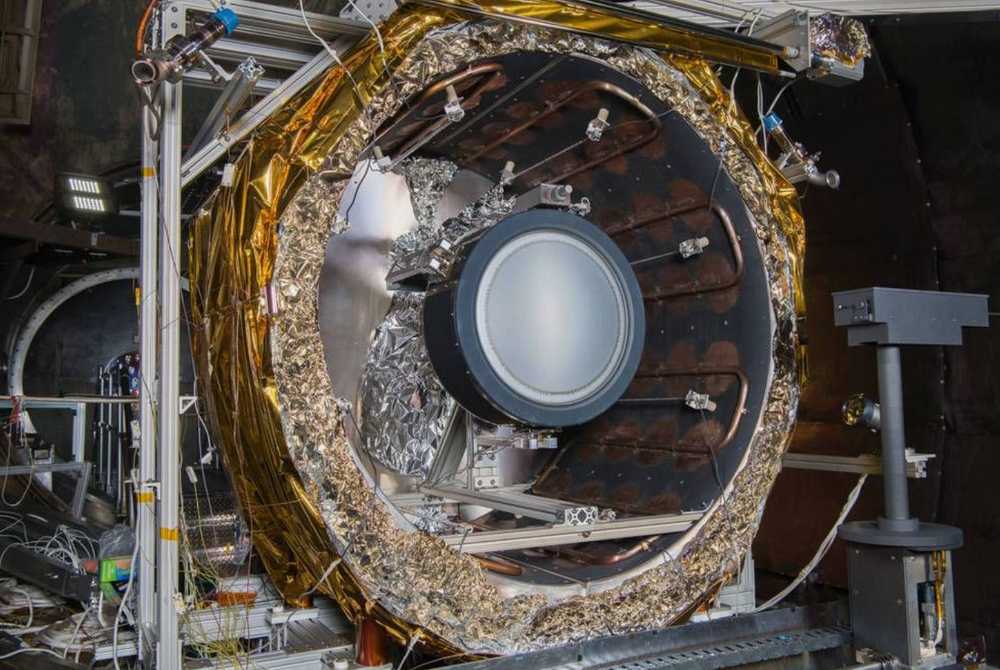
In terms of power, the DART impactor is equipped with a NEXT grid ion propulsion engine and a conventional rocket engine. The ion engine is used for deep space flight, with a propellant of 60 kg of xenon gas and powered by a 22-square-meter solar panel with a power of about 3.5 kilowatts. Conventional rocket engines are used for the final impactor power, equipped with 50 kg of propellant. The reason why ion thrusters are not used as the power for the final impact phase is that ion thrusters need to use pulse mode in the final impact phase. In pulse mode, the current of ion thrusters is as high as 100 amperes, which is too high for the electrical system of the probe to withstand. In the final plan, the ion engine is retained as a backup power. If DART misses the target, the ion engine will propel DART to rendezvous with the asteroid in two years.
The Italian Space Agency has developed a nanosatellite called LICIACube, which is carried on DART to take close-up images of DART’s impact with the asteroid and send back images of the ejecta. LICIACúbe is equipped with two optical cameras, called LUKE and LEIA.
, on November 24, 2021, the DART impactor was launched. On July 1, 2022, DART’s DRACO camera observed Jupiter and its satellites, tested the SMART Nav navigation algorithm, and prepared for the final impact. On July 27, 2022, the DRACO camera detected the binary system from about 32 million kilometers away and began to correct the trajectory.
According to the plan, DART will hit Dimorphos head-on. After the impact, the orbital velocity and radius of Dimorphos will decrease, but the amount of change depends on the topography of the surface of Dimorphos and the material composition of the planet. The momentum change that can be generated by the impact itself is actually very limited, mainly relying on the recoil momentum generated by the ejecta ejected from the impact gap. After the impact, the momentum generated by the ejecta produced by the DART impact is estimated to be 3-5 times the impact momentum, and the specific value depends on the mass and speed of the ejected material. Therefore, accurate measurement of the material jet has become one of the important links and goals of this mission.
The impact on Dimorphos is complex. It is not just a change in momentum. The impact will also change the shape of Dimorphos and the direction and speed of its spin. If the spin speed is too high, it may also cause the asteroid to partially disintegrate due to centrifugal force. Even if there is no change in mass, the change in the shape of the asteroid will cause changes in the center of mass and radius, which will cause changes in the orbital period. If the impact effect is analyzed only by the simple law of conservation of momentum without accurate modeling, huge errors will occur.
Nanosatellites are small in size and have limited sensors. Therefore, observations of impacts and jets mainly rely on telescopes. The Hubble Space Telescope and the Webb Space Telescope Solar-Terrestrial Relations Observatory both participated in the impact observations. In addition, the NASA-funded Asteroid Terrestrial-Impact Last Alert System (ATLAS) in Haleakala, Mauna Loa, South Africa and Chile also participated in the impact observations. The time of the impact was therefore deliberately chosen on September 26, the day when the binary system is closest to the Earth, when the binary system is less than 11 million kilometers from the Earth.
On September 11, 2022, 15 days before the impact, the LICIACube nanosatellite was released. Four hours before the impact, at a distance of 90,000 kilometers from the asteroid, DART activated the SMART Nav navigation algorithm and turned on the fully autonomous impact mode. 90 minutes before the impact, at a distance of 38,000 kilometers from Dimophos, the impactor trajectory was determined. At a distance of 24,000 kilometers from Dimophos, the DRACO camera captured a clear image of Dimophos. In the last two seconds before the impact, DART sent back the last complete image. The impact occurred at 23:14 UTC on September 26, 2022, with the DART impactor slamming into Dimorphos at a speed of 6.6 km/s. The impact produced about 11 GJ of energy, equivalent to 3 tons of TNT.
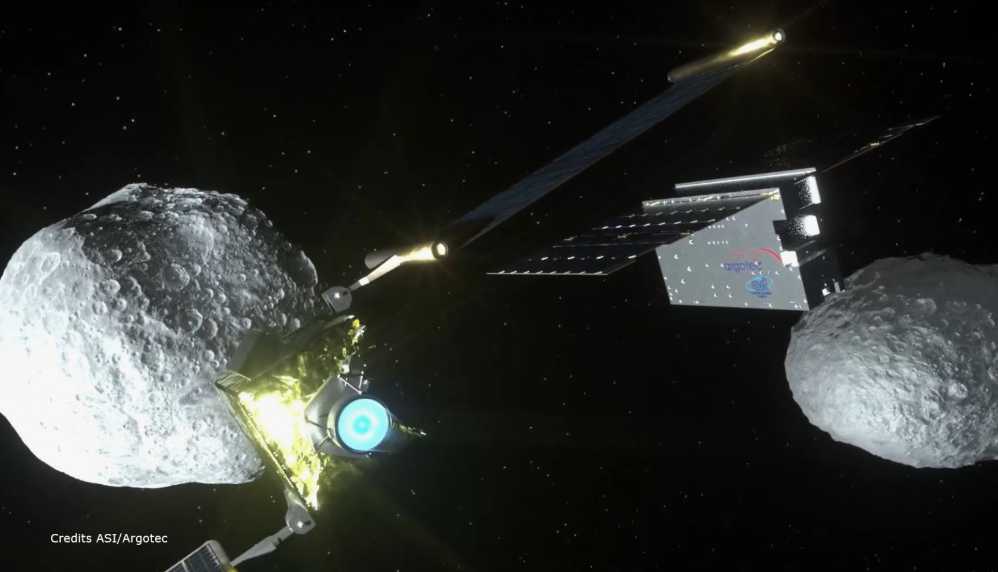
When the impact occurred, multiple telescopes were pointed at the asteroid at the same time. According to the observations, the jet produced by the September 26 impact was as long as 10,000 kilometers. As the jet continues to be ejected, the final changes in the orbital period of the binary system still need to be observed continuously. LICIACube released preliminary observation data within a week. Before the impact, Dimophos’s orbital period around the parent asteroid was 11 hours and 55 minutes, while after the impact, it was shortened by 32 minutes to 11 hours and 23 minutes, with a measurement error of about plus or minus 2 minutes. This result far exceeded NASA’s expectations. Before the impact, NASA believed that as long as the orbital period changed by 73 seconds, it would be considered a success. The actual impact effect was 25 times the expected one. This fully demonstrates that even a small-mass impactor can achieve significant results. In the following months, LICIACube and various astronomical telescopes continued to observe Dimophos to study the impact on its orbit. However, Dimophos is too small and too close to the main planet Didymos to be directly observed. Dimophos can only be observed indirectly through the "occultation effect" and the changes in the brightness of the main planet of Didymos. In addition, the European Space Agency is developing the Hera probe, which is scheduled to be launched in 2024 and arrive at Dimophos in 2026. It will continue to observe and evaluate it in depth four years after the impact. The Hera probe will also carry two nanosatellites - Milani and Juventas.
Prospects
DART has successfully verified the feasibility of planetary defense. With current technology, controlled impacts are not difficult. The difficulty lies in the fact that the kinetic energy must be sufficient to effectively deflect the orbit of the impacted celestial body, but the kinetic energy must not be too large to smash it and generate new uncontrolled debris that threaten the Earth. If a near-Earth object can be detected and defended many years before the impact is predicted, it is not necessary to deflect its orbit too much. In the distant deep space, it is only necessary to deviate its orbit by a millimeter to eliminate its threat to the Earth, and this only requires a small amount of kinetic energy. Such a small impact will not smash the celestial body. In addition, even if it fails, there is still a chance to "finish the job" because there is enough time and space.
Overall, as long as the early detection of threatening asteroids can be achieved, the success rate of planetary defense is still very high. Therefore, the key to planetary defense is to build a near-Earth object observation and tracking system. At the same time, it is necessary to continuously track and observe near-Earth objects and have a better understanding of their orbits, spins, and material composition. Only in this way can we nip the threat in the bud and protect our blue home.