
It has been more than 8 months since the outbreak of the Russian-Ukrainian conflict. Different from the pre-war estimates and the news released by the Russian military, the Ukrainian Air Force, which was once considered vulnerable and reported to be "completely destroyed", is still engaged in offensive and defensive operations with the Russian military industry today, fully demonstrating this most stubborn ally in air combat.
Ukrainian Air Force before the outbreak of the conflict
As early as the beginning of 2022, before the outbreak of the Russian-Ukrainian conflict, the Ukrainian Air Force had a lineup of about 140 to 150 combat aircraft, distributed in 7 different tactical aviation brigades. Its main models in service are MiG-29, Su-27, Su-25, Su-24 and a certain number of reconnaissance aircraft. Obviously, although these models are also in service in the Russian Aerospace Forces, the number is far less than that of the Russian Army, and compared with the latter, most of them are relatively old models, and few have been modernized. In addition, each tactical aviation brigade has several L-39 "Albatross" two-seat trainer aircraft for pilot training, with a total of about 25 to 30 aircraft. In theory, these trainer aircraft also have certain combat capabilities.
MiG-29, the backbone of the Ukrainian Air Force
The most numerous aircraft in service in the Ukrainian Air Force is the MiG-29 multi-purpose fighter. The MiG-29 main fighter aircraft equipped by the Ukrainian Army includes the following three models: the more modern MiG-29MU1 single-seat fighter, the standard Soviet-era MiG-29 "Fulcrum-C" (9-13 type) and the two-seat MiG-29UB "Fulcrum-B". Among them, the MiG-29UB equipped by the Ukrainian Army is not equipped with an onboard radar, so it cannot use radar-guided air-to-air missiles. As of early 2022, the Ukrainian Air Force has a total of 30 basic MiG-29s (9-13), 16 MiG-29MU1s, and 10 MiG-29UBs in service, of which only about 40 have been overhauled or modernized in the past decade.
The MiG-29MU1 upgrade was undertaken by the Lviv State Aircraft Repair Plant in Ukraine. The biggest improvement in combat capability is the upgrade of the NO19 airborne radar, which increases the target detection range by about 30% and can launch R-27ER and R-27ET air-to-air missiles with longer range. In addition, since some Eastern European countries announced that they would provide their own Soviet fighters to support Ukraine after April 2022, it was later believed that at least Poland and the Czech Republic provided some MiG-29 spare parts to Ukraine, which can also play a certain role in the subsequent maintenance of the Ukrainian Air Force MiG-29 fleet.
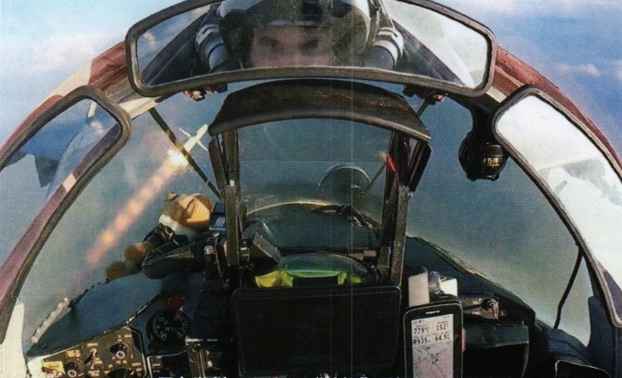
The Ukrainian Air Force is equipped with a relatively large number of MiG-29 models. From the beginning of the Russian-Ukrainian conflict in 2022, it has been mainly used for combat patrols and close air support missions. On February 24, the home of Ukraine’s Antonov Airlines, the Hostomel Airport in the northwest of Kiev, was quickly occupied by the Russian airborne troops, and the MiG-29 fighters from the 40th Tactical Aviation Brigade of the Ukrainian Air Force quickly took off with the Su-24 and Su-25, and carried out ground attack missions against Russian troops, using unguided rockets to suppress the Russian troops on the ground. Other MiG-29s of the 40th Tactical Aviation Brigade, equipped with air-to-air missiles, were sent to perform defensive missions over Kiev.
However, after all, the strength of the two sides is too different. On the first day of the Russian-Ukrainian war alone, the Ukrainian Air Force lost 3 MiG-29s and their pilots. All three tactical aviation units of the Ukrainian Air Force lost a total of 9 fighters and 8 pilots in the first month of the conflict. By the end of August, another 2 fighters were destroyed by the Russian army on the ground and 2 pilots were killed. As the situation on the battlefield stabilized, the MiG-29 of the Ukrainian Air Force was mainly used for combat patrol missions in the later period, as well as the new mission brought about by the change in the situation of the war - suppressing the Russian air defense system. In particular, after receiving the AGM-88 high-speed anti-radiation missiles assisted by the United States, the Ukrainian MiG-29 equipped with this advanced guided weapon also began to be used to attack the Russian ground air defense system.
Su-27, fighting for air superiority
The Su-27 air superiority fighter equipped by the Ukrainian Air Force mainly has four models. These include the Su-27S and two-seat Su-27UB, which can launch unguided rockets to perform ground attack missions, as well as the air defense Su-27P and its two-seat version Su-27UP.
In early August 2014, the Zaporozhye State Aircraft Maintenance Plant in Ukraine completed the first batch of Su-27 upgrades. Like the MiG-29 upgrade, this batch of Su-27s mainly upgraded the airborne radar, increasing the air target detection distance by 30%, while also improving the anti-interference capability. In addition, the Zaporozhye State Aircraft Maintenance Plant also added airborne electronic equipment such as navigation and communication to this batch of aircraft. After this stage of improvement, the Su-27s have added the model suffix "1M", namely Su-27S1M, Su-27P1M, Su-27UB1M and Su-27UP1M.
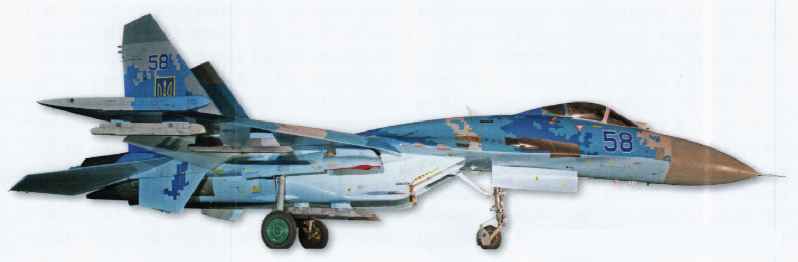
In terms of equipment quantity, by early 2022, the Ukrainian Air Force was equipped with about 35 Su-27 fighters, 12 of which had been completely overhauled and 12 were undergoing modernization. Although many of these Su-27s are capable of using air-to-ground weapons, judging from the situation in the air battlefield of the Russian-Ukrainian conflict, the Ukrainian Air Force’s Su-27s seem to have only participated in air combat patrol missions against Russian Aerospace Forces aircraft and cruise missiles. Compared with other aircraft types participating in the war, the Ukrainian Air Force’s Su-27s often only perform missions at higher flight altitudes. Despite this, these Su-27s still suffered a certain degree of loss in combat. Three Su-27s were confirmed to have been shot down in the first week after the outbreak of the Russian-Ukrainian conflict, killing two pilots. Subsequently, the Ukrainian army lost two more Su-27s in June and August, and one pilot was killed.
Su-25, the "flying artillery" fighting against Russia
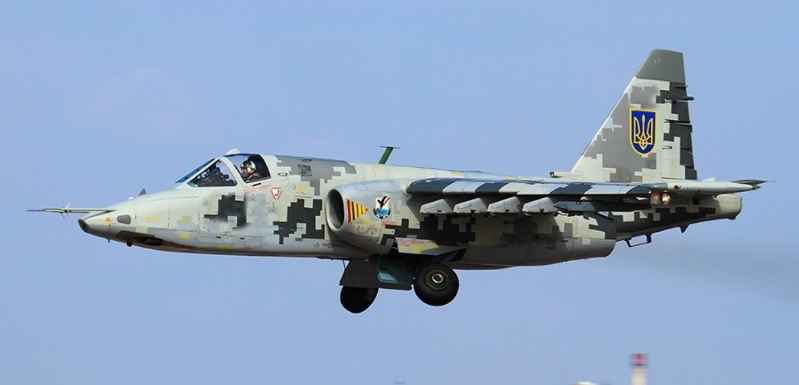
Compared with the MiG-29 and Su-27, the Su-25 attack aircraft equipped by the Ukrainian Air Force may be more modernized. Among the 30 Su-25s and two-seat Su-25UBs in service, 26 have completed modernization and upgrades at the Zaporozhye State Aircraft Repair Plant. The Su-25 attack aircraft unit is undoubtedly one of the most active and combat-capable iconic components of the Ukrainian Air Force. The Ukrainian Su-25 often performs combat missions at extremely low flight altitudes, such as flying over the heads of the Russian ground armored vehicle units to perform ground attack missions. From the very beginning of the Russian-Ukrainian conflict, the Ukrainian Su-25 appeared in almost every corner of the battlefield, from Hostomer in the north to the Donbass region in the east, and then to Kherson in the south. Ukrainian pilots flew Su-25 attack aircraft to carry out a large number of resolute and decisive combat operations. Although these Su-25s suffered heavy losses in the battle, they still caused great interference and blocking effects on the actions of the Russian ground forces. In the first three days of the Russian-Ukrainian conflict alone, the Ukrainian Air Force lost 4 Su-25s, three pilots died, and one was captured. By one month after the war, the loss figure had risen to 8 Su-25s, 4 pilots died, and 2 pilots were captured. By the end of October, 15 Ukrainian Su-25s had been shot down and 11 pilots were killed. The two previously captured Su-25 pilots returned to Ukraine through a prisoner exchange.
Su-24, a "fencer" with limited performance
The Su-24 fighters of the Ukrainian Air Force are composed of two Soviet-era derivatives, namely the Su-24M "Fencer-D" fighter-bomber and the Su-24MR "Fencer-E" reconnaissance. The current status of the Su-24 fleet is undoubtedly the worst in the Ukrainian Air Force. Due to the shortage of spare parts, the Ukrainian army can only ground some aircraft and dismantle parts to ensure the attendance rate of other Su-24s. Despite the limited number and backward performance, the Ukrainian Air Force still used the Su-24 in its hands to carry out low-altitude raids on Russian troops gathered near Kiev. In the first month after the outbreak of the Russian-Ukrainian conflict, the Ukrainian army lost at least 5 Su-24Ms and 5 pilots were killed. The Su-24 is a variable-sweep wing fighter with a complex structure and control. It requires high technical proficiency and experience from pilots and ground crews to fly and maintain it, and is difficult to fly and maintain on the ground. Many of the Su-24 pilots lost by the Ukrainian army during the war between Russia and Ukraine were also reservists and retired personnel who were recalled to the Air Force.
Russia claims that Ukraine’s Su-24s were wiped out as early as the first month of the war between the two sides, which is obviously an exaggeration. At least after the Russian army occupied Snake Island, the Ukrainian army’s Su-24s carried out many low-altitude air strikes on the Russian defenders of Snake Island
Overall combat performance
Early before Russia took action against Ukraine, the Ukrainian Air Force received news from Western intelligence agencies and immediately dispersed the fighters of its tactical aviation units and deployed them to various air force bases, civil airports or temporary airports in the relatively safe western and central regions of the country. Therefore, in the first round of air strikes by the Russian Aerospace Forces against Ukraine, the Ukrainian Air Force did not suffer much loss. At the beginning of the war, the only Ukrainian fighter plane confirmed to have been lost on the ground was a Su-27 from the Ozerne Air Force Base. The ones destroyed on the ground afterwards were basically old models retired by the Ukrainian Army decades ago, some of which even retained the Soviet-era paint and emblems.
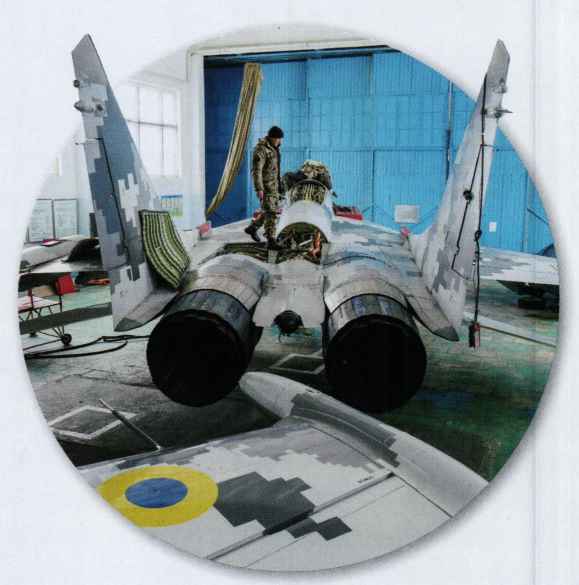
After withstanding the initial "three-axe" offensive of the Russian Aerospace Forces, the Ukrainian Air Force began to repair and consolidate its ground air defense network and communication command system links. By mid-March 2022, the first adjustment and recovery since the start of the war had been completed. By the end of March, the active fighters of the Ukrainian Air Force were able to take off from their respective first- and second-level air bases, and were basically equipped with effective medium- and long-range surface-to-air missile systems near the bases. Although the equipment was backward, with the support of NATO’s intelligence, the fighters of the Ukrainian Air Force still maintained a certain frequency of action after several months of fierce fighting, occasionally bombing Russian targets, and continued to put pressure on the Russian ground forces participating in the war. Correspondingly, as the United States and Western countries continued to provide air defense weapons to the Ukrainian army, the Russian Aerospace Force aircraft, which felt the pressure of air defense, could only move as much as possible near the front line and the Russian-Ukrainian border area, and rarely went deep into the depths. The lack of intensity and density of the Russian Aerospace Force’s attacks also allowed the Ukrainian Air Force to retain some of its strength for a long time, so that the Ukrainian army not only gradually saw the Russian army on the ground, but also gradually launched a fierce battle in the air. It is difficult for both sides to have an absolute upper hand.
On March 25, a full month after the war between Russia and Ukraine, the Russian Ministry of Defense said that about 73% of the Ukrainian Air Force’s combat aircraft (that is, 112 of the total 152 aircraft) had been destroyed by the Russian army. This number is obviously exaggerated, because only more than 30 Ukrainian fighters have been confirmed to have been lost. In addition, based on this loss figure in the first month, it accounts for almost 80% of the confirmed losses of Ukrainian fighters as of the end of October, which also shows from one side that the Ukrainian Air Force has achieved results in adjusting its tactics quickly after the war and reducing combat losses. On the other hand, the data also shows that the combat activities of Ukrainian tactical aviation, especially fixed-wing fighter units, have become increasingly active. Since the war began, Ukrainian fighters, fighter-bombers, and attack aircraft have carried out nearly 2,000 reconnaissance, air combat patrols, and close air support missions. Data released by the Ukrainian Army Aviation in early June also showed that its Mi-8 and Mi-24 armed helicopters were deployed for combat at around 1,000 times, rising to 1,700 times in mid-July and 2,200 times in late August, more than doubling throughout the summer. In addition, the TB2 drones purchased from Turkey before the war played a major role after the conflict broke out, causing considerable trouble for the Russian ground forces on the front line.
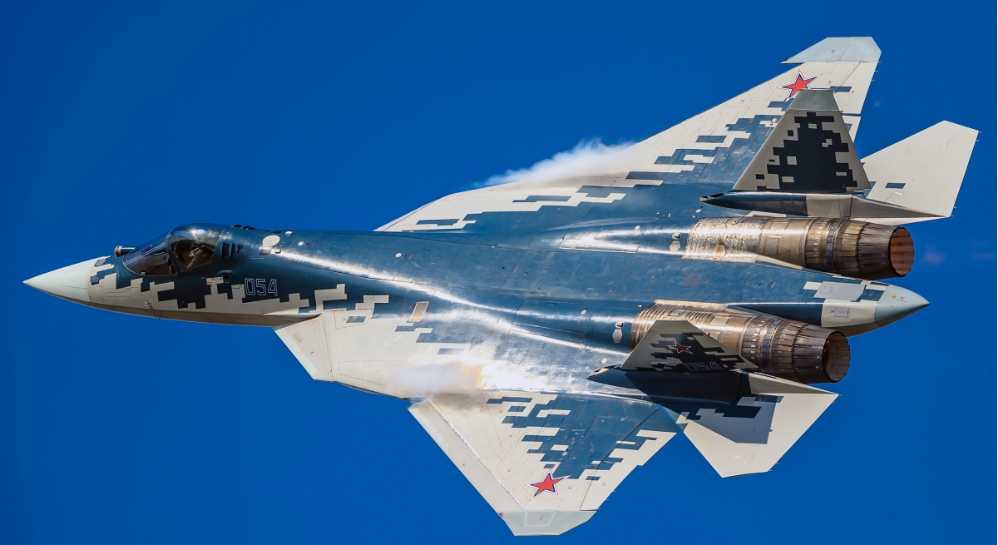
However, the problems exposed by the Ukrainian Air Force since the start of the war are also very prominent. The vast majority of the Ukrainian army’s equipment are Soviet-era fighters, and even the youngest ones have been in service for nearly 30 years. The limited degree of upgrades and improvements to some of the active models introduced in the previous article are mostly just for the sake of upgrading. The improvement of local functions has no specific occasions for use in actual combat, and the actual combat performance of many modernized models is still subject to the inherent limitations of Soviet-era prototypes. For example, the Su-27 of the Ukrainian Air Force still retains most of the original airborne equipment and weapon systems, and is essentially still a traditional fourth-generation basic model. In contrast, the Su-27SM equipped by the Russian Aerospace Force is equipped with a brand-new weapon system, especially the R-77 (AA-12) air-to-air missile with active radar guidance and fire-and-forget. However, the main medium-range air-to-air missiles R-27R and R-27ER (AA-10) equipped by the Ukrainian Air Force Su-27 can only be semi-actively radar-guided. After launch, the carrier must continue to track the target until it hits. This huge defect and deficiency makes the fighters of the Ukrainian Air Force lag far behind their opponents in air combat - the Su-27SM and Su-35S of the Russian Aerospace Force. For most of the aircraft of the Ukrainian Air Force, even if they can survive the Russian-Ukrainian conflict, this will be the last war they will participate in. Due to the extremely limited supply of spare parts, it is difficult for these fighters to continue to be used and participate in the war without proper maintenance. For this reason, the Zelensky government has been asking the United States and the West to provide it with more modern Western fighters such as the F-15, F-16, and A-10. Once the fighters of the Ukrainian Air Force can be effectively supplemented and updated, there is no doubt that the Ukrainian air force will have more confidence and strength to compete with the Russian army.