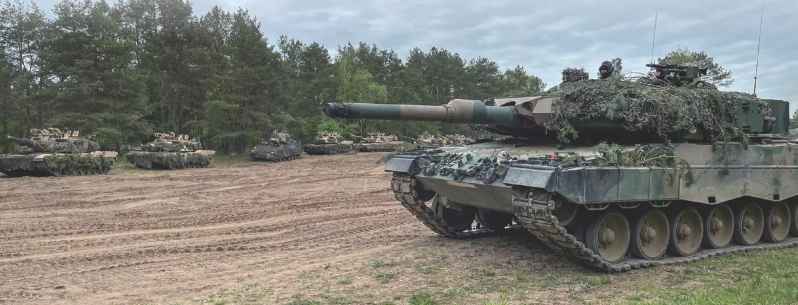
Today, Poland has the largest armored force in NATO, except for the US troops stationed in Europe and Turkey. The number of active main battle tanks is about the sum of the United Kingdom and Germany. Moreover, this considerable armored force is still committed to continuous modernization and innovation. In addition to the purchase of hundreds of Leopard 2A4, A5 and Leopard 2PL main battle tanks in the early years, in July 2021, it announced the purchase of 250 of the latest M1A2C Abrams main battle tanks from the United States. Considering that Poland is an important geopolitical presence today, both in the Cold War and the post-Cold War, what does it mean for the Abrams to join the already strong Polish armored forces?
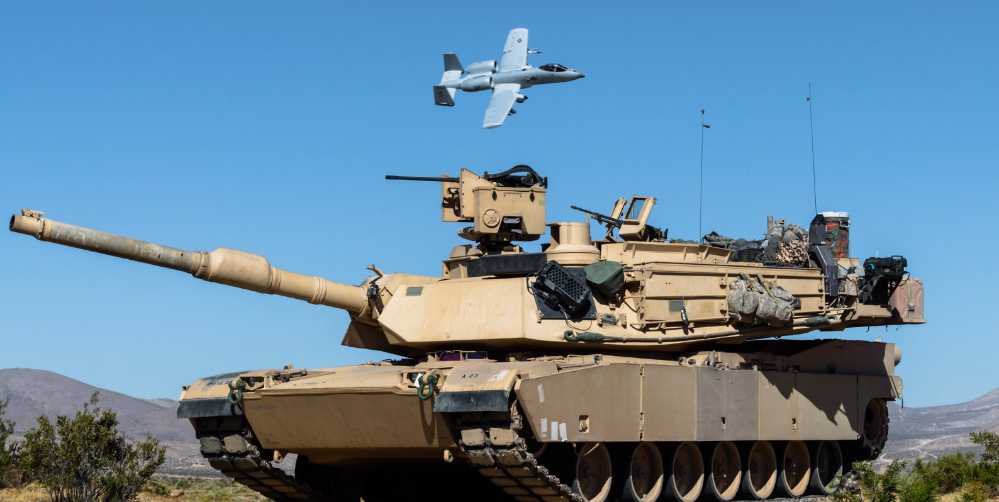
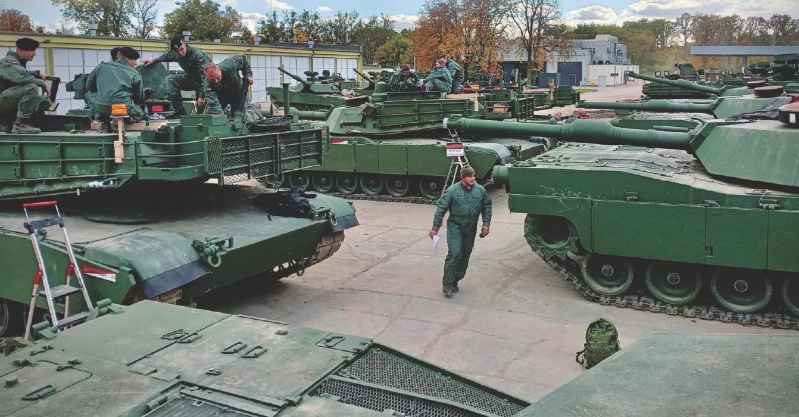
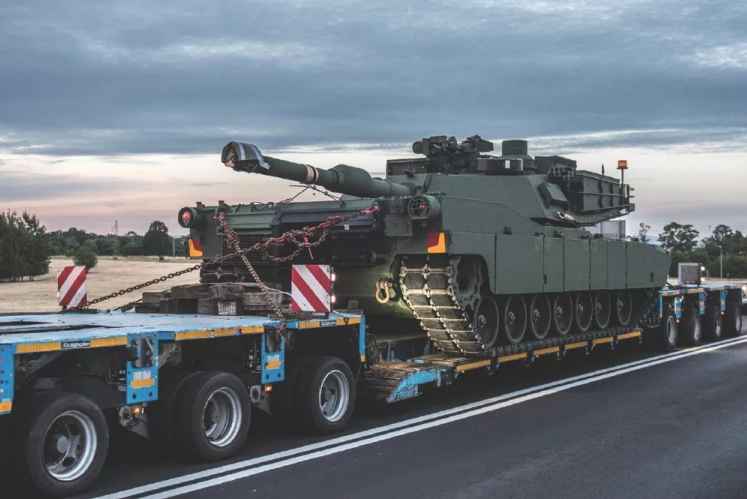
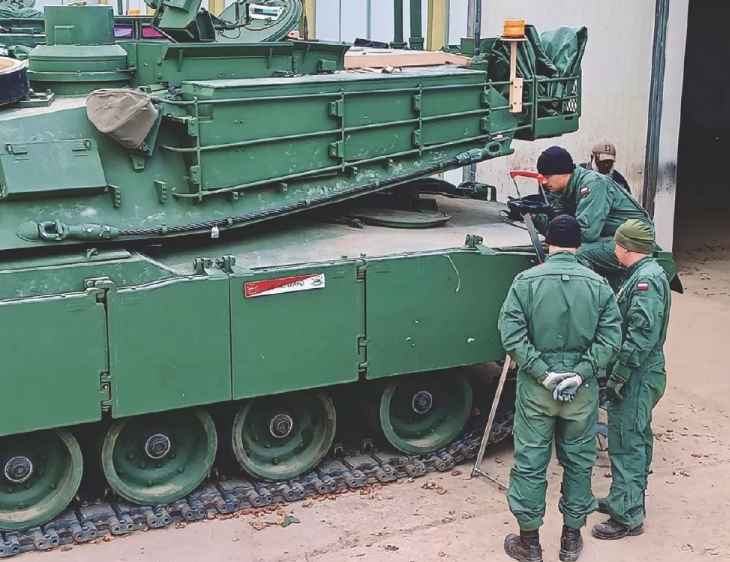
The Polish Ministry of Defense sought to purchase the M1A2SEPv3 main battle tank (M1A2C) from the United States in July 2021. At that time, it was expected that the purchase quantity would reach 250, and the entire purchase plan would cost about US$6 billion. Considering that the arms sale had been approved by the US State Department in mid-February 2022, it is a foregone conclusion that the Polish army will obtain the Abrams. The M1A2SEPv3 main battle tank is the latest improved version of the M1 series. The whole vehicle weighs 73 tons and has been improved in electronic fire control, communication capabilities, armor protection, power system, vehicle reliability, etc. In the future, the "trophy" active protection system can also be installed. Even for the US military itself, the MIA2SEPv3 main battle tank is a new type of equipment that exudes a "paint smell". The US Army only began to receive the M1A2SEPv3 main battle tank in the summer of 2020. The 1st Cavalry Division of the US Army is the first unit to be equipped with the M1A2SEPv3 main battle tank. The inclusion of such cutting-edge technical equipment obviously means that Poland’s efforts to further strengthen the construction of armored forces have achieved significant results.
The technical strength of Poland’s M1A2C
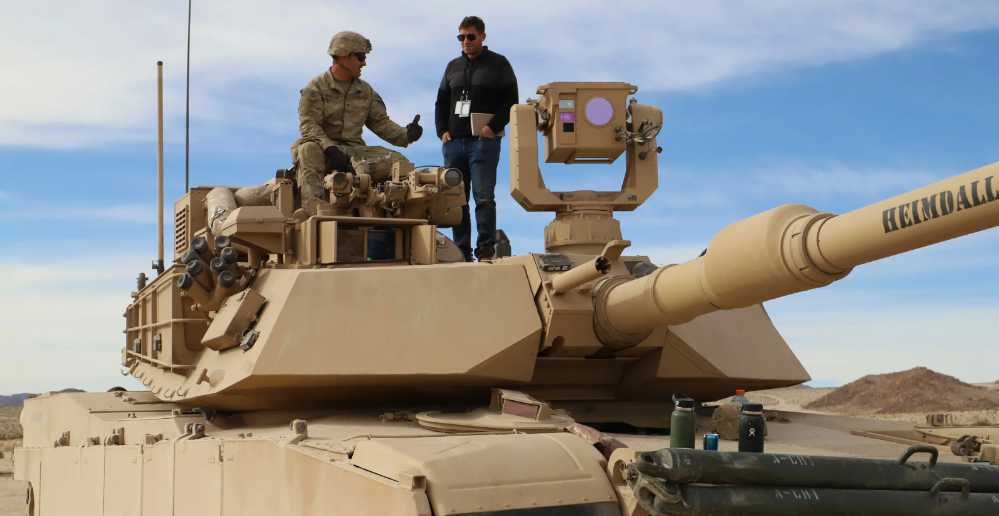
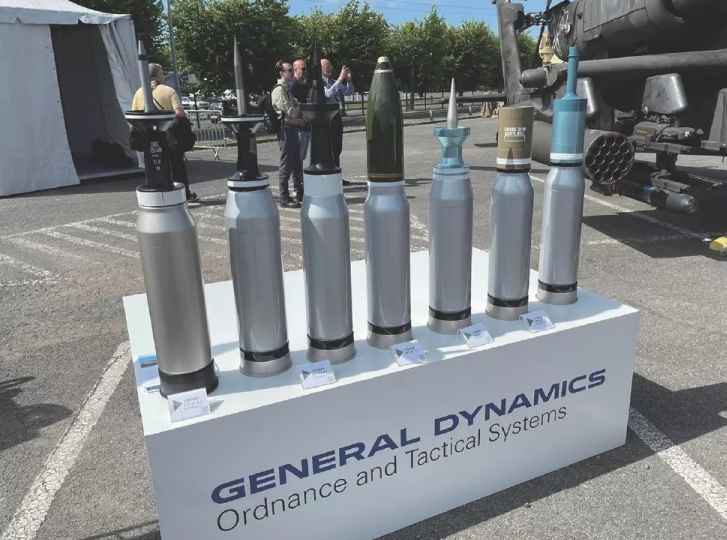
What is the quality of the "Abrams" introduced by Poland? MIA2SEPv3 is also known as M1A2C. SEPv3 is actually the abbreviation of "System Enhanced Package Version3", which is the third version of the system enhancement package. MIA2SEPv3 is a contract signed by the US Army TACOM (US Army Tank Vehicle and Weaponry Command) with General Dynamics Land Systems in 2015 to invest $91 million in research and development funds, and then signed a purchase contract for 45 tanks in 2017. As a further upgrade of SEPv2, SEPv3 has made further upgrades in protection, firepower and sighting systems. The main gun of MIA2SEPv3 is still the M25644 120mm smoothbore gun, but it is equipped with the latest M829A4 depleted uranium armor-piercing projectile and the newly developed AMP ammunition. At the same time, the software and hardware of the fire control system have been upgraded to a certain extent, and it has the ability to program M829A4 and AMP (Advanced Multi-Purpose Ammunition). AMP was developed by ATK Orbital Company, and the verification model is XM1147. It has multiple functions and can be used to replace the four types of ammunition, M830 armor-piercing projectiles, M830A1 explosive grenades, M908 explosive barrier-breaking projectiles and M1028 shrapnel shells, which can greatly reduce the pressure on logistics. This type of ammunition achieves different effects such as delayed detonation (against light armor and bunkers) and air explosion (killing personnel) by programming the fuze. The MIA2Sepv3 has also been upgraded in terms of auxiliary weapons. The original M2HB 12.7mm machine gun on the top hatch of the turret has been replaced with the "Common Remote Control Weapon System (CROWS), so the loader no longer has to stick his head out to operate the machine gun. CROWS is a universal remote-controlled weapon platform. The M2 machine gun is used on the M1A2Sepv3, but CROWS can also be equipped with weapons such as the M240 medium-caliber machine gun, 40mm grenade launcher, and even the "Javelin" anti-tank missile.
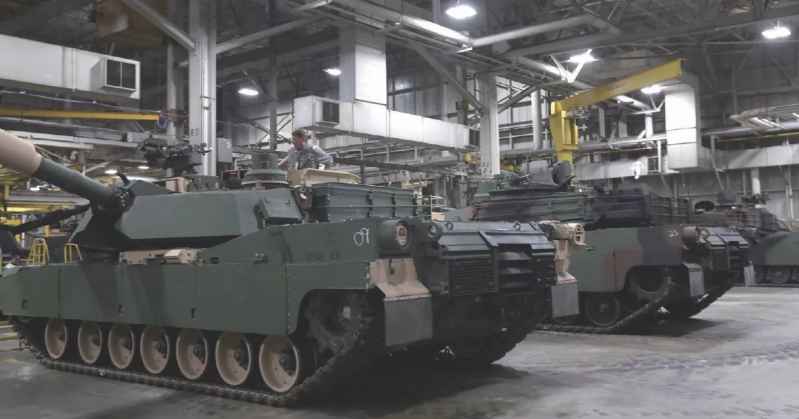
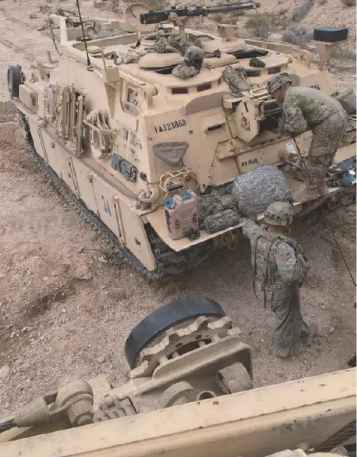
The body of the M1A2SEPv3 has not changed much compared to the past, and the basic layout has not changed, but the protection has been specifically enhanced. The body and turret are integrated with new armor kits to deal with the threat of IEDs, especially to enhance the attenuation effect of explosions directly under the body; on the side of the body, installation points for explosive reactive armor and ceramic armor plates have been added. At the same time, the tank is also equipped with the CREWDukeV3 system. The system has electronic warfare capabilities and can disable the remote control IED by interfering with its radio signal. In addition, SEPv3 can also support active protection systems like Sepv2. The power pack of the M1A2SEPv3 continues to use Honeywell’s AGT1500 gas turbine, but there is an important improvement, that is, an APU under armor protection can be used to store electricity. When parking, the gas turbine can be completely shut down, and only the APU is used to provide electricity to drive the turret and fire control system, which not only improves the efficiency of fuel use, but also greatly reduces the infrared characteristics of the vehicle body. In addition, the MIA2SEPv3 is also equipped with a JTRS (Joint Tactical Radio System) for the crew, which is a handheld and portable small radio system that can complete battlefield networking and can integrate each crew member into the network to meet the battlefield communication command and joint operations of future brigade combat teams. The JBCP (Joint Battle Command Platform) is also installed on the M1A2SEPv3, which integrates the second-generation Blue Force Tracking System (BlueForceTrack2) internally, with stronger battlefield perception and faster response speed. However, the above description of the MIA2SEPv3 is actually based on the M1A2C batch configuration received by the 8th Cavalry Company of the 3rd Battalion of the 3rd Armored Brigade of the US Army in June 2020. As for whether the M1A2C purchased by Poland from the US government meets the above standards, it is unknown. For example, the MIA2S main battle tank purchased by Saudi Arabia from the United States is very different from the US military version in terms of armor protection. Since the original poor-axle composite armor has been replaced in some way on the M1A2S, the MIA2S is downgraded compared to the US military’s own MIA2SEPv2, and there are many cases of being penetrated head-on on the battlefield in Yemen. The M1A2C that Poland is about to receive is likely to be the same.
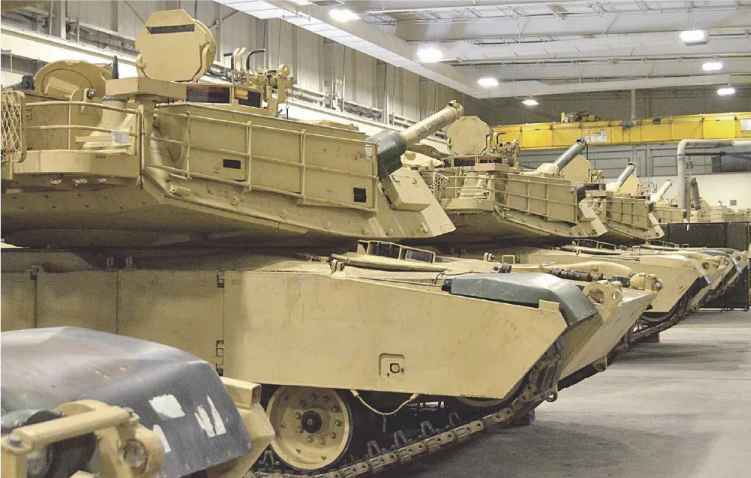
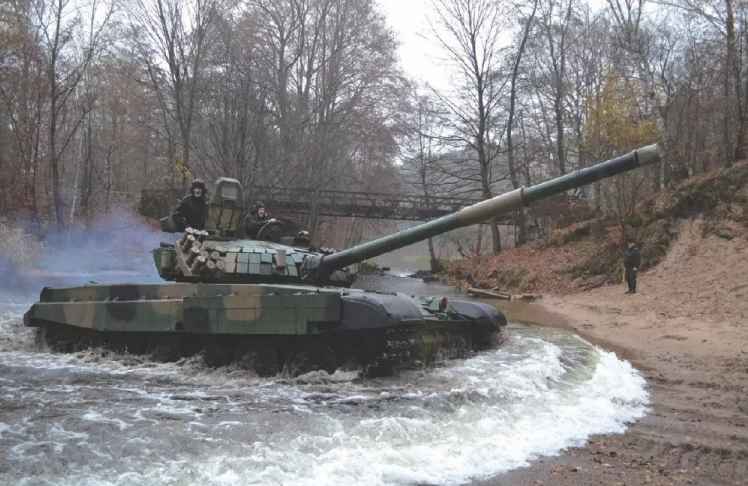
Of course, although some sensitive technologies may be moderately downgraded, the significance of the "Abrams" that Poland is about to receive is still significant. The strength of the Polish armored forces is already good, equipped with about 250 "Leopard" 2 series main battle tanks, more than 230 PT-91 main battle tanks, and more than 150 T-72 main battle tanks. Among them, the PT-91 is a limited modernization and improvement model of the Soviet-made T-72M main battle tank. It has some Polish characteristics, such as the installation of the ERAWA-1 additional reactive armor developed by Poland, which enhances the tank’s defense against armor-piercing and armor-piercing shells. After the installation of additional armor, the combat weight of the PT-91 has also increased from 43 tons to 45.3 tons compared with the T-72M. The tank is also equipped with 4 laser warning receivers, which can promptly alert the crew when the enemy’s laser rangefinder or laser illuminator illuminates the tank. In addition, the outer surface of the tank has an absorbing coating coated with a model of "1K2KS" absorbing paint, which can effectively reduce the probability of the tank being discovered by radar. In view of the fact that the T-72 main battle tank is prone to "secondary effects" after being hit, the PT-91 is equipped with a new automatic fire extinguishing and explosion suppression system.
In addition, the performance of the T-72M fire control system is poor, especially the night combat capability. As an improved version of the T-72M, the Poles replaced the PT-91 with the self-developed "Drawa-T" digital fire control system. This type of fire control system uses a large number of European and American components. For example, the gunner’s thermal imaging sight integrated in the system is produced in Israel. In addition, the commander and driver are equipped with a new low-light night vision device improved by Poland. The improvement of the fire control system and the significant improvement in performance have greatly improved the strike capability and night combat capability of the PT-91 main battle tank. As for the 250 "Leopard" 2 series main battle tanks currently equipped by the Polish Army, they are actually divided into three models: A4, A5 and PL. Among them, 105 "Leopard" 2A5s are superior in technical quality. Compared with the Leopard 2A4 and Leopard 2A5, which mainly focus on armor protection and fire control systems, the Leopard 2A5 has a new reinforced armor component installed in the front arc area of the turret. Its design purpose is to install a multi-layer composite armor structure. The body and turret are welded, and the front upper deck of the body has a large inclination angle, which improves the anti-ballistic capability. The turret is equipped with an anti-collapse lining, and the track skirt also uses improved composite armor to improve the protection against kinetic and chemical bombs. The Leopard 2A5 is also equipped with an EMES-15 gunner’s periscope combination sight with an internal laser rangefinder and independent field of view stabilization function.
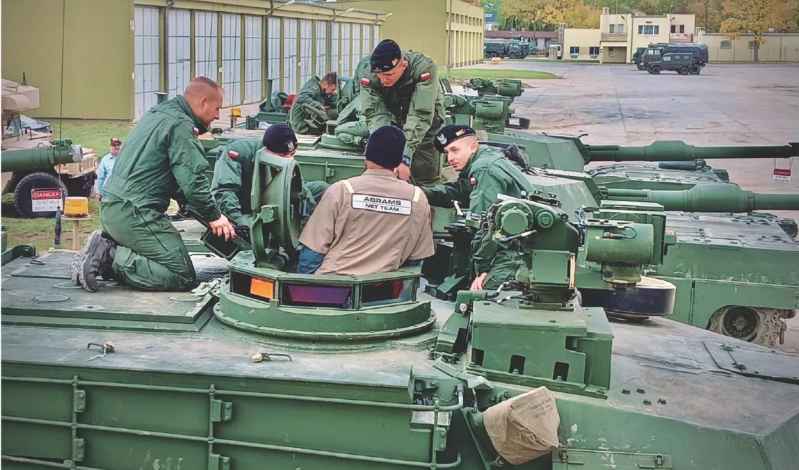
However, the PT-91 is outdated in terms of overall technology, and the armor protection of the Leopard 2A5 is not completely reassuring (Germany has no advantage in composite armor technology). Moreover, it is not realistic for the Polish Army to focus its armored forces entirely on the Leopard 2A5 or the newer Leopard 2A6 - the Leopard 2 series main battle tanks have long been discontinued, and all of the Polish Army’s main battle tanks in this series are second-hand vehicles, so it is difficult to continue to expand its equipment scale. It is in this context that the M1A2C version of the Abrams is a very pragmatic choice for the Polish government. In fact, the purchase of 250 M1A2C versions of the Abrams is only part of a large-scale armor modernization plan for the Polish Army. In addition to 250 MIA2C versions of the Abrams, this plan also includes 250 AN/VLQ-12 "Duke" anti-IED electronic jamming systems, 26 M88A2 "Hercules" armored recovery vehicles, 17 M1110 joint assault bridge-laying vehicles, 276 12.7mm M2 heavy machine guns, 500 7.62mm M240C machine guns, 15 AGT1500 gas turbines, 9168 120mm M865 tail-stabilized discarding sabot training bullets, 4592 120mm M1002 multi-purpose tracer bullets, 13920 120mm M830A1 anti-tank grenades and 6960 120mm AMP programmable advanced multi-purpose tracer bullets. Also included are forward maintenance systems (FRS), towed generators, common low-profile remote weapon stations, communications equipment, GPS receivers, ammunition, spare parts, specialized tools and test equipment, technical manuals and other printed materials, maintenance training, tank shooting and driving training systems, new equipment training, and other elements of technical engineering and logistical support from the U.S. government and military contractors.
Will enhance Poland’s military geopolitical influence
Today, as the situation in Ukraine has escalated, Poland’s purchase of 250 M1A2C versions of the Abrams main battle tanks from the United States is considered to be a clear signal from Poland in terms of geopolitics. Since the early morning of February 24, 2022, the Russian army has launched a large-scale special military operation against Ukraine. The Russian army launched a "blitzkrieg" on the entire Ukraine from a vast front, and Polish Defense Minister Błaszczak made it clear in an interview on March 4, 2022 that the US government has agreed to deliver the Abrams to Poland, and these tanks will arrive in Poland "as soon as possible" to cope with the complex geopolitical situation. In fact, as a member of NATO with a strong anti-Russian will, Poland has always had a tense relationship with Moscow after the disintegration of the Soviet Union, and as Ukraine’s western neighbor, it plays a pivotal role in related issues. For example, during the Ukrainian color revolution in 2013-2014, Poland remained highly active.
After the anti-Yanukovych demonstrations broke out in Ukraine in 2013, the Polish government closely followed the development of the situation. The Polish government supported Ukraine’s choice, supported the political solution to the political crisis, and condemned the violence against the demonstrators. February 20, 2014 was designated as Ukraine’s day of mourning. Warsaw lit up the landmark building, the Palace of Science and Culture, with the blue and yellow colors of the Ukrainian flag to show its solidarity with Ukraine. The Polish Post announced that parcels sent to Ukraine would be free of postage. After Yanukovych fled, the political situation in Ukraine suddenly changed, and the Ukrainian interim government was established. Poland immediately recognized the interim government led by Prime Minister Yatseniuk as the only legitimate government in Ukraine, and supported Ukraine’s signing of the Association Agreement with the European Union. Polish Prime Minister Tusk stressed that supporting Ukraine today is to defend Poland tomorrow, and promised to provide Ukraine with necessary assistance. After Crimea was annexed by Russia, the Polish government strongly condemned Russia’s actions and called for maintaining Ukraine’s independence, sovereignty and territorial integrity. After the outbreak of the war in eastern Ukraine, Poland supported a political solution to the conflict in eastern Ukraine and opposed Russia’s military intervention. After the escalation of the conflict in the east at the end of August 2014, the Polish Ministry of Foreign Affairs strongly opposed the presence of Russian soldiers in eastern Ukraine. Poland does not recognize the elections in Donetsk and Luhansk in eastern Ukraine on November 2, 2014, saying that the elections violated the spirit of the Minsk Agreement.
In 2014, the Polish government decided to invest 100 billion zlotys (about 24 billion euros) in the next 10 years to promote the modernization of the Polish army. The purchase of 250 M1A2C versions of the "Abrams" from the US government in July 2021 is an important part of this plan. As a member of the European Union and NATO, Poland has always called on NATO and the European Union to respond toughly to the Ukrainian crisis and take necessary measures against Russia. After Russia annexed Crimea, Prime Minister Tusk called on Europe to act rationally and firmly. There are differences within the EU on the issue of sanctions against Russia, and Poland called on the EU not to relax sanctions on Russia. Poland is undoubtedly a hawk in the EU.
So it can be imagined that after the MIA2C version of the "Abrams" arrives one after another, the Polish government, which holds this latest American main battle tank, will take a tougher stance on Russia. As for the root cause of Poland’s behavior behind such a move, it is not difficult to understand that Poland and Ukraine have a common border and are relatively close in ethnicity and language. Before World War II, most of the territory of Western Ukraine was Polish territory. After the disintegration of the Soviet Union, Ukraine declared independence. Poland was the first country to recognize Ukraine’s independence. The two countries reconciled to establish a future-oriented relationship. Poland and Russia have a long history of hostility. In the late Middle Ages, Poland competed for borders with the Grand Duchy of Moscow. In 1596, the "Lublin Union" Grand Duchy of Poland and Lithuania (Federation) was established. The Catholic Grand Duchy of Poland and Lithuania and the Orthodox Russia launched a fierce competition for the political, strategic and civilizational dominance of Central and Eastern Europe. During the Polish-Russian War from 1605 to 1618, Poland occupied Moscow for a time. Poland began to decline in the mid-17th century, and Russia began to interfere in Poland’s internal affairs in the 18th century. In 1772, 1790, and 1795, Tsarist Russia, together with Prussia and Austria, divided Poland three times. Poland disappeared from the European map as a sovereign state for 123 years, and it was not until the end of World War I that it was restored. In the early 20th century, most Polish politicians believed that Poland should be restored within its historical borders, and that the Ukrainian land once belonged to the Polish-Lithuanian Commonwealth. Polish politician Roman Dmowski believed that the Ukrainian land should be made part of the Polish state, denying the right of Ukrainians to establish a state and believing that Ukrainians were "non-historical and non-national peoples." After the Polish-Soviet War from February 1919 to October 1920, the two countries formally concluded the Treaty of Riga on March 18, 1921, assigning Western Ukraine and Western Belarus and part of Lithuania to Poland. In August 1939, the Soviet Union and Germany signed the Molotov-Ribbentrop Pact (also known as the Soviet-German Pact). On September 17, the Soviet Red Army invaded Poland and realized the fourth partition of Polish territory. After the end of World War II, Poland’s borders changed. Although Poland was a victorious country, its eastern border changed according to the Curzon Line. Poland lost eastern territories including Wilno (Vilnius) and Lviv, and Poland’s western border moved westward to the Oder-Neisse River. After 1945, Poland became a member of the Warsaw Pact and Mutual Economic Cooperation. Poland is a member of the United Nations, and its domestic and foreign affairs are completely dependent on the Soviet Union, but anti-Soviet sentiment in Polish society has never disappeared. In 1991, the Soviet Union collapsed, and Russia became the successor state of the Soviet Union. The newly independent countries of Lithuania, Belarus and Ukraine became Poland’s eastern neighbors. Poland borders the Russian exclave of Kaliningrad in the north. Kaliningrad is the headquarters of the Russian Baltic Fleet and a major military town in Russia. Since 1992, although Poland has maintained normal state relations with Russia, Poland’s suspicion of Russia has never disappeared.
In the 1990s and early 21st century, Poland established a national policy of supporting the independent states of the Soviet republics. During Tusk’s tenure as prime minister from 2007 to 2013, Poland tried to restart relations with Russia, but was opposed by Lech Kaczynski. During his presidency, Lech Kaczynski advocated Ukraine and Georgia to join NATO. Kaczynski believed that a strong NATO would prevent Russia from trying to dominate Central and Eastern Europe again. In 2008, President Kaczynski visited Tbilisi during the Russo-Georgian war and warned against Russia’s aggressive policies. He said Georgia was the first victim of Putin’s policies, and Russian tanks would appear in Ukraine and the Baltic countries, and finally Poland. Poland’s political elite believed that Russia had the intention of restoring the empire, and Russia never regarded Ukraine and other countries as truly independent countries.
It should be noted that Poland and Russia have had frank dialogues on the complicated history of their relations. In 2009, Poland, Germany and Russia successfully held a discussion meeting on the Molotov-Ribbentrop Pact. In 2010, Polish and Russian historians jointly published the book "White Stain-Black Stain: The Dilemma of Polish-Russian Relations (1918-2008)". However, the dialogue between the two countries on sensitive historical issues was affected by events such as the crash of President Kaczynski’s plane in 2010.
Poland looks at the threat of Russia very realistically. Poland believes that the Ukrainian incident is not a NATO plan to disintegrate Russia, but a manifestation of Russian expansionism. The annexation of Crimea is regarded as an unprecedented forced change to the borders determined in Europe after 1945. Poland believes that once Russia’s intentions in Ukraine succeed and Ukraine is controlled by Russia, Poland will face direct threats from Russia. Therefore, Poland’s purchase of a large number of M1A2C versions of the "Abrams" from the United States is not only obviously of an emergency nature, but also has an undisguised political intention, which is to deal with the "Moscow threat"
The United States’ intention to sell the "Abrams" to Poland
The United States also has its own considerations for selling the M1A2C version of the "Abrams" to Poland. Since the end of the Cold War, Poland has always regarded "returning to Europe" and joining NATO as its main diplomatic direction. Relying on the European Union in politics and economy, and relying on the United States and NATO in military and security have also become its diplomatic strategies. With the firm support of the United States, Poland became one of the first three Central and Eastern European countries to join NATO. Although Poland and the United States have good relations, before the Ukrainian crisis, the cooperation between the two sides, especially military cooperation, could hardly be called close. At that time, the security situation in Central and Eastern Europe was very stable. In the absence of major security threats, Poland and other Central and Eastern European countries were not willing to maintain high military expenditures, but instead paid more attention to domestic transformation and European integration affairs. Because of the experience of being controlled by big powers many times in history, the Polish government and people are very cautious about the deployment of external military forces. According to statistics from the Polish Public Opinion Research Center, in 1999, only 32% of Poles agreed to NATO troops stationed in Poland. The outbreak of the Ukrainian crisis was an important node for changes in Polish-American relations. Crimea’s "accession to Russia" made Poland feel "substantial" pressure, and also led to a sudden tension in the security situation in Central and Eastern Europe. Faced with potential "military threats", Poland turned to actively support military cooperation with the United States and NATO. By 2016, 65% of Polish people agreed to the deployment of NATO and US troops in Poland. Since the outbreak of the Ukrainian crisis, the Polish government has maintained a high military expenditure on the one hand, and strengthened military cooperation with the United States and NATO on the other hand, and actively invited US and NATO troops to enter the country. Poland’s invitation received a positive response from the United States and NATO. In 2016, NATO formally decided to deploy a multinational force led by the United States in Poland. In 2018, the United States and The Polish government signed a purchase agreement for the Patriot missile defense system, which became the largest arms purchase agreement in Polish history. According to the newly signed "Enhanced Defense Cooperation Agreement" on August 15, 2020, the United States will increase its garrison to Poland by about 1,000 troops, from 4,500 to about 5,500, and deploy a forward command post of the Fifth Army Command of the U.S. Army in Poland. The NATO Eastern Wing Force Command Center is also located in Poland. Therefore, in the eyes of the U.S. government, the sale of 250 M1A2C Abrams to Poland is not only a In addition to economic benefits, there are obviously more geopolitical considerations. After all, Poland believes that the existing security mechanism is not enough to guarantee its national security. If NATO, led by the United States, changes its rotating troops in Poland to permanent ones and provides the Polish army with some similar main battle equipment that can interoperate with the US troops stationed in Europe, Poland can be more closely bound to NATO tanks and reduce its risk of being attacked. This is the main intention and direction of Poland’s strengthening of military cooperation with the United States. From the perspective of the United States, there are also multiple considerations to strengthen military cooperation with Poland by exporting the same type of main battle equipment: first, to expand its influence in Central and Eastern Europe and put pressure on Russia at the same time; second, to support and encourage "dissidents" within the European Union; third, to use military cooperation as a bargaining chip in exchange for Poland’s cooperation in other fields and its position on international issues. Therefore, in the relevant documents on the website of the Defense Security Cooperation Agency (DSCA) under the US Department of Defense, it is written as follows: "NATO is an important force in maintaining political stability and economic development in Europe. This proposed arms sales project will help strengthen the security of NATO allies, thereby supporting the US foreign policy and national security. The arms sales project will enhance Poland’s ability to respond to current and future threats and provide Poland with a reliable force capable of deterring enemies and participating in NATO operations. This is the goal that the US government and NATO are committed to. In the future, the Polish armed forces will have no difficulty in incorporating these equipment.
Conclusion
Poland’s purchase of a large number of M1A2C Abrams main battle tanks from the US government has both military and political purposes, and the overall intention is to offset the insecurity brought by Russia as much as possible. As a neighbor of Ukraine, Poland’s actions in the Ukrainian crisis reflect Poland’s historical cognition and realistic judgment of its two neighbors, Ukraine and Russia, and reflect Poland’s geopolitical need to pursue its own security under the changing geopolitical situation in Europe. In fact, former Polish President Kwasniewski pointed out: "If the border of democracy moves eastward, we are closer to the heart of Europe; this will mean more security. For Poland, Ukraine’s NATO membership is more important than NATO’s new strategic concept or the US missile defense plan. In a sense, these policies are the product of Poland’s geography. Since Poland is the easternmost border of the EU, Poland has the greatest interest in the further expansion of the EU to Ukraine. Polish diplomacy has a missionary enthusiasm that exceeds the purely rational considerations of economic interests.
In fact, the outbreak of the Ukrainian crisis has provided Poland with a unique opportunity to exert its influence, and Poland has made corresponding diplomatic and military responses to the Ukrainian crisis. Therefore, some international comments believe that "due to Russia’s military actions against Ukraine, Poland has the opportunity to strengthen its military strength without alerting its neighbors. Poland can act in its own interests without being restricted by NATO and the EU, and play a regional role at a lower cost. Ukraine has given Poland the conditions to become a regional power and the key to the Eastern Alliance against Russia." This is also the information we can get from Warsaw’s purchase of a large number of Abrams main battle tanks.