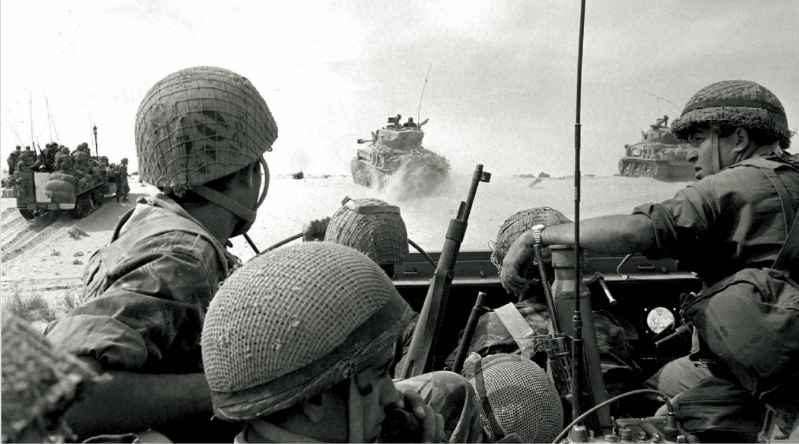

In the 1967 "Six-Day War", the third Middle East War, the Israeli assault force, with tanks as the core, boldly attacked in the desert and broke through the key position of the Egyptian army in Abu-Aqela in one fell swoop, ensuring that the Israeli army would eventually become the winner of this war
A new conflict brewing
By the summer of 1967, Israel, which declared its founding in the spring of 1948, once again felt the clouds of war after a short and bloody history. This new Jewish country has had two fierce conflicts with its neighboring Arab countries. The first war caused the death of nearly 1% of Israel’s population. Less than 10 years after the warring parties barely reached a ceasefire agreement, Israel fell into a new dispute with its most powerful Arab neighbor. This is the second Middle East War, which is called the "Suez Canal Crisis" by Western countries.
With the rise of Colonel Abdel Nasser, one of the most charismatic leaders in the Middle East, a wave of nationalism surged across the ancient land of Egypt. Nasser became the president of Egypt in 1954, and uniting Arab countries and fighting the Jewish state "next to his bed" became the theme of his administration.
In response to Egyptian President Nasser’s announcement to nationalize the Suez Canal, Britain, France and Israel took joint invasion actions based on their respective interests. Israel sent troops to the Sinai Peninsula on October 29, 1956, and Britain and France carried out airborne operations near the Suez Canal. However, the old colonial empires did not gain any benefits from this action. Under international pressure, Britain and France were forced to accept a ceasefire agreement.
At the same time, however, the Israeli army achieved amazing success in ground operations, occupying the Sinai Peninsula in a short period of time. However, the Israeli army failed to capture one of the most heavily defended positions of the Egyptian army, the strategic location near the seemingly insignificant pass of Abu-Aqela - only after the local Egyptian garrison voluntarily left, the Israelis were able to occupy this place.
After this short war, Britain and France withdrew their troops from Egypt, and UN peacekeepers entered the Sinai Peninsula to separate the hostile Egyptian and Israeli sides. After that, as Nasser’s influence in the Arab world grew, Israeli intelligence estimated that a new conflict between Israel and Egypt was inevitable, and this war could come as early as 1967.
Egypt was indeed preparing for a new war. Nasser promoted some capable military personnel to the highest levels of government and the military, such as Field Marshal Abdul Hakim Amer, who served as the commander-in-chief of the Egyptian army. He was a veteran who had fought against Israel in 1948 and 1956.
However, there was nepotism and authoritarianism in the Egyptian senior military corps during that period. Amer appointed his subordinates based on their closeness rather than their ability. Some Western researchers believe that "many senior officers are more interested in Cairo’s nightlife than military art" and "intelligence personnel spend a lot of time monitoring suspicious Egyptian officials instead of collecting intelligence on the Israelis."
Despite this shortcoming, Egypt under Nasser had built up a respectable army. The Egyptian army had greatly enriched its arsenal through its alliance with the Soviet Union, which had provided Arab countries with billions of dollars in military aid since the end of the last Middle East war, including 1,700 tanks, 2,400 artillery pieces, and 500 jets, at least half of which had been shipped to Egypt. In the spring of 1967, Egypt received "important intelligence" from Syria that Israel was massing heavy troops on its northern border. The intelligence was not actually accurate, but Nasser ordered the 3,500 UN peacekeepers stationed in Sinai to leave on May 19. As the peacekeepers withdrew from the Sinai Peninsula, Egypt’s war preparations entered their final stage.
On May 21, Egypt closed the Straits of Tiran, a strategic waterway that controls the Gulf of Aqaba, completely cutting off the southern Israeli port of Eilat from international waters, a move that would almost certainly lead to direct conflict between Egypt and Israel. In response, President Nasser firmly stated: "This will be a full-scale operation, the goal is to destroy Israel."
Preemptive Strike
Since any conflict with Arab countries will inevitably lead to the Israeli army fighting on multiple fronts at the same time, Israel’s military theory emphasizes an aggressive and proactive offensive strategy, that is, to preempt the numerically superior Arab army.
In the years before the "Six-Day War", the Israel Defense Forces were transforming into a more mobile force, tending to be armored. Brigadier General Isra Tal, commander of the Israeli armored forces, was a key contributor to Israel’s armored warfare theory. The core of his new tactics was "fast armored assault under air cover", which of course could actually be said to be an Israeli version of the German "blitzkrieg" during World War II. Tal’s actions, coupled with the fact that Defense General Dayan was also a thorough "tank worshiper", the status of tanks in the Israeli army has changed from a supporter of infantry to a decisive factor in ground combat.
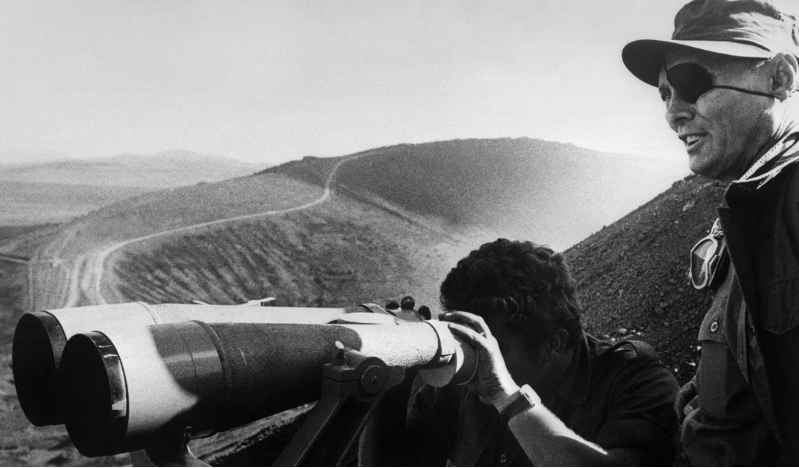
In terms of equipment details, Tal prefers the firepower and protection of heavy tanks, while the more flexible light tanks are inferior. This is based on the reality faced by the Israeli army. On battlefields like the Sinai Peninsula, tanks with stronger survivability and the upper hand in long-range armored duels are undoubtedly more popular.
Based on this idea, the Israeli armored forces are mainly based on the British "Centurion" main battle tank and the "Super Sherman" tank modified from the World War II tank. Both tanks are equipped with 105mm caliber main guns, and are supplemented by the French AMX-13 light tank equipped with a 90mm main gun.
Israeli tankers generally receive rigorous training. "Armored forces are the decisive factor in land combat," Tal said. "The armored units’ mission is to bring the battle into enemy territory and achieve a quick victory." However, in the upcoming unresolved conflict, the Egyptian positions in the Abu-Aqala area remain the key, and the attack is more difficult than in the last war.
The Israeli army failed to break through the fortifications of Abu Agila in 1956. They were impressed by the fortified areas there and the fighting spirit of the ordinary Egyptian soldiers was also respectable. With the help of Soviet military engineers, the local defense system has become more complete and solid, and it seems to be able to withstand any attack by the Israelis.
In fact, since 1956, the difficult task of breaking through the fortifications of Abu Agila has been the focus of the IDF. The Israeli Command and Staff College holds exercises on simulated Abu Agila positions every year, and each time the exercises are updated based on the latest intelligence on the evolving Egyptian defenses. Therefore, most Israeli field commanders and staff officers are already familiar with their goals, and based on Israel’s active offensive theory, the military advocates that the first strike is the best.
However, there is a real panic at the highest levels of the Israeli government, and politicians are worried that a new war may become a severe test of Israel’s survival. Therefore, at a high-level meeting held in a bunker in Tel Aviv on June 4, when the Israeli military leaders almost unanimously said that they should launch an attack on Egypt first, the politicians objected.
In the corner of the conference room, the division commander, Brigadier General Ariel Sharon, bowed his head and said nothing. Once Israel attacked Egypt, the 38th Armored Division commanded by Sharon would serve as the spearhead of the assault on the Sinai Peninsula. Sharon was worried about this "political indecision that put the front-line troops in a dilemma." He later wrote that the combat troops "moved around, crossed each other, took up positions, but were ordered to withdraw from there a day later, and the army had no idea what they should do." Sharon’s view on the politicians’ attitude was: "In any case, we must act now, otherwise we will definitely pay a higher price."
The meeting lasted until late that night, and Sharon and others were happy that the opinions of the soldiers shook the government ministers, and they finally chose war. The Israeli government issued a secret directive: "It has been determined that the armies of Egypt, Syria, and Jordan have been deployed to launch a multi-front attack aimed at threatening Israel’s survival. Therefore, the Israel Defense Forces should launch a military strike in order to rescue Israel from its predicament."
Sharon’s bold plan
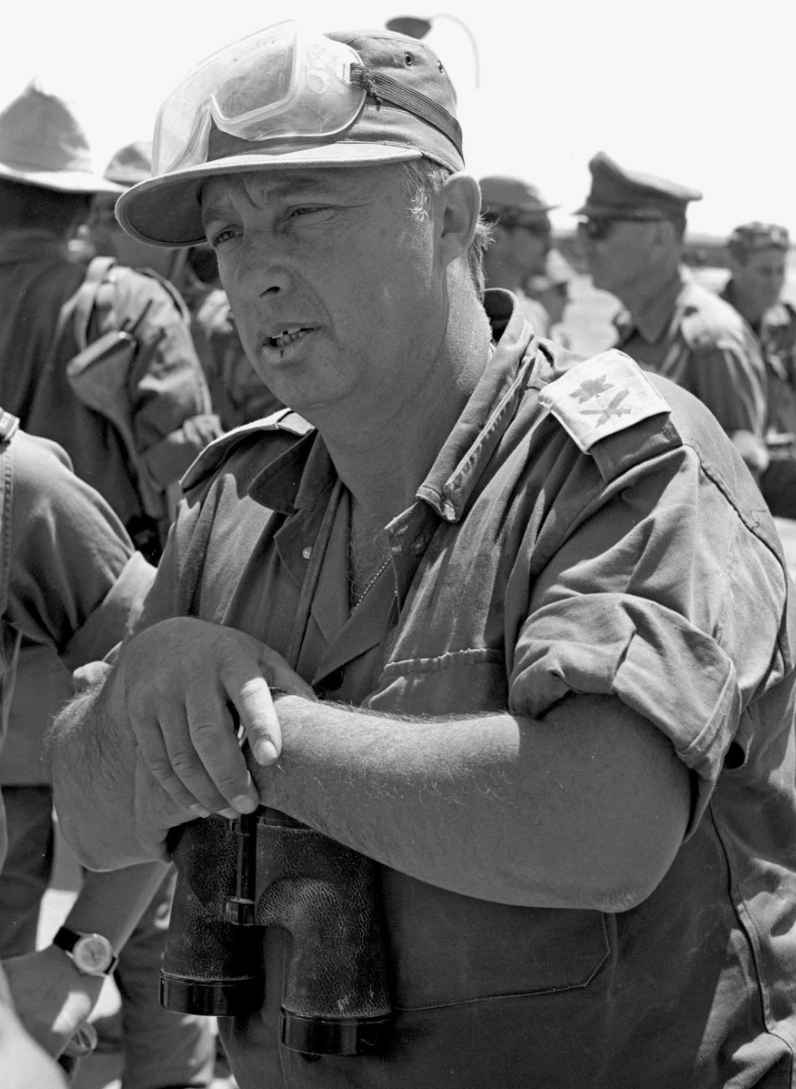
In the early morning of June 5, 1967, this secret directive was launched with amazing force. In order to suppress Egypt’s powerful air force, the Israeli Air Force launched a series of shocking undeclared attacks on airports throughout Egypt. Within a few hours, about 200 Israeli aircraft launched multiple rounds of attacks, ultimately destroying 338 Egyptian aircraft, most of which were destroyed on the ground.
Air strikes in several other directions also destroyed all 29 aircraft of the Jordanian Air Force and 61 aircraft of the Syrian Air Force. As the Arab air threat dissipated, Israeli ground forces began to advance into the Sinai Peninsula, executing an operational plan they had rehearsed over the past few years.
The troops on the Sinai front were under the unified command of Brigadier General Yeshayahu Gawish, who had three front-line combat divisions at his disposal. The right-wing division of the Israeli army was deployed along the Mediterranean coast and would attack along the coastline under the command of Brigadier General Tal. The center division was led by Brigadier General Avram Yov, a veteran who had participated in the battle since the age of 16, and led two armored brigades.
The left-wing force was the strongest and had the heaviest task, that is, the 38th Armored Division commanded by Brigadier General Sharon. As a native Israeli, Sharon was only 14 years old when he joined the Haganah militia. He was known for charging at the front on the battlefield, but he left a stain of killing civilians in an operation in October 1953.
Sharon’s target was the powerful defense system of Abu-Aqeila, which controlled the central route through the Sinai Peninsula. Because the huge sand dunes in the north were considered impassable for tanks, the Egyptians saw it as a natural flank barrier. The passage extending from the east is almost the only passage for the Israeli army to attack Abu-Aqela. The Egyptian army has set up two lines of defense there, consisting of trenches, bunkers, artillery positions, mortar pits, tanks, barbed wire and minefields.
The troops stationed here are the well-trained 2nd Infantry Division of the Egyptian army. At that time, the standard Egyptian infantry division had a strength of 11,000 people, while the 2nd Division had 16,000 people. However, the troops of this division are distributed in many important places in the Abu-Aqela area. Among them, the 12th Reinforced Brigade, with a strength of about 7,000 people, is in the most core position.
In addition to the artillery units directly under the headquarters, the brigade has also been strengthened by several temporarily added artillery units, which enables the 12th Brigade to have a considerable number of Soviet-made 122mm cannons and 152mm howitzers. The power of these two types of artillery is formidable, and they have a technical advantage over similar equipment of the Israeli army.
In order to implement the latest concept of "strengthening static defense with dynamic means", the 66 T-34-85 tanks and 22 SU-100 self-propelled artillery of the 6th Tank Regiment were also assigned to the 12th Brigade, with the intention of launching an armored counterattack against the Israeli army when necessary. Dayan, who served as the Chief of Staff of the Israeli Army in the 1956 War, once pointed out that the biggest shortcoming of the Egyptian army in Abu Agila was "the lack of a mobile force that could launch a counterattack against the enemy." The arrival of the 6th Tank Regiment was very targeted.
As for the elite force commanded by Sharon, it was a multi-service synthetic strike force. The sequence included not only the 14th Armored Brigade, the 226th Independent Armored Battalion, the 99th Infantry Brigade and 6 artillery battalions, but also the 80th Paratrooper Brigade, bringing its total strength to 14,000. The tank strength of the division is 100 "Centurion" and "Super Sherman", plus 50 AMX-13 light tanks. Although the number of troops of the 38th Armored Division of the Israeli Army is smaller than that of the 2nd Division of the Egyptian Army, it has an advantage over the 12th Brigade, which is deployed alone in the core area of Abu-Aqela.
Fully remembering the lessons of the Israeli army’s setback in 1956, Sharon formulated a complex combat plan, hoping to overwhelm the Egyptian defenders with unconventional tactics. Of course, the success of this plan will not only depend on the execution of each unit, but also on perfect timing and a certain amount of luck. In short, Sharon will not concentrate all his efforts on the frontal attack on Abu-Aqela, but will divide his troops into three routes, including frontal containment, flanking detours, and "jump operations"
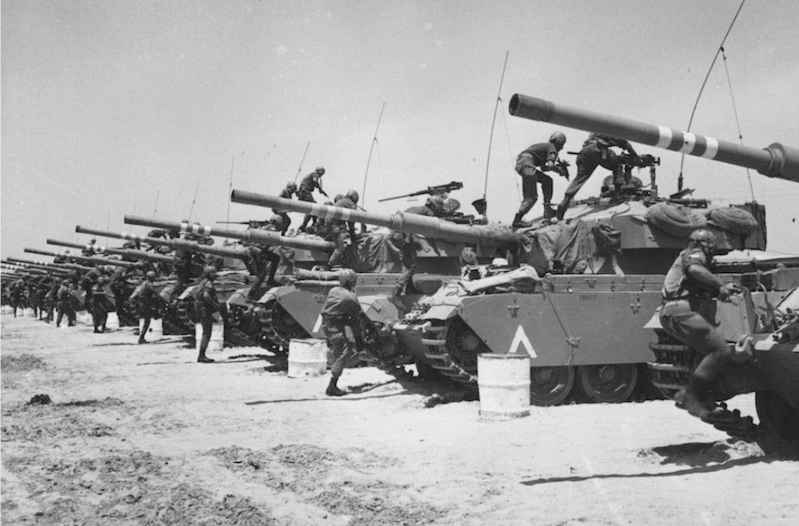
Among them, Colonel Adam’s 99th Infantry Brigade attacked the Egyptian positions from the front of the main passage, and Lieutenant Colonel Zipoli’s 14th Armored Brigade’s two "Super Sherman" tank battalions and two mechanized infantry battalions also joined this route. Lieutenant Colonel Neil’s 226th Independent Armored Battalion was given the arduous task of crossing the northern sand dunes that were considered impassable, in order to penetrate the Ruwafa Dam behind the main Egyptian position in one fell swoop, cut off the defenders’ retreat there, and block possible Egyptian reinforcements from the west. As for the 80th Paratrooper Brigade, it will take a helicopter to land directly on the Egyptian artillery position and destroy all artillery, thereby clearing the artillery threat for the first two Israeli troops
Tank assault and paratrooper landing
Sharon began his adventure. On June 5, the 38th Armored Division crossed the border to Abu Agila. The 99th Infantry Brigade and the 14th Armored Brigade launched a tentative attack on the Egyptian positions in Kusayma. Although only a few tanks were used in this attack, it was enough to convince the Egyptians that the Israeli army would adopt the same strategy as in the last war, that is, to attack Abu Agila head-on along the central route of the Sinai Peninsula.
Immediately afterwards, Sharon launched the most critical and dangerous part of his complex plan. Lieutenant Colonel Neil’s 266th Independent Armored Battalion began to cut into the sand dunes on the north side of Abu Agila along an inconspicuous desert path called the Batul Trail. Neil’s mission was to first eliminate the Egyptian outpost 181 and then seize the Ruwafa Dam.
Neil’s unit is a multi-arms mobile combat group, including mechanized infantry, vehicle-mounted mortars and rocket launchers, as well as reconnaissance and engineering units, and the core force of the entire unit is 45 "Centurion" Mk.V main battle tanks. In the last war, both the attackers and defenders agreed that heavy vehicles could not pass through the sand dunes on the north side of Abu-Aqela, but after careful research after the war, the Israelis believed that tanks could cross the sand dunes under appropriate conditions.
The 266th Armored Battalion was equipped with the "Centurion" purchased from the UK for this purpose. This tank has two characteristics: one is strong protection and the other is wide track plates. These two points are the prerequisites for the tank to successfully penetrate the sand dunes. When encountering the Egyptian army, the 105mm main gun of the "Centurion" is enough to pose a fatal threat to it.
Due to inaccurate intelligence, Neil thought he would not encounter any resistance at Point 181, so when the defenders’ firepower attacked, the leading Israeli mechanized infantry was temporarily repelled. However, after calling for air support, Neil launched another attack. When his infantry fired at the Egyptian stronghold from the front, the "Centurion" tank fired at the Egyptian flank. After paying the price of several tanks being destroyed, the 266th Armored Battalion defeated the defenders of Point 181, and Neil was able to march his troops deeper into the heart of the sand dunes.
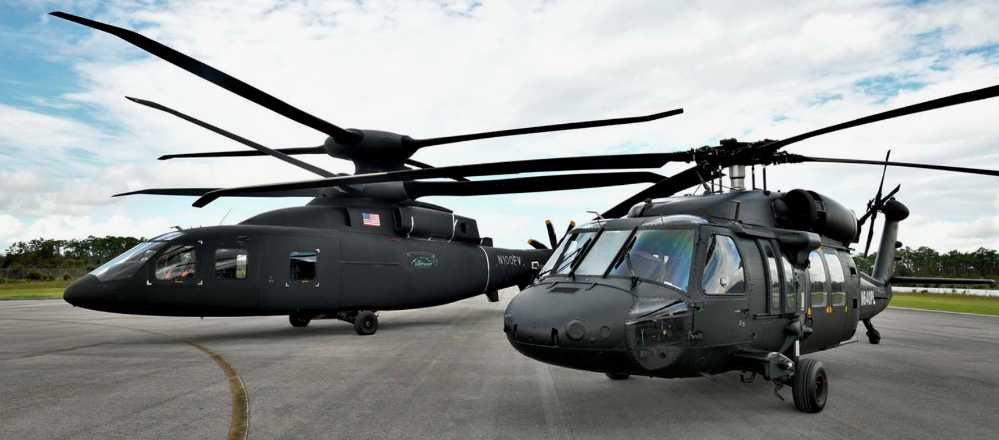
At sunset, the 80th Paratrooper Brigade’s bold helicopter landing attack began. According to Sharon’s personal arrangement, six Sikorsky S-58 helicopters took off and dropped 200 Israeli paratroopers in three waves to the Egyptian artillery positions behind the main defense line. The task of these paratroopers was to destroy the Soviet-made large-caliber artillery that posed a major threat to Israeli tanks.
Sharon had a special relationship with the paratroopers. As a former paratrooper, the general continued to wear the red beret of the Israeli paratroopers. War correspondents noted that when talking to the paratrooper commander, Sharon’s voice "became particularly cordial." Therefore, the 80th Paratrooper Brigade was determined to implement Sharon’s plan to the letter.
As soon as the helicopter landed, the paratrooper commander Colonel Danny Matt’s men went into action. They landed quietly only 3 kilometers away from the target, and Matt was surprised that the helicopter had not revealed its whereabouts. However, as the Israeli paratroopers struggled to advance towards the artillery position, there was sporadic shooting, followed by a melee. Matt recalled: "Suddenly, hundreds of flares lit up in the sky, followed by mortar fire falling on our path, and the roar of explosives was everywhere.
Despite the noisy response, it was clear that the paratroopers still had the initiative as the panic caused by the initial attack gradually subsided. The Egyptian army’s shooting was unclear and lacked effective command, and when the desperate Israelis rushed to their target, they unexpectedly discovered that there were no minefields or barbed wire around the Egyptian artillery positions. The paratroopers used their hands to After a fierce fight, the paratroopers rushed into the artillery position.
After the paratroopers poured into the target area, they attacked their respective targets. The Egyptian artillery was stunned by the attack and fled the scene. The Israelis began to destroy the ammunition depot in an orderly manner while blasting the artillery. A few minutes later, there were explosions one after another at the scene, and the artillery and ammunition depot were engulfed in flames.
Matt later wrote: "The scene was full of raging fire, the huge noise became unstoppable, and the smoke was suffocating. "For Matt and his men, this was a life-and-death struggle in the Sinai Desert; and for the IDF, this operation was crucial to the success of Sharon’s Armored Division’s critical assault on Abu Agila, and was equally crucial to the direction of the Six-Day War.
Highway in the Festival
After receiving the radio message that the paratroopers had succeeded in the attack, Sharon arranged for a helicopter to transport Matt’s paratroopers away from the scene. Now, the Israeli army no longer had to worry about the Egyptian army’s formidable artillery suppression, but its own artillery could show its power. At about 22:00 on the night of June 5, Sharon ordered his artillery to fire at the Egyptian army’s positions. As Sharon scanned the desert, he issued a legendary order to his gunners: "Let everything tremble.
For nearly half an hour, the artillery group consisting of 105mm and 155mm howitzers, 120mm and 160mm mortars and British 25-pound guns carried out the most intense artillery bombardment by the IDF up to that time. Even Sharon, a professional soldier, was surprised by this huge show of firepower. He said: "I have never seen such a scene in my life."
After the fierce artillery fire hit the Egyptian defense system, Sharon deployed his main force towards the attack front of Abu-Aqela. Lieutenant Colonel Zibori’s 14th Armored Brigade, led by two tank battalions equipped with "Super Sherman", roared towards the main position of the Egyptian army.
Ziboli’s mission was to seize the Egyptian Army’s forward observation post and then use his tanks to support the massive attack of his own infantry. The 14th Armored Brigade was divided into two routes. Major Sassen led an armored battalion and a mechanized infantry battalion to attack the Talat Um outpost, and Major Hartzell commanded the other two battalions to attack Hill 236.
The defenders of Hill 236 were obviously unprepared and abandoned their positions after being attacked by Israeli tanks and armored vehicles. Major Sassen’s "Super Sherman" encountered firm resistance at the Egyptian outpost of Talat Um. However, although the local Egyptian Army’s 2nd Reconnaissance Battalion fought tenaciously, it was alone and fled in all directions after more than an hour of fighting.
After both attacks were successful, Lieutenant Colonel Ziboli stopped his tanks. Now, the 14th Armored Brigade is resting outside the main Egyptian position, waiting for another group to come forward.
The infantry unit of the 38th Armored Division, the 99th Infantry Brigade commanded by Colonel Adam, crossed the border late in the afternoon and is now approaching the Talat Um line. The brigade has three battalions, two of which are equipped with troop carriers and trucks, and the other reserve infantry battalion composed of part-time personnel was sent to the front line by a strange train of civilian vehicles.
In this regard, an Israeli military correspondent wrote: "A strange scene appeared on the highway. A long line of civilian vehicles of different heights and colors drove by, filled with our soldiers. The temporary requisition of civilian vehicles was a method that the IDF came up with to quickly transport infantry, which made the entire road look like a highway on a festival."
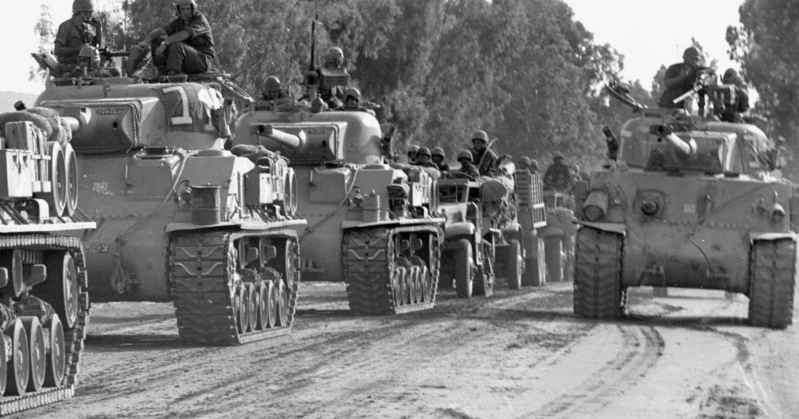
Based on the survey made in advance, Adam’s brigade decided to break through from the left wing approach position of the Abu-Aqela position, which was also a difficult sand dune area, but the advantage was that there were no mines laid by the Egyptians. Adam chose to put his two regular battalions into the initial attack, and keep the part-time reserve battalion from the "highway on the festival" as a reserve.
Soon, the 14th Armored Brigade and the 99th Infantry Brigade launched a coordinated attack, with the "Super Sherman" firing at the Egyptian positions from the front and the infantry marching through the sand dunes in the dark night. When the gunfire came from their left wing, the Egyptian 7th Army was inevitably confused about the enemy’s choice of attack direction, but they quickly regrouped and launched a fierce resistance. The two sides fought back and forth in many areas, and brutal hand-to-hand combat occurred in some trenches.
Although most of the Egyptian soldiers on the position put up a resolute resistance, the tactics adopted by the Israelis that night began to bear fruit. The Israeli infantry penetrated the defenders’ defense system in many places, and in the chaos of the night battle, the Israeli infantry used the color signal flashlights issued in advance to effectively avoid accidental attacks by friendly forces. Each battalion of the 99th Brigade had its own specific color: one was red, one was green, and one was blue.
By 1 a.m. on June 6, the Israelis had penetrated into the central area of Abu Agila, but the Egyptian army was still able to maintain an orderly formation, and the direction of the battle was still unclear.
The tank duel was staged in a flash
Adam clearly realized that the battle had reached a critical stage, so he ordered his reserve battalion to join the battle. At the same time, the Israeli engineers successfully opened a gap in the minefield and barbed wire to the east of the main Egyptian position, so Zipoli’s "Super Sherman" was able to advance forward. Of course, the tanks still had a hard time moving forward.
After the first few tanks slowly drove through the gap, a "Super Sherman" ran over an anti-tank mine and was blown up, thus blocking the passage. The engineers worked frantically to expand the passage in the minefield and barbed wire, while the tanks continued to fire to suppress the Egyptian army’s firepower points. Three hours later, Zipoli’s tanks poured out from multiple gaps, expanding the Israeli army’s control of Abu Agila.
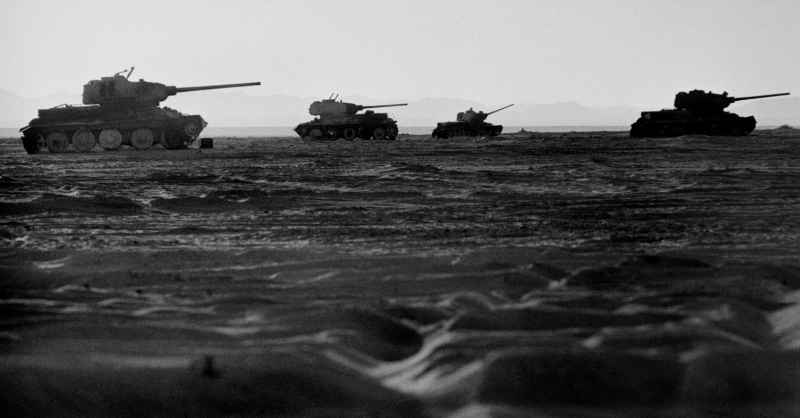
Then, another surprise force also won success. After a painful night, Lieutenant Colonel Neil’s 266th Independent Armored Battalion crossed the sand dunes north of Abu Agila, and the "Centurion" tanks finally appeared behind the enemy and defeated the small number of Egyptian troops stationed at the Ruwafa Dam in one fell swoop, thus tightening the rope around the necks of the Abu Agila defenders.
The enemy tanks rolled in from the west, which of course surprised the Egyptian defenders, whose attention had been focused on the main attack direction from the east. At this last moment when the main position was facing collapse, the Egyptian army’s armored reserve was finally called into battle: the tanks and self-propelled artillery of the 6th Tank Regiment launched a final counterattack against the Israeli army.
At about 4 a.m., the Egyptian armored column met Neil’s armored surprise troops head-on, and a tank duel in the sand dunes took place in a flash. As a result, Israel’s "Centurion" main battle tank, which had a generational advantage, not only suppressed the Egyptian army’s T-34-85 and SU-100 in technology, but also enjoyed a tactical advantage due to its bold penetration. By the end of this armored duel, a total of 40 Egyptian tanks and self-propelled artillery were on fire on the battlefield, while the Israeli army lost more than a dozen tanks and armored vehicles.
After the battle was decided, the main position of the Egyptian army began to disintegrate desperately. As the sky gradually brightened, only a few isolated Egyptian detachments continued to put up sporadic resistance, and these forces were quickly defeated. Egypt invested huge resources to build the Abu-Aqela defense system. This group of fortifications, which had resisted the Israeli army’s fierce attack in the last war and was generally regarded as one of the strongest defensive positions in the world, collapsed after a night of fierce fighting.
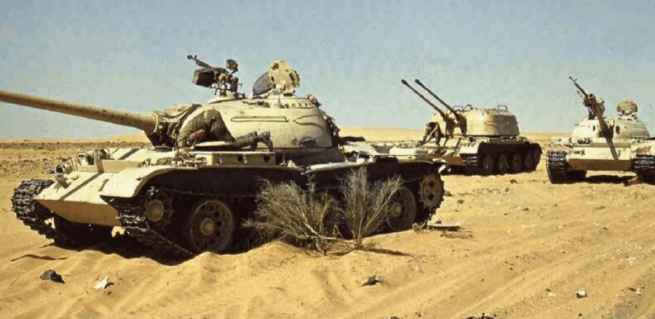
The loss of Abu-Aqela, coupled with the successive victories of the other two Israeli army units, led to the complete collapse of the Egyptian army’s defense in the Sinai Peninsula. In Cairo, the depressed Marshal Amer had to stop his army from fighting in vain and retreat to the west bank of the Suez Canal to regroup. By the early afternoon of the 6th, the Egyptian army had retreated to the east bank of the canal, and the Israeli armored column followed closely behind.
In order to block the Egyptian army’s retreat across the river, the Israelis sent a small armored unit to advance quickly and seize the few strategic roads leading to the western Sinai mountains. Although some Egyptian soldiers were able to escape, the battle in the Sinai Peninsula was disastrous for the Egyptian army. The Egyptian army lost 80% of its tanks, artillery and trucks here, and 11,000 people were killed, wounded or captured. Among them, in the core area of Abu-Aqela alone, the Egyptian army lost 2,000 people and 60 tanks, while the Israeli army lost only 40 people and 19 tanks in the area.
The Israeli army’s victory in the Sinai Peninsula even exceeded the most optimistic estimate of the Israeli side before the war, and the outcome of the Third Middle East War was doomed. The root of all this lies in the gains and losses of the attack and defense of Abu-Aqela, and Sharon’s troops completed the task of capturing this "key place" in less than 24 hours!