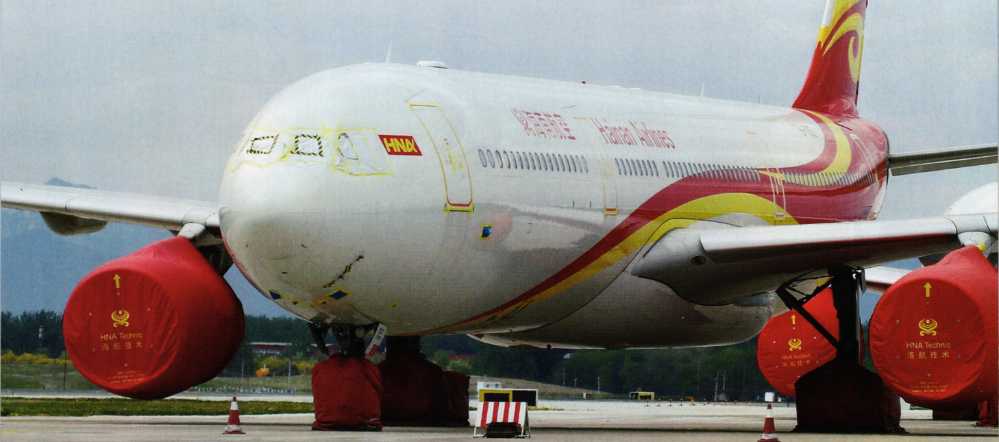

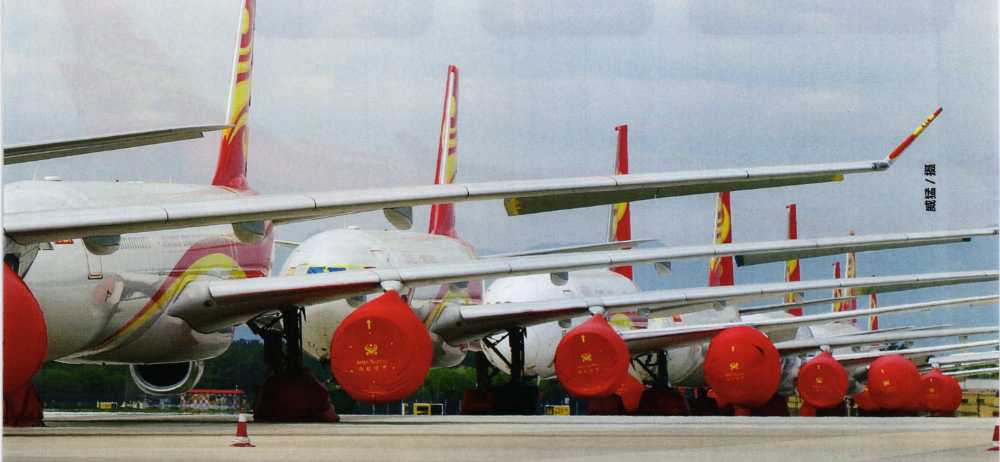
Three years ago, due to the impact of the COVID-19 pandemic, the global aviation industry’s passenger bookings fell sharply, and the sudden reduction in flights caused a large number of civil airliners to be grounded, forcing the global aviation industry to press the pause button. According to statistics from the International Air Transport Association, nearly two-thirds of aircraft worldwide were once forced to ground, reaching 13,700 aircraft, and many busy airports became "temporary parking areas."
If an aircraft does not need to be put into operation due to the current market conditions, or lacks spare parts to meet the operating requirements, and needs to be parked for more than one day, the maintenance personnel need to perform parking or sealing procedures on the aircraft. The purpose of sealing is mainly to maintain the airworthiness, safety and economic value of the aircraft, avoid unnecessary losses of the aircraft due to parking, and ensure that the aircraft can return to the fleet at a lower cost.
Aircraft sealing is particular
Aircraft sealing has high requirements for the environment. Operators will avoid storing aircraft at airports with large temperature changes, changeable weather, high humidity or high salinity (such as the seaside) to prevent corrosion and aging of aircraft parts. Airports in areas with low rainfall, dry climate, and less severe weather such as typhoons and hail are often the best options. Most of the retired aircraft of the US military are transported to the "Aerospace Maintenance and Regeneration Center" near Tucson, Arizona for processing. This "aircraft graveyard" has the function of storing aircraft. The desert environment has low annual rainfall, dry air, and is not easy to cause aircraft corrosion. The soil surface with high alkalinity is hard and suitable for aircraft to move on the ground.
If you want an aircraft to be sealed and returned to the fleet operation smoothly, the maintenance staff needs to complete the following tasks: initial sealing of the aircraft; interval inspection during the aircraft sealing period; unsealing work before the aircraft returns to operation and various expired but unfinished maintenance plans, disposal of retained fault recovery aircraft parts, etc. The aircraft sealing procedure is divided into aircraft parking and aircraft sealing according to the length of the parking time. The interval inspection time is calculated from the date of the aircraft’s last flight. If an aircraft completed its last flight on March 1, 2021, and is expected to resume operations on April 15, 2021, the parking time is short, and the aircraft operator will choose the parking procedure.
Parking and storage
Aircraft parking is suitable for aircraft that are not in operation for a short period of time. The aircraft needs to be kept in a flight-ready state so that it can quickly resume normal operation. The initial parking work is simple and the workload is small, mostly visual inspections and general maintenance work. During the parking period, it is not allowed to remove major components (such as engines), and there are more interval inspections mainly based on aircraft function tests. These are all to confirm that the functions of the aircraft are complete and ensure that the aircraft can be put into operation quickly. The interval inspections include 7-day interval inspections (P7D), 15-day interval inspections (P15D), 30-day interval inspections (P1M) and 90-day interval inspections (P3M). If the aircraft is parked for more than 4 months and still has not resumed flying, it will no longer be considered to be in a flight-ready state and a long-term storage procedure should be performed.
Aircraft storage is suitable for aircraft that are not planned to be put into operation in the medium and long term. The initial workload of storage is large, and the various operating mechanisms of the aircraft need to be lubricated. The main components (such as the engine) can be removed as spare parts for other aircraft. The specific work of storage includes: oiling the engine oil seals of various aircraft structures; filling the fuel tank with sterilizing agent, placing moisture-proof bags in the cabin; isolating the engine start switch, isolating the fire alarm switch, disconnecting the battery; blocking the external sensors, air conditioning ram air ports, outflow valves, etc. After completing the above work, the maintenance staff will tow the stored aircraft to the designated position, put on the engine and tire cloth covers, and then only need to perform regular parking maintenance and aircraft system testing. The interval inspections include 7-day interval inspection (S7D), 15-day interval inspection (S15D), 30-day interval inspection (S1M), 90-day interval inspection (S3M), 180-day interval inspection (S6M), 365-day interval inspection (S1Y) and 730-day interval inspection (S2Y).
Parking and storage have their own advantages and disadvantages. Storage interval inspection has less workload than parking interval inspection, and can maintain low maintenance costs for a long period of time, including the aviation materials and labor costs required for frequent interval inspections during the aircraft parking period, and the fuel costs required for interval test flights. Due to the large workload of unsealing and resuming operation of the aircraft, advance notice is required to resume operation.
Airbus A320 and A330 have four options for operators to choose: parking procedures for aircraft parked in flight preparation status for no more than 1 month; parking procedures for aircraft parked in flight preparation status for more than 1 month; storage procedures for storage time of no more than 1 year; storage procedures for storage time of more than 1 year. The initial storage and unsealing workload of these four storage methods will gradually increase. Operators can flexibly evaluate which method to use to store the aircraft based on actual operating conditions.
Unsealed, back to the blue sky
If the car at home is not driven for a long time, it needs to be checked before it can be put on the road, not to mention the more complex structure of the aircraft? Aircraft sealing is relatively simple, and unsealing is more time-consuming and laborious.
The unsealing process is simply to reverse the sealing process, including removing the protective layer, lubricating components, pressurizing, various system tests, ground test runs, etc. The maintenance staff will check the checklist to check whether each link, component, and system of the aircraft meets the standards for resuming operation, and replace expired or damaged components. Check the aircraft cabin to test whether the facilities in the cabin can be used normally; check whether there are foreign objects on the aircraft to confirm whether the performance of each system of the aircraft is normal; check the landing gear system to check whether there are abnormal conditions such as metal corrosion and oil leakage. When the aircraft is unsealed, there are also tests on the aircraft operating system and hydraulic system to ensure that the aircraft can normally complete key actions such as takeoff, climb, turn descent, and landing. If the A320 is sealed for more than 4 months or the A330 is sealed for more than 3 months, the landing gear retraction and extension test is required, and all wheels are removed for repair. All the work that was not carried out as planned due to the storage of the aircraft will be completed together, such as scheduled inspections that were not completed on time, troubleshooting of retained faults, and restoration of all strung parts. Usually, the aircraft needs to complete at least one flight cycle within 24 hours after the unsealing work is completed, so as to recalculate the starting time of subsequent storage work or directly put the aircraft into production operation.
With the continuous increase in the number of flights, more and more aircraft are taking off their cloth covers, washing off the dust accumulated during the storage period, and returning to operation after careful inspection and testing, welcoming every passenger with a brand new look.