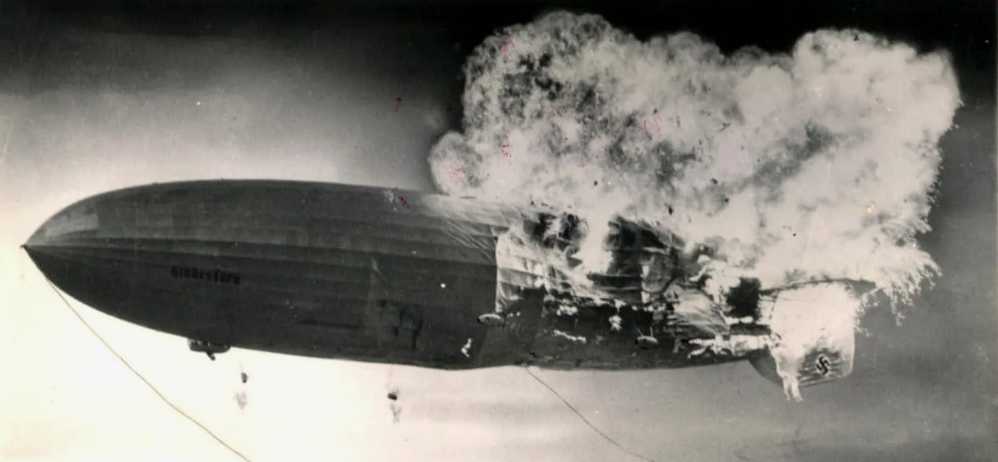

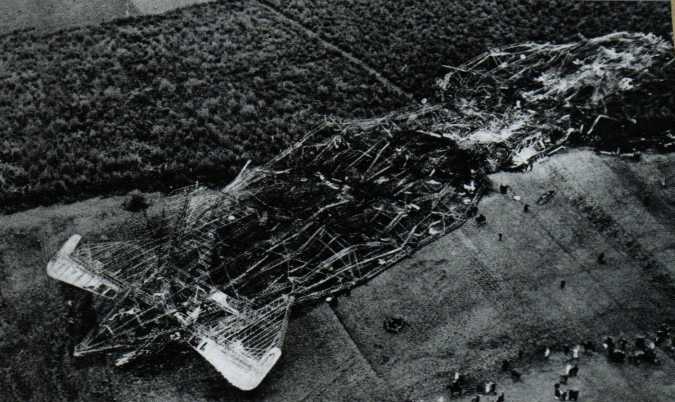
The violent fire in Lakehurst, New Jersey, USA on May 6, 1937, not only destroyed the German airship "Hindenburg", a star of transoceanic shipping, but also announced the "social death" of large commercial transport airships. From the slow leakage of hydrogen from the airship’s airbag to the static sparks between the airship and the mooring tower, what happened in an instant changed an era. The sudden fire and the hydrogen filled in the huge airbag inside the airship helped each other, turning this sturdy rigid airship into a blazing torch floating in the air. The cameras in the hands of the journalists waiting on the ground failed to capture the wonderful scene of the airship docking with the mooring tower, but accidentally captured the terrifying image of the airship turning into a torch.
Of the 97 people on board, 35 died on the spot in the accident. Although the Hindenburg accident was not the worst in the history of airships, it was the most shocking, because the crash scene appeared in the headlines of almost all news media at the time, and there were even thrilling on-site videos, which strongly touched the public’s nerves.
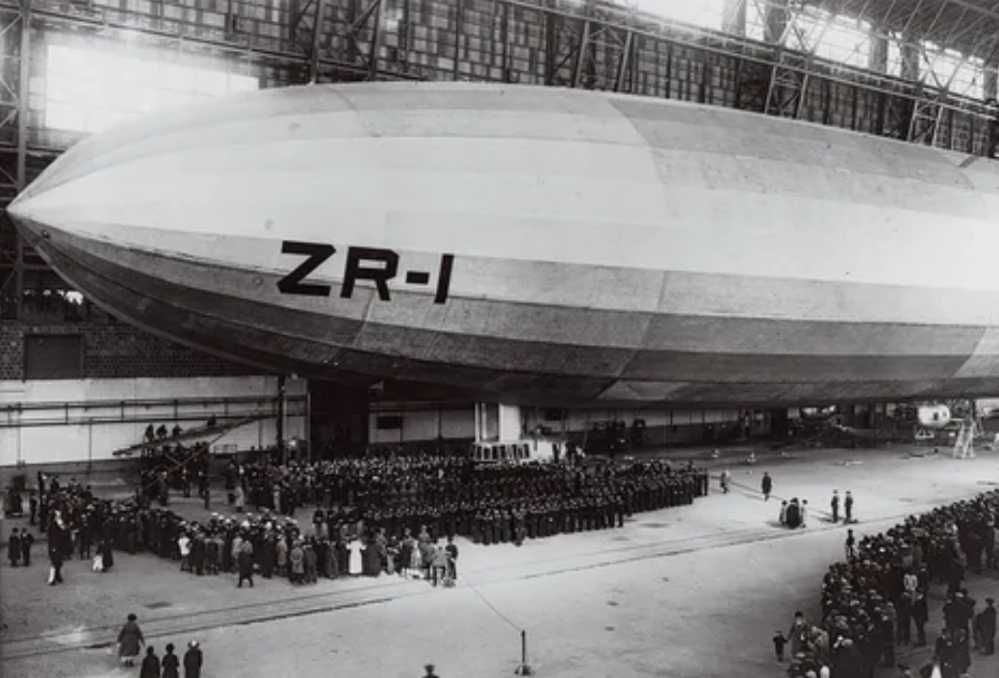
Today, if you buy a balloon for your child, you will pay attention to whether it is hydrogen or helium. The Germans naturally understand this. The research and development team of the "Hindenburg" is well aware of the dangers that hydrogen’s flammability and explosiveness may bring. As early as 1930, the British R101 hydrogen airship crashed, and most of the crew members died not because of the crash, but because of the subsequent fire. The previous experience of R101 prompted Hugo Eckener, the designer of the "Hindenburg", to decide to use helium, which does not burn, to fill his airship. However, although the German industry was very developed at the time, it did not have the ability to produce helium in large quantities. At that time, the world’s monopoly on helium production was the United States across the ocean - to this day, the United States’ helium manufacturing capabilities are still strong. In order to meet the helium needs of the Hindenburg, Germany had to buy helium from the United States. However, the United States replied "no" because it was worried that Germany might use the purchased helium for military purposes - after all, the horrific scene of the German Zeppelin airship raiding Britain and France in World War I was not long ago.
Due to the United States’ embargo on Germany’s import of helium, the Hindenburg had to adjust its design and switch back to using hydrogen that Germany could provide on its own, which was an important reason for the Hindenburg tragedy in 1937. After seeing the violent fire, the American people could not sit still and asked the US government to approve the supply of helium to Germany’s next large passenger airship LZ130. The US government also revised the embargo bill to allow the supply of helium to Germany for non-military purposes. However, before the United States began to sell helium to Germany, Nazi Germany annexed Austria in 1938. The US Secretary of the Interior refused to sign the helium sales agreement, and Germany ultimately failed to get helium from the United States.

Due to its extremely light properties, helium can easily escape from the surface of the earth into space, which results in a very small amount of helium in our atmosphere, about only 0.0005%. To extract helium directly from the air is indeed a bit like looking for a needle in a haystack. Fortunately, people have discovered that the natural gas produced during oil and gas drilling contains a certain amount of helium. Although the volume percentage is only about 0.3%, it is already an absolute rich mine compared to the content in the earth’s atmosphere. Personally, I understand that the reason why the natural gas deep in the stratum has a high helium content is because there is a thick stratum shielding, and these helium molecules cannot escape from the surface into space.
Despite this, the process of separating helium from natural gas is still quite complicated: first, it is necessary to filter out impurities such as water, carbon dioxide and hydrogen sulfide in the natural gas, and then cool the gas through an ultra-low temperature treatment process to remove the largest proportion of methane in the natural gas, leaving a crude helium with a purity of about 50%-70%, at which time it is also mixed with a small amount of argon, neon and hydrogen. Finally, it needs to be cooled and filtered again to obtain helium with a purity of more than 99%. So why do humans go to so much trouble to make helium? The role of helium is not limited to helping us make safer balloons or airships. It is very important in the fields of industry, scientific research and medicine. From the shielding gas in arc welding, to the cooling gas in nuclear magnetic resonance, to the shielding gas and cooling gas in computer chip and silicon crystal manufacturing, helium can almost be called a scarce strategic material.
Although helium is relatively "rich" in natural gas, not all oil and gas mining areas have such an endowment. In addition, the process of extracting helium is technically complex and costly. Therefore, there are basically only three main sources of helium supply in the world, namely Ras Rafon Industrial City in Qatar, Exxon Oil Company in Wyoming, USA, and the Texas National Helium Reserve in the United States. The seemingly inconspicuous helium may restrict many important industries.