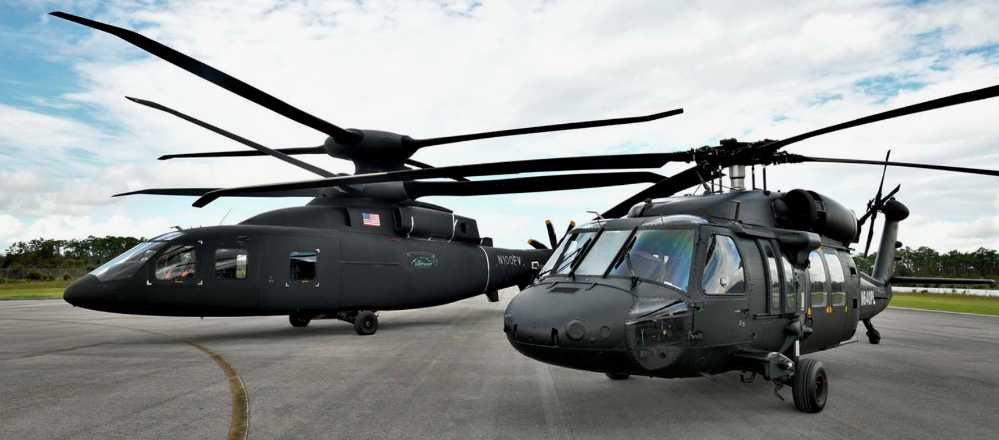

On December 5, 2022, the U.S. Army announced that the Bell V-280 Valor won the Future Long-Range Attack Aircraft (FLRAA) project and will be used to replace the classic UH-60 Black Hawk helicopter.
The Black Hawk entered service in 1979 and was first put into combat during the U.S. military’s "Urgent Fury" intervention in Grenada. Over the past 40 years, the Black Hawk has won the favor of more than 40 countries in the world with its excellent performance. China ordered a batch of civilian versions of the Black Hawk in the 1980s, and from the appearance, the newly commissioned Z-20 was also obviously influenced by the Black Hawk.
In 2019, the U.S. Army put forward requirements for the next generation of general-purpose helicopters, hoping to replace the 50-year-old Black Hawk in the 1930s. This is not a simple homogeneous replacement, but requires a revolutionary improvement in speed and range.
The United States used a large number of classic UH-1 "Huey" helicopters in the Vietnam War. The new generation of "Black Hawk" has been enhanced in speed, range, and troop transport capabilities, but the biggest improvement is the increase in external weight and combat damage resistance. Airborne infantry not only need to fight deep into the enemy’s firepower circle, but also need to carry certain heavy equipment instead of just transporting light infantry.
However, the "Black Hawk" is limited by the traditional helicopter layout itself, and its speed cannot be greatly increased, and its fuel consumption is also difficult to reduce.
The power of the helicopter comes from the rotor. When the rotor is rotating, the relative speed of the forward blade and the air is high, and the relative speed of the backward blade is low. This means that the higher the rotor speed, the greater the relative speed difference between the forward blade and the backward blade. The theoretical speed limit of a rotor helicopter is half the speed of sound. At this time, the relative speed of the forward blade can reach the speed of sound, and the relative speed of the backward blade is zero. In fact, when the helicopter is far from reaching half the speed of sound, the relative speed of the backward blade is already lower than the stall speed. In actual flight, the relative speed of the forward blade and the backward blade must maintain a certain safety margin between the speed of sound and the stall speed, which limits the maximum speed of the helicopter.
Over the years, various novel helicopter solutions have emerged, and technological breakthroughs have all focused on these two breakthroughs.
The advantages and disadvantages of the new configuration
In the FLRAA bidding, Sikorsky SB-1 and Bell V-280 entered the finals.
Sikorsky SB-1 adopts a composite helicopter solution of coaxial reverse rigid rotor + propulsion propeller. Coaxial reverse rotation cancels the anti-torque of the rotor, and no longer requires a tail rotor. The rigid rotor is suitable for high-speed rotation, which can appropriately reduce the rotor diameter and reduce the distance between the upper and lower rotors. The composite helicopter is provided with thrust by the propulsion propeller, and no longer needs the rotor to provide thrust. When the rotor is in high-speed level flight, it turns into a quasi-windmill state, providing only lift but no thrust, which greatly alleviates the problem of the relative speed of the rotor forward and backward.
But once the speed is high, the inherent vibration problem of the rotor is serious, and the rigid rotor has a tendency to further aggravate the vibration. The maximum speed of the Sikorsky solution has always been plagued by vibration problems, rather than the forward blade speed being too high or the backward blade being close to stalling.
The Bell solution uses a tilt-rotor, which is like a fixed-wing aircraft in level flight, with lift generated by the wing; it is like a helicopter in vertical takeoff and landing, with lift generated by the rotor. The tilt-rotor fundamentally solves the speed and range problems of traditional helicopters.
The tilt-rotor aircraft has great speed potential, but the new configuration also brings many problems and difficulties. First, the engine is installed at the wing tip, far away from the center of gravity. Once the power on both sides is unbalanced, it will immediately cause the aircraft to crash. Therefore, the engines on both sides of the tilt-rotor aircraft drive the rotors on both sides through the synchronous shaft at the same time to ensure that the working conditions of the two rotors are the same. However, this also makes the transmission and speed change mechanism design of the tilt-rotor aircraft complex, heavy, and less reliable. In addition, the heavy engine is like a shoulder pole for the tilt-rotor aircraft, and the rolling inertia during flight is also very large.

The V-22 currently in service with the US military is the first practical tilt-rotor aircraft. Its biggest feature is that the rotor and engine rotate at the same time when the aircraft changes its flight mode. In the vertical take-off and landing state, the engine nozzle is very close to the ground, which not only causes flying sand and rocks, causing safety problems for personnel and equipment at the take-off and landing field, but also has a serious ablation effect on the ground. When used on a ship, the flight deck needs to be specially heat-resistant to prevent the deck from being ablated.
Due to the US Marine Corps’ rigid requirement for foldable wings and rotors, the wingspan and rotor diameter of the V-22 cannot be optimized, so the designers can only compensate by increasing the rotor speed, which results in serious vortex ring problems. The vortex ring is like a helicopter rotor "slipping" in the air. Once this state is reached, further increasing the engine output will only make the problem worse. The solution is also simple: increase the rotor diameter and reduce the rotation speed, but the size requirements of the Marine Corps for the V-22 determine that this is impossible.
V-280 is Bell’s second-generation tilt-rotor based on the experience of using the V-22. The engine is still at the wing tip but no longer rotates. Instead, the power transmission and rotor tilt are cleverly solved together through the bevel gear set. Because the engine nozzle is fixed backward, the problem of nozzle ablation on the ground and deck is also solved. After the engine is fixed, the side firing range of the aircraft is also freed up-the vertical take-off and landing process is the time when the onboard firepower is most needed to be exerted to both sides, and the V-22 has never been able to solve this problem.
V-280’s biggest problem is the width of the fuselage. The rotor diameter of the Black Hawk is 16.36 meters. The distance between the two engine nacelles of the V-280 is 24.93 meters, not counting the rotor. With a rotor diameter of 10.7 meters, a field with a width of more than 30 meters is required for takeoff and landing.
Such a fuselage width is not a problem for field deployment in open areas, but when operating in narrow environments such as woodlands or towns, the passability of the V-280 will be a problem. The "Future Attack-Reconnaissance Aircraft" (FARA) synchronized with the FLRAA clearly puts forward the fuselage width requirement, so Bell did not bid with a tilt-rotor, but bid with an improved conventional layout solution.
Another problem with the V-280 is that the helicopter’s unique maneuverability is insufficient.
The mystery of the helicopter lies in the rotor. The rotor is not a simple fan blade driven by the main shaft, but under the action of a tiltable sliding plate, it can swing forward, downward and backward periodically while rotating. So when the fuselage is horizontal and the main shaft is vertically upward, the rotor blade tip motion path forms a forward tilted blade disc - this is why the rotor generates lift and thrust at the same time
The tiltable sliding disc can not only adjust the forward tilt angle to reasonably distribute the power output between thrust and lift, but also tilt and tilt backward. Therefore, traditional helicopters can not only fly forward, but also fly sideways and backwards. This unique maneuverability of helicopters is particularly suitable for unconventional maneuvers on narrow terrain.
The periodic flapping requires the helicopter blades to have a certain flexibility, and the traditional helicopter blades have such flexibility just to extend the fatigue life.
But in the level flight state, the blades of the tilt-rotor helicopter are preferably rigid to improve the propulsion efficiency. This is contradictory to the flexibility requirements of the vertical take-off and landing state. As a compromise, the rotors of the V-22 are semi-rigid, and so are the V-280. This affects the ability to fly sideways and backwards.
In addition, traditional single-rotor helicopters have single-point lift, while V-280 (and V-22) have two-point lift, and the impact of external cargo shaking in the air is more complicated.
In the future, a mix of new and old helicopters
In a sense, the tilt-rotor aircraft is a propeller transport aircraft with vertical take-off and landing capabilities. Its speed and range are much higher than those of traditional helicopters, but it is no longer suitable for use as a real helicopter, and it also needs to be positioned around this in practical use.
The main task of the U.S. Marine Corps MV-22 is to attack from sea to land. The flat terrain of the coast is particularly suitable for the use of tilt-rotor aircraft. The U.S. Air Force uses CV-22 to perform combat search and rescue missions, and also focuses on the speed and range of the aircraft. Under normal circumstances, CV-22 tries not to land as much as possible, and directly uses ropes, cranes, etc. for search and rescue operations.
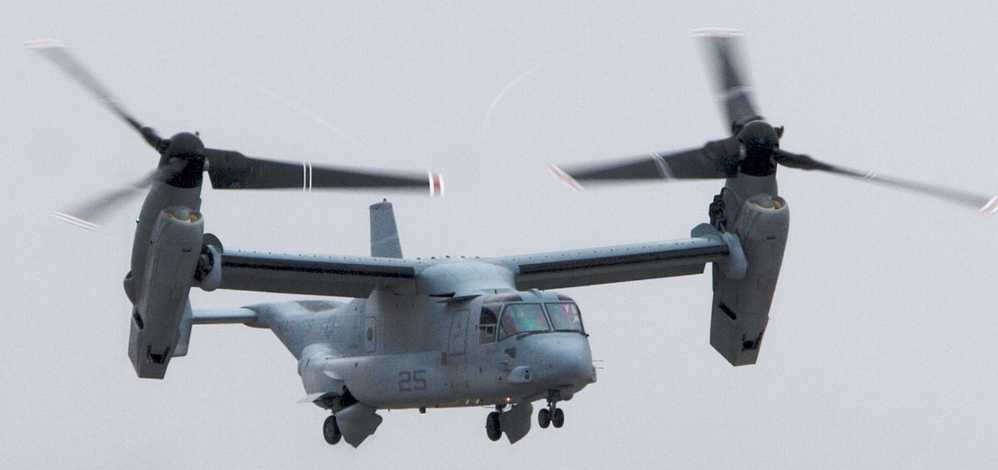
The Army is different. "One tree high" is the typical combat altitude of the Army Aviation. If the terrain is complex, it is difficult for the V-280 to meet the needs of the Army. In other words, the V-280 may not be able to completely replace the "Black Hawk".
UH-60L is a later model of the "Black Hawk". It was produced from 1989 and stopped in 2007. The latest UH-60M has been produced since 2005 and is also the main model currently in production. The US Army is upgrading more than 1,300 later models of the "Black Hawk" (including L and M models) with the new General T901 turboshaft engine. In terms of size and weight, the GE T901 turboshaft engine is not much different from the current GE T700 turboshaft engine and can be directly interchanged, but the power is increased by 50%, the fuel consumption is reduced by 25%, and the service life is extended by 20%. GE still continues to use a simple single-rotor structure, and taps into the potential through material technology and combustion chamber optimization. Its technical skills are amazing.
The speed of the upgraded "Black Hawk" has not increased significantly, but its external hanging capacity and plateau performance have been significantly improved. Compared with the V-280, the biggest advantage of the upgraded "Black Hawk" is that it "occupies a small area" and is suitable for use in narrow woodlands, mountains, and streets. It is also good at helicopter-specific maneuvers, which is still an indispensable capability for air mobile forces.
Now Bell V-280 has won the bid, but there is no recent production start-up plan, and the order quantity has not been disclosed. The US Army hopes to control the unit price at US$43 million. In contrast, the UH-60L costs only $6 million per unit, and the UH-60M rises to $10 million. It is very likely that the US Army’s final choice will be some kind of mashup of the V-280 and the Black Hawk, just like the B-21 and the B-52.