
At the turn of spring and summer in 1894, the Donghak Party uprising broke out on the Korean Peninsula. The Lee Dynasty was unable to suppress the rebellion, and the Qing government was invited to send troops to suppress it. Since the Meiji Restoration, Japan has used external expansion as a strategy for the rapid rise of the country. Finally, it has waited for the opportunity to intervene in the East Asian continent and challenge the original political structure. Under the pretext of protecting overseas Chinese, Japan began to transport troops to Korea on a large scale, occupy key areas, and confront the Qing army, step by step igniting the flames of the Sino-Japanese War of 1894-1895, which is familiar to modern Chinese.
In contrast to the situation at that time when the Japanese army was well-fed and marched according to orders, the initial preparations of the Japanese Navy seemed a bit complicated. When the cabinet issued an order to assemble warships on the coast of Korea, the Japanese Navy’s maritime combat force-the standing fleet was actually in a state of scattered ships. According to national strategic needs, the 8 warships of the standing fleet were actually carrying out missions in 5 directions at that time. Among them, the "Matsushima" and three other warships led by the commander of the standing fleet, Ito Yuheng, were anchored in the waters of Matsu Island at the mouth of the Minjiang River in Fujian. Fujian and Taiwan have been regarded by the Japanese military as important alternative "windows" for invading China since the 1870s; the small gunboat "Akagi" was anchored in Yantai, Shandong, conducting close reconnaissance of the imaginary enemy Beiyang Navy; the gunboats "Chikushi" and "Yamato" were stationed in Incheon on the west coast of Korea, and had already entered the state of interfering in Korean affairs in advance; another gunboat "Musashi" was stationed in Yokosuka, guarding Tokyo Bay, the gateway to the capital. Among the 8 warships, the most special one was the cruiser "Takachiho". According to Japanese military history records, it was anchored in a country called "Buwa" at the time.
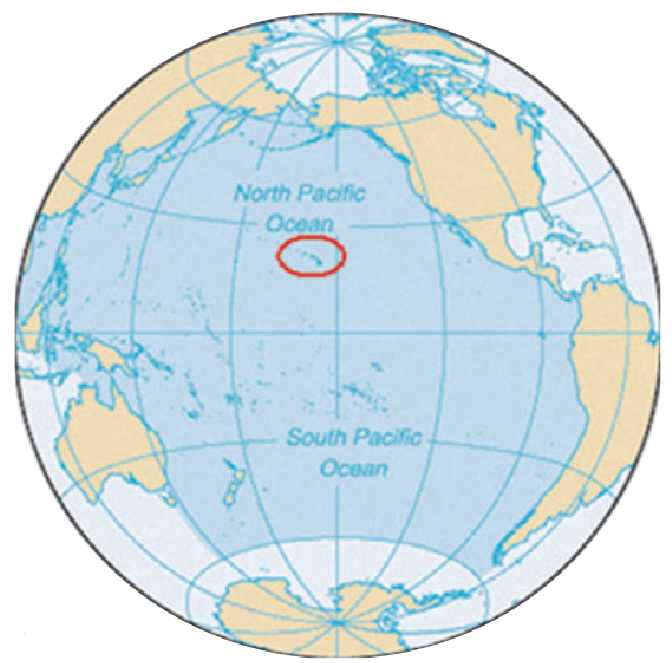
Buwa in Japanese refers to the Hawaiian Islands in the vast ocean. The Qing Dynasty of China called it Hawaii and Honolulu in diplomatic documents. The reason why Japanese warships appeared in Hawaii, a distant country that seemed to have nothing to do with Japan, in 1894 can be traced back to the special history of Hawaii.
Founding of the country
The Hawaiian Islands, where the Hawaiian nation is located, are located in the central Pacific Ocean. They are composed of eight large islands, including Hawaii, Maui, Oahu, Kawai, and Nio, and more than 100 small islands, like a green gem spread on the blue velvet of the Pacific Ocean. In the years when human navigation was not yet developed, this archipelago was not known to the distant outside world and was isolated from the world for a long time, like a paradise on the sea. There were no people living on the archipelago originally. It was not until around 250 AD that the earliest inhabitants, the Polynesians, migrated from overseas. Their specific situation can only be speculated from some myths and poems that have been circulated. In 2016, the American Disney Company launched the animated film "Moana" based on the myth of Maui Island in the Hawaiian Islands. The life scene of the islanders living by the sea in the film may be the scene of the early years of the Hawaiian Islands.
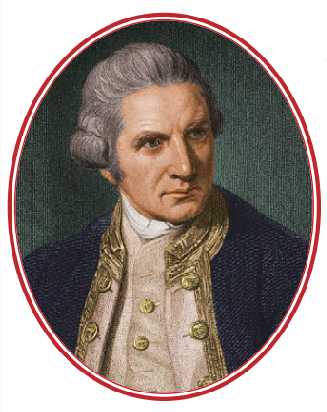
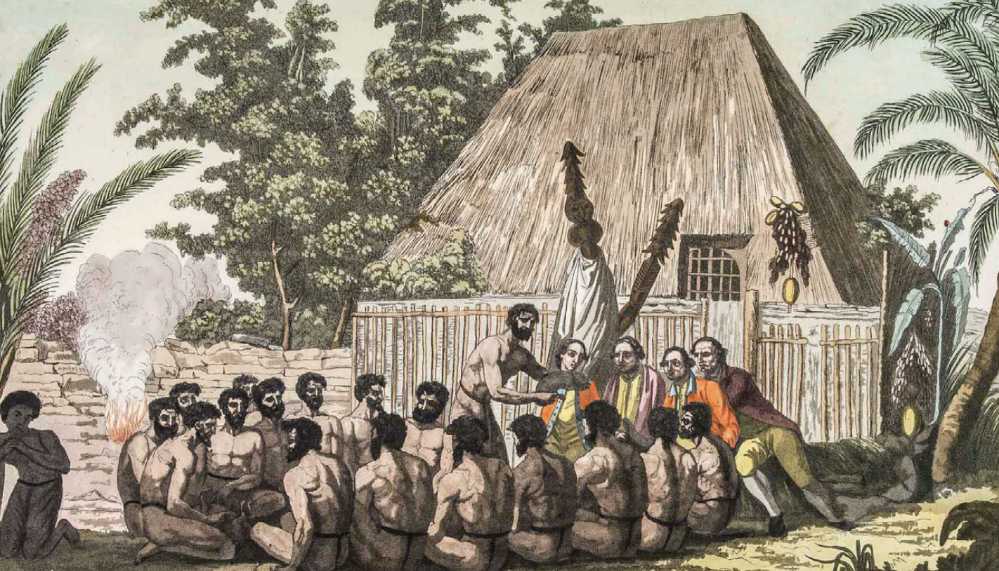
Over the long years, the indigenous civilization of the Hawaiian Islands developed independently in a relatively closed environment and gradually evolved into a slave-based tribal society. On Hawaii Island and some other larger islands, many independent tribes emerged, led by chiefs and wizards. The peaceful life of the Hawaiian Islands was broken and its mysterious veil was unveiled by the outside world in the late 16th century. On January 18, 1778, James Cook, a famous ocean explorer and British naval officer who had discovered Australia, crossed the sea to explore and accidentally discovered the Hawaiian Islands during his voyage. The fate of the islands began to change dramatically from then on.
The first islands that came into contact with the Westerners, mainly the British, were the larger islands of Hawaii and Oahu in the Hawaiian Islands. Some tribal leaders with more vision and courage had a clear understanding of the huge technological gap between themselves and the British, and then began to try to contact and communicate with the British navy that came to the island, and even wanted to use the British military technology to realize their political dreams. In the eyes of the British government, the Hawaiian Islands, which were accidentally discovered, happened to be in the center of the Pacific Ocean and had value as a supply point for long-distance voyages. At the same time, the islands had excellent natural conditions and were also a good place for immigration and reclamation. Therefore, they did not reject dealing with the indigenous people on the island who were in a state of ignorance and wildness.
In 1782, the chief of Hawaii Island died, and the chief’s nephew Kamehameha took advantage of his control of the tribal military power and overthrew the young new chief in 1790 to seize the ruling power. Kamehameha was ambitious and adopted an active foreign policy towards the British. In 1794, he signed the "Defense Support Treaty" with Britain in exchange for the sale of guns and weapons to Hawaii. With this almost exclusive military advantage, Hawaii began a conquest and annexation of surrounding islands without suspense. Under Kamehameha’s leadership, other island tribes in the Hawaiian Islands were conquered one after another. In 1795, the Hawaiian Kingdom, which consisted of many islands in the archipelago, was established. The history of a unified country in the Hawaiian Islands began. To this day, a memorial statue commemorating Kamehameha I, the founder of the kingdom, is still erected on Oahu Island in the Hawaiian Islands.
After entering the 19th century, Westerners’ enthusiasm for the Hawaiian Islands grew day by day. In addition to the British who arrived first, Russian naval warships from the north also came to the Hawaiian Islands in 1804. They even regarded it as unowned land and raised the Russian flag on the islands. Later, they gave up because the islands were too far away.19 In the 1920s, a wave of religious enthusiasm arrived, which had a greater impact on the fate of Hawaii. American missionaries first landed on the Hawaiian Islands and began to spread Protestantism on the islands to convert the islanders. In competition with this, the Roman Catholic Church responded almost immediately. Pope Leo XII decided to send Catholic missionaries to the Hawaiian Islands to spread the gospel.
Under the cultural influence dominated by missionaries, the Hawaiian Islands society, which had only evolved to the level of a slave tribe, was suddenly dragged into the modern world. Various systems, cultures, values, and lifestyles imported from the West began to spread rapidly on the islands, causing drastic changes in the culture and even language of the indigenous society. The continuous landing of a large number of Western immigrants with the dream of gold rush further exacerbated the great changes in the society of the Hawaiian Islands.
Affected by Britain, the royal family of the Kingdom of Hawaii in 1839 In 1840, the Kingdom of Hawaii published the famous "Declaration of Rights" announcing that the Kingdom of Hawaii would completely change its original social order and transform into a Western-style secular country, which means that the Kingdom of Hawaii would enter the mainstream international world of the West from a previously ignorant tribal country, and become a modern country recognized by the Western world and with the characteristics of modern international law concepts. This adjustment of national modernization was decades earlier than the transformation of China and Japan in East Asia.
Then on October 8, 1840, the Kingdom of Hawaii formally formulated and promulgated the "Hawaii Constitution" imitating the Western style on the basis of the "Declaration of Rights", announcing that the Kingdom of Hawaii would adopt a constitutional democratic system and establish a cabinet called the Executive Government, which would be under the jurisdiction of the king, regent, internal affairs, finance, education guidance, legal affairs, and foreign affairs, and at the same time open a Western-style parliament. In order to ensure that the Kingdom of Hawaii can truly transform into a country that enters the mainstream world and survive in the cracks of Western powers, shortly after the formation of the Hawaiian Kingdom government imitating the Western style, the royal government was established in In 1842 and 1843, the Kingdom of Hawaii negotiated with the United States, Britain and other countries that had the greatest influence on Hawaiian society, and obtained their formal recognition of the Kingdom of Hawaii in the form of international law. More importantly, in 1849, the Kingdom of Hawaii formally established diplomatic relations with the United States on an equal footing.
In this way, a wild archipelago that was originally a tribal system in the Central Pacific took less than 50 years to transform into a constitutional monarchy in the sense of modern international law.
Immigration Wave
Since the promulgation of the Constitution, the Kingdom of Hawaii has begun various activities to establish rules and regulations to meet its identity as a modern country. However, as this reform was underway, the fate of the kingdom came to a crisis, and the relationship between the Kingdom of Hawaii and Japan was established.
According to Hawaii’s population census, the indigenous population of the Kingdom of Hawaii was 130,000 in 1832. However, with the rapid modernization of the country and the daily changes in the traditional Hawaiian Islands society, affected by infectious diseases and social changes, by 1866, the indigenous population had dropped by half to only 63,000. What happened to form a trend of decline and growth was that a large number of Westerners came to the islands, and what was even more terrifying was that these Westerners became citizens of the Kingdom of Hawaii. In the 1850s, the Kingdom of Hawaii issued a decree allowing foreign immigrants to choose to naturalize as Hawaiian citizens, and allowing naturalized foreigners to privately purchase and own land in the Kingdom. At that time, the United States was in the midst of a wave of whaling in the Pacific Ocean, and the Pacific region became the "New West" in the minds of many Americans. More and more Americans with a dream of gold rush came to the Hawaiian Islands, where there were a lot of land and few people, to run horses and grab land, or engage in whaling, or run farms, and export the finished products back to the United States for profit. Gradually, the situation in the Kingdom of Hawaii was formed where foreign Hawaiians, especially Hawaiians with American immigrant backgrounds, were the majority.
The situation was extremely serious. By 1862, more than 75% of the land on the Hawaiian Islands had been owned by foreigners. In the Hawaiian government, which was very familiar with Western politics and had a large number of new immigrants as a support base, many Americans who naturalized in the Kingdom of Hawaii entered the parliament and even the cabinet of the Kingdom of Hawaii, infiltrated the heart of the kingdom, and began to be eager to participate in the operation and decision-making of the country.
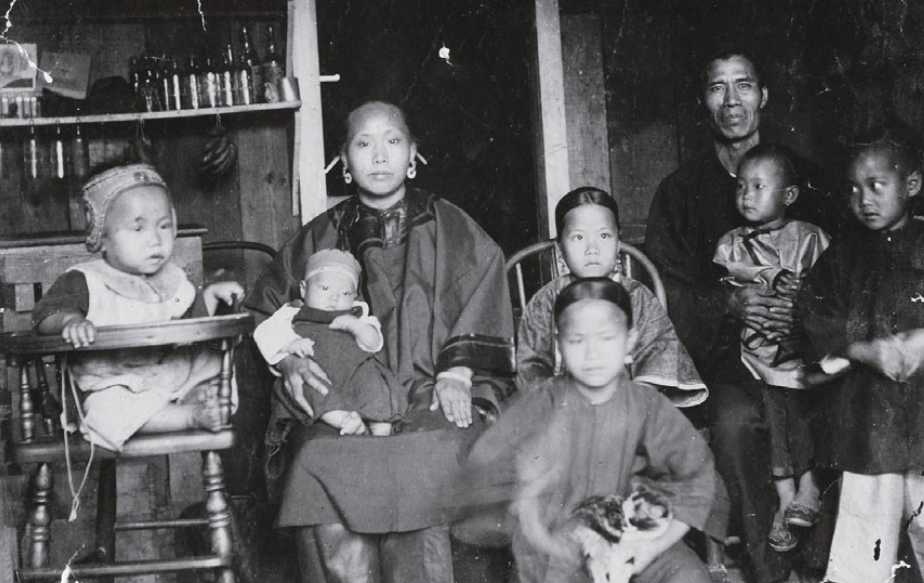
Realizing the seriousness of this problem, the Kingdom of Hawaii, in the case that its own indigenous population could not grow rapidly, turned its attention to the west coast of the Pacific Ocean in order to offset the influence of American and British immigrants on the country, dilute the proportion of British and American immigrants in the country, and solve the country’s labor problem. In the occasional contacts and exchanges before, East Asian countries, especially Japan, left a deep impression on the Kingdom of Hawaii, because in the exchanges between countries, China and Japan were not as aggressive as Western countries such as Britain and the United States, but friendly. At that time, Chinese and Japanese immigrants who had already appeared in the Hawaiian Islands in small numbers were not as domineering as American immigrants, but seemed to be resentful. Therefore, the Kingdom of Hawaii began to introduce a large number of Chinese and Japanese immigrants from the late 1860s.
In April 1865, the Japanese government and the Kingdom of Hawaii began to discuss the immigration issue. In 1866, immigrants organized by the Japanese government began to leave their homes and embark on an expedition to the Pacific Ocean. The first batch of government-organized immigrants from Japan that year reached 945, and the second batch increased to 989, which was a huge scale. Japanese immigrants were warmly welcomed by the Kingdom of Hawaii. From then until 1894, the Japanese government organized the export of Japanese immigrants to Hawaii, with a total of 29,312 people. This exported the country’s labor force to an overseas country and directly turned these laborers into citizens of another country. Behind this scene, there was actually a special interest of the Japanese government in the Hawaiian Islands.
In China, although it is difficult to find the number of immigrants organized by the Qing government, from the treaty signed in Honolulu between Zhu Hejun, the deputy director of the Qing government’s Ministry of War, and representatives of the Kingdom of Hawaii, the Kingdom of Hawaii also tried its best to offer various preferential conditions in order to attract Chinese immigrants. For example, the treaty stipulates that Chinese immigrants can obtain Hawaiian nationality and enjoy most-favored-nation treatment, "allow them to travel freely and purchase land and property", "no boundaries or insults should be made to Chinese people", "Chinese people living in Hawaii must be protected from time to time to ensure that their personal property is safe". In this wave of immigration to Hawaii approved by the Qing Dynasty, the most legendary one is Sun Mei, a Guangdong immigrant who became the richest man on Maui Island, Hawaii. His brother Sun Wen was also influenced and came to Hawaii, a magical country in the Pacific Ocean, to study in 1879, and saw "the vastness of the ocean and the wonder of the ships". However, unlike Japanese immigrants, the Qing Dynasty government only supported and approved immigration to Hawaii, but did not organize and arrange it like Japan, which was a rough and spontaneous immigration activity.
By the 1880s, the residents of the Kingdom of Hawaii gradually formed a three-way balance of power among the indigenous people, British and American immigrants, and Chinese and Japanese immigrants. However, since most Chinese and Japanese immigrants arrived in Hawaii and worked as coolies on farms controlled by British and American immigrants, they were completely unable to match the powerful and domineering British and American immigrants in terms of their influence on national politics.
The Kingdom’s Sorrow
In order to fight for national policies that were beneficial to themselves, American immigrants in the Kingdom of Hawaii constantly took measures in the Kingdom’s parliament and government to increase their influence. The measures taken by these immigrants for profit coincided with the imagination of the US government at the time about Hawaii.
Since the 1850s, the United States has begun to march into East Asia. Whether it is the "Black Ship Incident" in Japan or the "Open Door" proposed in China, it has shown the United States’ new strategic perspective on the Pacific. At this time, the Kingdom of Hawaii, located at the crossroads of the Pacific, has become a gateway for the US government to take East Asia, compete with Britain and Russia, and defend the West Coast. Ensuring that the Kingdom of Hawaii can be used by the United States has become the main strategy of the US government’s diplomacy towards Hawaii.
Since the founding of the Kingdom of Hawaii, the royal family has been deeply influenced by Britain. King Kamehameha IV, who ascended the throne in 1855, was particularly pro-British and even asked Queen Victoria of Britain to be the godmother of his son Albert. This move made the pro-British faction in the Kingdom of Hawaii rise, and the pro-American faction was very angry. In 1862, Kamehameha IV’s son unfortunately died, and the king himself died of excessive grief the following year. After that, the king’s younger brother succeeded to the throne and became Kamehameha V, continuing the pro-British policy. It was at this time that the pro-American faction in the kingdom began to stir, and the US government also made efforts in secret.
In 1872, King Kamehameha V of Hawaii died suddenly. Because he had no heir and did not designate an heir during his lifetime, the throne of the Kingdom of Hawaii was vacant for the first time. The question of who would be the king was handed over to the parliament to decide. The American immigrants in the Parliament of the Kingdom of Hawaii were the most powerful. In the end, as expected, the parliament elected a pro-American king, William Lunalilo, thus opening the example of the king being elected by the parliament. In 1874, King Lunalilo died of illness, and the parliament elected a new king, KalaKaua.
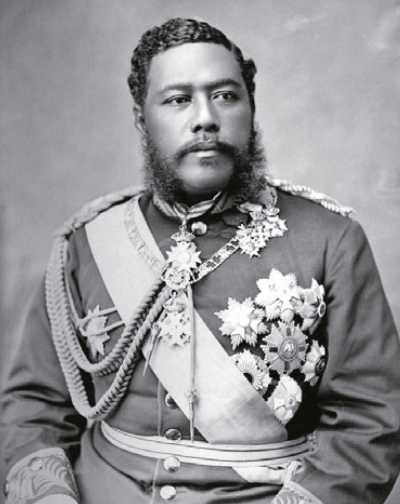
Somewhat unexpectedly to the US government and American immigrants in the Kingdom of Hawaii, King Kalakaua witnessed the hollowing out and weakening of the royal power, and tried his best to reverse and change this decadent situation. Although on the surface, he was dealing with the United States, such as signing a reciprocal trade treaty with the United States, but the treaty included clauses that secretly restricted the rights of the United States and even American immigrants. At the same time, King Kalakaua also had a strange idea of forming alliances.
In 1881, King Kalakaua went abroad to travel around the world. A few months later, the monarch from the Kingdom of Honolulu arrived in Tianjin, China’s Westernization City, and stayed at the famous Astor Hotel. Li Hongzhang, the Minister of Beiyang and the Governor-General of Zhili, came out to entertain him warmly. During the conversation, King Kalakaua proposed the idea of going to Beijing to meet directly with the Emperor Guangxu of China, but was eventually rejected by Emperor Guangxu. What people at the time did not understand was that King Kalakaua wanted to meet Guangxu, which actually had a rather bold political plan, but he was rejected before he had time to show it to China. This plan later became known in other forms in exchanges with Britain, the United States, China and Japan. King Kalakaua is increasingly close to China and Japan. Witnessing the internal and external troubles of the Kingdom of Hawaii, King Kalakaua wanted to lobby China, Japan and other East Asian countries to form an East Asian alliance to counter the activities of British and American forces in East Asia and preserve the lifeline of the Kingdom of Hawaii. After failing to negotiate with China, King Kalakaua proposed the idea of establishing an East Asian alliance including the Kingdom of Hawaii with Japan as the leader. This plan aroused great interest in Japan, but Japan was still immature at that time and was still timid about coming forward and confronting the British and American powers directly.
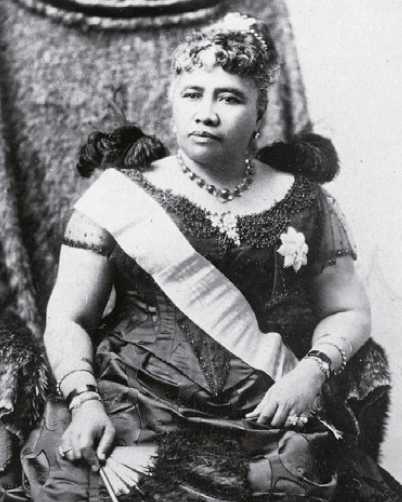
On January 21, 1891, King Kalakaua suddenly died of illness in San Francisco San Francisco while visiting the United States, and the East Asian alliance plan he envisioned came to an abrupt end. Seven days later, on January 29, King Kalakaua’s sister, Liliuokalani, who was well-versed in music and literature, succeeded to the throne and became the first queen of the Kingdom of Hawaii. After taking office, Liliuokalani continued King Kalaka’s policy of trying to strengthen the royal power and tried to overturn the "Bayonet Constitution" that restricted the royal power in 1887 (named because the royal family was forced to recognize it under bayonet), which further angered the pro-American figures in the Kingdom of Hawaii.
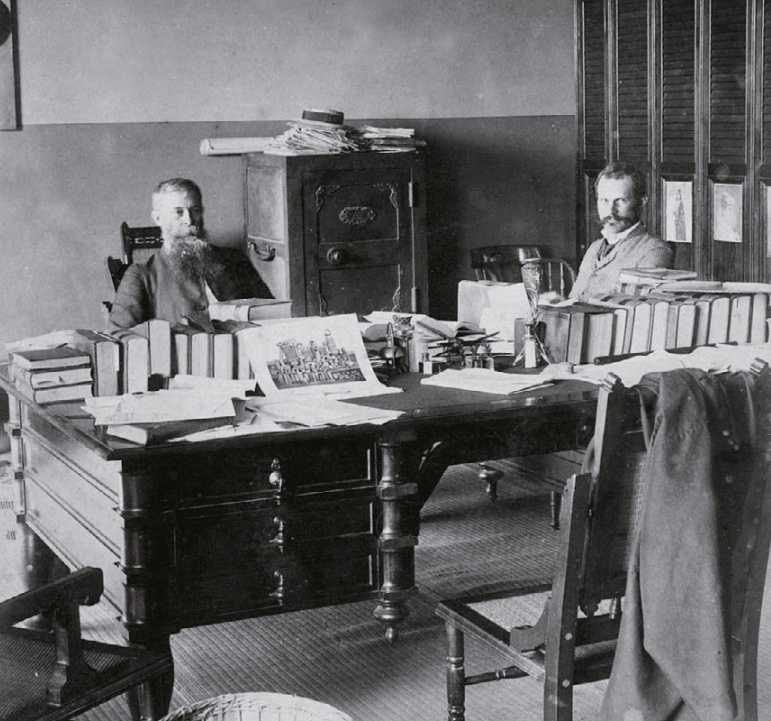
As early as 1887, Susston (Lorrin AThurston), a descendant of American immigrants and the then Secretary of the Interior of Hawaii, established a secret organization called the Annexation Club to gather the pro-American forces in the Kingdom of Hawaii, with the political goal of suppressing the royal power and promoting Hawaii’s direct annexation to the United States. Seeing the Queen trying to overthrow the Bayonet Constitution and restore the royal power, on the evening of January 14, 1893, Sasdon and others secretly met with John L. Stevens, the U.S. Minister to the Kingdom of Hawaii, and proposed a plan to launch a coup. Stevens cited the instructions of Thomas F. Bayard, the U.S. Secretary of State in 1887, that if civil unrest occurred in Hawaii, efforts should be made to protect the interests of the United States, and expressed support for the coup.
On the second day after the secret meeting, on January 15, 1893, an organization called the Committee of Safety led by Sasdon officially launched the attack. On January 16, the Committee of Safety announced the overthrow of the kingdom, directly abolished the royal power, and established a provisional government in Hawaii led by the Committee of Safety. At 5 pm that day, on the grounds that Hawaii was in civil unrest, the captain of the U.S. Navy warship "USS Boston" stationed in Hawaii personally led more than 160 officers and soldiers to land and support the coup of the provisional government. Immediately, the US Minister made a speech on January 17, announcing the recognition of the Hawaiian Kingdom, which was established and led by Hawaiian natives, after 93 years of ups and downs. After that, it was directly strangled by pro-American political forces.
Game on both sides of the Pacific Ocean
The coup in the Hawaiian Kingdom was like a sudden tsunami, and its influence rushed to both sides of the Pacific Ocean. While the United States paid close attention to the coup, it was unexpected that Japan, an inconspicuous small country on the west coast of the Pacific Ocean, was so enthusiastic about Hawaiian affairs.
On January 17, 1893, the Queen of Hawaii was deposed. Soon after the Hawaiian Provisional Government replaced the Kingdom of Hawaii, a warship flying the Rising Sun Flag suddenly entered the center of the storm. The second-class ironclad ship "Kongo" (displacement 2,250 tons) of the Japanese Navy, which was conducting ocean exercises, became the first Japanese warship to arrive in Hawaii after the incident. On February 23, the cruiser "Naniwa" (displacement 3,709 tons) sent from the Japanese mainland also arrived in Hawaii. At that time, the only US Navy ships anchored in Hawaii were the cruiser "Boston" (displacement 3,189 tons) and two gunboats. The Japanese Navy’s military strength in Hawaii instantly surpassed that of the US Navy.
Since the Civil War, the United States has relied on the natural barriers of the Pacific and Atlantic Oceans to reduce its naval construction. The naval strength has almost shrunk. It was not until the 1880s that it began to pay attention to the navy again and "reconstruct" the navy. At this time, the US Navy was actually still weak, with zero ironclad ships in service and only eight newly built new cruisers. In terms of military strength, it was not as strong as the Japanese Navy. The sudden and powerful arrival of the Japanese Navy made the US Navy somewhat embarrassed. What was even more unexpected to the United States and even the Hawaiian Provisional Government was that the attitude of the Japanese warships was very arrogant.
The Japanese Navy’s small detachment stationed in Hawaii, led by Captain Heihachiro Togo of the "Naniwa", had the public mission of protecting Japanese expatriates in Hawaii. According to international practice, when warships arrive at foreign ports, they should perform salutes and other salutes. However, when "Naniwa" and "Kongo" arrived in Hawaii, they only saluted the US and other foreign warships in port, and ignored the Hawaiian Provisional Government, because Japan did not recognize the Hawaiian Provisional Government. After arriving in Hong Kong, Heihachiro Togo inspected the main islands of the Hawaiian Islands one by one to appease the Japanese expatriates, and the Japanese expatriates cheered wherever he went. During this period, a Japanese expatriate who was convicted and imprisoned escaped from prison and swam to the "Naniwa" ship for refuge. Facing the request of the Hawaiian Provisional Government to return the prisoners, Togo Heihachiro took a tough attitude and was at a stalemate with the Provisional Government for a time.
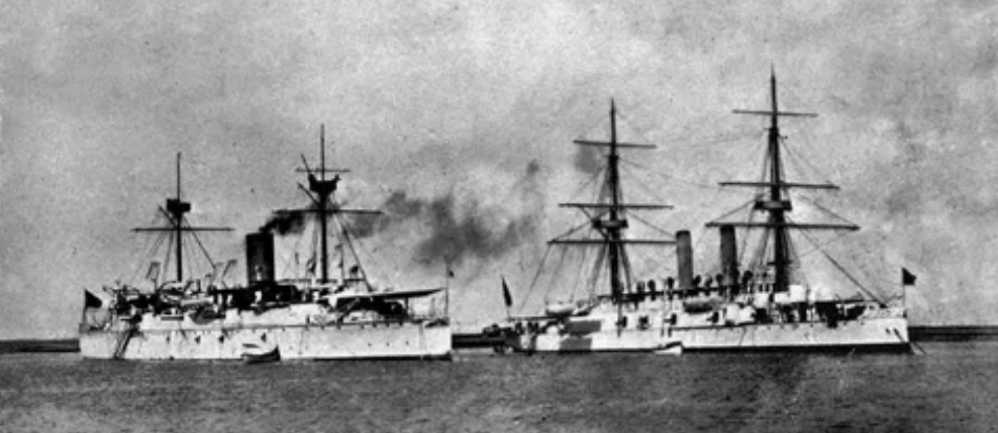
After the Hawaiian Incident, the sudden appearance of the Japanese Navy may have made Americans feel Japan’s imagination of the Pacific for the first time. In 1893, the Hawaiian Provisional Government requested the United States to directly annex Hawaii. The then US President Cleveland hesitated and did not approve it. Against this background, in order to seek the legitimacy of the provisional government, the new Hawaiian Constitution was promulgated on July 4, 1894, announcing the establishment of the Republic of Hawaii ruled by pro-American white people.
During this period, Japanese warships were originally stationed in the port, and the rotation of garrison warships was realized. On March 21, 1894, the cruiser "Takakansui" arrived in Hawaii to take over and continue to observe the situation in the port to protect Japanese interests. However, a few months later, the Korean Incident broke out. In order to gather strength to fight against China, "Takakansui" hurriedly withdrew to Japan in June, and Hawaii was free of Japanese warships.
After the end of the Sino-Japanese War in 1895, Japan not only greatly increased its national strength, but also changed its international status by virtue of its victory in the war against China. It has become the overlord of East Asia and has become one of the world’s powers. At this time, Japan once again paid attention to the Hawaiian Islands, which had become the Republic of Hawaii. The Hawaiian Islands, located at the crossroads of the Pacific Ocean, were an important key to the other side of the ocean for Japan, which pursued an expansionist national policy.
Since the Republic of Hawaii was actually controlled by pro-American white political forces, Japanese expatriates in Hawaii could not really enter the political arena, and Japan began to look for opportunities to interfere and intervene. On February 27, 1897, the Japanese merchant ship "Shinshu Maru" carrying immigrants arrived in Hawaii. The government of the Republic of Hawaii began to block the arrival of Japanese immigrants on the grounds that the amount of cash carried by the immigrants exceeded the limit and their health did not meet the standards. After that, the Japanese immigrant ships "Sakura Maru" and "Kinai Maru" also encountered similar treatment. The Republic of Hawaii began to refuse to continue to accept Japanese immigrants and suppress Japan’s influence in the Hawaiian Islands society.
The Japanese government immediately made a big fuss about this incident and sent the cruiser "Naniwa" to Hawaii on May 5 to anchor. At the same time, the Japanese Minister to Hawaii, Hisahisa Shimamura, negotiated with the government of the Republic of Hawaii and launched "gunboat diplomacy", accusing the Hawaiian government of violating previous treaties by refusing to allow Japanese immigrants to enter.
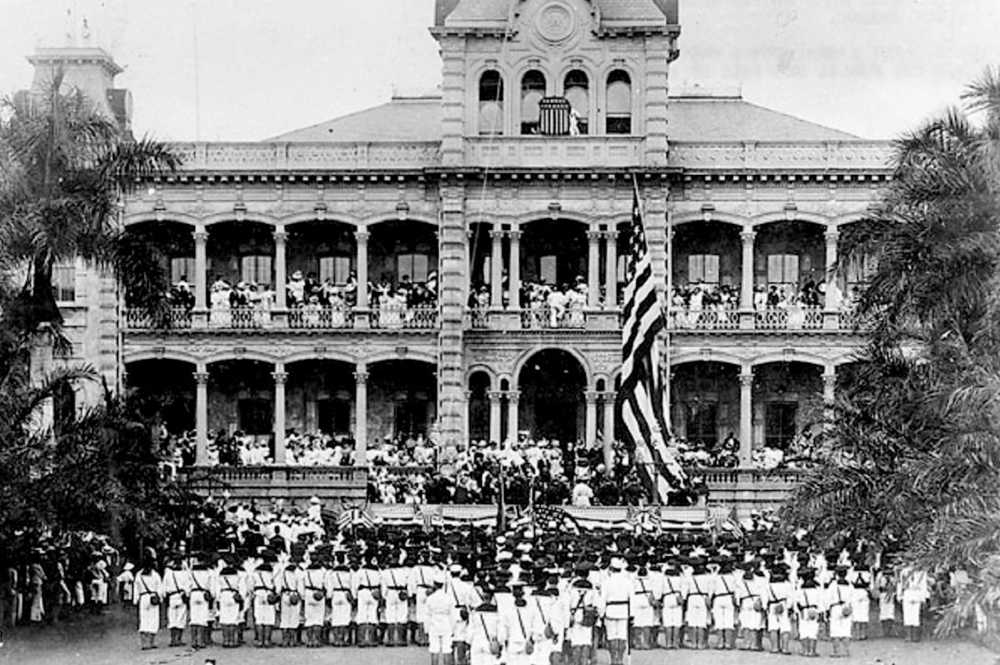
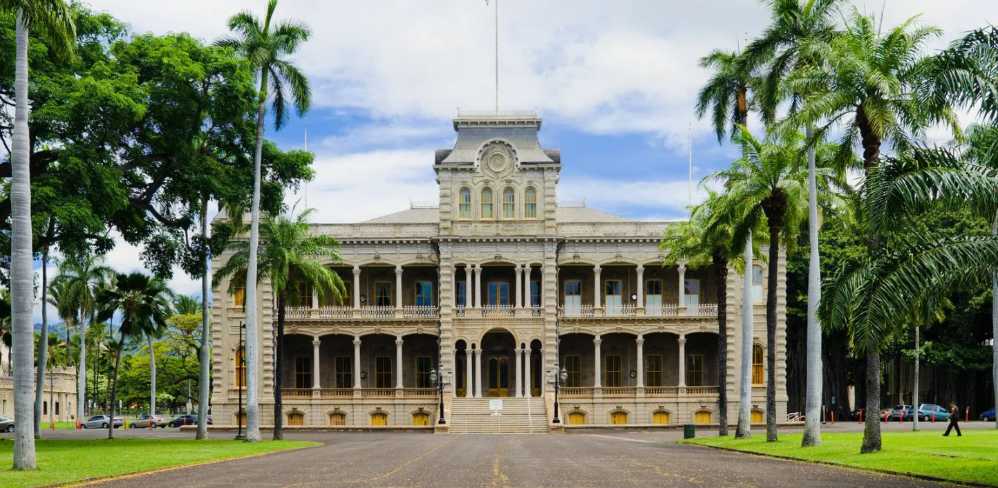
Just as Japan and the Republic of Hawaii were conducting intense diplomatic negotiations, the Spanish-American War broke out in 1898. The United States went to war with Spain in South America and the Pacific. The increasingly powerful U.S. Navy demonstrated its rapidly growing combat power, and thus unveiled the curtain of the United States’ strong overseas expansion. On May 1 of that year, the U.S. Asiatic Fleet commanded by Major General Dewey completely wiped out the Spanish Asiatic Fleet in Manila Bay, Philippines, and the frontier of the United States’ expansion in the Pacific advanced to the Philippine Islands. With the power of the Spanish-American War, on July 7, U.S. President McKinley signed a bill agreeing to the annexation of the Republic of Hawaii to the United States. On the 27th of that month, Japan’s military campaign in Hawaii came to an abrupt end, with the Republic of Hawaii paying Japan 75,000 yuan in compensation to settle the dispute. Half a month later, on August 12, 1898, representatives of the Republic of Hawaii and the United States held a ceremony in front of the Old Royal Palace in Honolulu, Hawaii, announcing the end of the Republic of Hawaii and the annexation of all its islands to the United States as new territories. Nearly half a century later, Japan provoked the Pacific War, and its first battle against the United States targeted Hawaii.