
On December 29, 2023, the X-37B spacecraft took off again: because the rocket used this time and the mission orbit were relatively special, and the launch date was repeatedly postponed, it attracted attention from the outside world. In fact, this is just one of the major events that happened in the United States Space Force (USSF) at the end of 2023. In November 2023, the US Space Force announced 21 new missions in the second phase of the "National Security Space Launch" (NSSL) plan, all of which are planned to be launched in the next two to three years. Among them, Space Exploration Technologies won 10 missions and the United Launch Alliance was responsible for 11 launches. This also reflects the new trend of advanced space payload missions in the US military and security departments.
X-37B rushes to a new orbit to fulfill a new mission
In this mission, the X-37B carried out its seventh orbital flight, so it was numbered X-37BOTV-7, and the entire launch mission was numbered USSF-52, with a bid of US$149.2 million.
Compared with previous USSF missions, the USSF-52 mission is very special: on the one hand, it is the first time to use the Falcon Heavy rocket to launch the X-37B. This rocket has a low-Earth orbit capacity of more than 60 tons in full-throw mode (this mission uses a dual-boost return recovery and core stage abandonment solution), instead of the previous Atlas 5 rocket’s 8 tons or the Falcon 9 rocket’s more than 10 tons; on the other hand, the X-37B No. 2 was sent into a high-Earth orbit and performed a high-orbit mission for the first time. The outside world believes that this is an important test of the new concept of US space operations.
Since the X-37B is a top-secret payload test carrier of the US Space Force, the official will not release its orbital data. The US Space Force only mentioned that the USSF-52 mission "will expand the flight envelope of the X-37B and open up a new test environment." The outside world can only try to "locate" the X-37B by analyzing various clues.
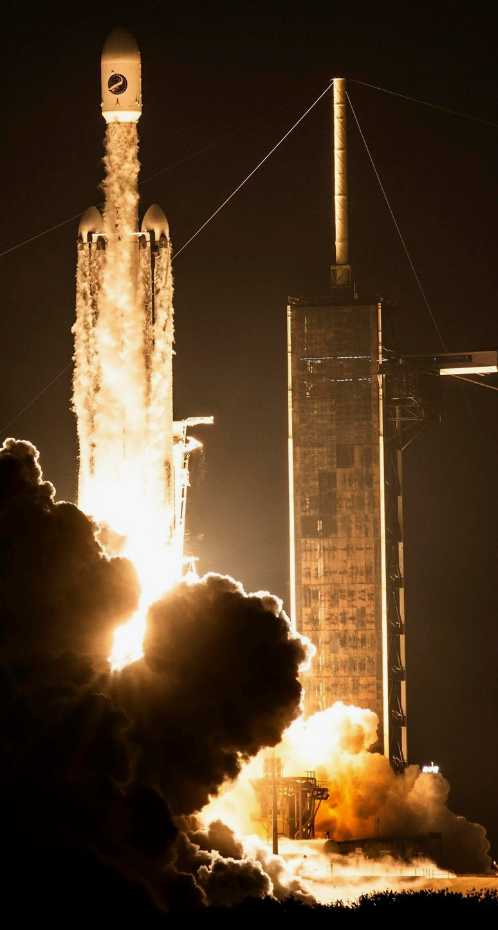
Before the launch of the USSF-52 mission, the tender required that a payload of 6.35 tons be sent into the geostationary transfer orbit. In addition, the Falcon Heavy rocket had sufficient carrying capacity, so the outside world once believed that the X-37B would go to the geostationary orbit.
But then the outside world comprehensively analyzed the navigation warning notice and the fact that the second stage of the Falcon Heavy rocket was not coated with a thermal insulation coating, and judged that this rocket launch did not involve an ultra-long glide trajectory, and it was expected to first enter a parking orbit with an inclination of 51 degrees to the north. Next, a navigation warning notice for the reentry of the second stage of the rocket was issued near Alaska, the United States. From this, the outside world inferred that the X-37B would enter a large elliptical orbit with an inclination of 74 degrees, a perigee altitude of 188 kilometers, and an apogee altitude of 35,188 kilometers.
In theory, there is nothing special about this orbit. The key is the mission given to the X-37B by the US Space Force. According to limited information, the USSF-52 mission will test "future space situational awareness technology" and test NASA’s radiation exposure payload.
To this end, it is necessary for the X-37B to enhance its maneuverability. According to public information, the maximum launch mass of the X-37B is 4.99 tons, it uses room temperature bipropellant, is designed to carry a payload of 227 kg, and has a speed increment of 2,300 meters per second. It is worth noting that the previous X-37B OTV-6 mission introduced a detachable module at the tail of the aerospace vehicle, and the payload launch mass of this mission reached 6.35 tons, so the X-37B is likely to carry a similar tail module again. If the tail module is equipped with an additional chemical propulsion system, or even a medium-to-high power electric propulsion system, then the X-37B OTV-7 mission is expected to achieve a speed increment of more than 3,000 meters per second.
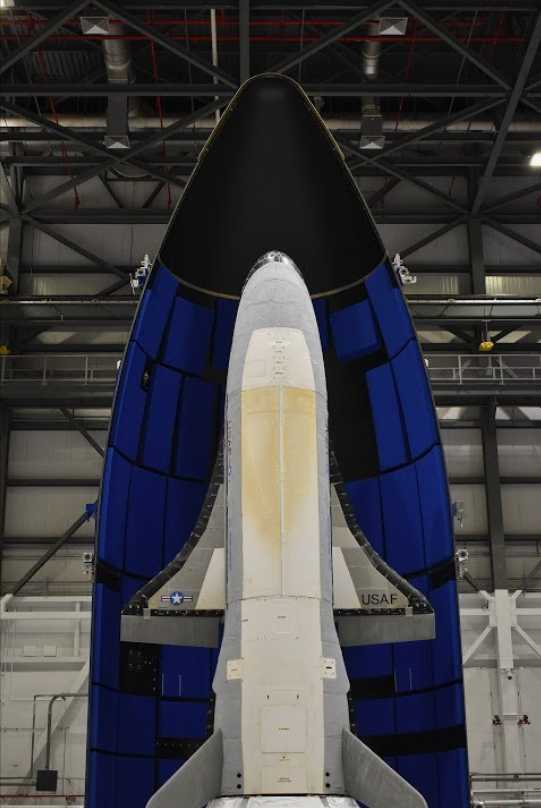
Considering that Northrop Grumman has launched a 30-kilowatt micro high-power electric propulsion aircraft, similar technology may be used on the X-37B. Moreover, according to the rocket fairing buckle picture released by the U.S. Space Force for this mission, the position of X-37B OTV-7 seems to be higher than that of X-37B OTV-6, which is also regarded by the outside world as evidence that it is equipped with a larger tail module.
In fact, for a large elliptical orbit with an inclination of 74 degrees, the spacecraft is more suitable for backlight situational awareness. However, the traditional optical perception system based on conventional optical equipment or radar has long been carried by X-37B OTV-1/2, and the limited payload space of X-37B cannot be equipped with a large sky survey radar. In addition, this optical perception system should have high "requirements" so that ordinary satellites or "space shuttles" cannot fully exert their observation efficiency.
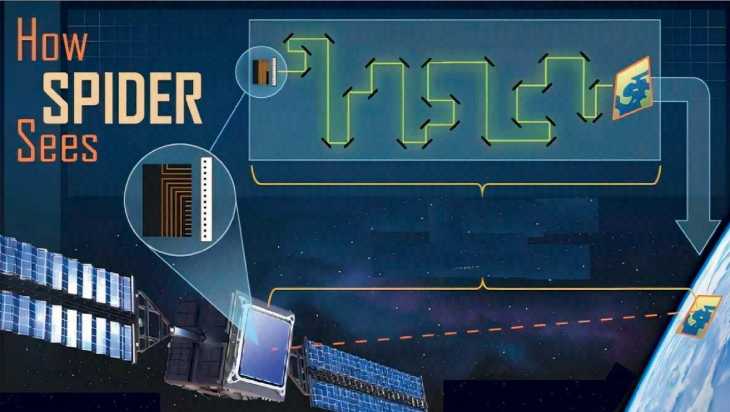
It is believed that the X-37B OTV-7 may be equipped with the optoelectronic reconnaissance block planar imaging detector (SPIDER) disclosed by Lockheed Martin in 2017. This is an optical interference array imaging device, which can also be understood as a synthetic aperture optical system. It is composed of a large number of micro-lens arrays and can replace the traditional single-piece large-aperture mirror. Lockheed Martin claims that SPIDER has reduced the mass, power and cost of telescopes to 1/10 or even 1/100 of the traditional level under the same performance. By flexibly adjusting the lens groups in different positions, SPIDER can achieve different imaging methods.
If the X-37B carries this payload in this mission and operates on a large elliptical orbit with an apogee in the southern hemisphere, it will help avoid the dense areas of most high-value and high-performance space assets (such as geostationary orbits and inclined synchronous orbits), and prevent other countries’ surveillance systems that are feared by the US military from obtaining images.
In addition, the X-37B OTV-7 should carry other small satellites as auxiliary equipment for the space surveillance system or "targets" of the space situational awareness system.
After calculation, the outside world found that the large elliptical orbit of the X-37B passing through the southern hemisphere will continue to shift northward in the future as the orbital plane precesses, and the perigee angle will gradually increase. If the X-37B does not perform any maneuvering orbit change in this mission, it is expected that by November 2025, its orbital perigee angle will reach 180 degrees. In other words, the X-37B will enter an inclined geostationary transfer orbit in the future, thereby obtaining the opportunity to get close to geostationary orbit satellites.
During the orbital precession, the X-37B can enable the new system imaging payload to conduct preliminary observation and inspection of the small satellites it carries. Once in the inclined geostationary transfer orbit, the X-37B may "go one step further" and conduct high-speed and high-angle imaging tests on geostationary orbit satellites. The X-37B may even cooperate with other observation payloads of the US Space Force operating in geostationary orbit to conduct a "sandwich" test on a target satellite and quickly detach after approaching the target, which will undoubtedly pose a great threat to satellites of other countries.
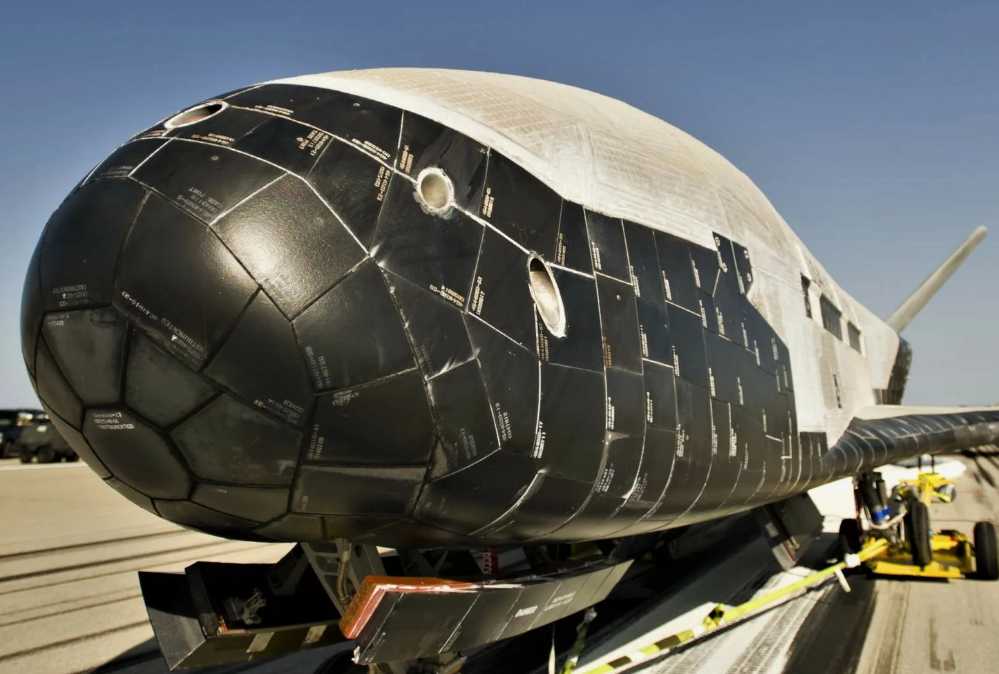
Another point worth noting is that special payloads will inevitably return to the ground with the X-37B, which puts higher requirements on reentry support. The X-37B is relatively small in size, and the aerodynamic heating effect of reentry is more significant than that of traditional space shuttles. Therefore, the leading edge uses more heat-resistant TUFROC enhanced ceramic insulation tiles, but it can only meet the needs of reentry from low Earth orbit. In this way, the X-37B OTV-7 will verify multiple aerodynamic deceleration return technology. As early as the deep space exploration mission of the last century, aerodynamic orbit reduction technology has been put into practical use, which is expected to enable the X-37B to quickly transfer from high orbit to low orbit and expand the scope of military missions.
Big rockets help expand space military missions
The USSF-52 mission that launched the X-37B once again demonstrated the value of high-thrust rockets such as the Falcon Heavy. Previously, SpaceX carried out two USSF missions, namely the USSF-44 and USSF-67 geostationary orbit direct delivery missions.
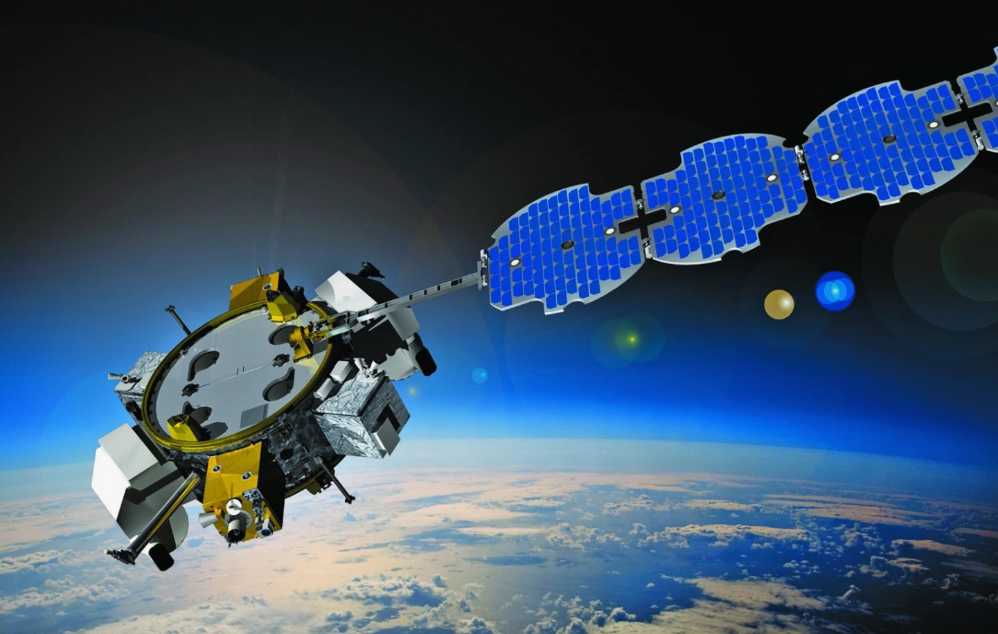
The USSF-44 mission is mainly to launch geostationary orbit test payloads. The total mass of the payload is 3.75 tons, including two ESPA ring satellites, that is, a ring structure with added propulsion systems and electronic components, which is convenient for deploying secondary payloads in space. The secondary payloads deployed by this mission include the "Shepherd-Demonstration" satellite numbered USA-339, the LDPE-2 satellite, four cubesats, and an unknown satellite numbered USA-344. Considering the carrying restrictions of the ESPA ring satellite, the mass of a single secondary payload will not exceed 130 kilograms.
Among the secondary payloads, the Tetra-1 satellite is a 27U small satellite designed to perform various technical verification tasks in geostationary orbit using a small platform. It is a demonstration mission led by the Space and Missile Systems Center of the U.S. Space Force. According to the U.S. military, the Tetra-1 satellite mainly develops and verifies the "tactics, techniques and procedures" of geostationary orbit operations. In the future, another three Tetra series satellites will be launched.
As a 12U cubesat, Lockheed Martin’s LINUSS A1/A2 cubesat will carry out many new technology verification tasks in geostationary orbit, especially space payload upgrade tasks. Specifically, they can perform operations such as approach and docking, verify the basic maneuverability required for future space payload upgrade and maintenance tasks, and demonstrate the space domain perception capabilities of small payloads. They will also test new high-performance processors, low-toxicity propulsion systems, special inertial measurement devices, 3D printed spacecraft parts, machine vision processing systems, and intersatellite communication equipment in orbit. Furthermore, the LINUSS series of cubesats will help to carry out more flexible and efficient software-defined satellite development and testing.
The outside world believes that the USSF-44 mission is a verification mission for the Falcon Heavy to demonstrate its powerful direct delivery capability. As for the USA-339 satellite whose mission is confidential and the LDPE-2 satellite that serves as a small satellite carrier platform, they are likely to be conducting principle verification of high-orbit combat systems.
The USSF-67 mission is the "Falcon Heavy’s first launch of the US military’s new generation of geostationary orbit "assets", including the CBAS-2 communications satellite and the LDPE-3A ring satellite. Among them, the CBAS series of satellites are L-band highly confidential strategic broadcast communications satellites built by Boeing, providing dedicated communication channels for senior US military and political officials. They may serve as so-called "doomsday satellites" at major crises such as nuclear war, or undertake high-orbit electronic warfare, active anti-satellite operations and other tasks.
Previously, the NSSL program launched a large number of in-orbit test payloads for the US military and the US National Reconnaissance Office (NRO). However, only a few of the more than 40 missions of the second phase of the NSSL program contract have been launched, and the X-37B’s recent mission is not included.
In the newly added 21 In the second phase of the NSSL program, SpaceX won five missions for the U.S. Space Development Agency, one GPS-3 navigation satellite launch mission, the U.S. National Reconnaissance Office’s NROL-77 mission and USSF-57170/75 mission. Together with the previously announced USSF-62 mission and NROL-69 mission, SpaceX has mastered at least 12 unlaunched U.S. military and U.S. National Reconnaissance Office missions, fully demonstrating the advantages of the powerful Falcon Heavy rocket in launching large-mass, high-performance payloads.
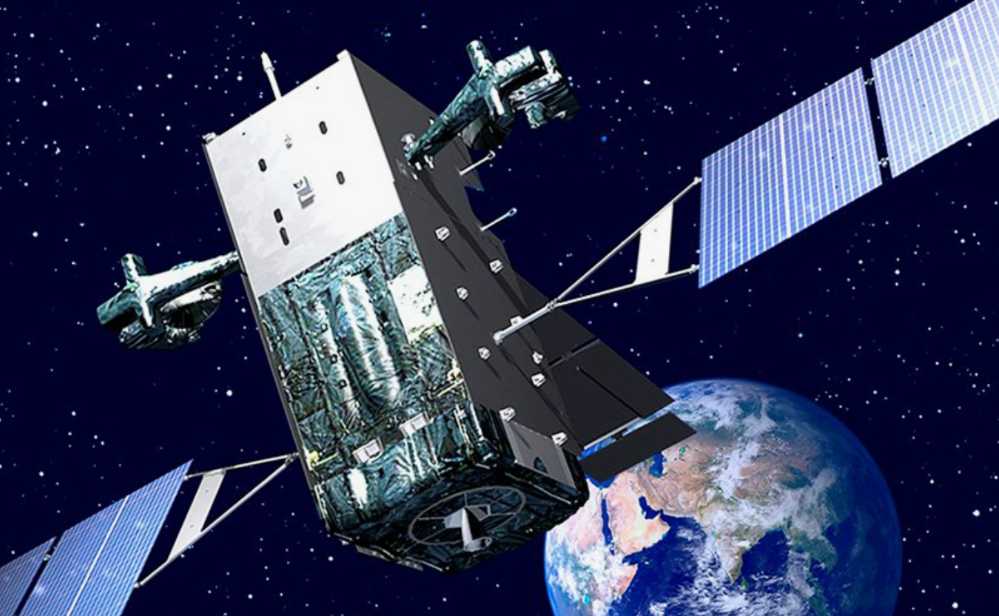
Among them, the U.S. Space Force revealed that the USSF-57 mission payload is the first new generation missile early warning infrared satellite (a total of 3 satellites in the same series) that continuously passes through the geostationary orbit, and will be launched using the Falcon Heavy rocket. According to the slightly exaggerated description of the U.S. media, the satellite further enhances the tactical infrared data acquisition capability and is likely to monitor the trail infrared signals released by the launch of small and medium-caliber artillery shells and air-to-air missiles.
The United Launch Alliance, which once monopolized the US official business, won 11 launch contracts this time, including 1 US Space Development Agency mission, 2 GPS-3 navigation satellite launch missions, NROL-56/73/100/109/118 missions, STP-5 mission, and USSF-25/95 mission. Among them, the NROL-118 mission is the second launch mission of the space target monitoring system nicknamed "Silent Growler", the USSF-25 mission is the "Agile Earth-Moon Operation Demonstration Rocket Test Flight Mission, that is, testing nuclear thermal rocket technology, and the USSF-95 is the first demonstration mission of the US medium earth orbit missile early warning satellite.
NRO mission explores new concepts and targets new targets
Compared to the US military’s space payloads that focus on practicality, the US National Reconnaissance Office’s space missions are quite novel and forward-looking, and are also worthy of attention. Looking at the NRO satellites launched by Space Exploration Technologies Corporation, some common points can be analyzed and studied.
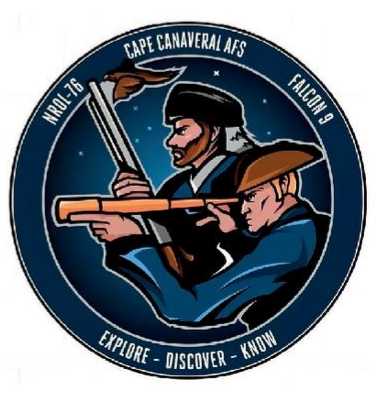
As the first NRO mission launched by Space Exploration Technologies Corporation, the satellite numbered USA-276 was sent into a low earth orbit at an altitude of 400 kilometers and an inclination of 51 degrees by the Falcon 9 rocket on April 30, 2017. The mission code is NROL-76. At that time, the first stage of the Falcon 9 rocket was recovered, and the near-Earth orbit capacity reached 13.9 tons, which was enough to launch special payloads such as the KH-11 Keyhole satellite in batches. The outside world judged from the ground imaging map that the USA-276 satellite was equipped with a sunshade structure similar to the Keyhole series of infrared imaging satellites, and it was likely to be a new generation 2.4-meter-diameter agile imaging satellite.
The outside world has noticed that the orbit of the USA-276 satellite is not only close to the orbit of the International Space Station in terms of altitude and inclination, but also the right ascension of the ascending node of the satellite orbit is not much different from that of the International Space Station. In other words, the USA-276 satellite and the International Space Station are almost on the same orbital plane.
On June 3, 2017, the USA-276 satellite passed the International Space Station at a very close distance, and also achieved a circle around the International Space Station within a range of 5 to 20 kilometers. The closest distance between the two was calculated by the outside world to be 6.4±2 kilometers. You know, in order to ensure the safe flight of the International Space Station, the so-called "safety box" is set at ±10 kilometers in the direction of its route and ±4 kilometers in the radial and normal directions. If an object enters this range, an alarm will be triggered. At that time, the USA-276 satellite almost "closely adhered to the safety box" and flew over the International Space Station.
After comparing the mission plan of the spacecraft on the International Space Station, the outside world believes that the direct goal of the USA-276 satellite is to monitor the process of the Cygnus spacecraft leaving the space station and the cargo Dragon spacecraft docking with the space station in real time. Unfortunately, due to the spacecraft mission "not keeping up with the changes", the effect of the USA-276 satellite operation is unknown. For a satellite equipped with a 2.4-meter-diameter telephoto imaging system, monitoring spacecraft at close range is undoubtedly a "piece of cake", and sub-centimeter-level images can be easily obtained. However, the International Space Station-related missions are not a secret to the National Reconnaissance Office of the United States. This satellite approach mission is likely to be only to verify technology and tactics, and the real goal is to monitor the orbital approach and rendezvous operations of other spacecraft in the future.
A similar situation occurred in the NROL-107 mission launched in 2023. The geostationary orbit space monitoring project nicknamed "Silent Growler" was jointly implemented by the U.S. Space Force and the National Reconnaissance Office of the United States, using three payloads to try to monitor and "detain" spacecraft with approach threats. In addition, the USA-224 Keyhole satellite launched in 2011 is also equipped with a 2.4-meter aperture imaging system, and has also monitored the launch and operation of US spacecraft many times. Obviously, the USA-276 satellite is in the same vein as these US projects. As an agile space situational awareness satellite, it verifies large-aperture optical systems, takes into account space situational awareness tasks, and serves the US military intelligence department.
In December 2020, Space Exploration Technologies Corporation carried out the NROL-108 launch mission, and the two satellites were numbered USA-312 and USA-313. Currently, the two satellites are operating in a low-Earth orbit with an inclination of 51.35 degrees and an altitude of 540 kilometers. Interestingly, the USA-313 satellite showed signs of orbital decay shortly after entering orbit, which once aroused doubts from the outside world. However, the USA-313 satellite later resumed orbital control, so the outside world speculated that this might be part of the test content.
Another NRO satellite triggered a "space chase". In February 2022, the Falcon 9 rocket carried out the NROL-87 mission in the first-stage return recovery mode, launching the USA-326 satellite to be deployed in the morning and evening line sun-synchronous orbit at an altitude of about 500 kilometers. The carrying capacity of the Falcon 9 rocket under such conditions is not less than 8 tons.
The badge of this mission is quite special: the satellite uses space-based blue-green laser radar to penetrate the water and search for submarines. This suggests that it may be a submarine search test satellite. You know, the concept of space-based submarine search appears in the plans of scientific researchers in various countries, but there has been no definite evidence for a long time that a country has deployed a submarine search satellite with tactical application value.
Perhaps it was precisely because of the "curiosity" about the mission of the USA-326 satellite that Russia launched the Kosmos-2558 satellite a few months later, quickly approaching the USA-326 satellite, but the orbital altitude was about tens of kilometers lower than that of the USA-326 satellite. It is reported that the Russian satellite tracked the USA-326 satellite for several months, and even triggered protests from the United States. It can be seen that the USA-326 satellite is not an ordinary optical reconnaissance satellite.
In April 2022, the Falcon 9 rocket carried out the NROL-85 launch mission, sending the USA-327 satellite into an orbit around the earth at an altitude of 1,100 kilometers and an inclination of 63.4 degrees, coplanar with a group of Baiyun 3 electronic reconnaissance satellites. The outside world once speculated that the USA-327 satellite was another group of "Baiyun 3". However, all satellites in this series are binary satellites, and the USA-327 satellite has never shown the "second" object in orbit, so the outside world once thought that "the USA-327 binary satellite separation failed". Later, this view was gradually shaken because outside observations found that the USA-327 satellite has "far more brightness than the previous Baiyun 3 satellite" and may be a more advanced large-antenna electronic reconnaissance satellite or a wide-band optical ocean surveillance satellite.
In short, the many NRO satellites launched by SpaceX are not large optoelectronic satellites that undertake technical reconnaissance tasks, but more like new concept satellites for NRO to verify new technologies. In the future, their technical and engineering achievements may be used on larger practical satellites to serve the US space strategy.
In fact, a careful observation of the national security tasks undertaken by SpaceX can reveal two planning directions: in NRO tasks, a large number of new system test satellites are mainly launched by cheap and practical Falcon 9 rockets, which not only make profits, but also gradually accumulate reputation and connections, paving the way for flagship tasks; in USSF tasks, in response to the military’s tendency to attach importance to the tacticalization of space assets, "Falcon Heavy" relies on lower prices and large transportation capacity to quickly obtain the launch capability of the new generation of US geostationary orbit space assets. It is not difficult to see that SpaceX is gradually "eating away" the US military and intelligence launch market, laying a good foundation for competing for future geostationary orbit sun-synchronous orbit flagship tasks.