
This article, titled "Review and Outlook of the Russo-Ukrainian War", was published in the Chinese journal "Shipborne Weapons". Compared to the Western people’s sympathy for the Ukrainian people, or based on common values, or fear of Russia, or other reasons, they are always full of irrational cognition about the Russo-Ukrainian War. This article is analyzed by Chinese scholars from the perspective of China’s national interests. Russia’s battlefield performance, strategic capabilities, and lessons learned. Readers can observe what substantive experiences they should think about from the perspective of their own country’s interests. After all, "common values" alone cannot destroy your enemies. This article is divided into two parts and is reproduced here.
At dawn on February 24, 2022, the Russian Aerospace Forces, naval surface ships, and the Army’s combined arms group tactical missile brigades and other combat units carried out missile strikes and aviation fire preparations throughout Ukraine, accompanied by powerful electronic interference and communication suppression. Subsequently, two leading companies of the Russian airborne troops boarded helicopters and headed straight for Antonov Airport in the northwest suburbs of Kiev. Ground forces launched large-scale offensives into Ukraine along multiple main attack axes from Chernobyl, Chernigov, Sumy, Kharkiv, Taganrog, Crimea and other directions, and the curtain of the Russian-Ukrainian conflict was officially opened.
The Russian-Ukrainian conflict, which many people thought would end quickly, is still continuing after a year. On the first anniversary of the outbreak of the conflict, the Russian and Ukrainian armies are still fighting in the areas around Artemsk, Kupyansk and Donetsk, and the scale of the conflict is still intensifying. From the perspective of the Russian army, after mobilizing 300,000 troops and further expanding the total number of armed forces, especially promoting the general mobilization of the national defense industry, the Russian army’s war potential is constantly increasing, and the output of heavy equipment, especially precision-guided weapons, is rising steadily. The Russian army may be preparing to launch a new round of large-scale campaign offensives; from the perspective of the Ukrainian army, the Ukrainian army mobilized more than 1 million people as early as July 2022, and the total mobilization number may have approached 1.5 million, and will be supported by advanced Western main battle tanks such as the Leopard 2A6 Challenger 2 and M1A2. U.S. Secretary of Defense Austin also said that he supports the Ukrainian army in A new round of offensive campaigns will be launched in the spring of 2023.
How to evaluate the Russian-Ukrainian conflict last year, what were the successes and failures of the Russian and Ukrainian armies in the conflict last year, what will be the development trend of the Russian-Ukrainian conflict in 2023, and what impact it may have on the international situation, these are the issues that this article will analyze.
According to the provisions of the Soviet military language, the so-called war purpose is the expected result that needs to be achieved through war, including political, economic and military purposes; the so-called strategic goal is the expected result to be achieved by strategic actions, which is a concentrated reflection of the strategic intentions of the army. From the Russian Army 2022 Judging from the results of the special military operation against Ukraine in 2022, there is no doubt that the Russian army has neither achieved its established strategic goals nor achieved the ideal results of the war. In terms of strategic goals, according to the public television speech delivered by Russian President Putin in February 2022 before the launch of the special military operation, the strategic goals set by the Russian army for this special military operation include disarming the Ukrainian army, combating neo-Nazi forces in Ukraine, ensuring the security of the two Donbass states (Donetsk and Luhansk states) and safeguarding the interests of the Russian people and the status of the Russian language in Ukraine; in terms of the purpose of the war, the purpose of Russia’s special military operation is to fundamentally reverse Ukraine’s "de-Russification" momentum by launching a punitive military operation against Ukraine, interrupting NATO’s attempt to build Ukraine into an offensive, geostrategic bridgehead, and the possibility of threatening Russia’s core areas. At the same time, it is best to implement this military operation quickly and quickly create a fait accompli to ensure that this action will not affect the overall situation of Russia’s national economy and relations with the West.
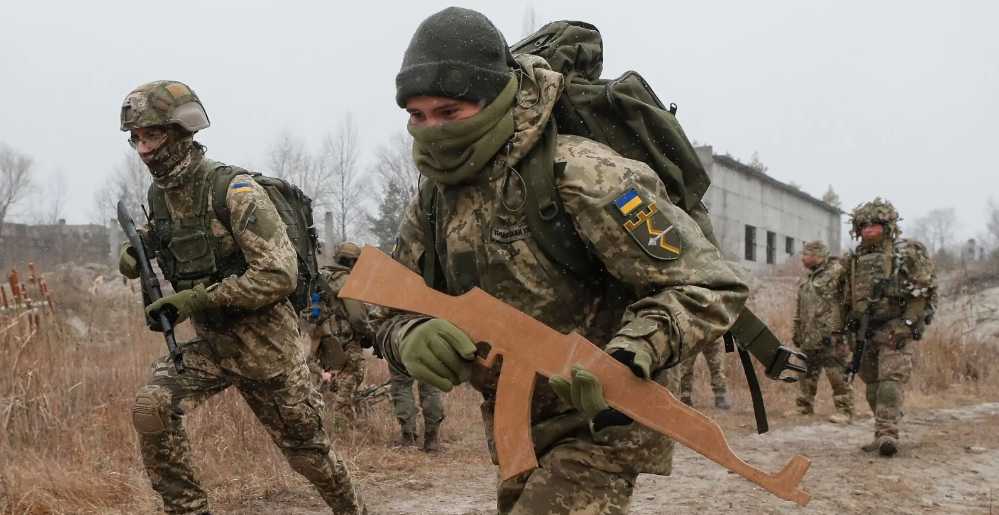
But after a year of fighting, the Russian army has not achieved its strategic goal: in disarming the Ukrainian army, although the Ukrainian army suffered heavy losses, with estimated irreversible losses (killed in action, seriously injured, captured) exceeding 200,000 and recoverable losses (minor injuries) of about 300,000, the Ukrainian army still maintained a basically complete troop combat effectiveness through the multi-level mobilization system established in advance and measures such as forced conscription. According to estimates from various channels, the number of Ukrainian brigades has expanded from more than 30 before the war to more than 80, and the total number of armed forces has expanded from more than 300,000 before the war (including the Ukrainian Army and the National Guard) to more than 1 million; in terms of heavy main battle equipment, the Ukrainian Army was equipped with about 1,300 main battle tanks, more than 3,000 infantry fighting vehicles of various types, and more than 1,100 large-caliber artillery with a caliber of 152 mm and above before the war. After a year of fighting, the number of those that were totally damaged and unable to restore combat effectiveness may exceed two-thirds, but in 2022 alone, NATO provided Ukraine with more than 400 main battle tanks, more than 800 infantry fighting vehicles/armored transport vehicles, more than 300 wheeled armored vehicles and more than 600 barreled artillery/rocket launchers. By 2023, NATO continued to provide Ukraine with more than 300 main battle tanks of various types and more than 500 infantry fighting vehicles/armored transport vehicles. The total main battle equipment provided exceeded 55% of the total tank equipment of the Ukrainian army before the war, 43% of the total infantry fighting vehicle equipment, and 54% of the total heavy artillery equipment. This is equivalent to NATO’s assistance in "rebuilding" more than half of the Ukrainian armed forces, and Russia’s strategic goal of "disarming Ukraine" has undoubtedly become a dead letter.
In terms of the strategic goal of "de-Nazification", although the Russian army almost destroyed the symbol of the Naziization of the Ukrainian armed forces, the 12th National Guard of the Ukrainian National Guard, in the Mariupol siege from March to May last year, The "Azov Battalion" within the special operations brigade surrounded and annihilated, and captured many senior officers of the "Azov Battalion", but the "Azov Battalion" was like a "Hydra". With the support of NATO, it quickly flourished on the original basis. What is even more unexpected is that due to the extension of the war, Ukraine’s domestic ideology has further evolved towards extreme nationalism and neo-Nazi thoughts. The Ukrainian National Guard, as the base camp of neo-Nazis in the Ukrainian armed forces, has gained stronger strength. It has not only rebuilt the notorious neo-Nazi forces such as the "Siren" special detachment, but also successively formed several special operations brigades with the name of "Azov". By the beginning of 2023, the Ukrainian National Guard has even carried out a new round of expansion, expanding the existing forces to 6 brigades, and even named some subordinate units as the "Stormtroopers" to retake Crimea. At the same time, activities in Ukraine to commemorate Bandera and Shukhevich (Ukrainian extreme nationalists) and use Nazi-specific symbols have increased, which means that Russia’s de-Nazification operations against Ukraine are still a long way to go.
Finally, Russia has not achieved its strategic goals in defending the two Donbass states and maintaining the status of the Russian ethnic group and the Russian language in Ukraine. Although the Russian army basically expelled the Ukrainian army from Luhansk after the Battle of Severodonetsk-Lisichansk from May to July, the Ukrainian army’s use of the "HIMARS" long-range rocket launcher can still pose a threat to the Luhansk region, making some important cities in Luhansk State, such as Svato and Starobolsk in the Severodonetsk urban agglomeration, unable to enter the post-war reconstruction state, the city’s infrastructure is in poor condition, and humanitarian disasters occur one after another.
The situation in Donetsk Oblast is even worse. The Ukrainian army has built a tight fortification area in the western suburbs of Donetsk, forming three major fortification defense areas with Malinka, Pisky and Avdeyevka as the core. After a year of fierce fighting, the Russian army only destroyed the Pisky fortification area and half of the Malinka fortification area. The front line only advanced 10 kilometers to the western suburbs of Donetsk. Not only did it fail to break through the Ukrainian army’s fortification defense zone, it even failed to eliminate the Ukrainian army’s tactical goal of using long-range artillery to attack the urban area of Donetsk. In 2022, thousands of residents will still die under the Ukrainian army’s artillery fire.
Due to the surge in extreme nationalism and neo-Nazi forces in Ukraine, the pace of "de-Russification" in Ukraine is further intensifying. Not only has a large number of historical relics from the Soviet Patriotic War period been cleared, but the scope of the cleanup has also been extended to historical figures, Russian books, Russian history and culture, and religious beliefs from the Russian Empire period. For example, the Ukrainian National Library in Kiev has launched a so-called "cleaning of Russian books" operation. The Ukrainian National Security Department has repeatedly suppressed and arrested clergy from the Orthodox Moscow Patriarchate. The status of Russians in Ukraine has not only not recovered, but has declined.
In terms of the outcome of the war, Russia is far from its original goal of reversing Ukraine’s "de-Russification" momentum, interrupting NATO’s use of Ukraine as an anti-Russian bridgehead, and threatening the core parts of Russian territory. In fact, Ukraine is not only rapidly de-Russifying, but also has a closer relationship with NATO. In terms of weapons and equipment, NATO has provided Ukraine with a large number of vehicles and equipment, portable anti-tank missiles/anti-aircraft missiles, supporting ammunition and spare parts, etc. in a way that almost "empties out its reserves". In terms of relations with NATO, Ukraine is moving closer to NATO. According to Western polls, more than 70% of respondents in Ukraine strongly demand Ukraine to join NATO, and NATO also understands and signed a preliminary intention document with Ukraine to join NATO in 2022. In terms of threats to Russia, Ukraine’s threats to Russia have evolved from potential threats to real threats. The "HIMARS" rocket launchers, suicide drones and other equipment equipped by the Ukrainian army have hit Russia more than once, and with NATO’s increasingly high level of military support for Ukraine, such as the gradual implementation of support for fighter jets and long-range tactical missiles, Ukraine’s real threat to Russia will only grow.
Facts have proved that the Russian army made obvious strategic decision-making errors in its special military operations against Ukraine in 2022. In defining special military operations, Russia has a serious opportunistic mentality. Judging from the strategic conception and battle deployment of the Russian military’s operations against Ukraine, the overall strategic conception of the Russian military is more inclined to the idea of "deterrence" and "decapitation". It plans to use a small number of elite air assault troops to launch a surprise attack on Ukraine’s political and military centers, supplemented by the concentrated advance of mechanized troops, to defeat the stubborn resistance of some Ukrainian troops, and at the same time control the strategic points and important targets in eastern Ukraine in a relatively short period of time. This means that Russia’s early definition of special military operations against Ukraine is similar to the Russian airborne troops’ intervention in the riots in Kazakhstan in early 2022, but military actions are only one of the means of special military operations. Another means to achieve its strategic goals is political means, which can only be achieved through negotiations with Ukraine after "deterring" Ukraine. However, in the early stage of the special military operation against Ukraine, whether it was "military" or "political" priority, even the Russian top leaders themselves were unclear, presenting a bizarre scene of multiple departments fighting each other and hindering each other, which made Russia lose a move before the military operation even started.
From the perspective of military operations themselves, the Russian army also has a certain degree of adventurism. Take the actions carried out by the Russian army against the political and military centers of Ukraine at the beginning of the conflict as an example. This battle concept is extremely dependent on two factors for realization: First, the Russian airborne troops can successfully launch a surprise attack on Kiev; Second, the combat effectiveness of the vast majority of Ukrainian armed forces is poor and their fighting will is low, so they "surrender at the sight of the Russian army". At the same time, high requirements are placed on the confidentiality of the Russian army’s operations and the suddenness of tactics. Obviously, the more a certain battle operation depends on a few variables, the lower its tolerance rate and the higher the probability of failure. As a result, the 4th Brigade of the Ukrainian National Guard only placed a few groups of trucks on the Antonov Airport to block the runway, which completely blocked the subsequent actions of the Russian army, destroyed the suddenness of the Russian special military operation, and fundamentally disrupted the strategic assumptions and battle deployment of the Russian special military operation. After that, the Russian army had a period of confusion, which undoubtedly meant that the Russian army was not prepared for the difficulties it might encounter.
In the course of military operations, the Russian army still has a very serious problem of subjectivism. Judging from the defeat of the Russian army in Kupyansk-Konliman in September and October 2022, after the Russian army ended the Battle of Severodonetsk in July, although senior generals such as General Lapin repeatedly called for attention to the possible recovery of Ukraine’s combat effectiveness after full mobilization and suggested partial mobilization in Russia, the political leaders in Russia turned a deaf ear to it for some objective reasons. Even when a large number of contract soldiers were terminated and the strength of the front-line troops dropped sharply, they still hoped that the Ukrainian army had lost the opportunity to launch large-scale battles, especially In particular, the ability to attack in multiple battle directions, the "empty city plan" was set up on the Kupyansk front. As a result, the Ukrainian army, with the help of NATO’s intelligence advantage, chose the direction of the battle breakthrough, which almost led to the complete collapse of the Russian front in the Luhansk direction. It was forced to announce the mobilization order, and fell into a great passive position both politically and militarily.
Chairman Mao clearly pointed out in "Problems of Strategy in China’s Revolutionary War" that on the principle of war, it is necessary to "correctly determine the strategic direction, oppose adventurism when attacking, oppose conservatism when defending, oppose escapism when transferring, and do everything possible to completely annihilate the enemy. It is useless to simply defeat the enemy. Oppose campaigns with unclear goals and campaigns with inadequate preparations." Looking at Russia’s special military operations in 2022, almost every principle mentioned above was violated, which is a key factor in the unsatisfactory results of the Russian army.
Of course, the unsatisfactory Russian military action does not mean that the Ukrainian army has the upper hand on the battlefield. At the tactical level, the Ukrainian army’s individual and small-group combat capabilities are at a disadvantage compared to the Russian army. For example, in the counterattack in October 2022, the Ukrainian army concentrated several times its superior equipment and forces to launch a fierce siege on areas defended by only a small number of Russian reserve forces and militia, but it still failed to completely annihilate the Russian army; at the campaign level, the Ukrainian army basically does not have the ability to organize large-scale offensive and defensive campaigns. Although it achieved the goal of the campaign in the direction of Kupyansk by relying on the lack of Russian troops, in Kherson, where the Russian army’s defense is strong, the Ukrainian army, which also launched an attack with superior forces and equipment, suffered a bloody head. As for battlefields such as Severodonetsk, Mariupol, and Artemsk, the Ukrainian army has almost no organizational capabilities at the campaign level and its actions are rigid; at the strategic level, Ukraine’s economy was almost in a state of collapse in 2022, with GDP falling by The economy has fallen by more than 30%, power generation and industrial activities have nearly halved, fiscal revenue and military spending rely on NATO support, and it is conservatively estimated that more than 8.5 million refugees have appeared throughout the year, and more than 4 million people have entered Russia. Ukraine has maintained an army of more than 1 million people while the national aging rate has reached 18%. The country has no potential and is gradually sinking into a quagmire.