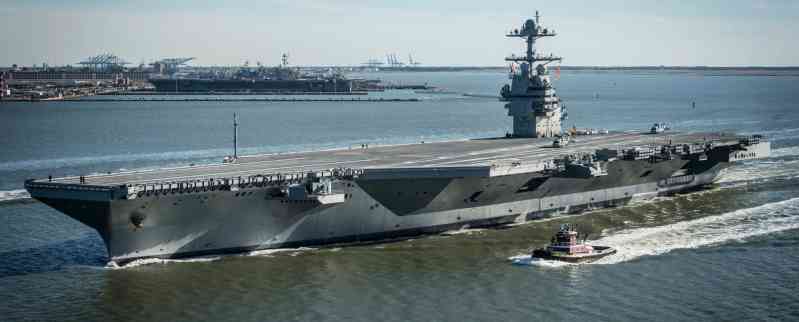
After the end of World War II, with the advent of the jet age, the trend of large-scale carrier-based aircraft has become increasingly obvious. At the same time, in order to meet the needs of seizing global sea control in the context of the Cold War, the US Navy began to build large-deck fleet aircraft carriers (also known as super aircraft carriers) with a full load displacement of 80,000 tons. Therefore, the first ship of the newly designed "Forrestal" class super aircraft carrier was started in July 1952 and completed and commissioned in October 1955. It can be said that in today’s world, only the United States has the ability and demand to build and deploy large fleet aircraft carriers in batches.
The development and evolution of the US Navy’s fleet aircraft carriers
From the 1920s to the early 2020s of the 21st century, Americans have built and deployed 9 levels of 52 fleet-class large aircraft carriers in a whole century. Among these dozens of giant ships, only 3 were sunk by the Japanese in the Pacific War. Especially after the end of World War II, US aircraft carriers have never been seriously attacked by hostile forces, which shows the stability of their position as the hegemon of the sea. It can be said that these steel behemoths have indeed made great contributions to the United States of America’s seizure of global sea control and maintenance of its hegemony system. However, looking back at history, we find that the process of the United States developing aircraft carriers was not smooth, but full of twists and turns.
After the tragic First World War, although Germany was temporarily suppressed, another highly expansionist emerging capitalist empire, Japan, was rising rapidly, and launched a naval arms race with the United States and Britain, and the Pacific region was undercurrent. In order to restrict Japan, the US President hosted a naval disarmament conference in Washington. After fierce negotiations and bargaining, the United States finally limited Japan’s naval strength to 60% of its own. This treaty is called the Five-Power Treaty on the Limitation of Naval Arms (i.e., the Washington Treaty), which was signed on February 6, 1922. Although the treaty imposed strict restrictions on giant ships and cannons, it gave a free pass to the development of aircraft carriers, so the world’s naval powers launched a wave of aircraft carrier shipbuilding. From the entry into force of the Washington Treaty in early 1922 to the outbreak of the Pearl Harbor incident in late 1941, the United States developed two classes of fleet-class aircraft carriers in these twenty years, namely the "Lexington" class and the "Yorktown" class. The former was converted from a battleship under construction, and the latter was the first fleet-class aircraft carrier specially designed by the United States.
Soon after the "Lexington" class aircraft carrier entered service, it participated in the far-reaching "US Fleet Problem Exercise No. 9". The Fleet Problem Exercise was the highest-level exercise held by the US Navy from 1923 to 1940, focusing on solving a major naval strategic and tactical problem every year. This was the ninth organization in 1929, so it was called the ninth exercise. In the exercise, Major General Joseph Rivers boldly innovated the tactics, separated the aircraft carrier, formed a small fleet, bypassed the enemy’s defense line at high speed, and attacked the US Army aircraft airport, naval ships and other targets in the Panama Canal Zone from the side and rear. 83 aircraft attacked in waves and succeeded. This exercise proved the great value of large and fast aircraft carriers in future naval battles. In the officially published book "U.S. Naval Aviation" (1910-1970), there is a passage about the U.S. Navy’s Ninth Fleet Exercise: "This exercise had a profound impact on U.S. Navy tactics and led to the establishment of a tactical fleet with aircraft carriers as the core in the 1930 fleet exercise. Obviously, it was the first time to organize such a force..."
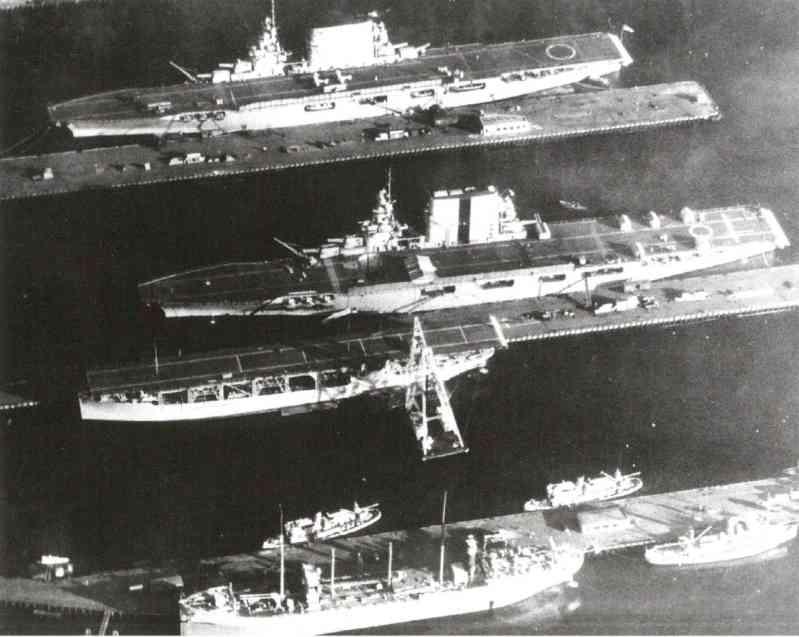
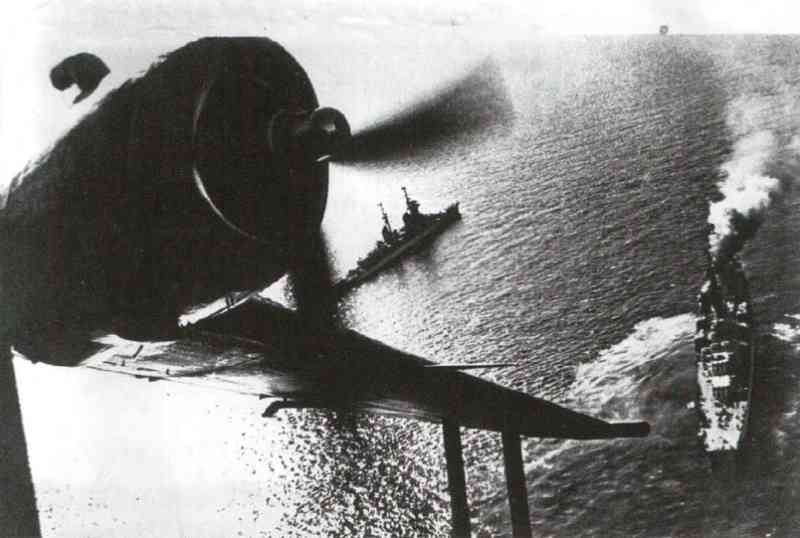
However, the "Lexington" class was a mid-term reconstruction aircraft carrier, and its performance was not completely satisfactory. So in the 1930s, the United States began to build a newly designed "Yorktown" class large aircraft carrier. After building two ships, the United States had to suspend the construction of large fleet aircraft carriers due to the restrictions of the "Washington Treaty". On December 31, 1936, the "Washington Treaty" finally expired and the United States no longer had to endure and continued to build the "Yorktown" class. When the third ship "Large" When the Wasp entered service in the navy, it was only 48 days before the Japanese attack on Pearl Harbor on December 7, 1941. The vast Pacific Ocean provided the most ideal stage for the combat use of large and fast fleet aircraft carriers. In the early days of the fierce Pacific War, the five fleet aircraft carriers in service of the U.S. Navy did play an absolute main role. In the Battle of the Coral Sea in May 1942, the U.S. Navy deployed two fleet aircraft carriers and successfully blocked the Japanese attempt to invade Port Moresby, bankrupting Japan’s plan to expand southward. Although the U.S. military lost the "Lexington" aircraft carrier, it won a strategic victory. However, the U.S. military summarized its experience and lessons and believed that the "Yorktown" and "Lexington" would suffer heavy damage and losses due to the lack of anti-aircraft fighters. At that time, the number of fighters accounted for only 13.5% of the carrier-based aircraft carriers. 1/4 of the total number of aircraft, which could not effectively defend against the attack of Japanese aircraft. So the US military immediately adjusted the composition of carrier-based aircraft. The new composition is: 1 fighter squadron, 27 F4F "Wildcat" fighters; 1 torpedo bomber squadron, 16 TBD "Devastator" torpedo planes; 2 dive bomber squadrons, a total of 36 SBD "Dauntless" reconnaissance dive bombers, a total of 79 aircraft. It can be seen that the proportion of fighters has increased to 34.1%.
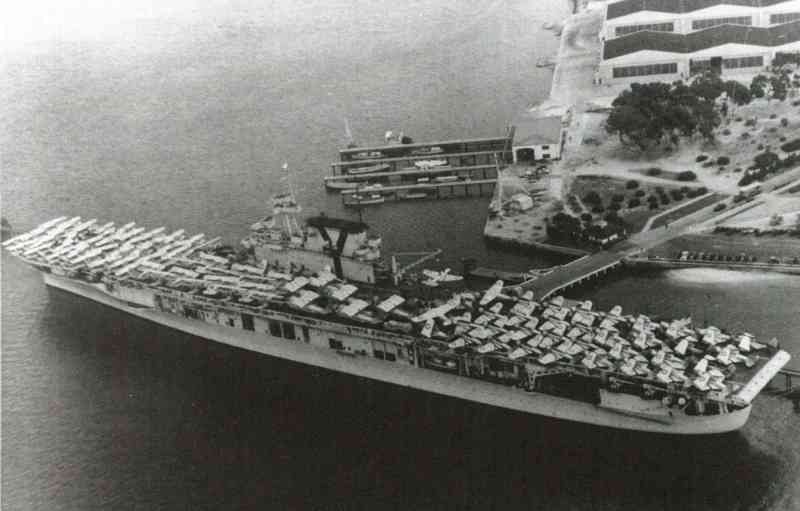
In the following June, the famous Battle of Midway broke out, and the US Navy deployed all three "Yorktown" class aircraft carriers. New adjustment The entire carrier-based aircraft brigade really exerted great power and achieved a brilliant record of sinking four Japanese main fleet aircraft carriers, which reversed the strategic situation of the Pacific War in one fell swoop. This was the first decisive defeat suffered by the Japanese Navy since the Meiji Restoration and industrialization for more than half a century, which was a serious blow to its vitality. Although the US military also lost the "Yorktown" aircraft carrier, the balance of power has gradually begun to tilt towards the United States. The end of the thrilling Battle of Midway marked the end of the first phase of the US-Japan Pacific War. The Japanese Navy won first and then lost. Most of the existing fleet aircraft carriers were sunk, leaving only two "Shokaku" class ships, while the US Navy still had three ships left, which was slightly superior. More importantly, the losses of the US military can be recovered, while the large fleet aircraft carriers and their elite pilots lost by the Japanese army are extremely difficult to replenish.
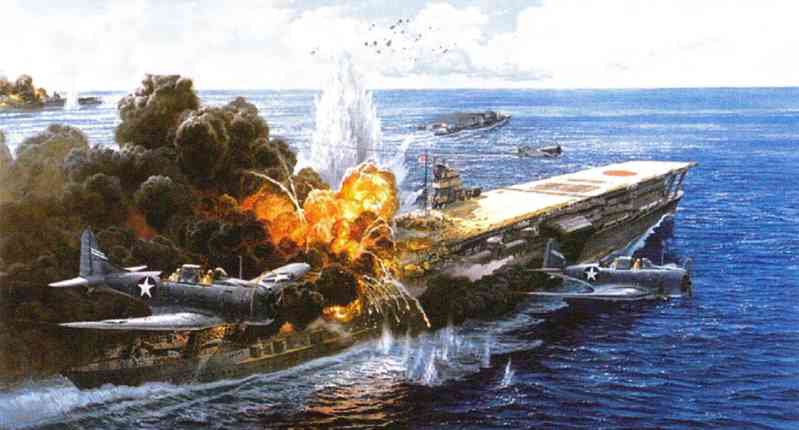
Since both sides’ main aircraft carriers suffered heavy losses, either sunk or damaged, the United States and Japan entered a strategic stalemate and launched a brutal and repeated battle for Guadalcanal Island in the South Pacific. In October 1942, the Battle of the Santa Cruz Islands broke out. Both sides deployed two fleet aircraft carriers in this battle. This was the last evenly matched contest between Chinese and Japanese aircraft carriers in the Pacific War. Judging from the final losses, the Japanese army seemed to be the winner, but the Japanese did not achieve the goal of retaking Guadalcanal, and the important airport on the island was still in the hands of the Americans. Although the U.S. military lost the "Hornet" aircraft carrier, with the joint cooperation of the three armed forces, it finally won the battle for Guadalcanal, and the Japanese army completely lost the initiative in the war. After entering 1943, the clarion call for a strategic counterattack against Japan had been sounded. Because the powerful industrial production capacity of the United States has been fully mobilized, the new generation of "Essex" class large fleet aircraft carriers are being built in batches and quickly entering service. The "Essex" class is recognized as the best aircraft carrier in World War II. Later, even in the face of the crazy suicide attack of the Japanese, no one was sunk, and it is a well-deserved "King of the Pacific". On the other hand, although Japan also designed a more advanced "Taiho" class fleet aircraft carrier, it was not completed and put into service until March 1944, more than a year later than the United States.
The most fundamental thing is that due to the loss of national strength, Japan has completely lost the ability to build such large aircraft carriers in large quantities. It can only be forced to build small and medium-sized aircraft carriers and modified aircraft carriers with limited combat capabilities. The "Taiho" has become the only seedling and is unable to turn the tide. However, the United States built and put into service 17 "Essex" class ships in one go during the war, which is a completely crushing advantage. In fact, under the mobilization of the two countries for war, Japan’s shipbuilding capacity is only 1/3 of that of the United States, and its aircraft manufacturing capacity is only 1/10 of that of the United States, which is completely not on the same level.
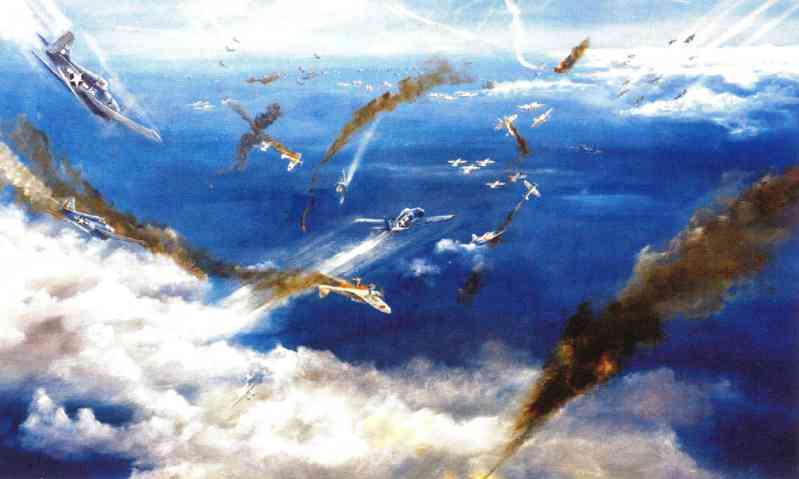
With the rapid increase in the strength of US aircraft carriers, the battle line was getting closer and closer to the Japanese mainland. In 1944, the unprecedented Battle of the Marianas and the Battle of Leyte Gulf finally broke out. The last three fleet aircraft carriers of the Japanese mobile force were also completely consumed in these two tragic sea and air duels. So far, the seven fleet-class aircraft carriers deployed by the Japanese fascists in the Pacific War (respectively, the "Kaga", the "Akagi", two "Soryu" class ships, two "Shokaku" class ships, and the "Taiho") were all sunk, and the control of the sea and air was completely lost. As Mitsumasa Yonai, the Navy Minister of the Koiso Cabinet of Japan, said at the time: "I think this is the end." World War II fully unleashed the industrial energy of the United States. During the war, the United States produced a total of 290,000 aircraft, 87,000 ships, and 45 million tons of merchant ships, which is amazing. Since then, the North American giant has leapt to the throne of the world’s number one maritime power until today.
Just after the end of World War II, the US Navy and aircraft carriers faced a major crisis - the atomic bomb was invented and proved its terrifying power at the end of the war. Do such huge and expensive surface ships have enough survivability in the face of nuclear weapons? This question can only be answered by experiments. In the summer of 1946, the United States conducted a series of nuclear tests code-named "Operation Crossroads" at Bikini Atoll in the central Pacific. People dragged nearly 100 target ships of various types, including CV-3 "Saratoga" and CVL-22 "Independence" aircraft carriers. On July 1, a B-29 bomber dropped an atomic bomb with an equivalent of 23,000 tons, and the explosion height was 158 meters. As a result, the "Independence", which was 0.8 kilometers away from the center of the explosion, was severely damaged and caught fire, but did not sink, while the "Saratoga", which was 7.4 kilometers away, was only slightly injured.
By July 25, the world’s first shallow Atomic bomb of the same power was detonated 27 meters underwater, instantly stirring up a 1,829-meter-high water column with a diameter of about 610 meters and a wall thickness of about 91 meters. About 1 million tons of water were sucked into the column. The disturbance caused by the underwater explosion caused a series of outward-moving waves. After 11 seconds, the maximum height of the first wave reached 29 meters (if it was a nuclear explosion with a yield of 100,000 tons, the wave height could reach 54 meters). As a result, most ships within 0.82 kilometers of the projection point of the explosion center on the water surface were severely damaged or had sunk or capsized. Among them, the "Saratoga", which was only 410 meters away, was hit. The ship was severely damaged, tilted, and sank 7.5 hours later.
The two tests showed that for surface fleets, shallow water nuclear explosions are more destructive than low-altitude nuclear explosions. However, in general, the destructive power of nuclear explosions on surface ships is weaker than most people imagine. Therefore, naval personnel believe that as long as targeted protective measures and ship design are taken, and the evacuation distance is appropriate, the surface fleet can still maintain a considerable degree of survivability even under the huge power of nuclear weapons.
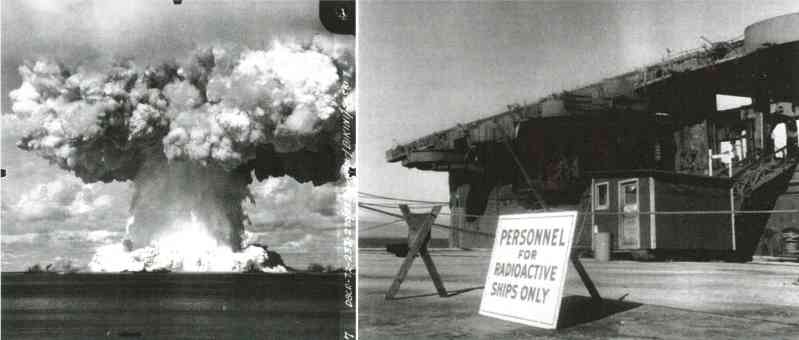
Later in the summer of 1958, the United States conducted a series of "Hard Biscuit" nuclear tests, one of which was a deep-water nuclear test. On May 16, a 2.5 million ton equivalent nuclear warhead was detonated 152 meters underwater near Bogong Island in the central Pacific Ocean. The water column rose to 488 meters in 15 seconds. A destroyer 5.4 kilometers away from the projection point of the explosion center on the water surface was affected to a certain extent--"Engine room-although startled, the staff was basically stable. Several staff members were terrified." "Boatswain’s cabin-the ship was shaking violently, very violently at first, and then slowed down. It sounded like water was poured in. The staff was very terrified. "Deep-water nuclear explosions are mainly aimed at underwater targets (based on experiments, researchers estimate that the killing radius of nuclear torpedoes and deep-water nuclear bombs should be between 400 meters and 600 meters, and any underwater submarine within this range will be seriously damaged). Since a large amount of energy is absorbed by the surrounding water, the destructive power on surface targets is generally significantly smaller than that of low-altitude nuclear explosions or shallow-water nuclear explosions.
Even if the survivability problem was solved, the development of US aircraft carriers at that time still faced a more difficult problem, that is, how to drop nuclear weapons? Because in the atomic age, if any branch of the military cannot carry out nuclear strikes, it will inevitably be marginalized and have no priority in budget allocation. For this reason, the Navy began to build the expensive "United States" large aircraft carrier to take off and land heavy nuclear bombers (nuclear bombs weighed several tons at the time) and jet interceptors. But this conflicted with the Air Force’s larger B-36 bomber project, and a fierce internal struggle involving the interests and strategic position of the military was inevitable. The US Air Force believed that with the maturity and application of the atomic bomb, the United States should focus on developing the Air Force’s long-range strategic bombing capabilities, and the Navy only needed to cooperate in performing some tactical tasks, and it was completely unnecessary to develop large aircraft carriers. Air Force General Frank A. Armstrong Jr. even openly denigrated the Navy at a social banquet: "The Air Force is the main force not only in wartime, but also in peacetime... The Air Force is about to dominate the world. The Navy, on the other hand, has nothing to offer except a few aircraft carriers, and even those aircraft carriers are likely to be sunk at the beginning of the war and thus be useless.
At the same time, the Army also supported the Air Force’s position. Army Chief of Staff General Omar Bradley put forward six reasons against the new aircraft carrier: 1. The purpose of the new aircraft carrier is actually the main function of the Air Force; 2. The Soviet Union is not a maritime power, and it does not rely on the sea to obtain raw materials; 3. The United States and Britain already have absolute strength at sea; 4. The use of carrier-based aircraft to attack land targets should be limited to the current 700-mile (1,126-kilometer) combat radius; 5. It is reasonable to use naval aviation forces at the beginning of the war and use them as a temporary supplement to the air force, but the naval aviation should not conduct continuous operations against enemy territory; 6. The new aircraft carrier will be very expensive and require expensive maintenance and frigates. This shows that the US Air Force has become the biggest "enemy" of the Navy’s development of aircraft carriers and carrier-based aviation, and the two sides are "fighting" to compete for defense budgets.
To make matters worse, the arrogance of the US Navy has offended the president and the main leaders of the government. As early as during World War II, then-US President Franklin Roosevelt pointed out in a letter to Secretary of the Army Henry L. Stimson: "The Navy Department has a peculiar psychological state. It seems to often leave the field of logic and jump into the hazy religious world, where Poseidon becomes God, Mahan becomes a prophet, and the US Navy becomes the only true church." On April 23, 1949, with the approval of President Ruman, Secretary of Defense Louis Johnson finally ordered to stop building new aircraft carriers. The US Navy suffered a lot, and even the so-called "Admiral Rebellion" incident occurred.
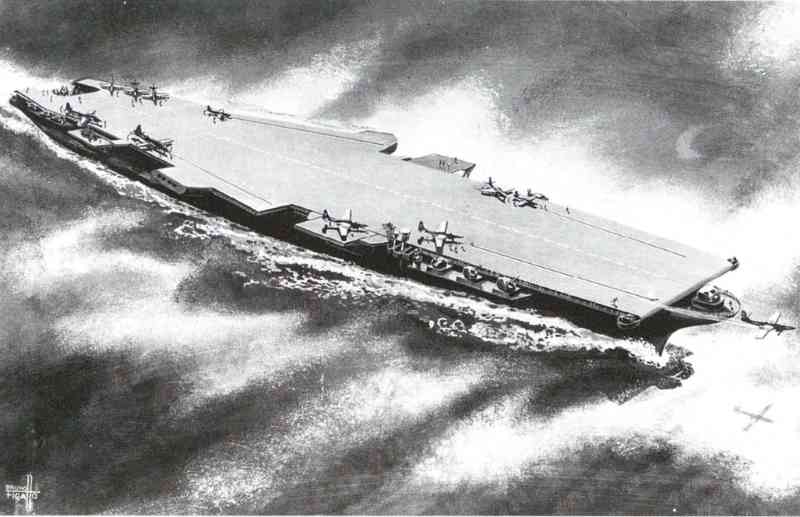
But the turning point soon appeared. In June 1950, the Korean War broke out, and the US Navy and Air Force immediately went into battle. However, due to the fierce offensive of the Korean People’s Army, all the airports in South Korea had been occupied, and the US tactical air force could only use the bases in Kyushu, Japan, which was out of reach. This means that the US Navy’s aircraft carriers became the only air strike force that the "United Nations Army" could rely on in the early stages of the war. In fact, it was with the fierce air fire support of carrier-based tactical attack aircraft that the ground forces of the United States and South Korea survived. Compared with the fixed land airports of the Air Force, the advantages of the mobility and flexibility of aircraft carriers were fully demonstrated.
During the Korean War, carrier aviation played a vital role in close air support, deep strikes, seizing air superiority, and destroying targets such as bridges and mobile forces that were difficult for air force bombers to attack. Facts have proved that although carrier-based aircraft units cannot compare with air force bombers in large-scale aerial bombing, they are very effective weapon systems in accurately striking land/sea targets. During the three-year war, the US Navy successively deployed 11 "Essex" class fleet aircraft carriers, each of which was deployed 1 to 4 times. Various types of carrier-based aircraft on these aircraft carriers dispatched more than 200,000 sorties (accounting for about 40% of the total dispatch of US military aircraft), and dropped more than 100,000 tons of bombs on a small peninsula, which exceeded the total amount of bombs dropped by the US Navy in World War II. Among them, the F4U "Corsair" fighter-bomber and the A-1 "Skyraider" propeller attack aircraft provided most of the close air support firepower, while air superiority operations were undertaken by the F9F "Black Panther" and F2H "Banshee" straight-wing jet fighters.
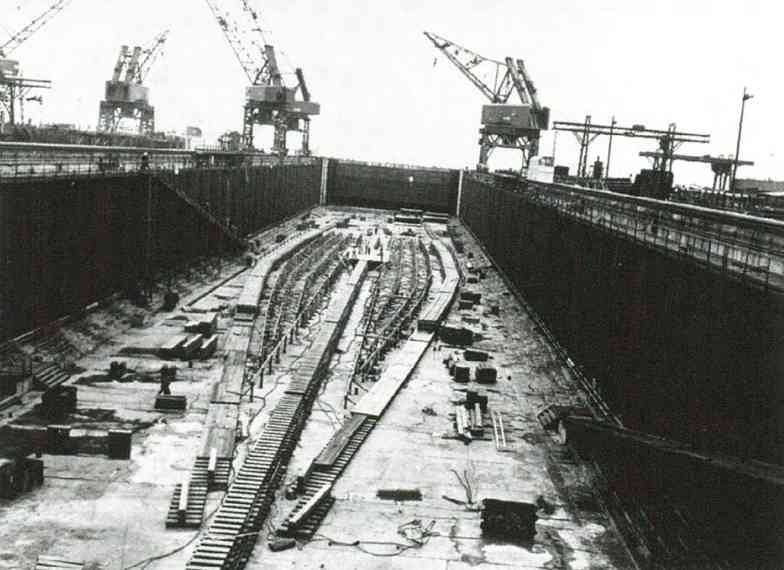
The early 1950s was a period of transition from propeller aircraft to jet aircraft, so when the war ended, the US fleet aircraft carriers were mixed with the above two types of aircraft. The typical plan is: 1 attack aircraft squadron (15 A-1 attack aircraft + 3 A-1 anti-submarine/early warning aircraft), 1 multi-purpose fighter squadron (17 F4U fighter-bombers), 2 jet fighter squadrons (30 F9F fighters + 2 F9F reconnaissance aircraft), 1 helicopter squadron (2 H-5 helicopters), a total of 69 aircraft.
After the practice of war, the "uselessness of aircraft carriers" theory was completely shattered. Secretary of Defense Johnson, who opposed the construction of aircraft carriers, was dismissed by the president less than six weeks after the outbreak of the Korean War and was replaced by Marshall.
In 1952, the United States finally decided to start building a brand new "Forrestal" class aircraft carrier. This type of aircraft carrier is the first in the United States designed specifically for the take-off and landing of jet aircraft. It uses three key new technologies: angled flight deck, steam catapult and optical landing system, which makes the "Forrestal" class the pioneering work of modern super fleet aircraft carriers-bigger, faster and stronger. In contrast, the modified "Essex" class aircraft carrier has a ship fuel loading capacity of 1.5 million gallons, aviation fuel of 440,000 gallons, and aviation ammunition of 650 tons, while the "Forrestal" class reaches 2.5 million gallons, 1.3 million gallons and 1,650 tons respectively. Coupled with advanced jet carrier-based aircraft, the combat capability has been completely transformed.
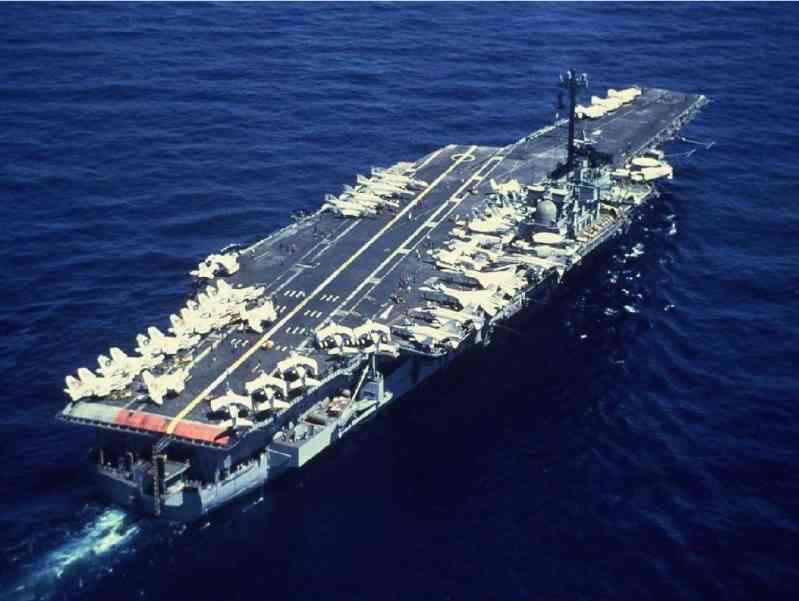
The completion and commissioning of the "Forrestal" class aircraft carrier means that the maritime power has entered the era of super aircraft carriers. The technical equipment advantage of the United States has been significantly widened, and the global sea control has become more stable. At the same time, with the commissioning of the A-3 "Sky Warrior" heavy carrier-based attack aircraft capable of dropping nuclear bombs, the US Navy finally has independent maritime strategic strike capabilities, and the "super aircraft carrier" is absolutely worthy of the name. US Navy Secretary Thomas once commented on the "Forrestal" class aircraft carrier: "It contains the largest number and most types of equipment, machinery and weapons, which have never been combined together in human history... Now this dream has finally come true.
But the good times did not last long. Just over a month after the "Forrestal" aircraft carrier was put into service, the Soviet Union exploded the first practical, air-dropped hydrogen bomb in human history on November 22, 1955. Limited by critical mass, the power of an atomic bomb is generally between tens of thousands of tons and more than 200,000 tons of equivalent, but the power of a hydrogen bomb can easily reach millions of tons or even tens of millions of tons of equivalent, which is two to three orders of magnitude higher than the former. This means that as long as a large-yield hydrogen bomb explodes over the center of the fleet (without directly hitting the aircraft carrier), it is possible to destroy the entire aircraft carrier battle group.
In fact, the Soviet Navy did begin to develop anti-aircraft carrier attack systems in the mid-1950s, and successively developed and deployed key equipment such as the "Kruger" radio direction-finding system, the Tu-95RT long-range reconnaissance and target indication aircraft, and combat anti-ship cruise missiles, which posed a certain degree of threat to the US fleet aircraft carriers. So the argument against aircraft carriers rose again--In 1958, Congressman Clarence Cannon, chairman of the House Appropriations Committee of the US Congress, said that the billions of dollars spent by the United States on aircraft carriers were completely wasted, and the aircraft carrier construction plan was the largest national waste project in military history.
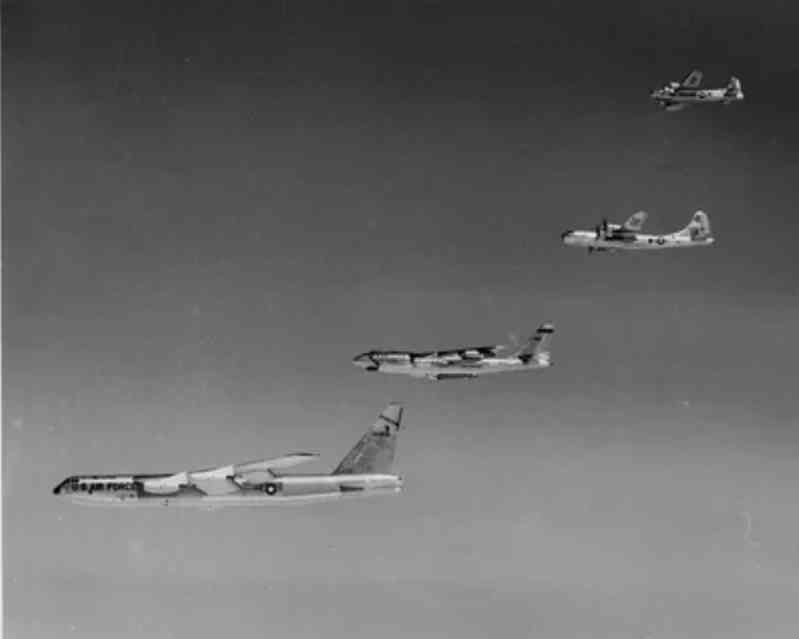
On the other hand, from the 1950s to the 1960s, the US Air Force’s jet bombers developed rapidly, posing a serious challenge to the status of naval aviation. The B-47, which entered service in 1951, was the first jet swept-wing bomber in the United States. It was a milestone, with a total of 2,041 units built, becoming the most numerous bomber in the United States during the Cold War. The B-52, which entered service in 1955, was the first intercontinental jet bomber in the United States, with a total of 744 units built, becoming the most numerous heavy intercontinental bomber in the United States. The large number of B-47 and B-52 main models has greatly increased the strength of the US Strategic Air Command (established in March 1946), making it a dominant force in the world.
By 1959, the number of bombers in the Strategic Air Command reached its peak, totaling 1,854, including 488 B-52 heavy bombers and 1,366 B-47 medium bombers. Soon after, the B-58 bomber with a novel delta-wing design entered service in 1960. It was the first supersonic bomber in the United States, with a maximum flight speed of up to 2 times the speed of sound. It was extremely popular for a while. The large-scale and diverse bomber forces provided a solid material foundation for the US Air Force to carry out various strategic and tactical attack missions, and the aircraft carrier aviation seemed to have become an insignificant role.
In response to the above issues, aircraft carrier supporters believe that no weapons and equipment are not vulnerable in the face of nuclear weapons. For example, ground forces are more vulnerable than naval fleets, but they do not lose their value of existence. Secondly, actual combat has proved that aircraft carrier aviation has more flexibility in strikes and more diverse tasks than land-based high-altitude bomber forces, and the former has not been replaced by the latter. As for the cost comparison, if the cost of base operation and base protection of the bomber force is taken into account, it is probably not much lower than the cost of a large fleet aircraft carrier. In addition, the US Navy believes that it can deal with the threat of anti-aircraft carrier systems through radio silence, deception, high-speed maneuvers, etc., and is not helpless. Therefore, after completing the construction of the "Forrestal" class, the US Navy has been intensively developing and building the second generation of super aircraft carriers - the conventionally powered "Kitty Hawk" class and the nuclear-powered "Enterprise".
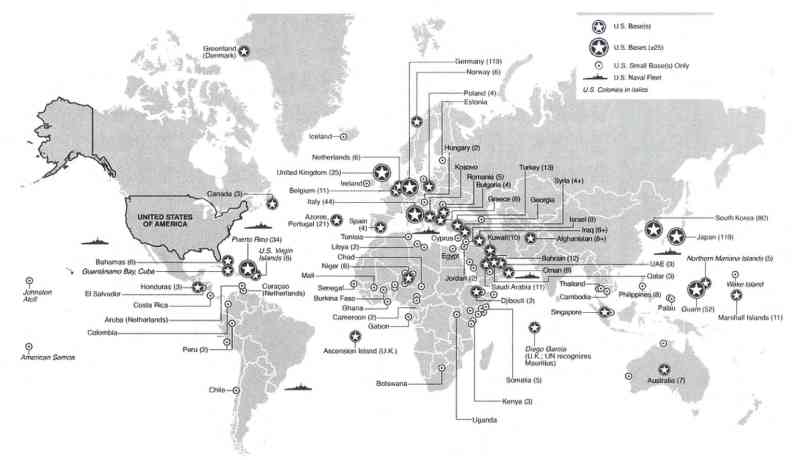
The five fleet aircraft carriers of these two types were successively put into service in the 1960s. Moreover, with the popularization of the second-generation jet carrier-based aircraft, the carrier-based aircraft wing at that time had basically achieved jetization, and its typical configuration was: 1 heavy attack aircraft squadron (10 A-3 attack aircraft), 1 propeller attack aircraft squadron (12 A-1 attack aircraft + 7 A-1 anti-submarine/early warning aircraft), 2 light attack aircraft squadrons (24 A-4 attack aircraft), 1 supersonic fighter squadron (14 F-8 fighters + 3 F-8 reconnaissance aircraft), 1 interceptor fighter squadron (13 F-6 fighters), 1 helicopter detachment (2 general helicopters), a total of 85 aircraft.
However, what really calmed the debate was still the performance of the aircraft carrier in actual combat. From August 1964 to January 1973, the United States invaded Vietnam on a large scale. All the fleet-class aircraft carriers in service at that time, except for CVA-67 "Kennedy", were successively deployed in the war (Among them, "Midway" and "Kitty Hawk" were deployed the most, up to 9 times, and each deployment was generally between 6 and 9 months). Especially in the early stages of the war, since the Air Force’s tactical aviation had not yet established a reliable theater base, the carrier-based aviation played a particularly critical role and performed various types of tasks such as strikes, air combat and reconnaissance.
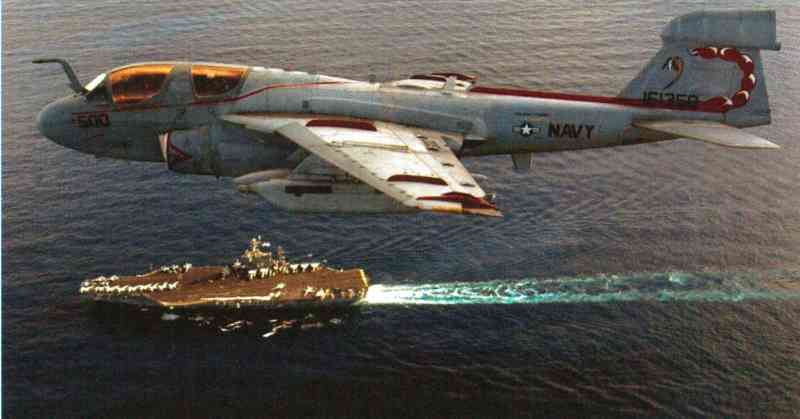
Thanks to technological advances, the performance of the Navy’s carrier-based fighters and attack aircraft at that time was comparable to that of the Air Force’s land-based aircraft, and the operational flexibility was greatly improved. For example, in air-to-air combat, the F-8 Crusader carrier-based aircraft was the US fighter with the highest rate of shooting down enemy aircraft during the Vietnam War. Its exchange rate with enemy MiG fighters (MiG-17 and MiG-21) was as high as 6:1, while the Air Force’s F-105 fighter was only 1.37:1, and even the more advanced F-4 fighter was only 3.07:1, only half of the F-8. The A-6 Invader attack aircraft was the first truly all-weather attack aircraft of the US Navy. With the support of advanced electronic equipment, 80% of the A-6’s attack missions were carried out at night. In fact, it was also the only US aircraft that could perform night strike missions over North Vietnam at that time. Not only that, the improved EA-6A/B "Prowler" electronic warfare aircraft of the aircraft also played an important role in the war, such as strongly interfering with the enemy’s radar to cover the penetration and strike of naval attack aircraft and Air Force B-52 bombers. In fact, the US Air Force only maintains a certain advantage in horizontal area bombing.
It can be said that if it were not for the brave fighting of the large number of fleet aircraft carriers and their carrier-based aviation, the United States would have withdrawn its troops in Vietnam long ago. Of course, while achieving results, the naval aviation also paid a huge price-a total of 859 carrier-based aircraft were lost, of which 530 were combat losses and 329 were accident losses. The 1960s and 1970s were the golden age of rapid development of aviation technology. Therefore, by the late stage of the Vietnam War, the US carrier-based aircraft wing had transitioned to the third generation, with a typical configuration of: 2 light attack aircraft squadrons (24 A-7 attack aircraft), 1 heavy attack aircraft squadron (8 A-6 attack aircraft + 4 A-6 aerial refueling aircraft), 1 multi-purpose fighter squadron (24 F-4 fighters), 1 airborne early warning squadron (4 E-2B early warning aircraft), 1 electronic warfare aircraft detachment (2 A-3 electronic warfare aircraft/aerial refueling aircraft), 1 helicopter squadron (7 SH-3 helicopters), a total of 73 aircraft. Among them, there are as many as 56 attack aircraft and multi-purpose fighters, accounting for 76.7% of the total, and the air assault capability has been significantly improved.
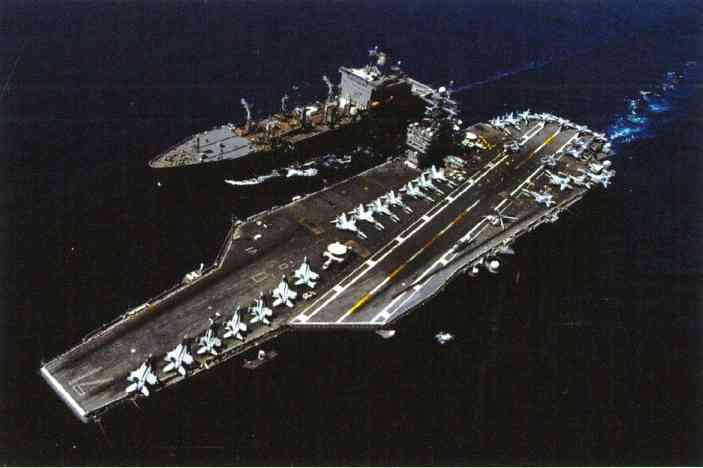
Due to its outstanding combat performance, Secretary of Defense McNamara, who had previously opposed the construction of aircraft carriers, finally changed his mind and announced a new policy in 1966 to support the construction of aircraft carriers and carrier-based aircraft wings. "Although the purchase of aircraft carriers does require huge funds, the experience of the Vietnam War and recent studies have shown that the total cost of building, supporting and defending overseas land-based tactical air forces is equivalent to the total cost of building an aircraft carrier task force with equal combat power." So the United States immediately developed the third-generation super aircraft carrier-the "Nimitz" class, pushing large fleet-class aircraft carriers to full nuclear power and modernization.
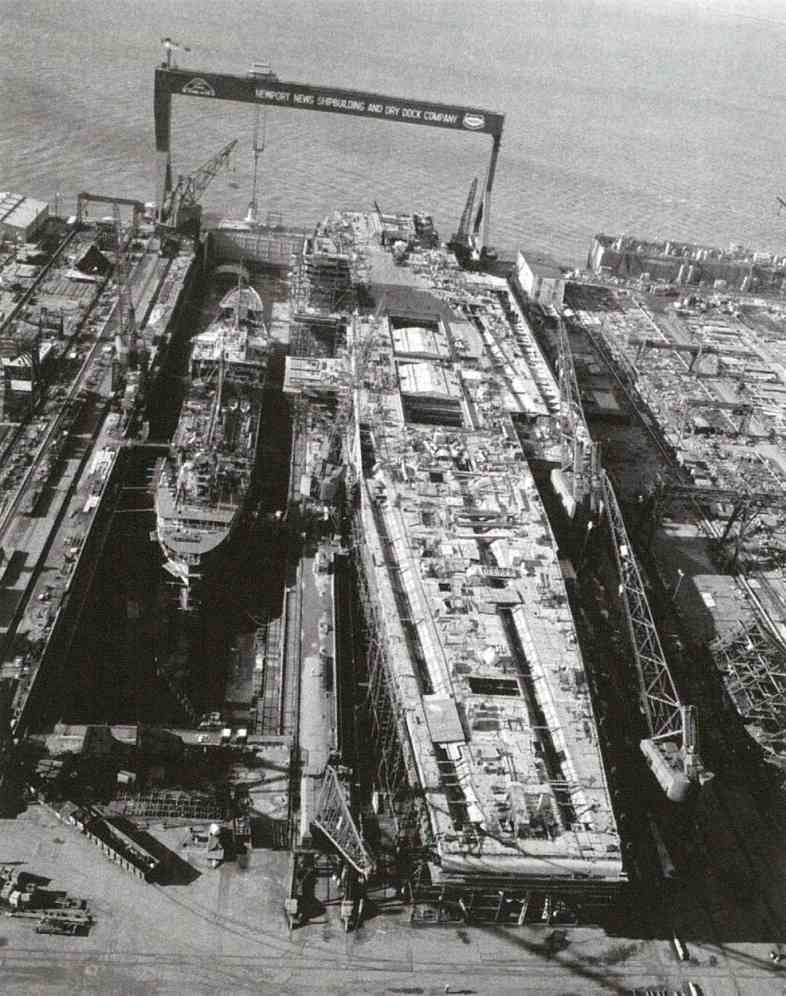
CVN-68 "Nimitz" began construction in 1968 and entered service in 1975. From the time the United States began building its first super aircraft carrier in 1952 to the time the USS Nimitz was equipped in 1975, in just 23 years, the United States developed three generations and four types of 10 of the world’s most advanced and complex large-deck fleet aircraft carriers at the time, an average of 0.43 ships per year, far ahead of the world’s navy, showing the United States’s incomparable scientific and technological strength and industrial production capacity.
But as we all know, no matter how bravely the most modernly equipped army, navy and air force fought, the United States eventually lost the long Vietnam War. By January 27, 1973, the "Paris Peace Agreement" was officially signed, and most of the US military forces had withdrawn from Vietnam. None of the evacuated soldiers felt proud at this moment, and not only that, they would face unemployment and protests when they returned home. It was obvious that this was an unpopular war, and it was also a disaster for the entire United States, and the morale of the people was severely hit.
When the US military industry developed rapidly from the outbreak of World War II to the end of the Vietnam War, it had reached the peak of mankind’s industrial revolution and was the best among all. However, "the moon is full and then it wanes, and the fortune is weak"--as the United States shifted from industrial capitalism to financial capitalism in the 1970s, the manufacturing and military production capacity would inevitably decline. From 1970 to 1979, the strength of the US Navy continued to shrink and its state was sluggish: the total number of fleet ships continued to decline from 769 to only 471, the total number of troops in service decreased from 692,000 to 522,000, nearly 10% of the staff were short, the number of new ships commissioned each year was only between 9 and 21, and the budget was also decreasing.
Although the "Nimitz" class aircraft carrier was built as early as 1968, the Navy only received 2 ships throughout the 1970s; in contrast, in the 1960s, the US Navy commissioned two new super aircraft carriers totaling 5. What’s more serious is that in the context of economic recession, social unrest, and military demoralization, the high cost of nuclear-powered super aircraft carriers is particularly eye-catching. So at that time, the US military proposed three alternatives: ocean control ships, vertical/short takeoff and landing support ships, and medium-sized aircraft carriers.
The then Secretary of Defense Harold Brown highly praised the last option. He said: "Building this new aircraft carrier will be an important step in reversing the trend of developing larger and more expensive warships over the past decade." "This government will be committed to reversing this trend." However, it is assessed that the combat capability of a medium-sized aircraft carrier is only half of that of a super aircraft carrier, and the cost savings are very limited. Overall, the gains do not outweigh the losses. Therefore, the US Congress approved the plan to build the "Roosevelt" aircraft carrier in the "National Defense Authorization Act of 1979". However, President Carter vetoed the bill on the grounds of high cost.
Carter said at a press conference: "This defense budget will lead to a dangerous trend, that is, instead of devoting ourselves to building a large number of ships of various types to enhance our power in the open ocean, we will focus on a small number of expensive ships, which will eventually weaken our naval power. Congress is using the money obtained by cutting life-critical areas to build the fifth nuclear-powered aircraft carrier we don’t need. Its cost is currently estimated to be at least $2 billion, and in the next few years we will have to bear the cost of billions of dollars for the aircraft and escort ships it carries." "This budget will weaken our role in NATO, waste our available defense resources, and ultimately weaken our country’s military power." However, the "Roosevelt" soon turned around. Due to the Iranian hostage crisis, the United States needed to strengthen its military deployment in the Indian Ocean, so Carter changed his position. The "Roosevelt" was subsequently authorized under the "National Defense Authorization Act of 1980". Finally, the US Congress overturned the president’s veto, so that the construction plan of the "Roosevelt" aircraft carrier was able to proceed smoothly.
Just when the United States was at its lowest point in history, on the other side of the strategic chessboard, the socialist superpower Soviet Union rose rapidly, taking advantage of the strategic contraction of the United States to attack all fronts and fill the vacuum. In just over a decade from 1965 to 1978, the industrial output value of the Soviet Union rose from only 62% of that of the United States to more than 80%. Thanks to the growth of industrial strength, under the leadership of Commander-in-Chief Gorshkov, the number of large ships of the Soviet Navy has reached an astonishing 240, exceeding the 172 ships of the United States, and the number of submarines is three times that of the United States. In the 1970s, the Soviet Navy also organized two large-scale global maritime exercises, codenamed "Ocean 70" and "Ocean 75". Through these strategic exercises close to actual combat, the Red Navy comprehensively tested its ocean-going combat capabilities, showed off its military power, deterred its opponents, and formed a new situation in which the United States and the Soviet Union competed for sea power. At that time, the U.S. Navy Chief of Operations Zumwalt estimated that if the U.S. Navy went to war with the Soviet Army in 1971, its chances of winning would be only 45%. Faced with an aggressive strategic-level opponent, the United States - as Gorshkov said that year - "had to admit that they no longer had exclusive control of the sea power."
The strength of the United States and the Soviet Union rose and fell, and the offensive and defensive positions changed. In panic, Nixon visited China and built a strategic triangle, which won the United States a breathing space. In 1981, President Reagan took office and revitalized the country’s prestige. Secretary of the Navy Lehman proposed "building a navy of 600 ships (including escort ships, mine warfare ships, auxiliary ships and supply ships)", pointing out that the United States must regain its undoubted maritime advantage. The US Navy strongly curbed the expansion of the Red Fleet and required that 16 global maritime choke points must be controlled to make them the internal transportation lines of the United States.
With the strong support of President Reagan and the full promotion of Secretary Lehman, the US Navy did usher in a "golden period" of construction-in the 1980s, an average of about 30 ships were commissioned each year, almost double the number in the past. By the time Lehman left office in 1987, the number of ships in the U.S. Navy had risen sharply to 568 (including 14 fleet carriers); a year later, it increased to 588. Navy spending also soared from about $37.9 billion in 1979 to $100.2 billion in 1988, and all types of personnel reached 100% full strength. This is very close to Lehman’s "600 warships plan" goal.
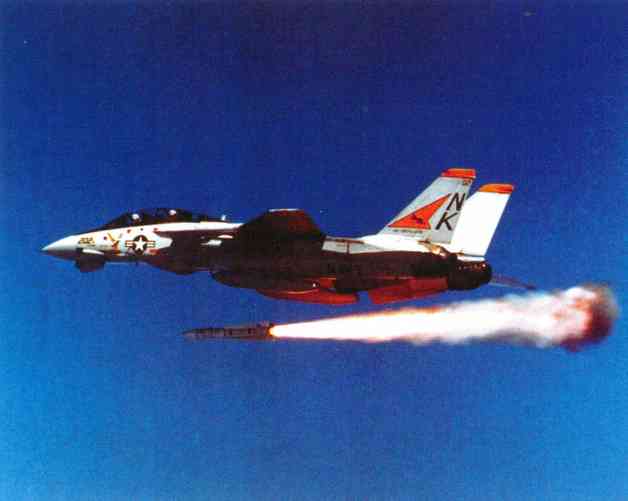
In the 1980s, the fourth-generation carrier-based aircraft also began to become popular. At that time, the typical configuration of the carrier-based aircraft wing on the fleet aircraft carrier was: 1 heavy attack aircraft squadron (10 A-6 attack aircraft + 3 A-6 aerial refueling aircraft), 2 light attack aircraft squadrons (20 A-7 attack aircraft), 2 heavy fighter squadrons (20 F-14 fighters), 1 anti-submarine aircraft squadron (7 S-3 anti-submarine aircraft), 1 air early warning squadron (3 E-2C early warning aircraft), 1 electronic warfare aircraft squadron (3 EA-6B electronic warfare aircraft), 1 helicopter squadron (7 SH-3 helicopters), a total of 73 aircraft.
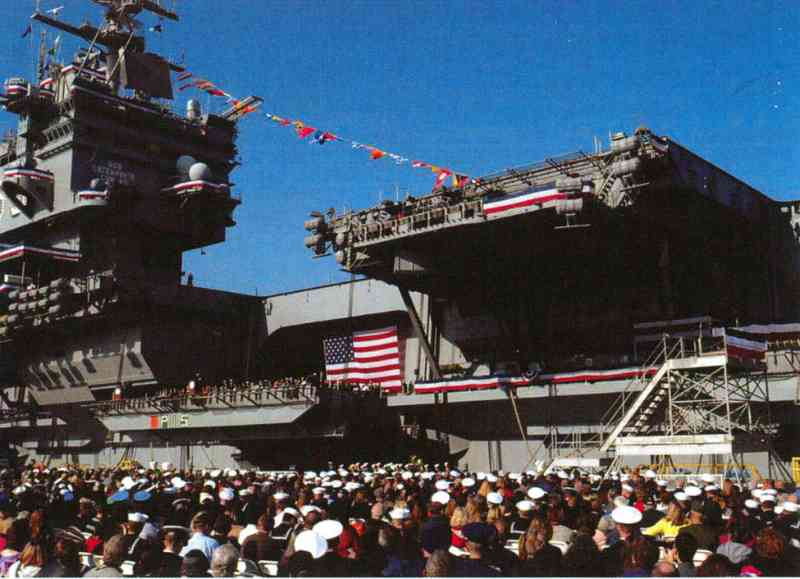
The professional characteristics of these aircraft are very obvious: A-6 and A-7 for ground attack, F-14A for air interception, S-3A for anti-submarine warfare, E-2C for air command, EA-6B for electronic warfare, and KA-6 for aerial refueling. All are professional, because only in this way can we ensure the advantage over the Red Navy. In the words of Lehman, the United States has such a strong navy, "which greatly enhances our ability to contain Soviet adventurism and ensure peace. The combat readiness of the Navy and the Marine Corps is better than at any time in post-war history. Our friends and enemies know this."
When the wheel of history moved forward to the 1990s, the Red Empire collapsed in a dramatic way and the world entered the post-Cold War era. With the disappearance of its strategic rivals, the U.S. Navy instantly became "the only one to win", and the obviously excessive size was inevitably reduced. By 2007, the number of fleet carriers had been reduced to 11. On December 1, 2012, with the retirement of the first nuclear-powered aircraft carrier "Enterprise", the size of the fleet carriers further shrank to only 10, which returned to the level of the U.S. Navy in the early 1960s. The difference is that at that time, the industrial strength of the United States was in a strong upward period, while now the hollowing out of the manufacturing industry has become very serious. (To be continued)