Combat Essentials and Tactical Organization
According to the Indian Army regulations, the tasks of field artillery include: close support (i.e. suppression) directly affects the objectives of the various units of the brigade (infantry brigade, mountain infantry brigade and armored brigade) to carry out combat tasks; general support is to provide supplementary artillery firepower for the combined forces (brigade, division, army); the purpose of anti-artillery warfare is to collect and provide information about the enemy’s artillery, and suppress and destroy the enemy’s artillery according to the principles stipulated by the commander of the combined force. The firepower effect that the Indian Army wants to achieve with field artillery is: kill and wound the enemy; destroy enemy equipment and fortifications; suppress the enemy, prevent it from using weapons effectively and restrict its mobility; demoralize the enemy and make it lose its will to resist.
With the gradual enrichment of combat experience, the Indian Army artillery realized the importance of tactical coordination: it must first understand when, where and what kind of firepower support other arms need, so whether it is when formulating combat plans or throughout the entire operation, the artillery and the supported arms must maintain close and uninterrupted coordination. In the long-term artillery battle with Pakistan on the Line of Actual Control in Kashmir, the Indian Army felt that concentrated firepower was very necessary to achieve victory in the battle. When planning artillery firepower, in order to obtain maximum artillery support at each stage of the operation, firepower should be concentrated to attack more important targets, rather than dispersing the available firepower on many targets. Of course, the concentration and flexibility of artillery use are interrelated. The former refers to the ability to concentrate a large amount of firepower on one point, and the latter refers to the ability to quickly transfer a large amount of firepower from one point to another as needed on a wide front. This is the tactical consideration that has led the Indian Army to accelerate the introduction of self-propelled, self-propelled and airborne ultra-light artillery. The Indian Army believes that in order to abide by the principle of concentrated firepower, it is necessary to save firepower so that firepower will not be dispersed to secondary tasks, and artillery firepower must be used to perform tasks that are not easy to be effective with other weapons (especially air force fighters). In addition, the type of artillery and the amount of ammunition must be adapted to the importance of the target and the expected effect.
According to the current Indian Army combat manual, field artillery should achieve the effect of catching the enemy by surprise by the following methods: (1) A certain number of artillery pieces remain silent before the infantry attack, so that the firepower can reach an intensity that the enemy cannot expect when necessary; (2) Conduct precision shooting; (3) Conceal artillery positions, use mobile positions, temporary positions and fake positions to confuse the enemy and make it impossible for them to grasp the strength of their own artillery deployment; (4) Use artillery to implement large-scale concealment plans, use fake bombardment and smoke screens to confuse the enemy and make it impossible for the enemy to grasp the time and front of their own attack; (5) Strictly control any unnecessary test firing; (6) Avoid using firepower in a fixed manner.
For this reason, the Indian Army’s field artillery is tactically organized according to the following formations:
·Command group, generally including observation group, artillery company commander group and artillery regiment commander group. Each artillery battery has two observation groups, each of which only needs one observation officer with necessary transportation and communication equipment. The artillery company commander group is located in the command post of the unit it supports, and commands the artillery positions and observation groups of its own company. The higher-level artillery regiment commander group mostly stays in the command post of the combined force it supports, but the position of the commander of the artillery regiment equipped with 130mm and 155mm medium and heavy artillery is determined by the superior artillery commander. The artillery regiment commander commands the regiment through the regiment headquarters based on the decision of the combined force commander.
·Firing positions, the main position is set up to implement the main firepower plan, and the temporary position is set up to prevent the main position from being exposed in the initial stage of the battle or to perform temporary firing tasks. The reserve position can be transferred to the reserve position when the battle situation changes and it is difficult for the main position to continue firing. The reserve position must be surveyed in advance. The mobile position is set up to perform special firing tasks. The false position is a position without artillery set up to deceive the enemy.
·The artillery company command post is established by the artillery company headquarters, controlled by the commander of the artillery position, and is responsible for coordinating the artillery company’s firepower. It is deployed in the artillery firing area of the company.
·The artillery regiment headquarters is responsible for coordinating the firepower of each artillery company of the regiment, and is deployed in an area that is convenient for coordinating the firing positions of each company.
·The distance between the artillery tractor parking line and the artillery position depends on the possible air cover and other conditions, generally about 1 km.
· The reserve is located in the divisional logistics area or with the divisional reserve. In mobile operations, it is located near the parking line of the artillery tractor and is controlled by the regiment’s quartermaster staff.
In offensive battles, the Indian Army divides artillery firepower into two categories: "fire preparation" and "covering firepower". The purpose of fire preparation is to suppress the enemy and dampen the enemy’s spirit, focusing on achieving the effect of surprise. Usually, on the eve of the attack, a short and intensive fire assault is carried out on carefully selected targets to disrupt the enemy’s deployment and defense plan, thereby effectively supporting the offensive forces. The purpose of covering firepower is to suppress enemy firearms, especially anti-tank weapons, that may threaten the offensive forces of the party. It is divided into pre-prepared and temporary covering firepower. The former is further divided into covering firepower controlled by the observation group, covering firepower implemented at a scheduled time, and on-call covering firepower.
In defensive battles, the Indian Army divides artillery firepower into two categories: "defensive firepower" and "counterattack covering firepower". Defensive firepower is used to destroy the enemy’s offensive preparations and split the enemy’s offensive formations. It can be divided into: Deep defensive firepower is used to destroy the enemy’s offensive preparations and counterattack preparations, kill enemy reserves, and the main targets are enemy command posts, assembly areas, and roads leading to the offensive starting position; close-range defensive firepower is used in front of the front support point, aiming to split the enemy’s offensive echelons from the offensive starting position and the offensive starting line; emergency defensive firepower is generally used close to the front support point, and the purpose is also to split the attacking enemy. The Indian Army stipulates that in order to control the approach road that is most likely to be used by the enemy, the infantry battalion commander has the right to decide to use emergency defensive firepower. Counterattack cover firepower is used to support the synthetic unit (detachment) to eliminate the enemy who breaks into the defense and recapture important positions occupied by the enemy.
After years of competition, the Indian Army realized that the artillery equipment of its main opponents has also evolved rapidly. In the future, artillery battles will not only suppress others, but also be "preempted" by others when the troops advance or open positions. Therefore, artillery "counter-artillery battles" have been elevated to an important height. At present, India’s military artillery brigades have set up special anti-artillery warfare staff. During operations, the commander of the combined force, based on the suggestions of his artillery commander, respectively stipulates the "active policy" or "passive policy" of anti-artillery warfare. The so-called active policy refers to bombarding an enemy artillery company or single gun that fires at one’s own side, and the passive policy is not to organize a counterattack against the enemy artillery, but only to obtain intelligence about the enemy artillery company or artillery so that it can respond effectively when needed. The Indian army generally only orders the artillery fire participating in the anti-artillery war through the anti-artillery warfare staff. The firepower of anti-artillery warfare is divided into suppression fire and destructive fire.
The Indian army also likes to carry out disruptive shooting or smoke screens. Disruptive shooting focuses on hindering the enemy’s movement, supply and rest, and frustrates the enemy. The Indian army emphasizes that disruptive shooting must be closely coordinated with air support and deep patrol activities, and prefers to use 120mm heavy mortars to occupy temporary positions and disruptive shooting at the enemy. The Indian artillery casts smoke screens to blind the enemy’s observation, prevent the enemy artillery from carrying out observation shooting and direct shooting of light weapons and anti-tank weapons, and can also use smoke screens as signals to indicate bombing lines, targets and demarcation lines to the Air Force.
Observing the combat and exercise training since the Kargil War, the basic shooting method of the Indian artillery is still the traditional blocking shooting and concentrated shooting. Blocking fire refers to the firing of a certain firing front with artillery firepower. The width of the front depends on the number of artillery that can participate in the blocking fire. The Indian Army requires a certain depth of blocking fire, with more than four blocking lines, the distance between the blocking lines is about 100 meters, and each blocking line is at least the firepower of a field artillery regiment. If it is difficult for the Indian Army infantry to obtain intelligence about the enemy’s fortifications during the attack, artillery blocking fire is especially required to create impact space for itself. Concentrated firing is generally used when the enemy’s deployment is clearly understood. Common ones include simple or standard line concentrated firing. The former arranges artillery to determine the firing elements for the same target point so as to form a small area of firepower firing on the target. The latter requires artillery to maintain a certain width of firing front when determining the firing elements.
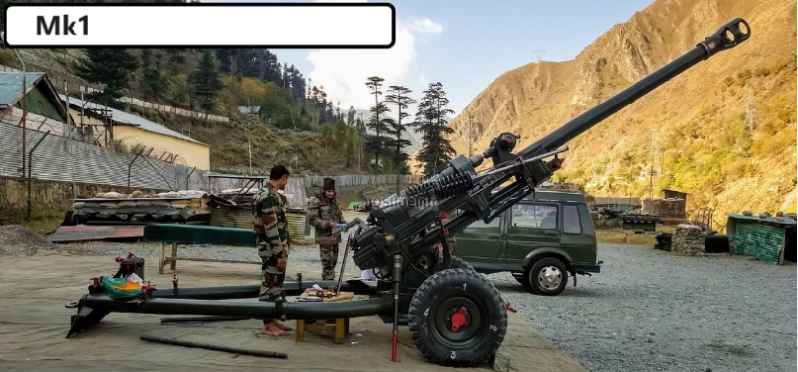
In terms of reaction time, the Indian Army artillery has accumulated data from long-term combat exercises. According to statistics, taking the time from deployment to entry into position of a common infantry division’s 105mm MK1/2 field artillery regiment (16 guns) as an example, it takes 55 minutes during the day, and increases to 1 hour and 15 minutes to 2 hours and 30 minutes at night. The corresponding indicators for the army artillery brigade equipped with 155mm howitzers are 4 hours and 6 hours, respectively, which are more than one-third more time than similar artillery units in developed countries. In terms of firepower response time, the Indian Army’s field artillery regiment has a response time of 4 to 5 minutes for planned targets during the day, 35 minutes for temporary targets, and 5 to 6 minutes and 40 minutes at night.
Due to the different artillery equipped, the effective killing radius and safety distance of the shells are also different. In order to ensure the smooth coordination of infantry and artillery, the Indian Army has also formulated corresponding offensive and defensive forces to maintain a safe distance from the bombing point. For example, when receiving fire support from 130mm cannons, it is necessary to maintain a safe distance from 320 meters (overtime shooting) to 366 meters (vertical shooting). If it encounters support from 155mm howitzers, it is necessary to maintain a safe distance from 274 meters (overtime shooting) to 640 meters (vertical shooting). In terms of suppression effect, the Indian Army believes that when dealing with exposed enemy manpower, only 2 to 4 155mm shells per 45m x 45m area are needed to achieve a killing effect. If it is an enemy defending a trench, it only takes 7 to 19 rounds. If the only artillery ammunition needed is to undermine the enemy’s morale, then when targeting a target of 45m x 45m in size, it is only necessary to use a 105mm gun to fire 10 rounds per hour for 4 hours, or to fire rapidly at a rate of 100 rounds per hour for 15 minutes, consuming 40 and 25 rounds of ammunition respectively.
, and also formulated the corresponding offensive and defensive forces to maintain a safe distance from the bombing point. For example, when receiving fire support from 130mm cannons, they must maintain 320 meters (overtime shooting) to 366 meters (vertical shooting). If they encounter 155mm howitzer support, they must maintain 274 meters (overtime shooting) to 640 meters (vertical shooting). In terms of suppression effect, the Indian army believes that when dealing with exposed enemy manpower, only 2 to 4 155mm shells per 45m x 45m area are needed to achieve a killing effect. If it is an enemy defending a trench, only 7 to 19 rounds are needed. If it is just the artillery ammunition needed to demoralize the enemy, then for a target of 45m x 45m, it is only necessary to use a 105mm gun to fire 10 rounds per hour for 4 hours, or to fire at a rate of 100 rounds per hour within 15 minutes, and the consumption of ammunition is 40 rounds and 25 rounds respectively.
Moving forward amid abuse
According to the Indian Army’s plan, they should have basically modernized their artillery equipment by the mid-1990s, forming a family of barreled artillery with 155mm as the mainstream caliber and eliminating miscellaneous models. But unexpectedly, a "Bofors scandal" disrupted all plans. In 1987, Indian President Venkataraman visited Geneva to celebrate the traditional Hindu festival of Diwali with Indians living in Europe. But no one expected that on the same day Venkataraman arrived in Switzerland, a Swedish non-governmental organization suddenly claimed to have mastered the scandal of Swedish Bofors company’s bribery of 640 million rupees in the process of selling FH77B howitzers to India, and also released a list of some people who assisted in the bribery. These people were all closely related to the then Indian Prime Minister Rajiv Gandhi. The organization specifically named a company founded by Indian citizens in Geneva - the Sindhu Family Group. The legal representative of the group is Sri Chand Sindhuja, and his brother Prakash Sindhuja is responsible for the specific operation, specializing in "matchmaking" for Western companies entering the Indian market. The Sindhuja brothers have had a long-term friendship with the Nehru family. The Indian government often sends procurement consultations to European arms dealers through them. Before Rajiv became prime minister, he was received by the Sindhu Family Group every time he traveled to Europe, and the relationship between the two sides was also very close. Because of this, European manufacturers also regard the Sindhuja brothers as the key to opening up the joints of the Indian government.
The Sinduja brothers, especially Prakash, have a close relationship with Indian Prime Minister Rajiv and the Indian ambassador to Switzerland. They inevitably meet with Indian dignitaries and attend or organize related banquets. Just when the European media broke the scandal of arms commissions, Rajiv acquiesced to the participation of Bhagat, an important figure of the Congress Party visiting Europe, in the reception hosted by Prakash, on the grounds that it would allow the Congress Party to establish connections with many European business people. At this moment, Raman, as the prime minister’s think tank, reminded Rajiv that Prakash was implicated in the Bofors scandal, and it was unwise for him to entertain Bhagat. But Rajiv did not comment, but just let Bhagat make his own judgment. Later, after returning home, Bhagat reported his itinerary to Rajiv and said that he declined Prakash’s invitation on the grounds of illness. In fact, the International Labor Organization and the World Health Organization were both meeting in Geneva at the time, and six senior Indian government officials attended the meeting. Prakash’s banquet was intended to invite all Indian officials in Geneva. Raman privately called these officials and told them that Bhagat could not attend due to health reasons. The officials guessed that the real reason was that Prakash was involved in the Bofors scandal, so they all missed it. Prakash, who was disappointed, had to cancel the scheduled banquet. However, Rajiv thought that if the banquet was really not held, it would confirm the outside world’s suspicion of the Sindhi family’s involvement in the case and thus himself. So he called again in his personal name to notify Indian officials in Switzerland to attend the banquet. In the end, only a part of them went. The chaotic and embarrassing scene at the banquet can be imagined.
After the Bofors scandal broke out, an Indian female journalist stationed in Geneva played an important role in exposing the Bofors scandal. She made the scandal public in The Hindu and The Indian Express. She had good sources in the Swiss Federal Police, Swedish government departments and non-governmental organizations. According to the Indian community in Geneva, a Swedish student did housework at the female journalist’s home and helped the female journalist with news reporting, while the female journalist provided free accommodation for the Swedish student. As the Bofors scandal continued to ferment, the inside story of Rajiv and his prominent Gandhi political family’s involvement in the Bofors commission case was dug out, especially an Italian middleman hired by Bofors even found Rajiv’s wife Sonia (originally from Italy) to exert influence on the Indian government, which became the last straw that broke the camel’s back for the prime minister. In 1989, Rajiv lost the parliamentary election amid boos from the public and stepped down in disgrace.
Due to the bribery scandal, Bofors was isolated from the Indian market after selling 410 artillery pieces, ammunition and accessories worth 1.7 billion rupees. The Indian Ordnance Factory Board (OFB) could only map and imitate the Swedish artillery in kind to accumulate knowledge on the development and production of 155mm artillery. Bofors was included in the Indian defense procurement blacklist, which paralyzed the Indian Army’s artillery renewal plan for more than ten years, until the FH77B howitzer played an important role in the 1999 Kargil War. After that war, the Indian Army launched an artillery modernization project, intending to introduce towed, tracked or wheeled self-propelled howitzers, but corruption ruthlessly surrounded these plans. Since 2002, four more arms dealers - South Africa’s Denar, Singapore Technologies Dynamics, Israel Military Industries (IMI) and Germany’s Rheinmetall have been blacklisted for bribery scandals. The blacklist also killed India’s rare domestic self-propelled artillery project "Hercules" - a T-6 howitzer mounted on the "Arjun" tank chassis (with a South African turret), and also led to the abortion of IMI’s plan to invest in a 155mm artillery factory in Nalanda, India. The blacklist that seems to have no end even makes some Indian soldiers suspect that an invisible international conspiracy is brewing. Retired Indian Army Brigadier General Girmeet Kanwal said: "The artillery upgrade plan is the focus of mountain warfare. Once a war breaks out with Pakistan or China, operations will be limited to mountainous areas, and firepower will be decisive.
In 2007, the Indian Army’s "Field Artillery Reorganization Plan" (FARP) was re-launched. The revised plan proposed to introduce 4,230 new howitzers at a price of 500 billion rupees to replace 235 artillery regiments. The categories include five types: wheeled, tracked, ultra-light, vehicle-mounted and towed. It is expected to be completed in 2025. But there is an "institutional trap" here, that is, all artillery must be produced in India. In the eyes of Indian parliamentarians with strong national self-esteem, it is simply an irony that a country that can be self-sufficient in restrictive technologies such as ballistic missiles has to import artillery. But a key design challenge for modern artillery and missile systems is to strike a balance between range, mobility, reliability and cost. This is not a difficulty that can be overcome in the short term for the Indian military industry system that lacks industrial base and scientific research experience.
As the "first batch of cashed-in projects" of FARP, in 2008, the Indian Ministry of Defense launched a new round of bidding for the purchase of 145 ultra-light howitzers to meet the urgent needs of the mountain infantry division. There were seven foreign and Indian companies competing. However, "what you fear will come true". As the ruling Congress Party government sought to establish a close military cooperation relationship with the United States, it secretly instructed the Ministry of Defense to favor the M777 howitzer produced by the US branch of the British BAE Systems Company. However, the Comptroller and Auditor General of India (CAG) released "explosive news" in August of the following year, claiming that the Ministry of Defense had "secret operations" and "bribery" during the bidding process, and deliberately "endorsed" the M777, resulting in insufficient competition. According to information disclosed by CAG, the M777 sent to India for testing was fired in the desert environment of Rajasthan and the high mountain environment of the Indian-controlled Sikkim (about 2,743 meters above sea level). As a result, many items did not meet the standards, including poor shooting accuracy, helicopter suspension and air transport performance not in line with the manufacturer’s publicity, and insufficient shooting life of the gun barrel. In order to calm public opinion, then Indian Defense Minister A.K. Antony criticized the scandal as "intolerable" and promised that the entire bidding process would be strictly implemented in accordance with "established procedures" and would not "shoot the arrow first and then draw the target" to deliberately let a certain country’s manufacturer win the bid.
However, in June 2009, all seven bidding manufacturers, including BAE, were caught by the Indian Central Bureau of Investigation (CBI) and banned on the grounds that these companies bribed important figures such as Sudiboto Ghosh, chairman of the Indian Ordnance Factory Organization. After some political struggles, in 2010, the Central Bureau of Investigation let BAE and Singapore Technologies Dynamics (ST) off the hook under the "good and bad persuasion" of the Ministry of Defense, allowing the M777 and "Pegasus" howitzers they produced to enter the next round of field tests to create a scene of "fair competition." However, ST repeatedly complained to the outside world about the unfair treatment of the Indian Ministry of Defense. The final test was like "accompanying the prince to study" and had no chance of winning. In early 2015, the newly elected Prime Minister of the People’s Party, Narendra Modi, with his super high popularity and political confidence, made the final decision and approved the Ministry of Defense to introduce M777. In order to meet the rigid terms of "Made in India", BAE specially formed an alliance with India’s Mahindra Defense Systems and only produced the first batch of 15 guns in the US branch. The remaining howitzers were assembled, integrated and tested in India.
M777 was born in 1997 and entered the US military for the first time in 2000. The production line is located in the US branch of BAE Systems in Hattiesburg, and a total of 1,800 guns have been manufactured. The reason why it is called "ultra-light artillery" is that it widely uses parts made of light metal materials. The frame, shooting seat, cradle, saddle-type mounting part, spade, wheel hub and other parts are all made of titanium alloy materials, and the recoil mechanism is made of aluminum alloy. Only the barrel and some connecting parts are made of steel. It is said that the whole gun uses a total of 960 kg of titanium alloy materials, accounting for 25.63% of the total weight of the gun.
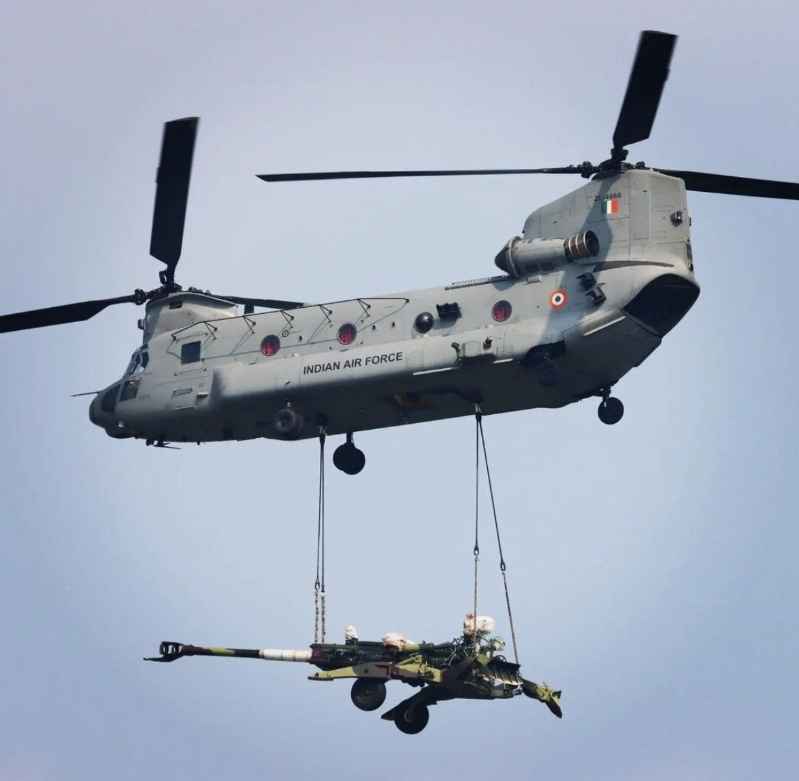
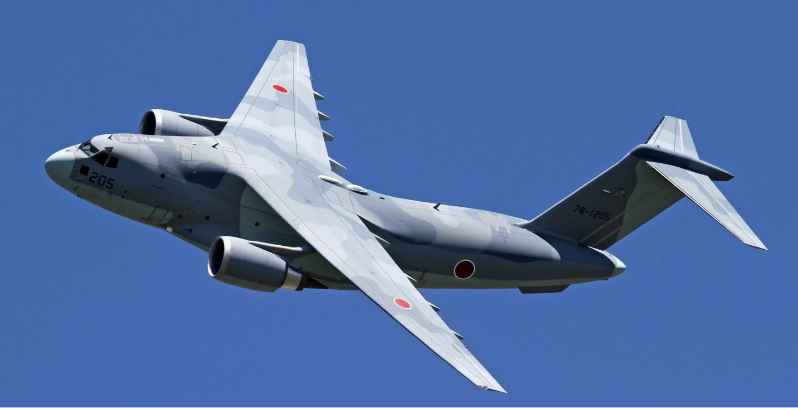
M777 weighs no more than 4.2 tons, which is half the weight of an ordinary 155mm gun. It can be hoisted by a CH-47 Chinook helicopter or airdropped at low speed by a C-17A or C-130J transport aircraft: These "supporting platforms" also entered the Indian Air Force sequence in the following years, forming a complete combat system. From October 19 to 27, 2021, the Indian Ministry of Defense organized reporters from mainstream media such as the Zee News Channel of the Indian Asian News Agency and the Hindustan Times to interview the garrison in the so-called "Arunachal Pradesh" (actually China’s southern Tibet region). Indian journalists visited an artillery position at the Bula Pass near the town of Tawang, where M777 howitzers were deployed. They belonged to the 190th Mountain Infantry Brigade, which was established in 1963 and has been training in plateau mountains above 3,000 meters for a long time. Its troops have also been trained in the United States and are praised by the Indian media as "elite mountain soldiers." From the pictures taken by Indian journalists, at least five M777s were deployed at the foot of a mountain, and the position was covered with gravel and mud washed down by rain. The deployment site is prone to landslides, and the Indian army did not dig pits or cook rice for stationing hoes, and the rear stationing hoes of the M777 were not buried in the soil, which shows the casual deployment of the Indian army. The outside world believes that in theory, the rapid deployment and combat transfer of the M777 howitzer takes less than 5 minutes, but the premise of achieving this "ideal value" is strict training-the quality of Indian soldiers is generally not high, and it is difficult to exert actual combat power when deployed and transferred on plateau mountain roads. In addition, artillery must formulate and compile plateau firing tables for plateau operations. Since the air in the plateau is much thinner than that in the plains, the resistance encountered by the artillery shells during flight has changed greatly, and the firing table in the plains is no longer applicable. Previously, there has been no report on the M777 howitzer completing live-fire tests in the plateau. Therefore, it is questionable whether the Indian M777 howitzer has the plateau firing table. If there is no plateau firing table, then the Indian Army’s M777 howitzer has basically no combat effectiveness.
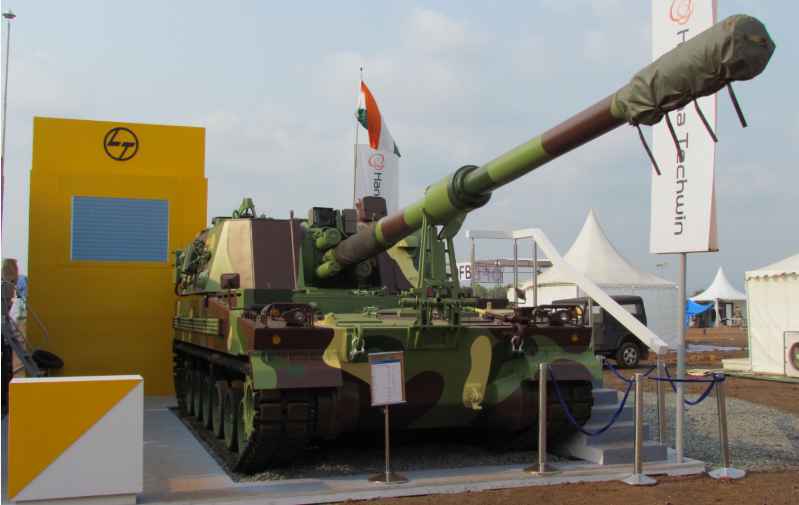
In the same turmoil, in April 2017, the Indian Ministry of Defense approved the introduction of 100 K9 self-propelled artillery (capable of equipping five regiments) from Hanwha-Techwin in South Korea, with a value of US$712 million, amid doubts from the outside world. The South Korean side guaranteed the transfer of technology and provided relevant engineering support packages (ESP), including parts, technical documents, training, and the transfer of maintenance technology to the army base factory. The Indian version of K9 was named "Vajra" self-propelled "Vajra". The artillery has a range of 40 kilometers and a firing rate of 6 rounds per minute. Although the shells fired have a time difference, they can still attack the same target, that is, they have the ability to "hit at the same time". Except for the first 10 guns produced in South Korea, the rest are assembled and produced by the Taligen Armored Systems Division (ASC) of the Larsen & Toubro (L&rT) Group in Hazira, India. J.D. Patil, senior vice president of the L&T Group and head of the defense and aerospace department, said that no less than 50% of the artillery parts are made in India, of which 14 vehicle-mounted systems (including fire control, direct shooting, automatic loading machine, auxiliary power unit, air conditioning, nuclear, biological and chemical protection equipment, etc.) are all developed by themselves.
On January 22, 2019, when Modi visited South Korea, he specifically mentioned to South Korean President Moon Jae-in that he had just experienced the "King Kong" in the country. "The self-propelled artillery provided by your country is very helpful in improving the combat effectiveness of the Indian Army. Military-industrial cooperation has become an important part of India-South Korea relations." This made the host very happy. In January 2020, L&T Group delivered 51 "King Kong" to the Indian Army in one go, and the remaining artillery vehicles were delivered within 42 months. Earlier in 2021, three "King Kong" were sent to the Ladakh Plateau for testing and were successful. After that, the Indian Army decided to purchase another 40 "King Kong"