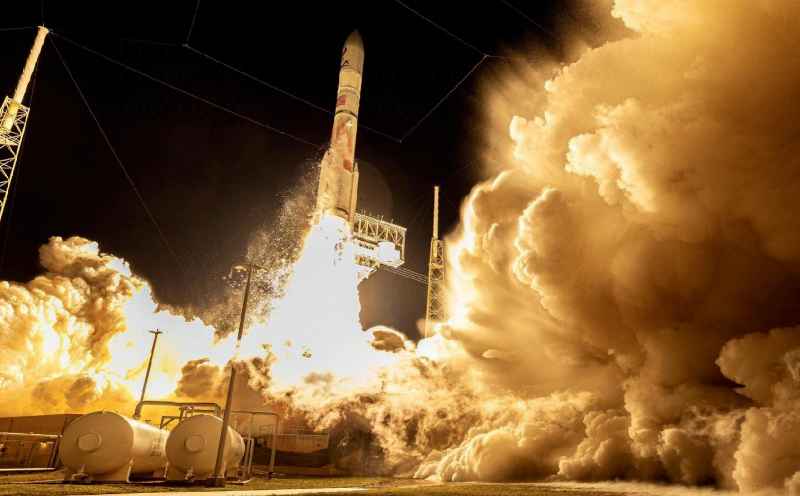
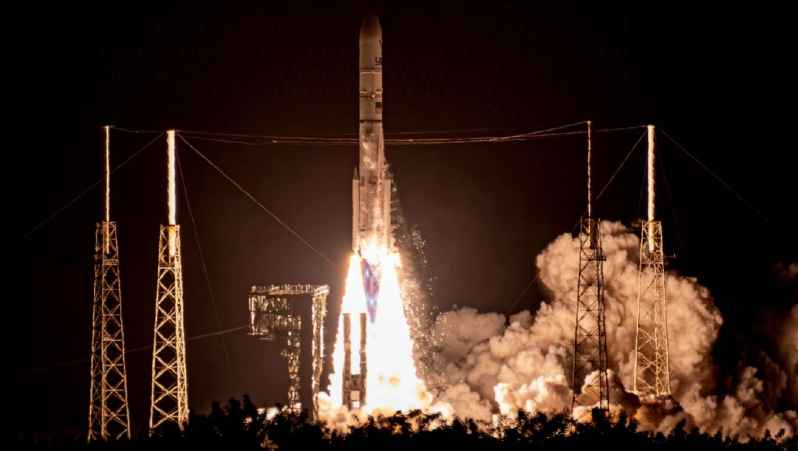
On January 8, the United Launch Alliance’s Vulcan-Centaur VC2S configuration rocket successfully completed its maiden flight. The mission codename "Peregrine 1" revealed its main payload - the Peregrine lunar lander developed by Astronautics. Unfortunately, the Peregrine lunar lander malfunctioned soon after it was sent into the Earth-Moon transfer orbit, and it was no longer possible to land on the moon as planned. We might as well sort out the development history and application technology of the lander, and combine the publicly disclosed failure information to try to interpret the reasons for its mission failure, so as to provide reference for the "latecomers" of the moon landing mission.
Unveiling the "new player in the moon landing"
The Peregrine lunar lander is eye-catching not only because the United States has attempted a soft landing mission on the moon again after more than 50 years since the completion of the "Apollo 17" mission in December 1972, but also because it is the first lunar lander developed by an emerging American commercial aerospace company. As a result, the company that developed the Peregrine Falcon entered the public eye.
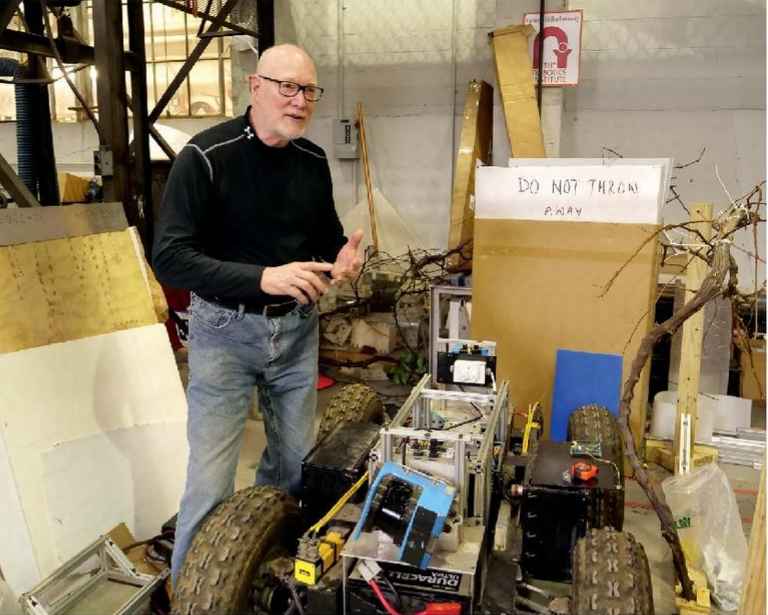
Astrobotics was founded in 2007 by William Whittaker, a professor at Carnegie Mellon University, and his colleagues in Pittsburgh, Pennsylvania. With his rich experience and knowledge in the field of robotics research and development, William Whittaker won a $2 million prize in the 2007 challenge held by the Defense Advanced Research Projects Agency of the United States Department of Defense, and later won a large number of top awards from various industries in the United States. Even NASA approached this company and hoped that they would develop a lunar rover.
Astrobotics’s initial goal was to win the commercial moon landing competition held worldwide by Google and the X Prize Foundation in 2007. At that time, the organizers of the competition required that the contestants must ensure that the robot landed on the surface of the moon, traveled 500 meters, and sent images and data back to Earth. The winner of the competition is expected to receive a prize of $20 million, which attracted many teams to participate. Unfortunately, no team successfully achieved the competition indicators until the deadline of March 31, 2018, so the award was closed in 2018.
Despite not receiving the prize, Astronautics continues to develop robotic technology for exploring the moon and other extraterrestrial planets. In 2018, the lunar lander plan submitted by the company was recognized by NASA and became one of the suppliers of commercial lunar payload services, and the company’s development has entered the fast lane since then.
Commercial lunar payload services is a contract-based lunar exploration payload transportation program launched by NASA in recent years. It attempts to use the emerging commercial aerospace forces to send a series of instruments and equipment, lunar rovers, etc. to the South Pole of the Moon and other regions to conduct resource distribution and environmental surveys, and further develop in-situ resource utilization technology, that is, to mine lunar resources and conduct cutting-edge exploration such as production activities. In the future, it will help astronauts build bases in the South Pole of the Moon, conduct lunar scientific research, and support the "Artemis Program". The feature of this program is to use fixed-price contracts to purchase payload transportation services between the Earth and the Moon in order to control costs and risks.
According to the plan, the Space Robot Company will carry out two lunar landing missions this year. The lunar landers are named "Peregrine Falcon" and "Griffin". The two missions are named "Peregrine Falcon 1" and "Griffin 1" for different purposes. However, with the failure of the "Youji" mission, the "Griffin" is bound to undergo more tests and the launch date has not yet been determined.
The lander is destined to be "short-lived"
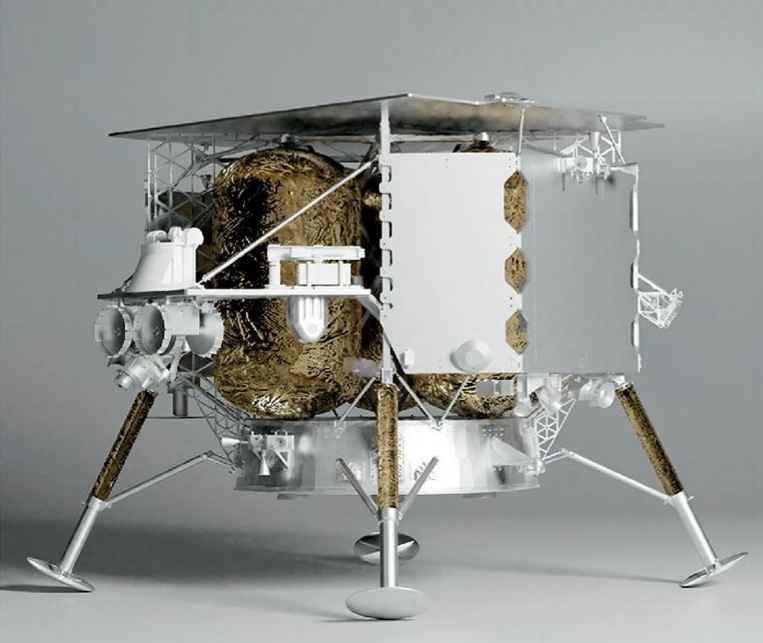
The main task of the Peregrine Falcon lunar lander is not too special, that is, to integrate and place various scientific instruments. Its main structure is made of aluminum alloy and includes two fan-shaped hollow platforms for installing payloads. The overall width of the lander is about 2.5 meters and the height is about 1.9 meters, with ample payload space.
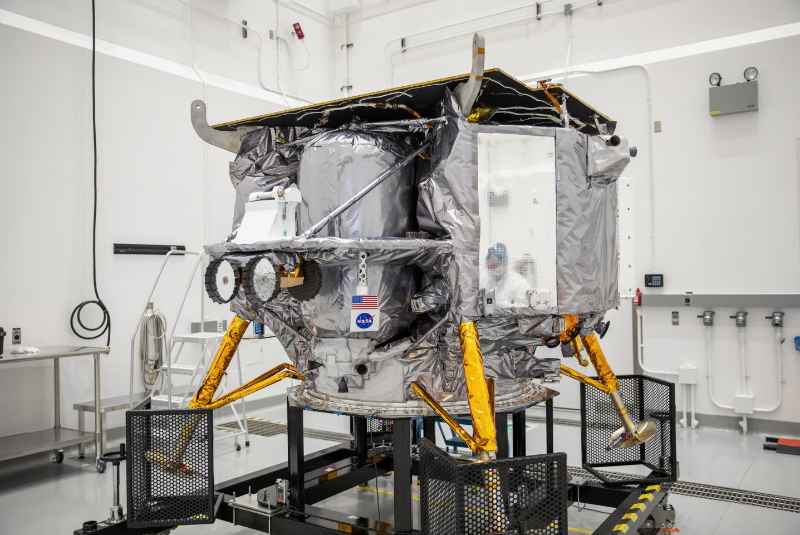
As a universal platform, the basic configuration of the "Peregrine Falcon" can be adjusted according to the latitude of the landing area. At present, the official has released two lander configurations that adapt to different lunar latitudes.
The first is a mid-latitude configuration, designed to allow the lander to operate safely in areas between 40 degrees north latitude and 50 degrees south latitude on the moon. The solar panels of the lander in this configuration are installed on the top as the core power source. Heat sinks will be arranged on the sides to control the temperature inside the lander. In this state, the payload mass carried by the lander is between 70 and 90 kilograms, and the expected operating time is 192 hours. The lander carrying the "Peregrine Falcon 1" mission is a mid-latitude configuration lander.
The second is a polar configuration, designed to allow the lander to operate in high latitudes such as the north and south poles of the moon. The solar panels of the lander in this configuration are installed on the side to more efficiently absorb sunlight from the side, and the heat sink is installed on the top of the lander.
It is worth noting that the Peregrine lunar lander is destined to be "short-lived" because its power comes entirely from gallium arsenide solar panels, and it does not have a radioisotope thermoelectric generator installed for long-term operation like some lunar landers (such as my country’s "Chang’e 4") do. Due to the lack of such a device, the instruments and equipment of the Peregrine lunar lander cannot survive the cold moonlit night of minus 183 degrees Celsius and do not have the ability to work on the lunar surface for a long time. However, Aerospace Robotics said that if customers need it, similar devices can be added to the Yuji lunar lander more easily.
All the electricity generated by the solar panels will be stored in the lithium batteries equipped with the lander, and will be distributed to various payloads under the management of the computer system.
Although it is "useless" in this mission, the power system of the Peregrine lunar lander is still worth mentioning. It is exquisitely designed, with a total of 5 main engines with a thrust of 667 Newtons each and 12 attitude control engines with a thrust of 45 Newtons each. All main engines are at the bottom of the lander, and every 3 attitude control engines are grouped into a group and distributed around the lander, so that the lander is expected to implement precise six-degree-of-freedom control. These engines all adopt the extrusion cycle mode, use room temperature fuel, do not require additional ignition devices, and have a simple and reliable structure. The engine’s oxidizer and reductant each have 2 tanks, and the lander carries a total of about 450 kilograms of propellant. There is also a tank filled with helium, which is specifically used for tank pressurization.
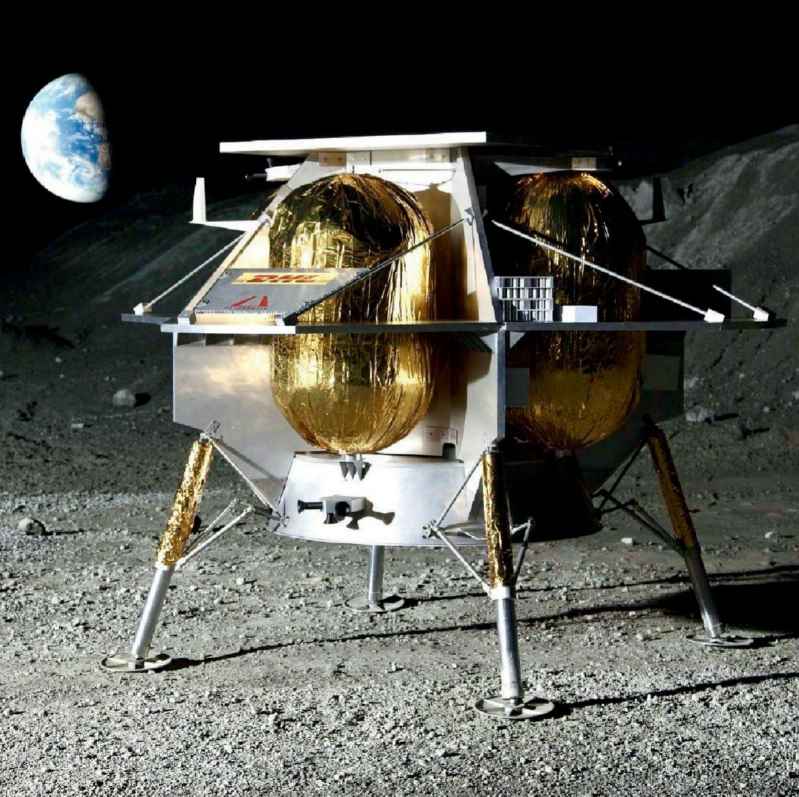
There are many participants in the "Peregrine Falcon 1" mission, ranging from scientific research institutions to commercial companies. In addition to Carnegie Mellon University, the alma mater of the founder of the Space Robot Company, and NASA, the European Space Agency, the German Aerospace Center, and the Mexican Space Agency have all contributed certain payloads, and some private companies that did not participate in the development of the payload have invested in the mission.
Among them, NASA originally planned to use this to carry out at least 5 experiments on the lunar surface, including using laser reflection arrays to accurately measure the distance between the earth and the moon, using linear energy transfer spectrometers to measure lunar surface radiation, using near-infrared volatile spectrometers to analyze lunar surface materials, identify water and other elements, and rely on neutron spectrometer systems to find hydrogen elements and indicate potential water sources.
Uniquely, the "Peregrine Falcon" also carries some non-scientific research payloads, which fully reflects its commercial attributes. For example, Germany’s DHL company placed a box on the lander, which contained 28 time capsules filled with items from various countries; Japan’s Daiichi Pharmaceutical Company placed a can model of its own brand beverage Pocari Sweat on the lander; a company engaged in virtual currency business placed a "physical Bitcoin" on the lander; and even two companies engaged in space funeral services placed samples of nearly 100 people’s remains on the lander, including hair samples of former US President John F. Kennedy. Their behavior even caused dissatisfaction among the Navajo tribe, the indigenous people of the United States, who believed that "placing human remains on the sacred moon is blasphemy."
Mission failure exposes defects
About 9 hours after the "Peregrine" separated from the Centaur upper stage, the mission team that had been closely monitoring the status of the lander disclosed for the first time: the lander encountered an abnormal situation.
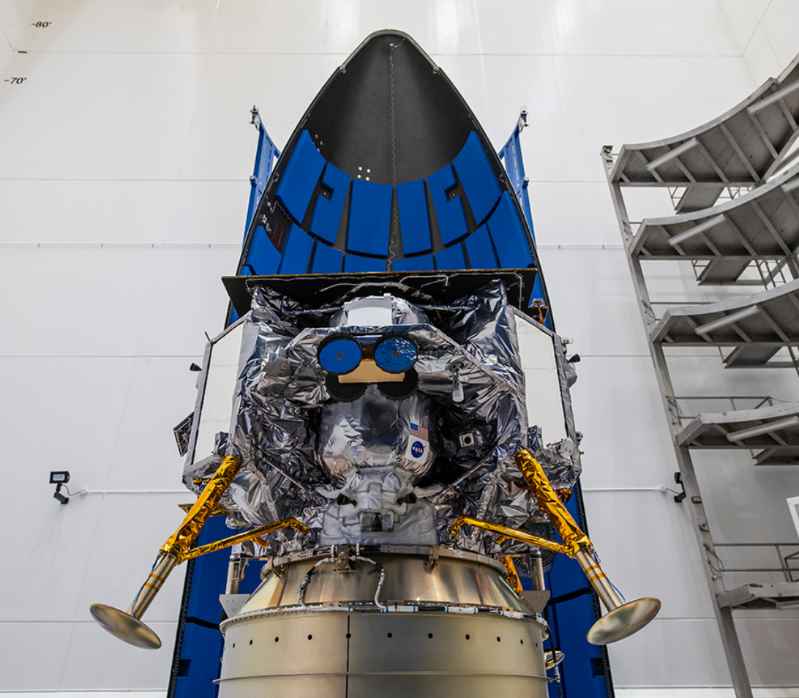
It turned out that the mission team found that due to some unknown reason (it was speculated that the sun and star sensors in the attitude sensor had failed), the solar panels on the top of the lander could not be stably aimed at the sun, making it difficult to continuously and efficiently charge the lander’s batteries. Subsequently, the mission team remotely operated the lander’s "temporary maneuver" and successfully aimed the lander in the direction of sunlight.
However, this was just the beginning of the serious failures that Peregrine Falcon exposed one after another. On social media, the mission team continued to update the status of the lander, and the outside world soon discovered that the situation was getting worse and worse.
About 18 hours after the successful launch of the rocket, the mission team announced the catastrophic crisis facing Peregrine Falcon - a very serious propellant leak problem. As we all know, during the process of the lunar lander entering the Earth-Moon transfer orbit and landing on the lunar surface, the orbit correction, near-moon braking, lowering altitude, and achieving soft landing all rely on the propulsion system and attitude control system, and a large amount of propellant is inevitably consumed during the orbit change and descent process. In particular, the "Peregrine" planned a complex orbit change process that took one and a half months. Once the propellant remaining was insufficient, mission failure was inevitable.
Soon, the mission team said, "Peregrine only has about 40 hours of propellant left to maintain stable operation, and it is impossible to try to land on the moon at the end of February. Therefore, the mission team had to extend the working time of the lander as much as possible in order to open more payloads and strive to harvest more results.
At noon on January 10, Beijing time, the mission team released a report to the public. In addition to admitting that the lander lacking propellant could not complete the scheduled moon landing mission, through simulation research, it preliminarily speculated the cause of the leak: during the period when the lander left the rocket upper stage and was initialized, the valve between the helium tank and the oxidizer tank used for pressurization was activated for the first time, and then failed to close again; because the pressure inside the helium tank is higher than that of the oxidizer tank, a large amount of helium was not needed. During the pressure test, the oxidizer tank was mistakenly entered into the oxidizer tank; as the internal pressure increased, the oxidizer tank eventually ruptured. Later, as the propellant in the tank decreased, the pressure decreased, and the leakage rate gradually slowed down, which could support the lunar lander to run for a little longer, which was conducive to the startup of various payloads such as the lunar rover of Carnegie Mellon University to obtain more data, try to recover some losses, and help to fully investigate the cause of the accident.
In fact, since the beginning of the 21st century, as of early January 2024, the success rate of spacecraft of various countries in performing soft landing missions on the moon has not exceeded 50%, which shows that its difficulty cannot be ignored. Among them, Israel’s "Genesis", India’s "Chandrayaan-2" and Japan’s "White Rabbit-R" all failed in the final descent stage, and Russia’s "Luna 25" crashed during the maneuvering adjustment of the lunar orbit, and this time "Peregrine Falcon" set a record for the "fastest" failure of the lunar landing mission in recent years.
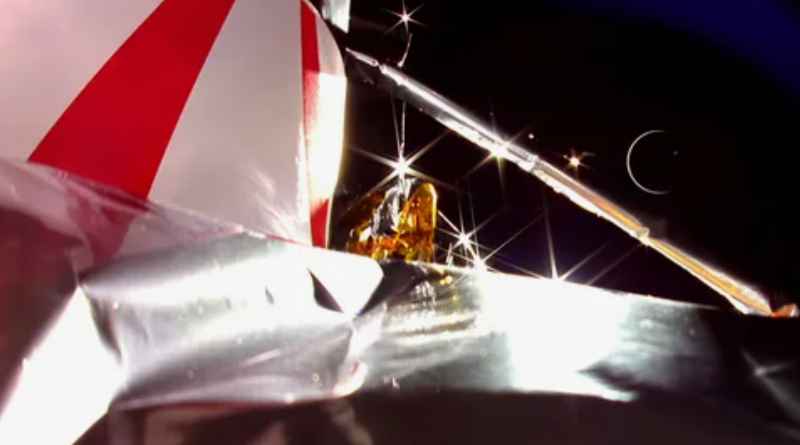
It is well known that the propulsion system is a high-incidence area for spacecraft failures. Although different simulated mission environments can be set up for testing on the ground, the test conditions may not be able to fully simulate the real space flight conditions, especially in deep space exploration missions, which place more emphasis on the reliability of the spacecraft propulsion system. For commercial aerospace that focuses on revenue and cost-effectiveness, how to balance the cost-effectiveness and reliability in increasingly difficult missions remains to be explored.
In the second half of this year, the American Space Robotics Company plans to implement the "Griffin 1" mission. The Griffin lunar lander has more complex application technology and will undertake the task of transporting NASA’s Viper lunar rover (scientific name "Volatile Research Polar Rover") to the lunar surface. At present, the company has not adjusted its lunar exploration plan for the time being, and will promote the zeroing and review of the "Peregrine 1" mission as soon as possible, redesign the valve system of the lunar lander, and improve reliability, in order to cope with the booming new round of lunar exploration.