
In recent years, as the curtain of the transformation and construction of the US Army has been opened, improving large-scale combat capabilities has become the focus of its construction and development. As one of the main echelons of the US Army’s main synthetic arms organization and implementation of close-range ground combat, the construction and development of the brigade combat team will surely serve the strategic goals of the US Army. As the only superpower now, the construction of brigade combat teams in the strategic transformation of the US Army is worth analyzing.
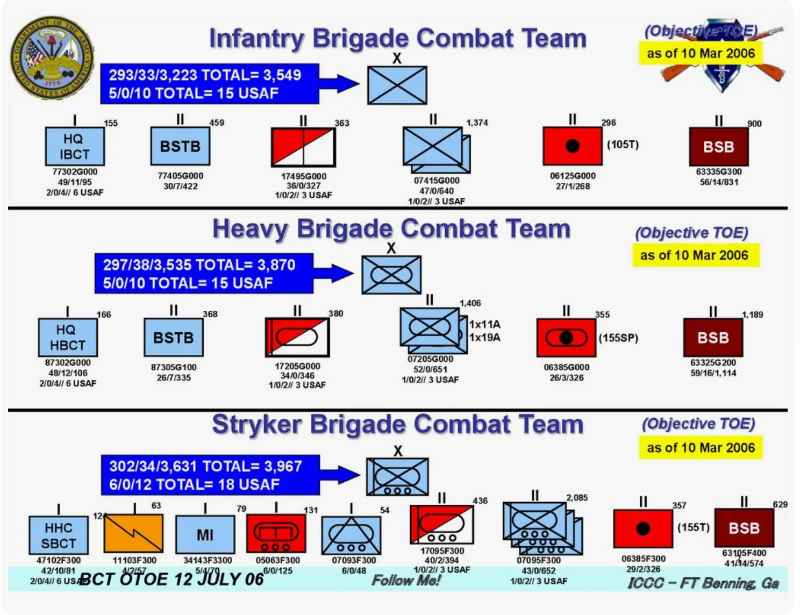
After the end of the Cold War, in order to achieve rapid deployment of overseas missions and carry out combat missions under future complex battlefield conditions, the US Army aims to "prevent conflicts, shape the combat environment and win wars" and strives to build a global combat force that adapts to deployment requirements, is flexible and has diversified combat capabilities, high lethality, survivability and sustained combat capabilities. In 2003, the US Department of Defense launched the construction of modular brigade combat teams. Through the reconstruction of the Army’s combat forces, three types of modular brigades were formed, namely brigade combat teams, multi-functional support brigades and special multi-functional support brigades. Among them, the U.S. Army Brigade Combat Team, as a combined arms force, is a basic unit designed for campaigns and tactics. It combines other support forces to eliminate the enemy through comprehensive reconnaissance, surveillance, information acquisition, mobile assault, long-range fire strikes and other operations. The U.S. military currently has three standard types of brigade combat teams: infantry, Stryker and armored. The organizational units include brigade-level and battalion-level mobile, firepower, reconnaissance, engineering and support combat forces. The subordinate units of the brigade combat team also follow the modular structure and standardized organization, and can be flexibly organized according to mission requirements. In 2012, the U.S. Army Training and Doctrine Command conducted a comprehensive assessment of the modular force structure. In 2013, the U.S. Army launched the second round of reforms of modular brigades to optimize the force organization and equipment allocation. This round of reforms was completed in 2017. The modular reform has greatly enhanced the flexibility, responsiveness and deployability of the Army’s forces, improved the Army’s full-spectrum combat capabilities, and improved the overall combat effectiveness of the Army’s forces. However, starting from 2017, in order to cope with the competition among major powers, the US Army has fully launched the largest strategic transformation since the end of the Cold War. In order to adapt to the needs of the transformation, the construction of brigade combat teams has been adjusted again.
Background
At present, the construction of US brigade combat teams is carried out under the guidance of clear background and target needs. The US military believes that after a long period of "irregular warfare" practice, the US Army’s ability to carry out large-scale operations has declined. In recent years, the military strength of major powers such as China and Russia has continued to increase, and the dominant position of the US Army has been challenged to a certain extent. Therefore, the US Army must promote the transformation and construction with an eye on future high-end wars, and strive to seize the initiative in possible conflicts in the future. At present, the US Army is fully engaged in a strategic transformation with the goal of "great power competition". This round of transformation is mainly aimed at responding to the threats of major powers such as China and Russia, and highlights the improvement of the US Army’s large-scale combat capabilities. Since the Obama administration proposed the "re-engagement in the Asia-Pacific" strategy, the strategic focus of the United States has gradually shifted from "war on terror" to "great power competition." In 2018, the Trump administration released the "National Defense Strategy of the United States", which clearly emphasized that "the long-term strategic competition with China and Russia is a major priority of the Department of Defense". In March 2021, the Biden administration issued the "Interim National Security Strategic Guidance" document, which pointed out that "China is the only competitor capable of combining economic, diplomatic, military and technological forces to pose a persistent challenge to a stable and open international system". The US Army believes that its existing capabilities are unlikely to defeat its opponents in future large-scale conflicts. First, China and Russia’s "anti-access/area denial" strategy has greatly limited the US Army’s cross-domain delivery capabilities; the US Army’s forces lack the ability to survive in the brutal war environment of the future; and third, there is a certain gap in scale and range with the opponent’s firepower. Accordingly, under the guidance of the "multi-domain warfare" theory, the US Army has accelerated its transformation to respond to great power threats in order to cope with possible future conflicts.
At the same time, it is also necessary to see that the transformation of the U.S. Army this time is not only an innovation of weapons and equipment, but also an all-round transformation, involving combat theory, force structure, weapons and equipment and other aspects. The first is to promote the development of the "multi-domain warfare" theory and shape the future way of war. Since General David G. Perkins, commander of the U.S. Army Training and Doctrine Command, proposed the concept of "multi-domain warfare" in 2016, the U.S. Army has successively issued a series of related documents, such as "Multi-Domain Warfare: The Evolution of Synthetic Arms in the 21st Century 2025-2040", "U.S. Army Multi-Domain Warfare 2028", "Multi-Domain Warfare: U.S. Army Brigade and Above", etc., and has formed a relatively complete combat theory system, which can provide theoretical guidance for the transformation and construction of the U.S. Army. The second is to adjust the structure of the Army. On the premise that the total number of brigade combat teams remains unchanged, two armored brigade combat teams will be added to cope with possible large-scale armed conflicts in the future. Third, the programmatic document "2019 Army Modernization Strategy: Investing in the Future" was released to guide the modernization of the Army’s equipment, continuously promote the research and development of high-tech equipment, and maintain technological advantages.
In addition, the US Army believes that after long-term development, the current main combat opponents have made great progress in military modernization. Their "anti-access/area denial" strategy shapes the combat environment into an environment with difficult access, difficult operations, lack of support and full of dangers, which brings huge challenges to the Army’s mission execution. In response to the survival dilemma that may be faced in future conflicts, the US Army emphasizes "capability aggregation" instead of traditional "force concentration". As a result, the US Army summarized the previous combat experience, integrated the new transformation concept, and took a variety of construction measures to enhance its own capabilities. First, promote network modernization. The US military top brass believes that this is an inevitable requirement for the future Army to achieve distributed deployment, and it is also a basic capability to support other modern equipment to play its due combat effectiveness. The second is to develop precision strike capabilities. In 2017, the U.S. Army Training and Doctrine Command issued the document "U.S. Army Firepower Functions 2020-2040", which proposed four principles of "precision", "rapidity", "destruction" and "multi-domain" to guide the development of the U.S. Army’s firepower and build a modern firepower system. The third is to improve the survivability of the troops. U.S. Army analysts believe that the army must further reduce the identification characteristics while ensuring independent combat capabilities for at least 7 days to meet the needs of future "multi-domain operations".
In the future, the U.S. Army will take measures such as reducing visual and electromagnetic signals, increasing redundant communication channels to resist interference, reducing logistics requirements, enhancing medical support, strengthening multi-functional networks, and improving mobile support capabilities and multi-domain shielding capabilities to improve the survivability of the army. In short, the risks faced by the U.S. Army are divided into three types: competition, crisis and armed conflict. It emphasizes that the army should take a variety of measures to keep the risks at the competitive level and avoid the situation from turning into crisis and armed conflict. This requires the army to have effective and powerful combat forces that can respond to crises that may occur at any time. It is also in this context that the construction of brigade combat teams in the US Army’s strategic transformation has undergone adjustments.
Guiding principles for the construction of brigade combat teams in the strategic transformation of the U.S. and Chinese Army
The "Department of Defense Military and Related Terms Dictionary" published by the U.S. Department of Defense defines the brigade combat team as follows: The brigade combat team is a synthetic armed force and the modular basis of the U.S. Army’s tactical composition. The U.S. Army Brigade Combat Team is the basis of the U.S. Army’s close-quarter ground combat capability and is divided into three types: armored brigade combat team, "Stryker" brigade combat team and infantry brigade combat team. In recent years, the United States has made great power competition its primary military goal, and its military construction has also mainly revolved around improving large-scale combat capabilities. As the main branch of the U.S. military for large-scale ground combat, the U.S. Army focuses on competitors such as China and Russia and strives to improve large-scale land combat capabilities. As the main synthetic arms force of the U.S. Army, the development and construction of the brigade combat team implies the future combat goals, methods and characteristics of the U.S. Army. The current and future construction of the U.S. Army Brigade Combat Team is carried out under a series of clear guiding principles. Since the U.S. Army proposed the concept of "multi-domain warfare" in 2016, it has successively issued a series of relevant documents to guide the transformation and construction of the U.S. Army. Today, the theory has been gradually developed and improved. Its theoretical core is to achieve "cross-domain strikes", "capability concentration" and "distributed deployment" through the transformation and construction of the Army to crack the opponent’s "anti-access/area denial" capabilities. Under the guidance of the Army’s "multi-domain warfare" concept, the brigade combat team is also working hard to improve its large-scale combat capabilities.
In December 2018, the "U.S. Army in Multi-Domain Warfare 2028" published by the U.S. Army Training and Doctrine Command pointed out that in the future, all 29 brigade combat teams of the U.S. Army will have a certain degree of multi-domain capabilities. At the same time, their intelligence, firepower, mobility, aviation support, electronic warfare, and space capabilities will be further integrated, and the cross-domain capabilities of the brigade combat teams at the forefront of combat will be strengthened in order to achieve a wider range of cross-domain integration capabilities. In the future, the U.S. Army will promote the development and construction of brigade combat teams in accordance with the principles of developing cross-domain capabilities, concentrating firepower, strengthening self-sustaining capabilities, and integrating multi-domain resources. The U.S. Army believes that in the face of future modernized combat opponents and complex and ever-changing combat environments, the situation facing the army is more severe and complex. Powerful opponents such as China and Russia are depriving the U.S. military of its advantages in multiple combat domains by implementing the "anti-access/area denial" strategy. This requires the army to have the ability to perform tasks in unfamiliar environments without support and to provide all-round effective protection for itself. At the same time, the army’s multi-domain warfare construction cannot only stay at the campaign level. It must enable tactical-level units and detachments to also have multi-domain warfare capabilities to form multi-domain warfare formations at different levels. Based on this, the brigade combat team should focus on improving the following capabilities. First, develop cross-domain firepower. The U.S. Army requires that future brigade combat teams should have the ability to provide cross-domain firepower and be able to perform tasks in the enemy’s "anti-access/area denial" environment, mainly to build autonomous and modern short-range air defense firepower and long-range ground firepower. Second, develop cross-domain information acquisition capabilities. The development of cross-domain firepower must be supported by cross-domain information acquisition capabilities, including the ability to use aviation reconnaissance systems, layered air defense and reconnaissance equipment, electronic warfare equipment, multi-spectral sensors, cyberspace forces, and related military facilities. The third is to enhance the ability to process and use data across domains. For example, through the application of high-tech technologies such as artificial intelligence, the speed of data processing and information exchange in air, ground platforms and communication networks will be accelerated, and the deep integration of flexible mobility and lethality will be promoted to give full play to the combat effectiveness of combat forces.
The concentrated use of firepower is another guiding principle for the construction of brigade combat teams of the Chinese and American armies in this strategic transformation. In 2003, then-U.S. Army Chief of Staff Pete Schoomaker made a drastic modular reorganization of the Army, delegating the tactical corps level from the division level to the brigade, and the reorganized division exercised the command function. At the same time, several brigade combat teams were established, and the division artillery battalions were assigned to the brigade combat teams as a whole. Although this move strengthened the firepower of the brigade combat team, it dispersed the concentrated firepower of the division-level troops, which was not conducive to the firepower troops maintaining their skill level.
In 2008, after investigating the Army’s firepower units, Army researchers concluded that "the rate of degradation of field artillery capabilities is very worrying." In order to change this situation, although the U.S. Army has taken many measures to improve the Army’s ability to concentrate firepower, it has always lacked official documents and norms. In 2017, the U.S. Army Training and Doctrine Command finally released the document "U.S. Army Firepower Function 2020-2040" to guide the development of the Army’s firepower. The document makes full use of joint, cross-agency and multinational firepower capabilities and multi-functional firepower integration as the key development direction of the U.S. Army in the future. It points out that the Army will focus on strengthening the firepower concentration and firepower support capabilities of brigade combat teams in the future to enhance the strike force of brigade-level forces in large-scale ground combat. In addition, the U.S. Army believes that the battlefield of the future is complex, chaotic and highly lethal, and powerful opponents may deprive the Army of the ability to obtain other support. At this time, multi-domain formations need to independently complete combat missions in dangerous environments. Based on this, multi-domain formations should have the ability to conduct independent operations in a controversial combat environment, relying on the combat effectiveness within the organization, and seize the initiative on the battlefield through long-distance maneuvers. As an important part of the multi-domain formation, the brigade combat team needs to have the ability to perform independent and continuous combat missions in the cruel, unfamiliar and dangerous combat environment in the future.
The U.S. Army emphasizes that in order to cope with the large-scale ground combat that may occur in the future, the brigade combat team should focus on improving its self-protection and self-support capabilities, such as reducing visual and electromagnetic signals, increasing anti-interference communication channels, reducing logistics needs, enhancing medical support, strengthening multi-functional networks, and improving mobility support capabilities and multi-domain shielding capabilities. The ultimate goal is to comprehensively improve the self-sustaining capabilities of the brigade combat team, such as organizational mission command, intelligence, reconnaissance, surveillance and maintenance capabilities, so that the brigade combat team can carry out 72-96 hours of combat operations under the conditions of highly competitive communication lines and highly dangerous and complex battlefield environments. In addition, integrating multi-domain resources in this strategic transformation is another guiding principle for the construction of the U.S. Army Brigade Combat Team. Integrating multi-domain resources means quickly and continuously integrating capabilities in the physical and information environments of all fields, realizing the rapid aggregation of multi-domain capabilities, and under the premise of strict mission-oriented command and taking the initiative, using a variety of cross-domain coordinated attack methods to strike the enemy’s key nodes, striving to defeat the enemy as quickly as possible. The U.S. Army believes that the multi-domain aggregation of joint forces has two major advantages: flexible selection of multi-domain strike methods and effective integration of combat capabilities in various domains.
Flexible selection of multi-domain strike means that brigade combat team commanders can flexibly select different means to conduct reconnaissance and strikes on enemy weaknesses based on actual conditions, using forces within the organization or requesting support from superiors, to ensure successful destruction even under complex conditions such as enemy camouflage and counterattacks. Effective integration of combat capabilities in various domains means that the U.S. Army integrates combat capabilities in various domains and releases them at a decisive time and place, producing a "1+1>2" effect, further improving combat effectiveness, gaining an advantage over the enemy, and providing strong support for brigade combat teams to conduct close-range ground combat. The U.S. Army emphasizes that in the future, all brigade combat teams of the Army will integrate and enhance reconnaissance, mobility, and firepower resources within the organization with aviation, mobility support, electronic warfare, firepower, and offensive space capabilities in the joint system to achieve an overall leap in combat capabilities, gain advantages in battles with powerful combat opponents, and seize the initiative.
Strategic transformation of the construction and development measures of the brigade combat teams of the Chinese and American armies
The current round of the transformation strategy of the US Army is closely centered on the goal of "great power competition". Starting from multiple aspects such as combat theory, decision-making mechanism, strategic deployment, weapons and equipment, and combat readiness, various measures are taken to enhance the large-scale combat capabilities of the army. Among them, in order to enhance the large-scale combat capabilities of the brigade combat team, the US Army promotes development and construction around the four principles of "cross-domain", "concentration", "continuity" and "aggregation", and takes corresponding measures to comprehensively enhance combat capabilities, which are mainly reflected in the following aspects. The first is to streamline the command organization to enhance survivability. The command post is the organization that commands the brigade combat team to carry out combat operations. A large number of equipment is required for the command agency to use to exercise command functions. These equipment include integrated tactical network environment and tactical Internet system, as well as a large number of vehicle platforms and tents and other facilities. At present, each brigade combat team command post is equipped with the same number of new brigade and below combat command systems, including tactical combat center kits, future command post workstations, power generation systems, and standard DRASH tents and other equipment.
The U.S. Army believes that the current command structure of the brigade combat team has defects such as large area, prominent target characteristics, and overly complex construction, and its survivability in future high-intensity operations is worrying. In 2016, the brigade combat team conducted the 6th rotation training at the U.S. Army National Training Center. The brigade combat command post suffered multiple devastating blows during the exercise. There are three main reasons:
First, the command post is large in scale and its appearance is too obvious, which is easy to be detected by the enemy;
Second, the existing command post has a lot of equipment, which is time-consuming and complicated to set up, and the combat efficiency is low;
Third, the command post is not mobile enough, and it is difficult to survive in the face of enemies with strong reconnaissance capabilities and firepower.

In response to the above problems, the U.S. Army plans to take measures to improve the survivability and mobility of the brigade combat team command post from three aspects: training, equipment and organization. First, special training is conducted for command agency personnel to improve the efficiency of command organization establishment. To this end, the U.S. Army organized troops to implement command post establishment training. The training results show that after two days of training, the time for the brigade combat team to set up the command post was shortened to half of the original time, greatly improving the efficiency of setting up. Second, the modularization of combat functional units is promoted, and relatively light and flexible modular vehicle-mounted containers are used to replace military tents that occupy a large area and occupy a lot of space. The new exercise results show that the use of new equipment not only improves the mobility of the brigade command post, but also provides solid support and armor protection for many equipment in the command post. Third, an uninterrupted tactical command post is set up so that the main body of the command post can maintain a minimum level of situational awareness and command and control during transfer. The U.S. Army believes that flexibility and mobility in future operations are very important to improve the survivability of the command post. When the battle is the most intense, the commander often needs to rely on a fixed and reliable command organization to complete the precise command and control of combat operations. At this time, the command post also faces a high survival risk and needs to be transferred to avoid enemy reconnaissance strikes. To solve this problem, the US military proposed setting up an uninterrupted tactical command post to ensure that the commander can achieve basic perception of the battlefield situation and command and control of combat operations during the transfer process.
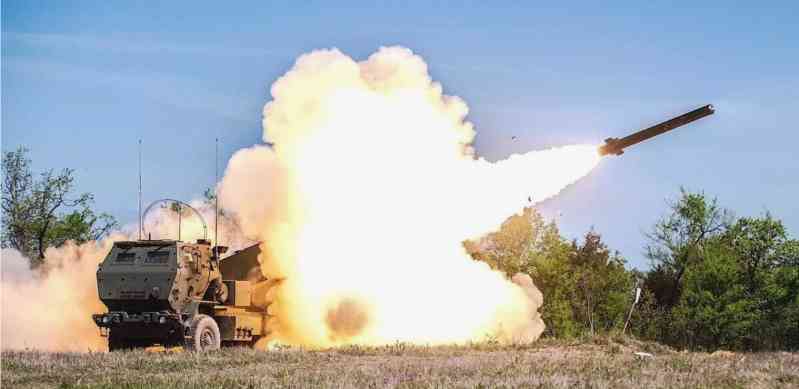
It is also necessary to see that in order to cope with possible large-scale conflicts in the future, the U.S. Army has identified "precision", "rapidity", "efficiency" and "versatility" as the four major development directions of future firepower. At the same time, it has proposed "making full use of joint, cross-agency and multinational firepower", "multi-capable firepower integration" and "cross-domain firepower expansion" and "enhanced reconnaissance and firepower connection" as four emerging concepts to guide the development of the army’s firepower construction. Focusing on the principles and directions of the army’s firepower construction, the brigade combat team has taken the following measures to further enhance its strike capability: first, developing long-range precision firepower, carrying out the research and development of extended-range barreled artillery projects, enhancing the lethality of the brigade’s field artillery battalion’s M109A6 and M109A7 self-propelled artillery systems, further lengthening the barrel of the new artillery, and increasing the caliber from 39 times the caliber to 58 times the caliber, with greatly improved accuracy, power and range; second, enhancing superior support firepower, such as rebuilding the division artillery to strengthen the brigade combat team’s support firepower, with a scale of about 1 to 5 rocket/missile battalions or field artillery battalions; third, strengthening the capabilities and qualities of firepower officers, including organizing the training of fire support officers in a planned manner, and using the newly formed division artillery as the division’s firepower headquarters, responsible for supervising the training management and qualification certification of the brigade combat team’s field artillery battalion and fire support group, and improving the training level of the brigade combat team’s firepower unit. In addition, the Russian army combined drone systems with large-scale indirect firepower such as cruise missiles and precision artillery during the Russia-Ukraine conflict that broke out in 2014, achieving fruitful results. The U.S. Army believes that the rapid development of China and Russia’s missile weapons and unmanned equipment has posed certain challenges to the U.S. military, and the existing air defense and anti-missile capabilities of the brigade combat team are not enough to cope with the threats currently faced by the U.S. Army.
Accordingly, the U.S. Army, in its 2019 modernization guidance document "2019 Army Modernization Strategy: Investing in the Future", will enhance air defense and anti-missile capabilities as one of the six priority military capabilities, and plans to take the following measures from the three perspectives of command, training, and equipment to enhance the air defense and anti-missile capabilities of brigade combat teams:
First, develop the "Army Integrated Air Defense and Anti-Missile Operations Command System" (IBCS). In order to adapt to the needs of future large-scale conflicts, the integrated air defense and anti-missile operations command system being developed by the U.S. Army is planned to be deployed in 2022. By then, all air defense and anti-missile equipment of the Army will be integrated into a unified command system to support the air defense and anti-missile needs of brigade combat teams with system capabilities.
Second, strengthen the training of soldiers’ air defense weapon use skills. In recent years, the U.S. Army has attached great importance to training the air defense weapon application skills of Brigade Combat Team soldiers. For example, in March 2019, the 3rd Armored Brigade Combat Team used the single-carry FIM-92 "Stinger" air defense system for actual combat training, and the mobile training team of the U.S. Army Air Defense Academy guided the officers and soldiers of the 2nd Infantry Division to train the use of "Stinger" air defense missiles.
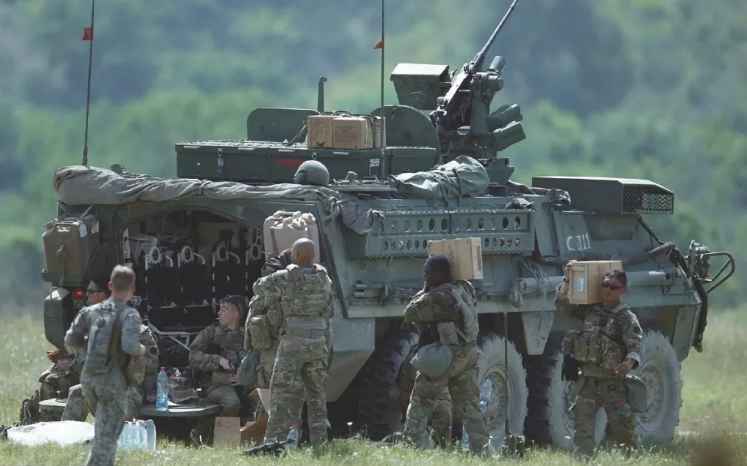
The third is to develop a new generation of mobile short-range air defense system (IM-SHORD). The U.S. Army is developing a new generation of mobile short-range air defense system based on the "Stryker" chassis. After the system is put into production in 2021, it will enable future brigade combat teams to have the ability to reliably identify and strike low-end drones and intercept drone groups and short-range missiles.
The top leaders of the US military believe that network modernization is the most complex and challenging task among the six priority development projects of the US Army. It is also the basic capability to support other modern equipment to play their due combat effectiveness, and should receive the most investment. In 2017, the US Army conducted a comprehensive assessment of the tactical network and believed that the tactical communication network had problems such as complex component operation, difficulty in dynamic networking, fragile electromagnetic characteristics, narrow coverage, insufficient anti-interference ability and excessive power consumption of radio stations, which needed to be further improved to meet future combat needs. To solve the above problems, the US Army has taken the following two measures. First, accelerate the preparation of the "Tactical Intelligence Target Access Point" (TITAN) project. The project plans to deeply integrate multi-domain sensors such as land, sea, air, space and electricity, and gradually parallel and replace the existing distributed general ground stations and other intelligence ground stations of the US Army to develop intelligent, automated, and integrated command, control, intelligence, surveillance, electronic warfare, space warfare and other capabilities, and give priority to deploying them in the multi-domain task force in the Indo-Pacific theater to improve the task force’s precision firepower strike capability. The second is to improve the network interconnection performance of tactical vehicles. In October 2020, the US Army tested the "Network Lethality" equipment upgrade project applied to the "Stryker" vehicle platform. The project will integrate all reconnaissance sensors on the "Stryker" vehicle, and can share information in real time within the brigade combat team in the form of reports and images, greatly improving reconnaissance efficiency and combat effectiveness. Ron Thomas, assistant tester of the US Army Combat Test Command, described this upgrade as the first major improvement in vehicle capabilities since the establishment of the "Stryker" Brigade Combat Team nearly 20 years ago.
Focus on strengthening the ability to respond to chemical, biological, radiological and nuclear threats
It should be noted that since this round of strategic transformation focuses on great power conflicts in the context of great power competition, one of the focuses of the construction of the US Army Brigade Combat Team is to strengthen the ability to respond to chemical, biological, radiological and nuclear threats. In recent years, in order to effectively respond to CBRN threats and hazards, the U.S. Army is reshaping the CBRN forces of brigade combat teams to enhance their self-support capabilities, thereby improving their full-spectrum and sustainable combat capabilities. The U.S. Army Brigade Combat Team has assigned CBRN staff to the brigade, battalion, and company levels of command, and equipped brigade combat battalions and support battalions with CBRN equipment to enhance their CBRN protection capabilities and ensure their sustained combat and full-spectrum combat in a CBRN environment. In order to adapt to the capability target requirements of the new round of strategic transformation, the U.S. Army has reorganized and strengthened the chemical defense forces of brigade combat teams since 2018. At present, the CBRN forces of the U.S. Army Brigade Combat Team can be divided into two parts: the CBRN unit and the CBRN staff. The U.S. Army Infantry Brigade Combat Team, Stryker Brigade Combat Team and Armored Brigade Combat Team each have a CBRN unit (CBRN reconnaissance platoon),
with 12 personnel, 3 M1135 Stryker CBRN reconnaissance vehicles, and are assigned to the Engineer Battalion Headquarters. The CBRN reconnaissance platoon has 3 reconnaissance squads, each of which is equipped with 1 M1135 Stryker CBRN reconnaissance vehicle with 4 crew members.
The CBRN unit has the ability to detect and identify known CBRN materials, provide early warning of pollutants (pollution avoidance), report, mark and identify contaminated roads, collect and transfer CBRN samples, and conduct hazard assessments during on-site investigations or consequence management support, providing vehicle-mounted CBRN reconnaissance and surveillance capabilities for the brigade combat team in full-spectrum operations. CBRN staff officers are divided into three types: lieutenants, non-commissioned officers and soldiers, and are assigned to the brigade, battalion and company headquarters. As the commander’s special staff, the CBRN staff of the brigade headquarters and battalion headquarters are responsible for supervising the headquarters’ preparations for operations in a CBRN environment and providing technical advice to the brigade combat team commander in operations in a CBRN environment; the CBRN staff of the company headquarters is the company commander’s main technical expert, providing guidance on reconnaissance, protection and decontamination operations for the brigade combat team in operations in a CBRN environment.
The infantry brigade combat team has 29 chemical, biological, radiological and nuclear staff officers, including 6 officers, 20 non-commissioned officers, and 3 soldiers; the "Stryker" brigade combat team has 29 chemical, biological, radiological and nuclear staff officers, including 2 officers, 24 non-commissioned officers, and 3 soldiers; the armored brigade combat team has 31 chemical, biological, radiological and nuclear staff officers, including 6 officers, 22 non-commissioned officers, and 3 soldiers. The above situation shows that the number of chemical, biological, radiological and nuclear staff officers assigned to the three types of brigade combat teams is different, and non-commissioned officers are the main body of chemical, biological, radiological and nuclear staff officers. The brigade headquarters and the engineering battalion headquarters are assigned 1~2 chemical, biological, radiological and nuclear staff officers, while the reconnaissance battalion, infantry battalion/armored battalion, firepower battalion and support battalion headquarters are assigned 4~6 chemical, biological, radiological and nuclear staff officers, which is a large number, indicating that chemical, biological, radiological and nuclear staff officers are mainly assigned to the combat battalion headquarters. The rank of the Brigade Command’s CBRN staff is Captain and Sergeant Major, the rank of the Battalion Command’s CBRN staff is Lieutenant, Warrant Officer, Staff Sergeant, Corporal and Private First Class, and the rank of the Company Command’s CBRN staff is Sergeant and Corporal, indicating that the Brigade Combat Team’s CBRN staff is assigned at different levels, which is conducive to coordinated command. CBRN staff are only assigned to the reconnaissance company and the medical company, and not to the intelligence company, the engineer company, the infantry company and the firepower company, indicating that the Brigade Combat Team selectively assigns CBRN staff according to the company’s combat mission and combat needs. CBRN staff are divided into staff sergeants and decontamination sergeants. Decontamination sergeants are only assigned to the reconnaissance battalion, armored battalion, infantry battalion, firepower battalion and support battalion. This is because the battalion is equipped with decontamination equipment, which can decontaminate personnel, equipment and areas contaminated with CBRN materials to ensure full-spectrum combat of combat personnel.
The current CBRN protection equipment assigned to the U.S. Army Brigade Combat Team is divided into three categories: reconnaissance equipment, protection equipment and decontamination equipment, and has the ability of CBRN reconnaissance, protection and decontamination within the organization. Reconnaissance equipment can be divided into three categories according to different uses: nuclear radiation detection equipment, chemical reconnaissance equipment and CBRN integrated reconnaissance equipment. According to different carrying methods, it can be divided into portable reconnaissance equipment and vehicle-mounted reconnaissance equipment. The reconnaissance equipment assigned to the U.S. Army Brigade Combat Team includes AN/VDR-2 radiation dosimeter, AN/UDR-13 pocket radiation dosimeter, AN/PDR-75 radiation detection indicator, M1135 "Stryker" CBRN reconnaissance vehicle, chemical agent monitor, joint chemical agent detector and chemical agent automatic alarm.
AN/VDR-2 radiation dosimeters and AN/UDR-13 pocket radiation dosimeters are mainly assigned to the engineer battalions, infantry battalions and support battalions of infantry brigade combat teams, as well as the engineer battalions, reconnaissance battalions, firepower battalions and support battalions of Stryker brigade combat teams; chemical agent monitors and joint chemical agent detectors are assigned to the battalions of Army brigade combat teams, and chemical agent alarms are mainly assigned to the engineer battalions of infantry brigade combat teams and the engineer battalions, reconnaissance battalions and armored battalions of armored brigade combat teams; M1135 "Stryker" chemical, biological, radiological and nuclear reconnaissance vehicles are assigned to the engineer battalions of infantry brigade combat teams, "Stryker" brigade combat teams and armored brigade combat teams, with three vehicles in a group. Overall, in the U.S. Army, portable chemical, biological, radiological and nuclear reconnaissance equipment is assigned with emphasis and distinction according to the different combat functions of the battalions of the brigade combat team, and is mainly used by group defense forces; vehicle-mounted chemical, biological, radiological and nuclear equipment is assigned to the engineer battalion and used by professional forces. Protective equipment is divided into two categories: personal protective equipment and collective protective equipment. The protective equipment assigned to the U.S. Army Brigade Combat Team includes the M50 joint service universal mask, the M51 joint service universal mask, the M20 simple nuclear, biological and chemical collective protective equipment and the chemical and biological protection shelter. The M50 joint service universal mask is used for ground combat personnel and is assigned in large quantities to the battalions and companies of infantry brigade combat teams, Stryker brigade combat teams and armored brigade combat teams; the M51 joint service universal mask is used for armored combat vehicle crews and is mainly assigned to the reconnaissance battalion, infantry battalion of the Stryker brigade combat team and the engineer battalion and armored battalion of the armored brigade combat team; the M20 simple nuclear, biological and chemical collective protective equipment is assigned in small quantities and is mainly assigned to the brigade headquarters, reconnaissance battalion, infantry battalion and support battalion of the infantry brigade combat team, the firepower battalion of the Stryker brigade combat team and the brigade headquarters, engineer battalion, reconnaissance battalion and support battalion of the armored brigade combat team; the chemical and biological protection shelter is mainly assigned to the support battalion of the infantry brigade combat team and the armored brigade combat team. Personal protective equipment is used as a group defense force, and is allocated in large quantities to the battalions and companies of the brigade combat team, and is allocated in a focused manner; collective protective equipment is allocated in small quantities, and is mainly allocated to the brigade headquarters, reconnaissance battalion and support battalion, to provide protection for the brigade combat team’s command operations and medical treatment under chemical, biological, radiological and nuclear conditions. Decontamination equipment is divided into two categories: personnel decontamination equipment and weapons, facilities and venues decontamination equipment. The decontamination equipment allocated to the U.S. Army Brigade Combat Team includes the Joint Service Personnel Decontamination System, the Light Decontamination System (M17) and the Joint Service Mobile Small Decontamination System. The Joint Service Personnel Decontamination System is allocated to the reconnaissance battalions of the "Stryker" Brigade Combat Team and the Armored Brigade Combat Team in small quantities; the Light Decontamination System and the Joint Service Mobile Small Decontamination System are allocated to the reconnaissance battalions, infantry battalions/armored battalions, firepower battalions and support battalions of the Infantry Brigade Combat Team and the Armored Brigade Combat Team, as well as the firepower battalions and support battalions of the Stryker Brigade Combat Team, in small quantities. In summary, decontamination equipment is mainly assigned to support battalions for immediate decontamination and combat decontamination at the tactical level, aiming to maintain combat operations.
Conclusion
The U.S. Army believes that the most likely conflict in the future is a high-tech, high-intensity, high-risk large-scale modern war with powerful opponents such as China. After the Army troops have been performing irregular combat missions in the Middle East battlefield for a long time, the large-scale combat capability of the brigade combat team has declined to a certain extent, exposing the lack of relevant training experience, the loss of experienced middle-level officers, insufficient survivability in large-scale conflicts, and lack of large-scale support firepower. There is a large capability gap with the future combat style, and it is urgent to make adjustments and improvements to adapt to possible future wars. Therefore, the current U.S. Army regards the improvement of large-scale combat capabilities as the focus of brigade combat team construction, takes relevant measures to promote its development, and has made certain progress. As the transformation construction work continues to advance, the combat capability of the U.S. Army brigade combat team will surely be greatly improved in the future,