
Tanks VS UAVs
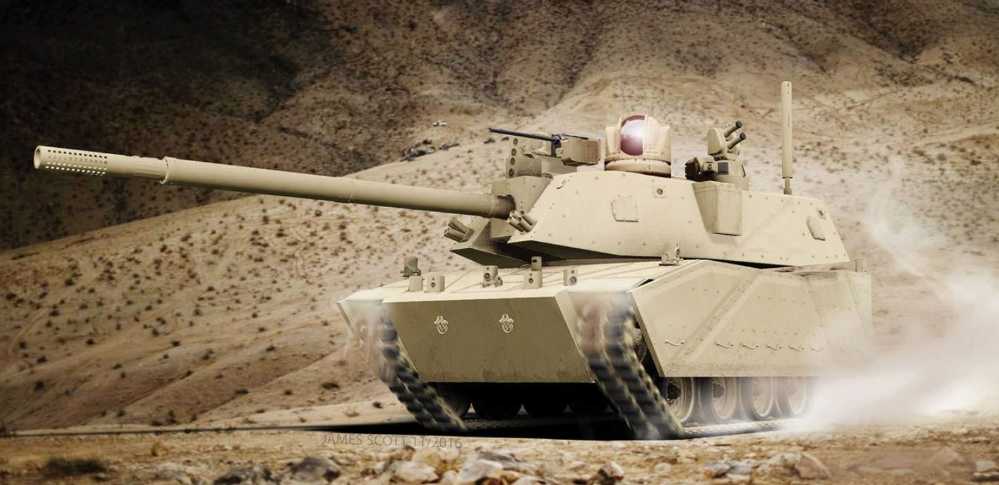
The Russian-Ukrainian war is a hybrid war that combines multiple combat styles. There are trench warfare, human wave charges, and volleys of thousands of artillery fire during the First World War; there are also new concept military operations such as "pseudo-chess operations", cognitive warfare, cyber warfare, and "miracle weapons". In the local situation, Russia attacks and Ukraine defends; in the overall situation, the Ukrainian army is accumulating strength for counterattack, and the source of this strength is tanks, or more precisely, the third-generation main battle tanks of Western countries, such as: "Challenger" 2, M1, "Leopard" 2, etc. In the 100-year history of tank development, tanks have experienced several tests of the uselessness of tanks, such as: the Fourth Middle East War, the Gulf War, the Nagorno-Karabakh conflict, and this Russian-Ukrainian war. Even so, land warfare still requires tanks to charge on the front line, so both Russia and Ukraine are seeking tanks. Since the country’s tank industry is almost paralyzed, Ukraine can only ask Western countries for help. According to the Ukrainian government’s more optimistic statement, the United Kingdom, the United States, Germany, Poland and other countries promised to provide more than 300 tanks in total, but the United States later changed its mind and said that the 31 M1 tanks promised could not be delivered this year. All signs show that it is difficult for the more than 300 tanks promised by Western countries to be fulfilled in the short term, which will undoubtedly drag down Ukraine’s spring and summer offensive.
Does Ukraine really need tanks? To be honest, Ukraine did not rely on tanks to stabilize the situation in its successful defense and counterattack in a year. I even boldly speculate that Western countries sending tanks to Ukraine is likely to be a "smoke bomb" to divert attention. The reason is very simple: the Russian army has lost nearly 2,000 tanks in Ukraine, and Ukraine must know how unreliable it is to rely on tanks as the backbone equipment for the new stage of counterattack. Why did Western countries and Ukraine stage this drama?
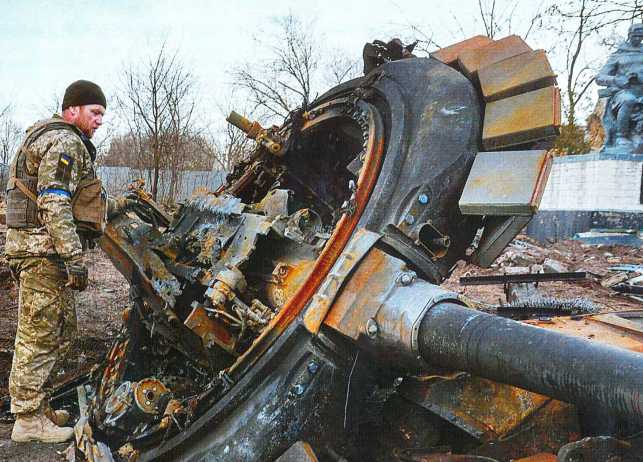
Of course, this was performed for the Russian military leaders to make the other side still foolishly believe that tanks are still the "king of land warfare", so that Russia, which is already in decline, will continue to consume limited war resources on the steel torrent, and let the Russian army send the immature T14 "Armata" to the front line for the Ukrainian army to practice. Because as long as Russia does not have the intelligence and network system advantages that are superior to those of the United States and NATO, no matter how many tanks there are, they will only be destroyed by cheap anti-tank missiles, drones, precision-guided artillery shells and anti-tank mines. Anyway, so far, all signs show that the Russian military leaders’ level of understanding of war is still quite insufficient.
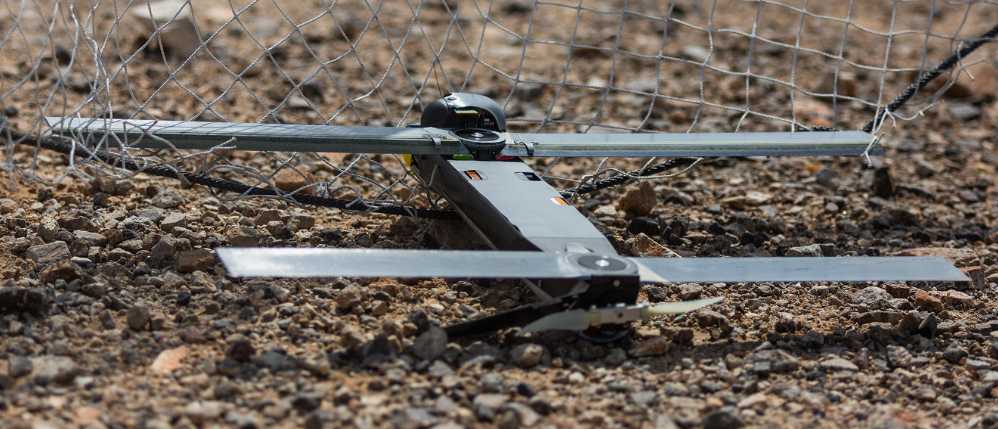
Compared with the timid "performance" when providing tanks, the United States is increasing the supply of drones to Ukraine. On the first anniversary of the outbreak of the Russian-Ukrainian war, the US Department of Defense announced a new $2 billion aid plan for Ukraine. In addition to traditional artillery and ammunition, the aid plan to Ukraine this time will focus on providing more drones, including: "Switchblade" 600 cruise missiles, Altius-600 drones, Jump 20 drones and CyberLux K8 drones. "Switchblade" 600 has appeared on the US aid to Ukraine many times before. After installing the anti-armor warhead, its power is equivalent to the "Javelin" anti-tank missile, with a range of 80 kilometers and a flight time of 20 minutes. The two in the middle are models that the US military is testing and will soon be equipped with. Altius 600 is a small drone developed by Area-l that can be deployed from a launch tube. It can also be transformed into a cruise missile with a maximum range of 444 kilometers and a flight time of 4 hours; Jump 20 is a fixed-wing drone that can take off and land vertically. It is similar in size to the US Army’s current RQ-7 "Shadow" reconnaissance drone and will replace the latter. It has a range of 185,000 meters and a flight time of 14 hours. No details were released for the last model, except that it is a handheld quadcopter drone.
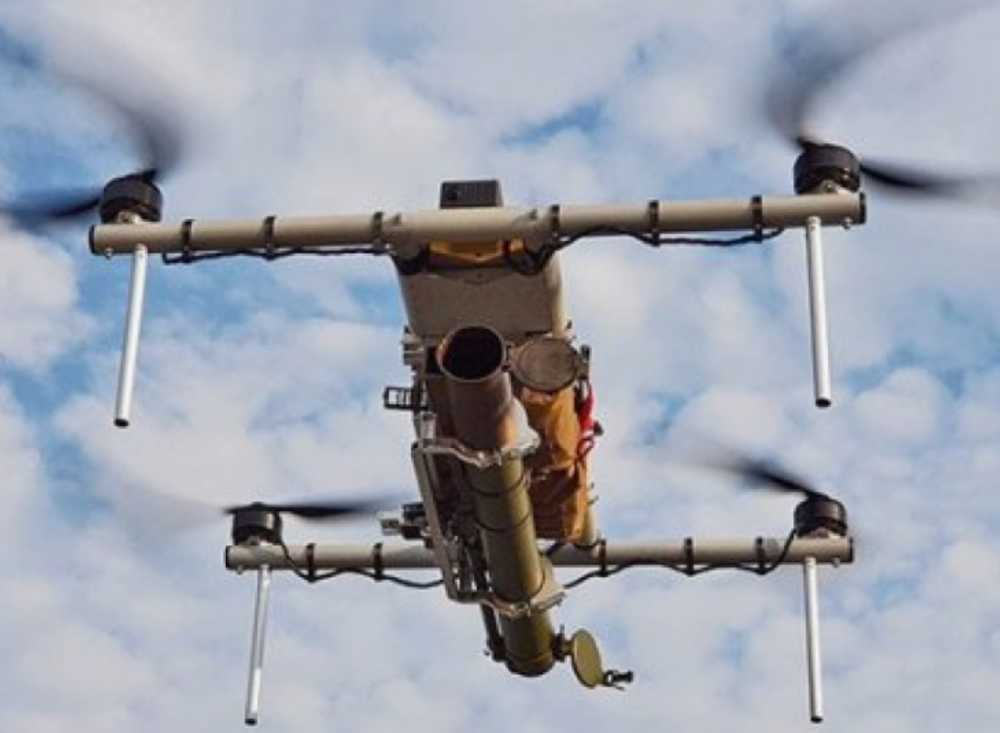
Will Ukraine’s counterattack rely on tanks or drones? Let’s start with the cost and exchange ratio. If a new Leopard 2A6 is manufactured, the purchase price will start at at least $7 million, and the M1A2 will start at $8 million, not to mention the large amount of ammunition, fuel and other parts consumed. It will also take several months to train tank crews, maintenance and support personnel. The first batch of small drones provided by the United States, the Switchblade 300, cost only $6,000, and other drones of similar levels must be at a similar level. Therefore, the exchange ratio of one drone to one main battle tank is at least 1:1000. UAVs have an absolute exchange ratio advantage. If the Ukrainian army exchanges 1000 drones for 1000 Russian tanks, the outcome will be decided.
From the most basic combat mode, one tank requires four combat personnel to be in the position inside the vehicle, with high concentration, real-time observation of the external environment and threats, and accurate shooting with artillery and machine guns. A group of logistics personnel are also needed to provide ammunition and maintenance. Moreover, Western countries must provide Ukraine with at least five types of tanks, which will cause a lot of coordinated combat and logistics problems. What’s more, the tank is a flat assault platform. It cannot respond to threats in a three-dimensional environment, that is, it cannot deal with aerial targets, nor can it attack targets in trenches and behind obstacles.
UAVs usually only need one operator, and the operator does not need to be exposed. When attacking, it only needs to lock the target with the aiming line of the image sent back by the onboard sensor. Small and micro drones require very few maintenance personnel, usually only the main and deputy operators are responsible for them. In special cases, they can ask for help from experts in the rear remotely through the network. Compared with tanks, drones are a three-dimensional assault platform. They usually search and attack targets from a God’s perspective, making the targets invisible.
The art of war is cunning. On the one hand, the United States continues to provide Ukraine with various small and micro drones, but on the other hand, it "rejects and welcomes" the tanks that Ukraine urgently needs: first, it says that Germany will give tanks first, and then the United States will give them; then it says that it will provide 31 M1 tanks; finally, it says that the promised tanks will not arrive this year. The author believes that the latest military aid from the United States shows its determination to support Ukraine in winning the Russian-Ukrainian war in the way it wants - unmanned systems.
Different logics of using drones by Russia and Ukraine
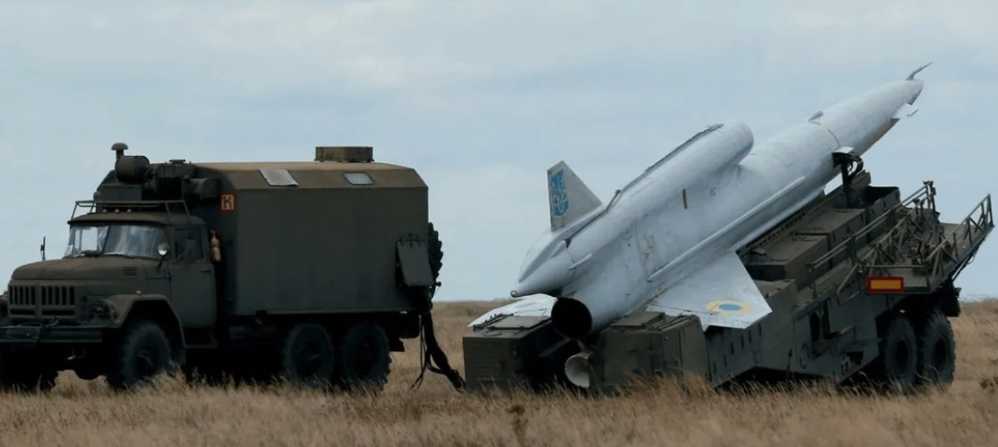
In the Russian-Ukrainian war, both sides deployed and used drones in large numbers, with dozens of models and more than 4,000 drones. However, the difference is that the Russian army mainly deployed and used drones at the campaign level, such as: Orion, Sentinel, Sea Eagle-10, Lancet and Iranian-made Geranium cruise missiles. In contrast, the Ukrainian army deployed and used fewer drones at the campaign level. In the early stage, it only imported a small number of TB-2 drones from Turkey, and recently it has made its own Tu-141 and UJ-22. Suicide drones. The Ukrainian army deploys and uses more drones at the tactical level, and the models are basically small and micro drones, such as: "Phoenix Ghost", "Switchblade" 300/600, "Black Hornet" micro drones, and dozens of civilian aerial photography drones from some neutral countries.
Objectively speaking, there is no difference between the centralized deployment and use of drones at the campaign level and the decentralized deployment and use at the tactical level, but the problem is whether such deployment and use can coordinate the intelligence, surveillance, reconnaissance (ISR), firepower and manpower and other military resources of the joint forces at the campaign level and the tactical level, rather than existing in isolation. This is the top-level logic of the centralized deployment and use of drones at the campaign level.
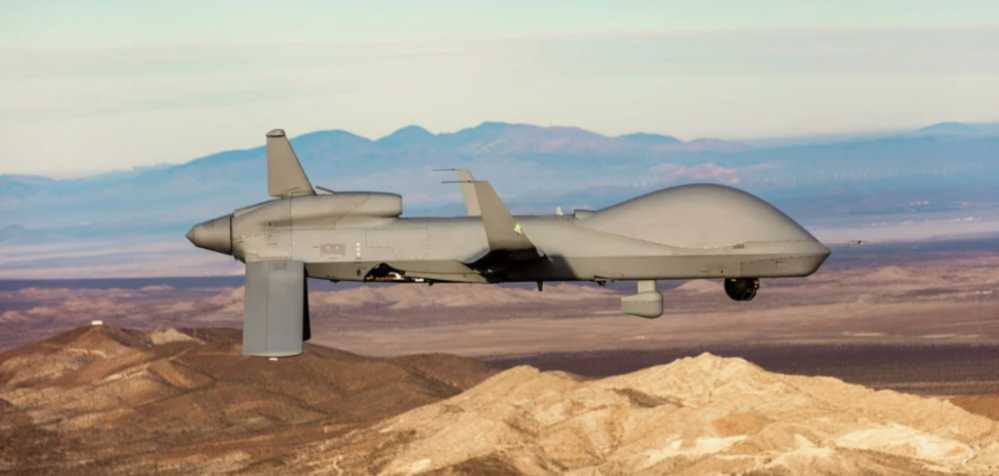
In reality, this top-level logic requires that campaign-level drones should be able to provide near-real-time ISR for campaign forces, with the ability to destroy time-sensitive targets. For example: The US military often uses MQ-1/MQ-9 The UAV performs front-line reconnaissance missions in the war zone and transmits real-time images of the battlefield to operators thousands of meters away through communication satellites. The Russian army lacks this capability, not only because of the lack of platforms, but more importantly, the lack of reliable satellite communication links and precision sensors. This is the difference between "Orion" and MQ-9. The real gap.
This lack of ability has caused the Russian army’s combat forces to be unable to keep up with the rapidly changing battlefield environment. The promised "blitzkrieg" is always "one step behind", and finally can only withdraw or collapse. For example: In the early days of the Russian-Ukrainian war, anyone with a little military knowledge would know that the Russian army’s convoys stretching for dozens of kilometers on the road would become an excellent target for the Ukrainian army to ambush. Even the Russian army’s announcement of a short state of silence is ridiculous, because this state of silence provides an excellent time buffer for the integration and distribution of Western intelligence resources, and the Ukrainian army’s counterattack forces are likely to be organized at this time. When the Russian army turned to the focus of the offensive in eastern Ukraine, the Russian intelligence system, including drones, could not provide the Ukrainian army’s long-range artillery positions and firing areas, resulting in a large number of troops and baggage rear assembly points being destroyed.
Of course, the embarrassing situation of the Russian army has improved slightly after Surovikin took charge. But this improvement is actually an illusion, because Surovikin did not make up for the shortcomings of the Russian army’s drones-overwhelming the Ukrainian army’s drones on the front line, but took a different approach and used long-range missiles and cruise missiles to bomb Ukrainian cities. In order to reduce the cost of the war, the Russian army used a large number of Iranian-made "Geranium" cruise missiles. Almost all major cities in Ukraine, including Kiev, sounded shrill air defense alarms for dozens of days, and many important cities were cut off from water, electricity and heating. The Russian army’s intention is very clear, that is, to force the Kiev regime to surrender by attacking the city with high pressure, but this goal has not been achieved.
Technically, the "Geranium" is essentially a low-tech cruise missile. Compared with similar Western products, many of its parts in materials, navigation, and power are purchased from the international civilian market. This means that its technical standards do not meet the Western military level at all. For example, "Geranium" uses civilian GPS navigation, which is not accurate and cannot hit moving targets. Its engine is very noisy and is nicknamed "small motorcycle". It is easy to be located and intercepted. However, "Geranium" is not without merit. Its extremely low cost and huge destructive power (with a 50 kg self-forged fragmentation warhead) should not be ignored.
In contrast, the Ukrainian army is more dispersed in the deployment and use of drones at the tactical level. On social media, Ukrainian soldiers can often be seen using small and micro drones to harass the Russian army. Some throw bombs into the cabins of tanks and armored vehicles, and some tie RPGs to directly die with the Russian army.
Why can the Ukrainian army use drones so skillfully at the tactical level? During the 2014 Donbass conflict, although the Ukrainian army also had a small number of drones, they made no achievements on the battlefield. Instead, Russian drones provided aiming and correction for artillery, and the Ukrainian army 7-8 A brigade was surrounded and annihilated by the militia and Russian troops in eastern Ukraine. After that, some knowledgeable people in Ukraine began to introduce and modify commercial drones and provide them to the grassroots units of the Ukrainian Army. A large number of drone operators were trained, even including some teenagers. The accumulation of 8 years has allowed the tactical deployment and use of drones to "take root" in the grassroots units of the Ukrainian Army.
These seemingly piecemeal drone operations are very different from the centralized deployment and use of drones by the Russian Army. In summary, there are three major advantages to deploying and using small and micro drones in grassroots units, which is also the underlying logic of Ukraine’s deployment and use of drones. First, it avoids It has opened up the "edge" of the relative advantage of the Russian military’s campaign-level drones, established advantages in the field of drones where the Russian military’s grassroots units are relatively scarce, and truly achieved "you fight yours, I fight mine". Moreover, it is very suitable for distributed operations with dispersed forces. Facing a strong enemy, the Ukrainian army can only break up into small pieces, and larger drones cannot adapt. Small and micro drones can accompany small units and do not require the take-off and landing support and maintenance required for campaign-level drones. Finally, small and micro drones are difficult to counter. At present, standard air defense and anti-missile weapons are difficult to effectively deal with small and micro drones. Such drones can easily escape countermeasures by flying close to the ground and covering each other.
After the outbreak of the Russian-Ukrainian war, drones from Western countries poured into Ukraine, along with networked tactics. At present, the Ukrainian army has decentralized the deployment and use of isolated drones at the tactical level, upgrading them to a more extensive simplified version of "networked unmanned system warfare". In March 2022, the Russian and Ukrainian armies fought in Nikolayev Oblast. The Russian army was fighting for the southern town of Voznesensk in the state, where there were about 35,000 Ukrainian civilians, most of whom were actively providing intelligence to the Ukrainian government. They used mobile phone software to upload the number, coordinates, and even equipment models of the Russian army to the network platform provided by the Ukrainian government in a very short time. The Ukrainian soldiers nearby "took orders" like the drivers of the Didi Taxi APP. Some soldiers approached with portable anti-tank missiles to ambush, and more soldiers hid in trenches to operate drones.
In the end, the Russian army was defeated, and dozens of tanks, armored vehicles and important equipment were not taken away in time, and a Mi-24 armed helicopter was lost. Such battles are numerous in the Russian-Ukrainian war. This is only the first defeat of the Russian army and the first success achieved by Ukraine with "networked unmanned system warfare". It can be said that the combination of drones and networking plays an increasingly important role in modern warfare, and there are more and more ways and means of use. However, the underlying logic of the Ukrainian army’s dispersed deployment and use of drones is not enough to support its victory in a more ambitious strategic counterattack. This is because the 1,000-kilometer contact line between the two armies in the four states in southeastern Ukraine occupied by the Russian army has gradually become resilient enough. It is no longer the fragile Russian convoy at the beginning of the war, but a solid defense line that integrates a large number of anti-tank obstacles, trenches, artillery and reserve forces. Small and micro drones may be able to cause local damage to such targets, but they cannot paralyze them globally. The Ukrainian army also needs to centrally deploy and use campaign-level drones and long-range precision strike weapons. This is probably the main reason why the United States is considering providing Ukraine with MQ-9 medium drones and extended-range JDAM precision-guided bombs.
Conclusion
The Russian-Ukrainian war has entered its second year. Both Russia and Ukraine and Western countries are investing more war resources at all costs. The high-intensity war of attrition has tempered every piece of weaponry including tanks and drones, and has trained every soldier, and has also guided the direction of future military changes. This war provides us with an excellent perspective on a future war model - networked unmanned system warfare.