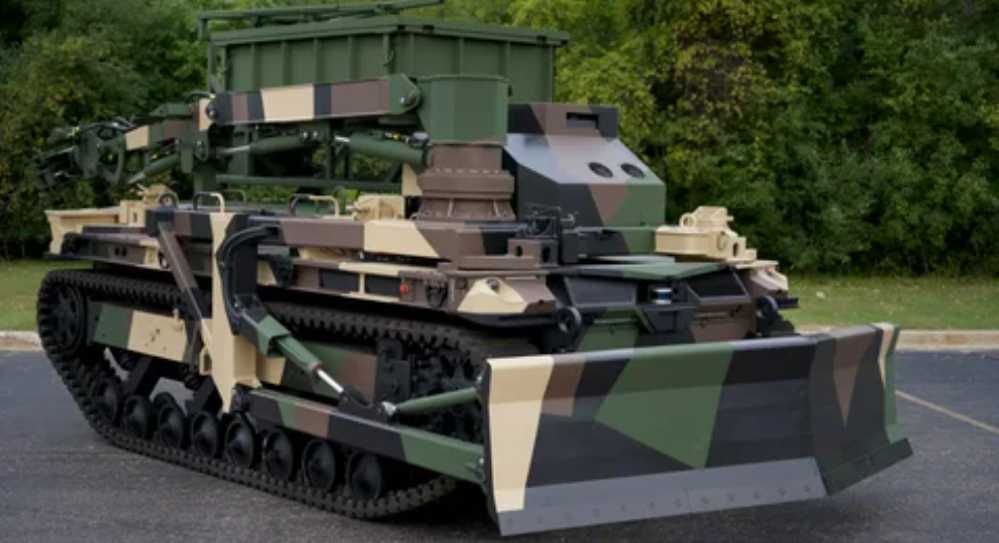

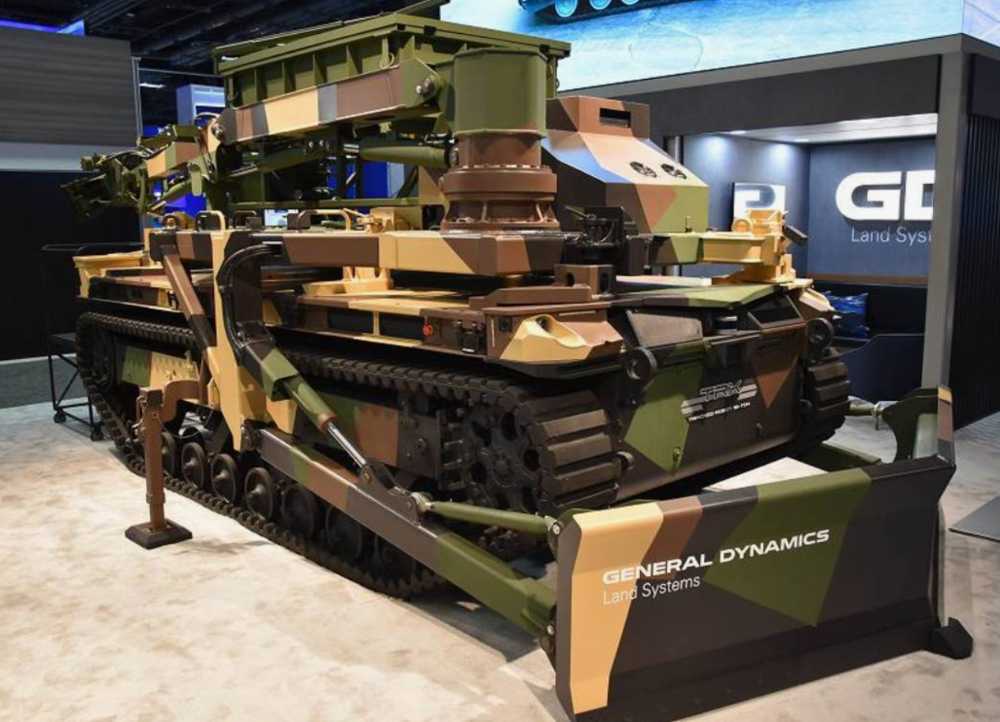
At the 2022 Association of the United States Army Annual Meeting (AUSA2022), General Dynamics Land Systems (GDLS) of the United States exhibited four next-generation armored combat vehicles, namely: "Abrams" X main battle tank, "Stryker" X wheeled armored vehicle, "Stryker-Leonidas" high-energy microwave anti-UAV system, TRX "Destroyer" unmanned armored engineering vehicle. The first three types have received high attention because they are combat vehicles, but it is not known that the value of TRX "Destroyer" as field engineering equipment is also critical.
Autonomous vehicles use sensors and artificial intelligence software to perceive the environment, identify obstacles, fuse sensor data, navigate and communicate with other vehicles. The technology is now mature enough. Major military powers are deploying military autonomous or semi-autonomous vehicles, and one of the main uses of these military autonomous or semi-autonomous vehicles is in the field of military engineering. You should know that the world’s land can be roughly divided into the following types: 40% of the area is cold areas, 33% is deserts and related areas, 21% is humid and hot areas, and 6% is temperate areas. Generally speaking, these areas are the scope of polar operations, desert operations, tropical operations and conventional operations. A considerable part or even most of the modern combat principles are formulated based on the experience of conducting operations under ordinary environmental conditions. Areas that meet the characteristics of conventional operations only account for about 1/16 of the total land area of the earth. In fact, the effectiveness of military equipment is related to the terrain, weather and artificial obstacles unique to the war zone, and the extent to which national power can play its role and effectiveness in a certain area also depends on the accessibility of the area. A country’s ability to support and maintain its international goals must be constrained by environmental factors, and the amount of combat costs also depends to a large extent on the environment. This means that investing advanced technology and effective resources in field engineering equipment is often a cautious choice for major countries.
At the 2022 Annual Meeting of the Association of the United States Army (AUSA2022), the reason why General Dynamics Land Systems of the United States put the TRX "Destroyer" unmanned armored engineering vehicle on a par with the new generation of "Abrams" X main battle tanks, "Stryker" X wheeled armored vehicles, and "Stryker-Leonidas" high-energy microwave anti-UAV systems is exactly this.
The replacement of the M9 armored bulldozer
First of all, we should make it clear that the main value of the TRX "Destroyer" is that it is a direct replacement for the M9 armored bulldozer. In 1986, the US military began to equip the engineering company with an engineering vehicle, which is the M9 armored bulldozer. Its functions are the same as those of conventional bulldozers, but it has amphibious capabilities, armored protection, and strategic deployment considerations. The M9 is an improvement on the Universal Engineering Tractor (UET) equipped in the 1960s. It was developed by the US Mobile Equipment Research and Development Center in 1958 with a total cost of US$210 million. The prototype was produced in January 1975, and the U.S. Army Test and Evaluation Command completed the test and evaluation work in August 1976. The finalization was approved in February 1977. In early 1982, the project was handed over to the Army Tank and Motor Vehicle Command for management. In the same year, 15 units were produced by Pacific Automobile and Foundry Company, and later by BMY Company. As a field engineering equipment, the M9 weighs about 24 tons, is 6.25 meters long, 3.2 meters wide, 2.7 meters high, and is driven by one person. The basic structure of the M9 is welded aluminum. The engine, transmission system and cab are located at the rear of the vehicle, while there is a 6.7 cubic meter bulldozer at the front. The armor is made of welded aluminum and selected steel, and consists of aramid laminates. The armor with 8 vision blocks covers the cab. Its power compartment is at the rear of the vehicle body, driven by a Cummins V903C8-cylinder diesel engine, which can output 295 horsepower. The walking device is tracked, with the driving wheel at the rear, and there are 4 pairs of road wheels. The vehicle uses hydraulic pneumatic suspension, and the driver can adjust the vehicle body to pitch, roll and other actions. The maximum road speed of the vehicle is 50 kilometers per hour. It also has full water driving ability, with a maximum water speed of 5 kilometers per hour. However, the water driving function is generally not used, and the US military basically does not maintain the relevant equipment when using this equipment at overseas bases, so many M9s actually lose the ability to drive on water. The M9 is also equipped with a winch with a pulling force of 11 tons, and it is not a bad idea to occasionally play the role of an armored rescue vehicle. Considering its use in dangerous confrontation environments, the M9 is also equipped with armor protection. Its basic armor is welded and riveted aluminum armor, and the outside is covered with aramid layer and steel plate. This can also be regarded as a composite armor, but its protection ability is not strong. It can only resist the damage of small-caliber ammunition and artillery fragments. The vehicle provides three-proof capabilities and can operate in special environments. At this time, the driver can observe the outside through the 8 periscopes on the top hatch. The M9 is generally not equipped with weapons, but it is entirely possible to install a machine gun outside the driver’s hatch, and there are also smoke bomb launchers.
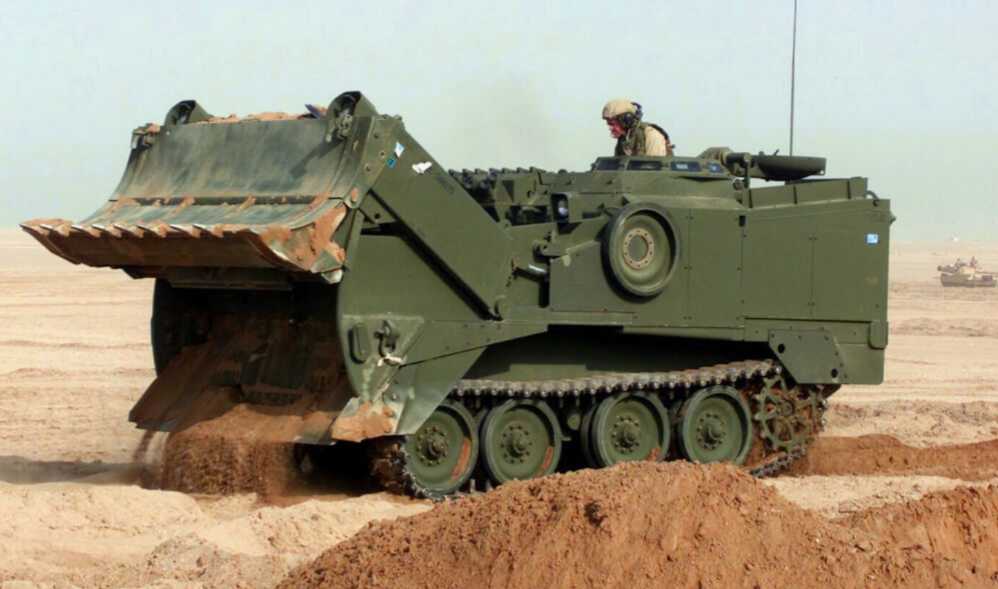
In terms of the standards of the times, the M9 has advanced comprehensive performance and can complete multiple tasks such as supporting troop mobility (building roads, filling craters, clearing obstacles, building assault airports, etc.), counter-mobility (building obstacles, carrying out sabotage operations, etc.) and survivability (building position engineering and command fortifications, etc.). The vehicle body is entirely welded with aluminum decks, and the front of the vehicle is equipped with a scraper bucket, a hydraulically operated baffle and a mechanical ejector. The bulldozer blade is installed on the baffle. Bulldozer and scraper operations are achieved by lifting or lowering the head of the vehicle through a hydraulic suspension device. The suspension device can also tilt the vehicle to work with a corner of the blade. The bulldozer operation capacity is almost twice that of a general bucket scraper. The US Army is equipped with about 450 M9 armored bulldozers, mainly equipped to engineering companies, and generally one company is equipped with 6 vehicles. These engineering vehicles have participated in many military operations with the US military, such as Operation Desert Storm. They have proven to be very reliable in actual combat. They can be quickly deployed with large transport aircraft and can also march quickly with mechanized troops. They are still one of the main equipment of the US engineering forces.
However, although the M9 is an engineering service equipment, the tasks it performs are high-risk, which creates space for it to be replaced by an unmanned robotic device. Robots and automated systems can replace humans to perform "boring, dirty or dangerous" military tasks in hostile environments. Although people have doubts about the deep involvement of AI-driven military systems in military operations. It is generally believed that the potential risks faced by military AI systems can be divided into three categories: for example, at the ethical and legal level - how can robotic systems (especially autonomous weapons) comply with the relevant provisions of the law of war; it is difficult to hold AI systems accountable when they cause accidents; AI systems pose a potential threat to human rights and personal privacy; and improper use of AI will also lead to certain risks. For example, at the operational level, damaged training data can have a great impact on the performance of artificial systems; bias may occur when humans misuse the system or misunderstand its output, or when operators lack trust in the system; artificial intelligence systems are susceptible to interference, deception or intrusion by malicious actors. In addition, at the strategic level, military artificial intelligence systems may lower the threshold of war, accelerate the escalation of the situation, trigger an artificial intelligence arms race, and undermine strategic stability.
The famous scientist Hawking is highly vigilant about the prospects of military use of artificial intelligence: "Unless we prepare in advance and avoid potential risks, artificial intelligence may become the worst event in the history of human civilization. It will bring danger to the entire human race, such as the emergence of lethal autonomous weapons." The "lethal autonomous weapons" Hawking mentioned are intelligent weapon systems with autonomous "shooting power", which are what scientists call "killer robots", and the most effective way to "avoid potential risks" does not actually depend on technological development, but on human decisions. But the subtle thing is that these concerns are unnecessary for an AI-driven field engineering equipment…
TRX "Destroyer" background and main technical features
The launch of the TRX "Destroyer" 7 unmanned armored engineering vehicle by General Dynamics Land Systems (GDLS) is not a spontaneous investment, but is closely related to the US Army’s combat planning. In order to reduce the risks faced by soldiers, the US military began to develop a robot combat vehicle with special uses in 2019. This is also part of the US Army’s "Next (RCV) Generation Combat Vehicle" plan. The project leader compared this robot combat vehicle to a "ghost army." This robot combat vehicle does not require a human driver, is more lethal and survivable than current similar combat platforms, and is smaller, lighter, more fuel-efficient, and easier to deploy. The US military hopes to use this combat vehicle to complete reconnaissance and fire support tasks on the battlefield to reduce casualties in non-traditional and high-risk combat environments, while countering enemy main battle tank forces. Robotic combat vehicles include three types of vehicles with different chassis weights: light (RCV-L), medium (RCV-M) and heavy (RCV-H). The main tasks of these robotic combat vehicles are: reconnaissance of the battlefield, response to small-scale conflicts with humans or other robot scouts, and full-scale combat with fully armed enemies. RCV-H is the largest combat platform of the three types of robotic combat vehicles, weighing 20 to 30 tons, and can carry large-caliber direct-fire artillery or other heavy weapons. The research and development agency expects to conduct actual combat tests on this type of robotic combat vehicle in 2023. In addition, this combat vehicle can also be equipped with various sensor components and can cooperate with drones, which is also in line with the concept of "multi-domain warfare" proposed by the US military in recent years. At present, the US Army is using the M113 armored personnel carrier to simulate the RCV-H and convert it into an unmanned combat vehicle. The focus of this work is to place the "wingman" robot combat vehicle in a mixed "manned" and "unmanned" formation. The core of the formation is a manned combat vehicle, which will serve as an operating platform for controlling multiple robots. However, RCV-H also has some disadvantages, such as the body is too heavy to transport. A C-130 Hercules transport aircraft can only transport one RCV-H combat vehicle by air.
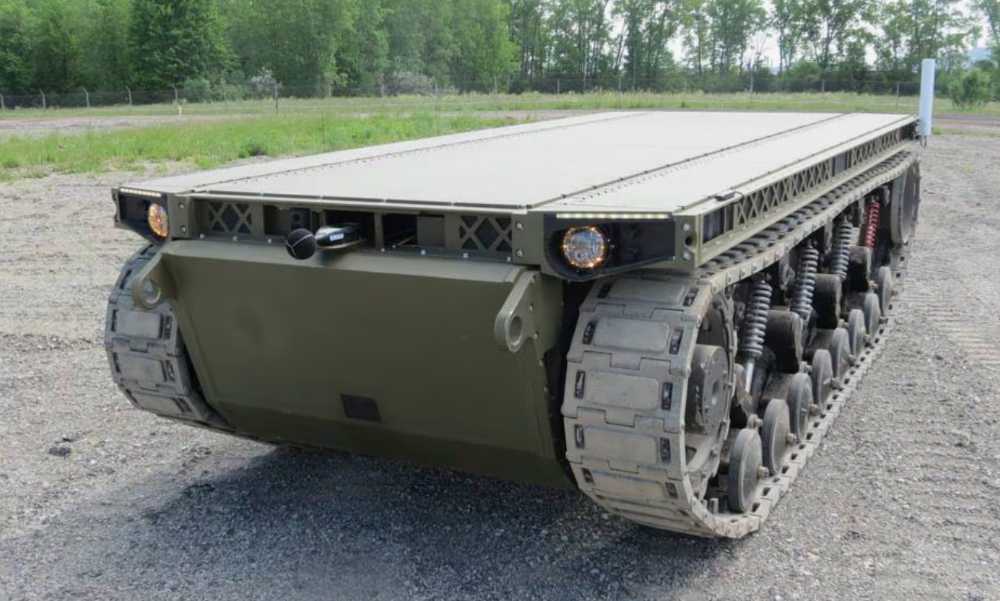
RCV-L is a light platform with a total weight of about 7 tons, a travel speed of 40 kilometers per hour, and can carry 544 kilograms of payload. RCV-L can carry a complete set of detection systems to guide other platforms to carry out precision strikes on targets. RCV-L can also carry anti-tank missiles or light low-recoil weapons. Because RCV-L is low-cost and light-weight, it is defined as a consumable in war. It can be quickly deployed to the battlefield by helicopters and transport aircraft. The US Army plans to purchase 624 RCV-Ls by the end of 2024. However, it is precisely because of the RCV-L’s lighter combat weight that its battlefield value should not be overestimated. The US Army’s attitude of treating it as a consumable also shows this.
In fact, compared with the heavier or lighter RCV-H and RCV-L, RCV-M may have the broadest application potential and is the most valued by the US Army. RCV-M is a medium-sized platform weighing 10 to 20 tons. A C-130 Hercules transport aircraft can transport 2 to 4 vehicles by air. At the same time, RCV-M is also a general platform that undertakes a wide range of tasks from direct fire confrontation, indirect fire support to logistics engineering. The US Army’s goal is to equip the first robot combat vehicle unit in 2026. However, due to the ethical confusion about autonomous or semi-autonomous military vehicles as combat platforms (the decision to "open fire" on the battlefield is the result of comprehensive consideration of a large number of complex factors. Existing technology cannot even comprehensively list the factors that the human mind must consider when making this decision, let alone build corresponding mathematical models and conduct logically rigorous simulation demonstrations. For example, the Geneva Convention stipulates that wounded soldiers, medical soldiers, parachuting pilots and soldiers who have lost their ability to resist shall not be shot. How can intelligent robots identify these people and how to determine whether the opponent has lost the ability to resist? These are insurmountable technical and ethical complex obstacles at least for now), the US Army prefers to make its non-direct combat equipment eligible for service first, which means that the TRX "Destroyer" unmanned armored engineering vehicle, a derivative model of the RCV-M general chassis, will receive special attention from the US Army.
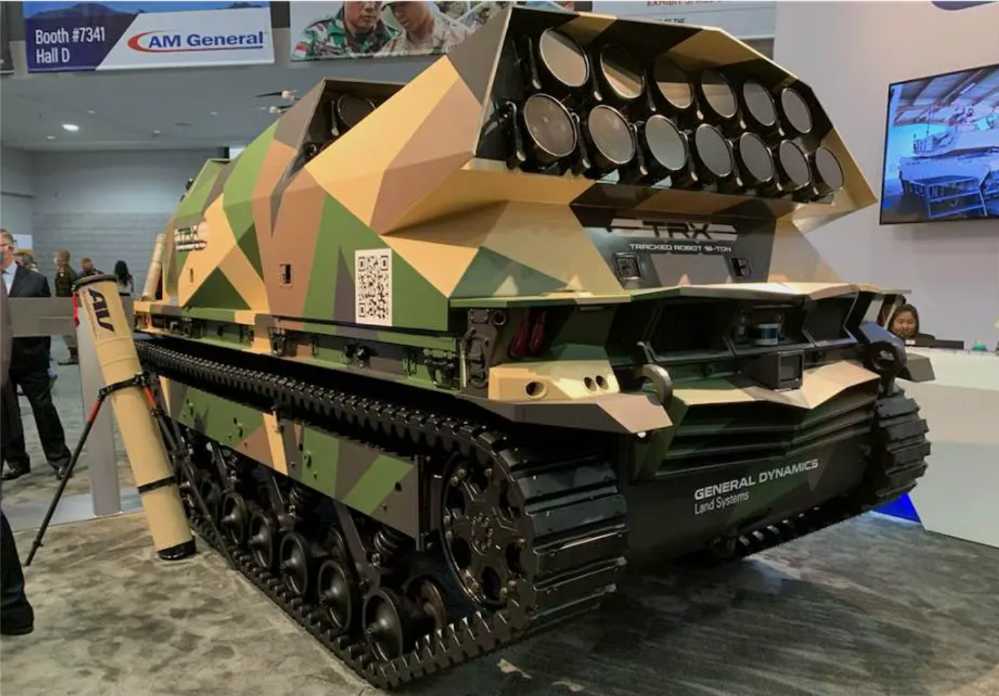
TRX "Destroyer" unmanned armored engineering vehicle is built on the TRX universal unmanned platform. This is a robotic vehicle developed by GDLS and selected by the US Army for the Small Multipurpose Equipment Transport (S-MET) platform. TRX consists of a multi-purpose tracked chassis platform and a flat deck that can accommodate any type of mission equipment package. The robotic vehicle platform is powered by a hybrid power unit based on a diesel engine, batteries and electric motors, which is sufficient to ensure high mobility on the ground and provide power for platform systems and payloads. The TRX platform itself is positioned to provide excellent multi-mission performance in countless key battlefield roles, including direct and indirect firepower, autonomous replenishment, complex obstacle breakthroughs, counter-unmanned aerial systems (C-UAS), electronic warfare (EW), reconnaissance, and other battlefield missions. For example, as early as AUSA2021, GDLS launched a "Switchblade" cruise missile launcher based on the TRX platform. The vehicle is equipped with 4 sets of launch tubes, of which 2 sets of 13-unit launch tubes are used to launch the larger "Switchblade" 600 UAV, and the other 2 sets of 12-unit launch tubes can launch the smaller "Switchblade" 300. The TRX cruise missile launcher displayed at AUSA2021 is also equipped with support facilities located at the front of the vehicle, which can accommodate a tethered UAV, which can be used to perform reconnaissance missions. The TRX cruise missile launcher demonstrates one of the mission capabilities of the TRX universal unmanned platform as a direct combat platform, and the "Destroyer" unmanned armored engineering vehicle, also based on the TRX platform, demonstrates its potential value as an engineering equipment.
As an unmanned version of the M9 armored bulldozer, the engineering equipment of the TRX "Destroyer" unmanned armored engineering vehicle adopts a modular design, including HLA (high lift adapter), FWMP (full width mine plow), CDBB (combat bulldozer), ROBS (rapid ordnance removal system) and SMP (lane marking system), which enable it to quickly clear various obstacles on the battlefield. All these equipment are interchangeable and can be quickly installed or disassembled to meet mission requirements. For example, the linear demolition charge system (LDCS) of the TRX "Destroyer" is placed in a large armor plate box and transported by the TRX "Destroyer" platform using a simple wheeled trailer. The projection rocket used by the LDCS is a 5-inch MK22Mod4 rocket, and the rocket is towed behind it by the M58A3 flexible polyethylene hose line charge. The so-called "sausage link" line charge is because the hose line charge looks very much like a string of sausages. The line is 107 meters long and contains 2.2 kg of C4 explosives every 30 cm, with a total charge of 794 kg per line. The line charge is connected to the rocket via a nylon rope and can be projected up to 91 to 137 meters. After being detonated in the minefield, the explosive blast can clear a safe lane 100 meters long and 8 meters wide.
HLA is another engineering equipment that is crucial to the role of the "Destroyer" unmanned armored engineering vehicle based on the TRX platform on the battlefield, because it allows the connection of a mine plow and a bulldozer, allowing for a quick exchange between the two pieces of engineering equipment, and even has a complete hydraulic throwing system in case the blade or mine plow needs to be removed in an emergency. Adapter for full-width mine plow or combat bulldozer, that is, these two equipment are installed on the front of the vehicle body through a high-lift adapter. It allows the rapid conversion of the above two equipment, and through its integrated hydraulic throw-off device, it can even quickly throw away the equipment installed on the upper side in an emergency. The entire adapter consists of an upper cross shaft and a bottom fixing block. The upper cross axis contains the locking point and release pin, which is connected to the front armor plate of the TRX universal platform. The bottom of the adapter is a fixed block that connects it to the lower equipment. This device can be maintained, connected and operated by only one person.
TRX "Destroyer" unmanned armored engineering vehicle The full-width mine plow installed by HLA is usually used in areas saturated with minefields with less explosives (wide refers to the path that the plow spans and clears the width of the main vehicle). The mine plow is connected to the front of the main engine and is pushed during raking. It is operated by the driver through the multi-function control unit (MCU) at his position. The mine-clearing type can be raised and lowered by hydraulic power provided by the built-in electric hydraulic system for loading and operation. The engineering equipment that can be used by the TRX "Destroyer" unmanned armored engineering vehicle also includes an obstacle marking system (OMS), also known as a lane marking system (LMS), which is installed on the engine deck behind the superstructure. The OMS uses an electro-pneumatic distribution system to fire darts at the ground at a controllable time interval or distance. In addition to marking safe lanes, these signs are also used to clearly mark dangerous obstacles or electrified minefields on both sides. There is a marking system on each side of the vehicle. 50 darts are placed in the dispenser, each dart is 1 meter long, with a high-visibility flag on the end, which can also be replaced with a fluorescent, reflective or LED enhanced rod. The pneumatically launched darts can be triggered manually or automatically. They can be used on a variety of surfaces such as sand, soil and gravel, and can even penetrate asphalt and concrete.
The advantage of the TRX "Destroyer" is that it can clear routes or minefields more efficiently than the M9, because it does not actually need to find improvised explosive devices or minefields, all it has to do is force its way directly through these restricted areas. Moreover, due to the use of an unmanned platform, there is no need to consider casualties, so the tactical options are much greater than the M9. In fact, compared to the M9 armored bulldozer, the real innovation of the TRX "Destroyer" is that it is a "meta battlefield equipment" driven by artificial intelligence. The concept of the meta-battlefield not only comes from the relatively sci-fi meta-universe, but more importantly, it comes from the networking, informatization, and intelligent construction in various fields over the years, which makes it possible for military activities to smoothly link reality and virtuality and deeply interact. In particular, with the development of battlefield perception and cognitive technology, our perception, understanding, and cognition of the battlefield and battlefield elements have become more comprehensive, more specific, and more accurate. The U.S. Army defines the meta-battlefield as a military activity space jointly constituted by the real world and the virtual world, which is connected to military equipment through virtual reality technology and has the characteristics of networking, informatization, and intelligentization of human-computer interaction. It can be considered that the meta-battlefield is essentially an organic unity of the real world and the virtual world. From the perspective of its form of expression, the meta-battlefield is the advanced stage of the meta-universe. The application of the meta-universe concept and related technologies in the military field is by no means based on virtual reality simulation of war, nor should it be based solely on the combination of reality and virtuality to complete battlefield information perception and understanding and command and control of military activities. The goal of the meta-battlefield concept design and related technologies should be to participate in military activities by relying on the deep integration of technologies such as virtual reality, parallel battlefields, and digital twins, and to complete real-world military activities as an important military means and achieve military goals. The main difference between the meta battlefield and the meta universe is that most of the scenes and facts in the meta universe cannot be reset, reproduced, or changed in important attribute information; the things in the virtual scenes of the meta battlefield can reset, reproduce, and change most of the attribute information according to the process needs in order to meet the needs of future combat effectiveness, but most of the facts cannot be reproduced.
For example, the loss and consumption of important weapons and equipment will completely disappear in the meta battlefield. The elements in the meta battlefield are unique, and the elements of the virtual world and the real world correspond one to one. The attribute of the elements in the virtual battlefield is the subsidiary information of the real world elements being detected, perceived, understood, and recognized. In order to ensure a smooth transition in multiple scenarios, the virtual world must establish a unique information database based on real entities to complete the understanding and cognition of the entire life cycle and process of real entities. The construction idea of the meta battlefield should be to achieve the organic unity of deep connection and interaction between networked, informationized, and intelligent weapons and equipment and virtual reality. Real-world weapons, equipment, computers and other external devices serve as the hard support of the physical domain of the meta-battlefield, and networking, informationization, intelligent communication, computing and cognition technologies serve as the soft support of the information domain of the meta-battlefield, jointly building a complete meta-battlefield. In the joint combat system, information dominance is the technical support for building an informationized combat system. Similarly, informatization is also an important part of the meta-battlefield.
Meta-battlefield information is a comprehensive type of information obtained in the real world through intelligence, reconnaissance, early warning, surveillance and other perception means, which is reflected in the virtual reality through the actual deployment of enemy and our forces. Through intelligent means, the battlefield situation is comprehensively judged, focusing on the impact of changes in the battlefield situation of both sides on combat operations in the meta-battlefield, and taking into account the impact of changes in the strategic environment and the natural environment, social environment, and information environment on combat operations. In the whole process, it is also necessary to iteratively add understanding information based on human cognition, and finally rely on the meta-battlefield system to implement real-world military activities and achieve military goals.
It plays an important role in the transformation of the US Army
Since the end of the Cold War in the 1990s, the US Department of Defense has always focused on acquiring information, networks and other advanced technologies in the transformation of the army, rather than establishing a new force organizational structure and weapon platform. However, there is an exception, that is, the "Modular Brigade Combat Team" (BCT) plan proposed by the US Army between 2003 and 2004, which is being continuously optimized and reconstructed. It aims to make the army more flexible and agile, enable rapid deployment of overseas missions, and better implement current regulations and conduct combat operations in complex combat environments in the future. This new type of brigade combat team is different from the old-style combat brigade embedded in the division level and performing basic support tasks. It is a force that fully integrates combat and support functions. It can be deployed on its own as needed and used according to different formations on the battlefield. This modularization has brought great changes to the command and control structure, combat support and battlefield service support of the US Army, using the high-quality advantages of the brigade combat team to offset its low number disadvantage. However, with the end of the US war on terror, the shift of its strategic focus, and the resurgence of great power competition, in order to adapt to the more complex combat environment in the future, the US Army is now repairing the deficiencies and legacy issues in the previous round of reforms for the modular force structure reform that was effective at the beginning of this century.
The modular force construction that the US Army began in 2003 actually partially adopted the concept of brigade-based divisions in the digital force experiment conducted in the 1990s. The new BCT is a combined arms force, similar to the regiment combat team (RCT) of the US Army during World War II, but it is incomparable in logistics, management and intelligence. In terms of intelligence, a reconnaissance battalion was added; in terms of logistics, combat service support is the responsibility of the brigade service support battalion, including a maintenance company, a distribution company, a medical company and four frontier support companies. After modularization, the previous six organizational structures, namely armored cavalry regiment, airborne brigade, air assault brigade, heavy brigade, Stryker brigade, and light infantry brigade, were simplified to three types - infantry brigade combat team, Stryker brigade combat team and heavy brigade combat team. There is no doubt that the merger and reduction of brigade-level mobile units into three basic mobile brigade combat teams has reduced the logistics needs of the US Army. Modularization has also greatly improved the reconnaissance capability of the brigade combat team. The reconnaissance battalion within the organization has replaced the reconnaissance company in the brigade in the past. The combat command system based on the digital information system of the reconnaissance battalion and the brigade combat team has greatly improved the commander’s situational awareness. The brigade combat team staff has been strengthened, and its corresponding command and decision-making capabilities are faster and better than before.
This is the most typical example of the high information combat capability of modular forces. However, the US military’s modular forces are not perfect and there are still many problems. For example, engineers found themselves marginalized in the new modular design. Each combat battalion of the heavy brigade combat team has an engineer company, and the infantry brigade combat team has only one engineer company in total. The divisional engineer battalion, corps engineer brigade and engineer battalion have all been cancelled, and there are not many engineers in the mobile enhancement brigade. The combat engineers in the Iraq and Afghanistan wars were only half of those in previous wars. Many people believe that an innovative move of the heavy brigade and infantry brigade combat team is the establishment of the BSTB, which is responsible for commanding and controlling all the independent companies and platoons in the past to reduce the management burden of the brigade staff. However, this move did not take into account the training and management of the military intelligence company in the heavy brigade combat team. The ability of the engineering force has been greatly reduced after the transformation. In the past, engineers mainly undertook the task of opening up paths for the combined arms. This complex task requires coordination, which requires detailed path opening plans, clear instructions, troops that have been rehearsed in advance, and effective command and control. At present, this type of training and education is lacking, and only senior non-commissioned officers and officers retain the skills to plan and execute such complex action tasks. In addition, there is only one engineering company in the heavy brigade combat team, which limits the ability to complete such tasks. In the execution of high-intensity confrontation tasks, the reduction of combat engineering professional forces has made this contradiction more prominent. In short, the modular reform of the US Army, although effective, also has many problems. Therefore, taking advantage of the opportunity to implement strategic transformation under the background of great power competition, the US Army began to reorganize its modular brigade combat team, and one of the important contents is to strengthen the combat engineer force. On the one hand, the US military believes that mobile forces also need organized engineering construction capabilities, as well as enhanced road clearing and opening capabilities, in order to improve the force’s protection and mobility in complex urban terrain, and to be able to implement construction work. Therefore, in the design of the US Army in 2020, an engineer company will be added, and the original BSTB will be reorganized into an engineer battalion (BEB). According to the 2022 Brigade Combat Team Organization Recommendations issued by the U.S. Army Force Management Agency, the combat engineer company and construction engineer company in the 2020 discussion draft have been redesigned and renamed Engineer Company 1 and Engineer Company 2. Engineer Company 1 has 2 combat engineer platoons and 1 support engineer platoon. The combat engineer platoon has 3 engineer squads, and the support engineer platoon has 1 breakthrough squad and 1 road construction squad; Engineer Company 2 has 1 combat engineer platoon, 1 support engineer platoon and 1 road clearing platoon. The combat engineer platoon and the support engineer platoon are organized with Engineer Company 1, and the road clearing platoon has 2 clearing squads. On the other hand, unmanned systems are used as much as possible to improve the equipment level of combat engineer forces and make up for the lack of human resources. Equipment such as the TRX "Destroyer" unmanned armored engineering vehicle is therefore highly anticipated.
Conclusion
The reason why GDLS launched the TRX "Destroyer" unmanned armored engineering vehicle in a very high-profile manner is undoubtedly to indicate that AI-driven combat engineering equipment is becoming the focus of the current US Army, and the greater subtext is that intelligent unmanned systems are stepping onto the battlefield. The design idea of intelligent unmanned systems is guided by the system view, starting from the simulation of human senses, thinking and actions, and is supported by technologies such as artificial intelligence, automatic control, communication transmission and information networks. With the rapid development of advanced technologies such as artificial intelligence, autonomous control, and unmanned combat, these intelligent unmanned systems can help people, replace people, and even complete more and more difficult combat tasks for people. Therefore, they will gradually replace many traditional forces and become one of the main combat forces in future wars, especially informationized wars and intelligentized wars with intelligent characteristics. This kind of combat force with forward-looking, traction and universal significance will surely promote the adaptive development and evolution of war forms and combat styles.