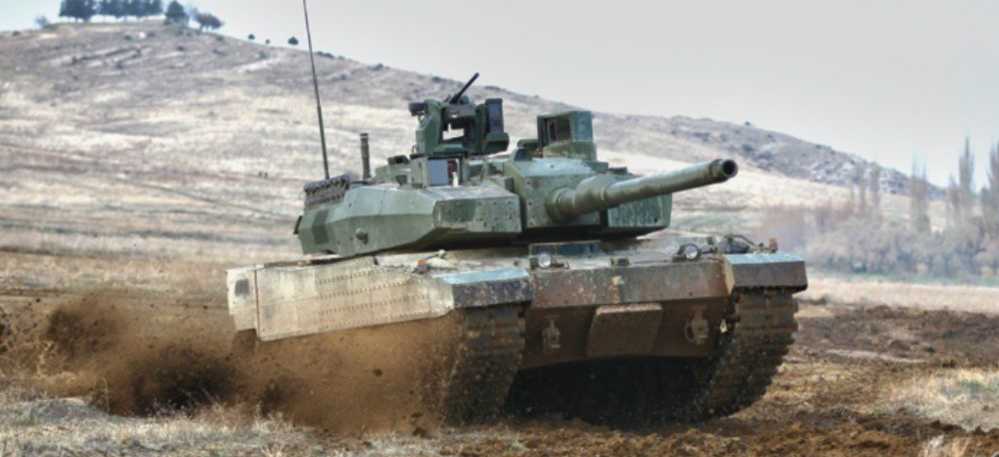
After 18 years of preparation, on January 9, 2023, Turkish President Erdogan announced during his visit to the Turkish BMC company that two pre-production models of the "Altay" main battle tank will be delivered to the Turkish army in May 2023, and mass production of the tank will begin in 2025.
Turkey has the largest army in NATO except the US military, but the quality of the Turkish Army’s equipment is relatively unsatisfactory. In particular, the tanks equipped by the Turkish Army, although there are more than 2,000 tanks available on paper, are seriously outdated in technology. 758 M48A5T and 1,300 M60TM/A3TTS tanks constitute the main body of its tank forces. Although they have undergone certain upgrades, they are still outdated. 397 Leopard 1 tanks were produced in West Germany during the Cold War. Among them, A1 and A5 are cast turrets, and A3 is a welded turret. Although a new fire control system is used and an armor module is installed, the combat effectiveness is actually very limited. As for the most capable tanks of the Turkish Army at present, there are 150 M60Ts upgraded by Israel and 325 Leopard 2A4s. However, even the best Leopard 2A4 is actually a second-hand product that the German Wehrmacht has eliminated more than 30 years ago. This situation not only deviates from the claim of "NATO’s second largest army", but also does not conform to Turkey’s growing vision of national influence in recent years. Therefore, as an important symbol of the rearmament of the Turkish Army’s armored forces, the mass production of the Altay main battle tank seems to be eye-catching.
Today’s national security concept of Turkey is an overall understanding of its internal and external security policies, inheriting some of the core concepts of offensive realism, that is, it believes that the country is a rational actor, but its own strength does not go beyond rationality and pursue an absolute offensive policy. Therefore, today Turkey is pursuing a "limited offensive security concept" based on power politics, using military strength as a means, and aiming at regional hegemony. "Limited" is different from "conditional" or "uncertain", but refers to the local obstruction of the international or domestic environment on the state of affairs, making it difficult to achieve a "comprehensive" or "wholehearted" state. The "limited" offensiveness of Turkey’s security concept is reflected in the fact that when the country formulates its external power politics goals, it takes into account the limitations of its own strength and the constraints of the international political environment on its pursuit of external power politics goals. It is precisely because of this that this can explain why the Turkish government insists on relying on the domestic industry for the large-scale upgrading of the Turkish Army’s tanks.
The Turkish government’s research on the modern main battle tank project began as early as 1996, with the intention of producing an existing foreign main battle tank under a production license. However, during the cooperation process, Western developed countries either controlled the core technology of the equipment or attached some political conditions, so the project was eventually terminated in 2004 on the pretext of cost issues. This failure made the Turks reflect. The experience of various wars in the Middle East in modern times told the Turks that Saddam had 5,500 Soviet tanks, but they were all fake ones bought in exchange for oil. In the end, he died and his country was destroyed. The ambitions of the New Babylonian Kingdom came to nothing. Instead, with the passage of time, Iran and Israel, which have independent defense industrial systems, have an increasingly powerful voice in the Middle East, which forces Turkey to work hard on independent defense research and development. The practices of Iran and Israel are also reminding the Turks that even under the conditions of a poor defense scientific research foundation, they can still take a path of "introduction-digestion and absorption-independent research and development" of weapons and equipment development. So in 2005, Turkey started the "Altai domestic tank project." "Altai" is named after the Altai Mountains, which is of great significance to the Turks who claim to be descendants of the Turks. The Turks are a nomadic tribe that emerged in the Altai Mountains in the middle of the 6th century. It is the name of the ethnic group that speaks Turkic in northern and northwest China after the 6th century. In 552, the Turks destroyed the Rouran Khanate and established the Turkic Khanate. In 583, the Turkic Khanate was divided into two major forces, the East and the West, with the Altai Mountains as the boundary. Therefore, Altai is actually the ancestral home of the so-called Turkic people. Today, Turkey, which claims to be a descendant of the Turks, named its domestic tank project "Altai", and its ambition is not small.
In 2007, Otoka was selected as the main contractor for the "Altai" domestic tank project. Due to Turkey’s weak scientific research capabilities and limited heavy industry foundation, it is difficult to develop a modern main battle tank from scratch, so the company chose to cooperate with South Korea’s Hyundai Company. But even so, on June 16, 2008, the Turkish Defense Industry Bureau still announced in a high-profile manner that it would develop a new tank power system domestically. In 2009, at the Abu Dhabi International Defense Exhibition, Bayar, the head of the Turkish Defense Industry Bureau, once again declared that "all parts of Turkey’s new tanks will be produced by Turkey itself." This statement made the outside world speculate that the "Altai" tank is very likely to be equipped with a domestic "heart". However, in 2010, Turkey signed an agreement with the German government to purchase engines, transmissions and technical steering.
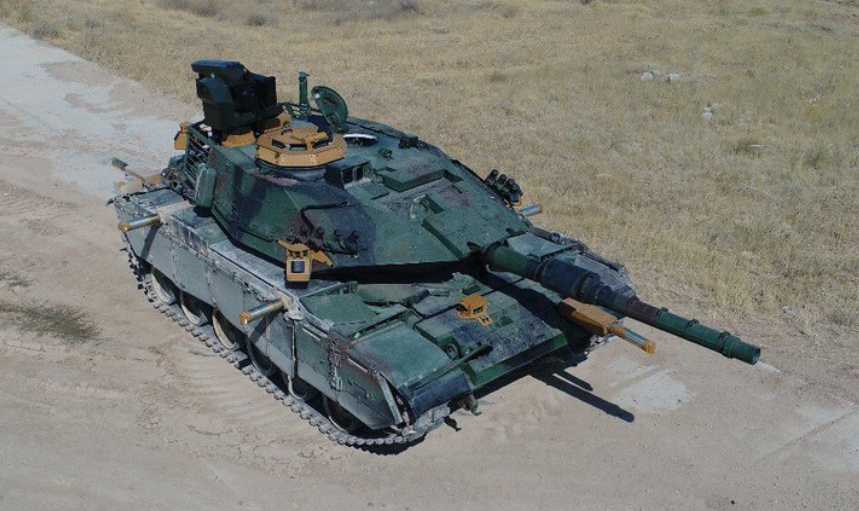
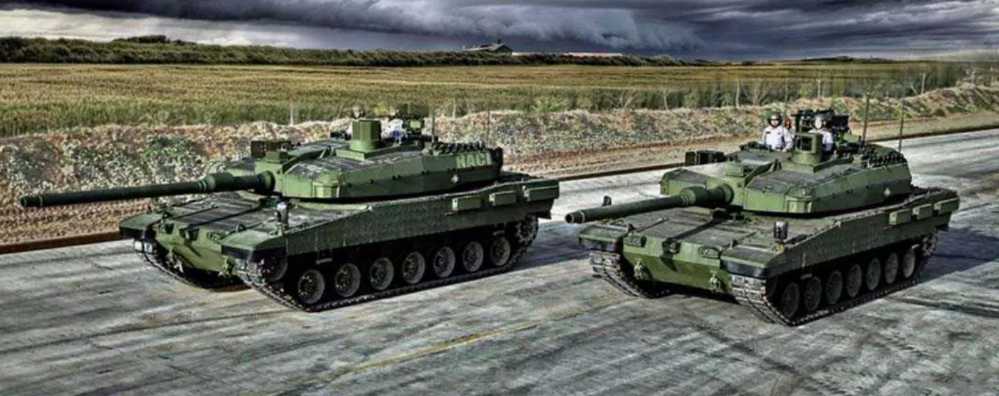
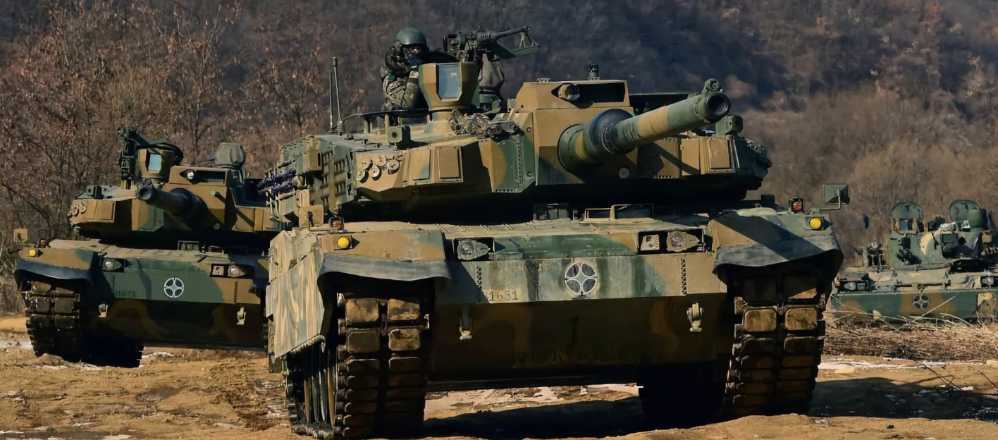
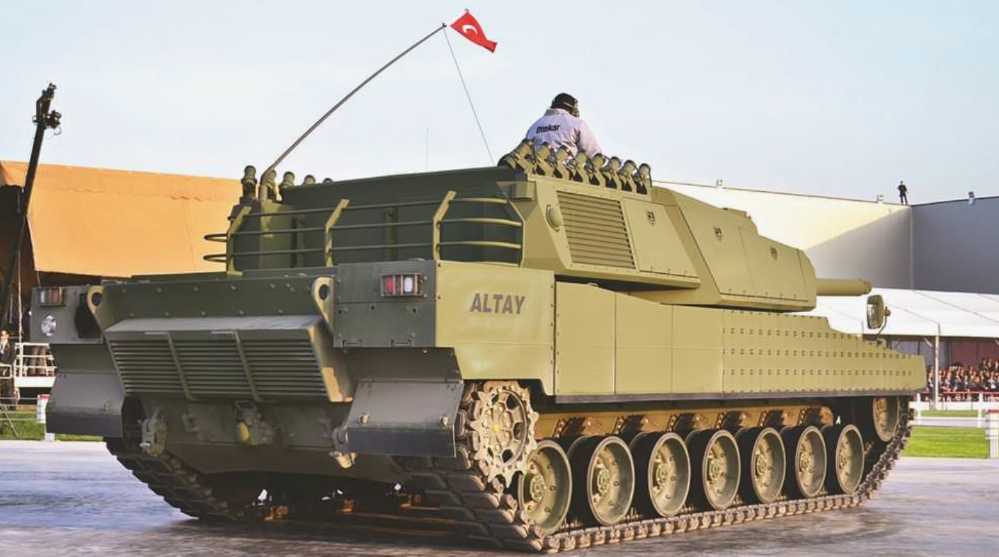
In August 2010, the 3D image of the "Altay" main battle tank was exposed to the public, and the design plan was completed in September. Although in December of the same year, Turkey’s Defense Procurement Department announced that it had decided to independently develop a 1,800-horsepower power system (Turkey’s domestically produced 1,800-horsepower power module will be used on the third batch of "Altay" tanks), this may mean that the prototype and the first batch of mass-produced tanks will first use the German power system, and then Turkey’s own domestic power system will be used. 80% of the design of the "Altay" main battle tank is derived from the Korean K2 main battle tank, but the chassis has been increased from 6 pairs of road wheels to 7 pairs, and the automatic loader of the turret has been cancelled and replaced with manual loading, so the turret has also been redesigned. In 2013, Otoka exhibited the "Altai" main battle tank prototype at the Turkish International Defense Exhibition. At that time, Otoka said it was waiting for the approval of the key design by the Defense Industry Bureau before entering the next stage of development. In 2015, Otoka completed the first prototype, and in 2016 completed the production of 5 prototypes, and successfully completed the test at several different test sites in Turkey. All this seems to indicate that the first phase of research and development of the "Altai" main battle tank has been basically completed, and it will not only enter mass production at the end of 2018, but will also be exported to earn foreign exchange. However, due to the "Altai" South Korea was unable to provide the key systems of the "Altai" main battle tank and could only rely on Western developed countries. However, Turkey and Western countries were in a rather unpleasant state of political relations at that time, which affected the "Altai" main battle tank project.
Since its founding, the demands of the political elites of the Republic of Turkey have been pro-Western oriented. Therefore, not only did it join NATO during the Cold War, but after the end of the Cold War, it also took joining the European Union as its national political goal, and its willingness to integrate into the West was clearly stated. However, for Western countries, the Islamic Republic of Turkey has always been an outlier, and joining the European Union is just a big pie drawn by the Western world for Turkey. The EU rejected Turkey on the grounds of geography, history, religion and other factors. While strengthening its European identity, it alienated Turkey’s identity-Turkey is a non-European country. Geographically, most Europeans believe that Turkey’s capital is not in Europe, and 95% of the population lives outside Europe, so it is not a European country. Turks are often proud of their metaphor as a bridge between the East and the West, Asia and Europe, and in the eyes of Turkish leaders, this is a reason for the EU to accept Turkey. However, according to former German Chancellor Angela Merkel, this is precisely a reason not to allow Turkey to become a full member of the EU: "A bridge... should never belong entirely to one side. If Turkey does not become a full member of the EU, it can better play its role as a bridge between Asia and Europe." Van Fogg, a leading member of the Christian Democratic Group in the German Parliament, claimed that after accepting Turkey, the EU will become a "European-Asia Minor Union." Former French President Sarkozy also refused to recognize Turkey as a European country on the grounds of the importance of Europe’s geographical borders: "Turkey is not a European country, so it has no place in the EU. A Europe without geographical borders will be the death of the great European unity. I just don’t accept Turkey as an EU country." Stoiber, the governor of the German state of Bavaria and chairman of the Christian Social Union, also expressed a similar view: "It must be recognized that Europe as an entity cannot extend its geographical boundaries to the Turkish-Iraqi border.’
Therefore, although Turkey has implemented many reforms at home and adjusted its foreign policy, the EU has been reluctant to accept Turkey. After 2005, there has been little progress in the Turkey-EU negotiations. Moreover, due to the Cyprus issue and the cultural and strategic resistance of a few member states, the EU froze Turkey’s accession negotiations, which made Turkey very disappointed and angry. After several difficulties, Turkey joined the EU in 2007. The enthusiasm for the alliance began to ebb, and the pace of returning to the Middle East began to accelerate, gradually highlighting the characteristics of competing for regional leadership. But this conflicted with the strategic interests of Western countries, further widening the rift between the two sides.
This reflects the complexity of Turkey’s relationship with NATO more typically-although Turkey is a member of NATO, it is an "alternative" to NATO, and its distinct non-Western characteristics always seem out of place in NATO, a traditional "Western club". Especially since 2011, geopolitical changes have continuously triggered new conflicts, and Turkey’s relations with the United States and Europe have been fluctuating downward all the way, almost falling to the freezing point. In 2011, after the outbreak of the Middle East upheaval, many countries in the Middle East, North Africa, and Central Asia fell into turmoil, and the United States and other foreign powers have been involved, including Turkey. "The complex security dilemma in the Middle East has given rise to more uncertainties. Both regional forces and external forces have found it difficult to adapt to the rapidly changing or somewhat deteriorating environment. This fact also applies to Turkey. "NATO has always been cautious about conflicts in the Middle East, Central Asia, North Africa and the Mediterranean, because NATO does not regard the above-mentioned regions as strategic priorities, but only regards maintaining the security and stability of the above-mentioned regions as an important support for the security order in the European-Atlantic region. After the outbreak of the Syrian civil war, NATO provided a lot of assistance to Turkey in order to fulfill its responsibility to protect member states, but it does not recognize that Turkey has special interests in the Middle East, Central Asia, North Africa and the Mediterranean, nor does it recognize its special status in the NATO alliance system. After Erdogan became president in 2014, Turkey began to actively intervene in Middle East affairs. He believed that he had great power and unique geographical advantages and historical and cultural resources. Therefore, he should become a central country in the Middle East and surrounding areas, and even act as an intermediary between NATO and China and Russia--"Turkey’s diplomatic interests began to gradually take shape in a new and important way. The rethinking and positioning of Turkey’s interests had a significant impact on the direction of Turkey’s diplomacy from a long-term perspective, especially on Turkey’s relations with the West. ”
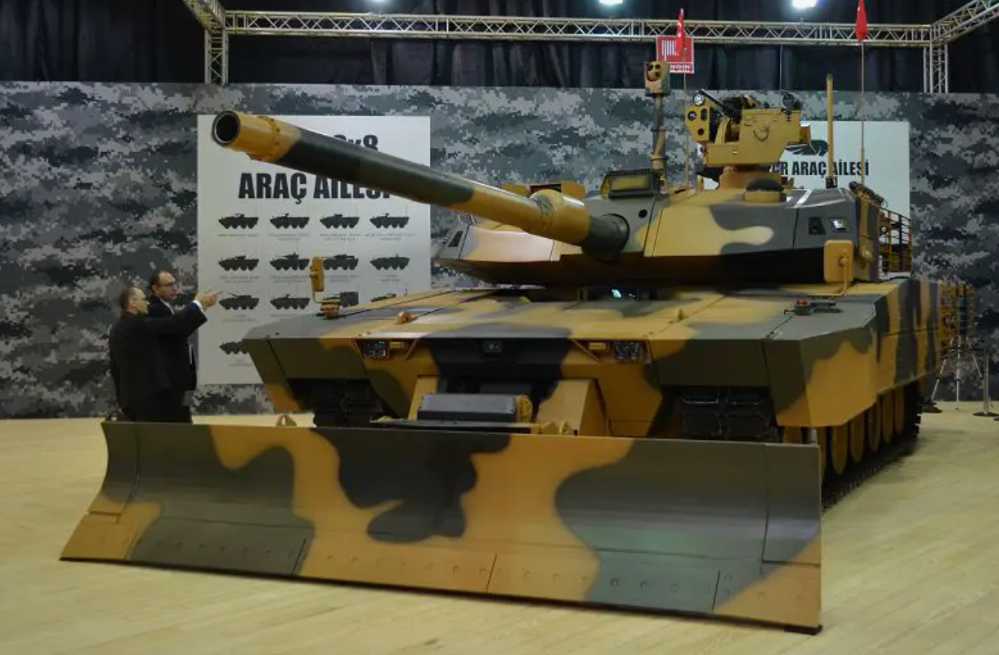
Turkey’s self-positioning is far from NATO’s cognition. It willfully magnifies its interests in the Middle East, Central Asia, the Mediterranean and other regions, and places them above NATO’s overall interests. It even regards the policy boundaries set by NATO and the United States, Britain and other countries as an infringement on Turkey’s interests and dignity. In order to promote its own interests, it constantly breaks through NATO’s policy constraints and political tacit understanding. In fact, as the strategic focus of Western countries, especially the United States, has gradually shifted away from the Middle East in recent years, the common interests with Turkey have continued to shrink, resulting in Turkey’s space for balancing NATO’s goals becoming increasingly limited. The smaller it is. Under such circumstances, Turkey’s policy autonomy has gradually increased, and it is determined not to over-accommodate or blindly yield to the EU and NATO. It emphasizes that it must handle foreign affairs with independent diplomatic thinking and guiding ideology on the basis of safeguarding its own interests. Therefore, in the face of suppression and sanctions from Western countries, it has shown a tougher stance, and even repeatedly "sang against" NATO on certain international hot spots and sensitive issues, in order to reflect its "maverick" style of behavior and realize its own value propositions. For example, on the issue of the Middle East, Turkey has frequently "made efforts" to actively intervene in regional affairs in recent years, and its policy differences with NATO have continued to increase. The Turkish government has repeatedly expressed its concerns about the Middle East refugee issue. "Accountability" of Western countries. On the Palestinian-Israeli issue, since Israel launched the "Protective Edge" operation in the Gaza Strip in July 2014, Turkey has repeatedly expressed strong condemnation of Israel and directly stood on the opposite side of Western countries that support Israel. It is precisely because of the constant twists and turns in relations with the West that, despite being a member of NATO, Western countries did not hesitate to set up obstacles in providing key system technical support to the "Altai" main battle tank project. In February 2017, Turkey’s Tumosan Company (a local diesel engine and tractor manufacturer in Turkey) failed to obtain the relevant from the Austrian List Internal Combustion Engine and Test Equipment Company (AVLList). Due to the negative attitude of the European Parliament towards Turkey at the time, Austria decided to stop exporting military equipment to Turkey, and for the same reason, it became impossible for Turkey to obtain technical support from other Western companies in the future. It is precisely because of this that in May 2017, at the 13th International Defense Industry Expo in Turkey, the Turkish Otokar Defense Company launched the "Altai" AHT main battle tank prototype designed for urban warfare, but at this time the entire project was actually in trouble due to the technical landing of the power unit.
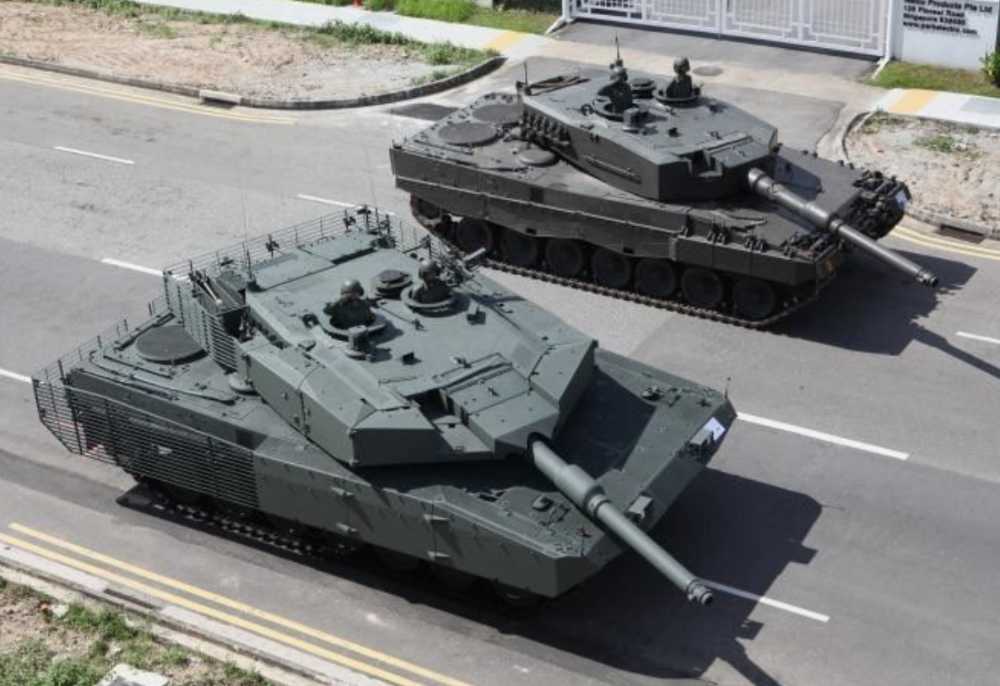
Setbacks have not extinguished the Turks’ ambition to produce domestic modern main battle tanks. First, on October 18, 2017, the Turkish Ministry of Defense Industry (SSM) issued a tender for the local development of the power system of the "Altay" main battle tank, with a bid deadline of December 22. The tender is to meet the power requirements of the "Altay" tank, while making the best use of Turkey’s existing industrial production capacity and eliminating dependence on foreign power components. On April 25, 2018, Turkey’s BMC company won the contract to continue the development and production of the "Altay" main battle tank. At the same time, the 2017-2021 strategic plan issued by the Turkish Defense Industry Bureau stipulates that the first batch of "Altay" main battle tanks will be installed in 2020 with 15 vehicles, and 20 vehicles will be installed in 2021. However, from the actual situation later, this goal was obviously not achieved. Because it was not until January 9, 2023 that the Turkish government announced that the "Altay" main battle tank had reached mass production. Before that, in 2021, Turkish Defense Minister Akar visited armored vehicle manufacturer BMC, which launched a new main battle tank at the time. The tank combines the second-hand "Leopard" 2A4 body and the turret of the "Altay" main battle tank, so it is also nicknamed "Hybrid Leopard". This weird combination is actually a true reflection of the fact that the "Altay" main battle tank project was still in trouble at the time. As for the subsequent turnaround, it lies in the political game behind the scenes. The dilemma of the "Altay" main battle tank project stems from politics. The so-called "bell needs to be untied" by the person who tied the bell. The way to save the "Altay" from the dilemma can only be found from the political level. Its status as a NATO member may have played a key role.
Turkey joined NATO as early as 1952, but many allies have always been controversial about its politics and ethnic border policies. They are unable to let go of the historical barriers and interest disputes between Turkey and neighboring countries, and lack trust in Turkey. NATO believes that Turkey is not only ambitious, but also has human rights, rule of law and moral issues, and has become the weak point of the NATO alliance system. However, Turkey’s view of itself is completely opposite. It regards itself as the second largest military power in NATO and should have sufficient voice in the alliance system, and should also play a leading role in regional affairs such as the Middle East, Central Asia and North Africa.
Turkey’s abnormal actions are not to part ways with NATO, but to gain more practical benefits and greater international influence, which exceeds the strategic expectations of NATO and the United States, Britain, France, Germany and other countries for the seven Turkeys. It is also necessary to see that Turkey, as a member of NATO, has repeatedly made actions that run counter to NATO’s goals. The deep reason is that the rapid economic development has provided the basis for Turkey’s strong diplomacy, and the economic downturn has become an important driver for Turkey to implement diplomatic adventures. After the new century began, Turkey actively promoted a development model dominated by inflation and government-led investment, and maintained rapid economic development through real estate, infrastructure construction, modern service industry, Islamic finance, and private sector leverage. Except for the impact of the global financial crisis in 2008, Turkey continued to develop rapidly from 2003 to 2017, with GDP growth even reaching double digits in some years. "Due to rapid economic growth and development in the past 10 years, Turkey has become one of the most successful examples of the global economy. Extreme poverty has been eliminated, and the Millennium Development Goals such as maternal mortality rate and primary education index have been achieved. Turkey is achieving the goals that were not completed in 2015." Turkey once became the fastest-growing economy in the world and the most representative among the "New Diamond 11 Countries". This won Erdogan political reputation, became the political basis for his continued rule, and also brought capital for his implementation of strong diplomacy. However, since 2018, Turkey has begun to show economic fatigue. Various problems caused by high debt, high currency, and high trade deficit have begun to emerge, economic development has slowed down, unemployment has increased, and society has continued to be turbulent. The United States and European countries are deeply dissatisfied with Turkey’s authoritarian rule, and have been criticizing Turkey for repeatedly breaking NATO taboos on issues such as the Middle East, Russia-Seven relations, refugees, and Kurds. For this reason, NATO, especially the United States, deliberately snubbed Turkey, the European Union refused to accept its application for membership, and the United States and other countries even imposed sanctions on Turkey for various reasons, exacerbating its economic and social difficulties. This has also had a significant negative impact on Turkey’s military modernization, including the "Altai" main battle tank project.
However, these contradictions between the Western world and Turkey are not enough to cause Turkey and the West to completely part ways. Although the alliance between the two sides has been limping and stumbling, the strategic cornerstone of cooperation is still there. For NATO, Turkey’s significance does not lie in its degree of democratization, cultural differences, national strength, etc., but in its irreplaceable strategic position. Turkey controls the southern gate of Europe, which is not only a strategic buffer zone to reject Russia, but also a natural firewall to isolate the chaos in the Middle East. If Turkey is lost, NATO will be "wide open", not to mention that Russia is eyeing Turkey covetously. For Turkey, Russia may not be more reliable than NATO, and there is a fundamental conflict of interest between Turkey and Russia in the Black Sea. In addition to relying on NATO’s collective defense, Turkey has no other means to balance Russia’s strong military pressure. The AKP government only wants to correct its overly pro-Western diplomatic line, but has no intention of completely getting rid of the West. Turkey has traditional geopolitical advantages in the Middle East, Central Asia and the Eastern Mediterranean. It willfully intervenes in crises and creates disputes in the above-mentioned regions, enhances its own status by challenging NATO traditions, seeks to expand its influence in an uncompromising way, and forces major powers to compromise by creating fait accompli. However, from funds to technology, Turkey’s future development is absolutely dependent on the West, and the Turkish government does not want to really tear its face with the West. It is difficult to say that there is no natural tacit understanding between the two sides. Therefore, although NATO’s internal conflicts and divisions continue in the midst of differences and quarrels, and contradictions will exist for a long time, because NATO’s self-regulation mechanism is still relatively perfect, and the overall decision-making is still dominated by the United States, it is difficult for the contradictions between member states to jump out of the "circle" of rules. NATO and Turkey still need each other. Especially after the full outbreak of the Russian-Ukrainian conflict, Turkey’s strategic value to the Western world has been on the rise again.
There is no doubt that Turkey has its own geopolitical plot in the Russian-Ukrainian conflict. Since the full outbreak of the conflict, Western countries led by the United States and Europe have announced severe economic sanctions against Russia on the one hand, and have launched multiple attacks on Russia through "public opinion war" and "information war"; on the other hand, they have provided military assistance to Ukraine, further exacerbating the confrontation. As a member of NATO, Turkey has condemned Russia’s military actions against Ukraine and provided humanitarian assistance to Ukraine, but has resolutely refused to impose sanctions on Russia and maintained a cautious attitude on the control of the Black Sea Straits. In fact, as a Black Sea coastal country and a NATO member, Turkey’s policy will inevitably reflect the characteristics of starting from its own interests and being different from the West, and maintaining a delicate balance between NATO, the European Union, Russia and Ukraine. From the perspective of the camp it belongs to, Turkey can completely follow the tone of the West to lash out at Russia and impose severe sanctions. But from the perspective of interests, Turkey is more suitable to maintain "active neutrality" between Russia and Ukraine. For Turkey, persuading peace, promoting talks and stopping the war is the current policy that can best balance morality and interests. Whether it is a too weak Russia or an overly powerful Russia, Turkey will bear the dual pressure from the West or Russia in the process of seeking an independent development path. At the same time, although there are pro-Western and pro-Russian factions in the Turkish ideological circles, there are still some politicians and scholars who are wary of the United States. They believe that the "active neutrality" policy that takes into account morality and interests can prevent Turkey from falling into the trap of the United States. It is precisely because of this extremely complex political relationship that the Western world, which currently needs Turkey, has to make certain concessions. The "Altai" main battle tank project is likely to be the beneficiary of this political easing. With the West giving the green light to the key tank power pack, the mass production of the "Altai" main battle tank is naturally a matter of course.
However, the significance of the mass production of the "Altay" main battle tank for Turkey should not be overestimated. The mass production of the "Altay" main battle tank is only a belated victory for Turkey - this main battle tank is actually outdated in technology. As repeatedly introduced in many materials, the "Altay" main battle tank is developed on the basis of the Korean K2 main battle tank. The main gun is a 120mm 55-caliber smoothbore tank gun produced by the Turkish Mechanical and Chemical Company authorized by South Korea. It can fire the Korean K276 tungsten alloy tail stabilized discarding sabot armor-piercing projectile, K277 multi-purpose armor-piercing projectile, Turkish domestic armor-piercing projectile, and Israeli "Rahat" gun-launched missile. Auxiliary weapons include a 7.62mm coaxial machine gun and a remote-controlled weapon station installed on the roof that integrates a 12.7mm machine gun and an optoelectronic detection device. The power is the "European Power Unit" (integrated with MT893 12-cylinder 1500 horsepower diesel engine and Renk HSWL354 series gearbox) produced under license from Germany’s MTU company. Although the design of the "Altai" main battle tank is derived from the Korean K2, it has undergone a redesign. Compared with the K2, it has significantly increased in size and has an additional pair of road wheels. Its cockpit has been moved to the center of the front, instead of being located on the left like the K2. The "Altai" main battle tank also abandoned the two-person turret used by the K2 and adopted a three-person turret with manual loading. The volume of the turret is obviously larger than that of the K2 turret. The fire control system of the "Altai" main battle tank adopts the command-style VOLKAN3 fire control system jointly developed by Turkey’s ASELSAN and STM.
Despite the use of traditional design and a large number of mature components, if the "Altai" main battle tank can be mass-produced as planned at the end of 2018, it will still be an excellent main battle tank. In fact, at that time, including the United States, Britain, France, Germany, etc. In most major Western military countries, the development of a new generation of main battle tanks is stagnant, and the patch-style upgrade of their current main battle tanks is also unoriginal, so the "Altay" main battle tank was known as NATO’s only new main battle tank development program at the time. Moreover, although the "Altay" is similar to the mainstream Western main battle tanks in basic technology, due to its late design time, the "Altay" with modular design is much better than the old third-generation main battle tanks in terms of integration of fashionable equipment such as active protection systems. Therefore, if the "Altay" main battle tank can be put into production five years ago, it will not only have a significant effect on improving the image of the Turkish army, but also have the opportunity to open up the export market.
In fact, at the beginning of the "Altay" main battle tank project, Turkey had the intention to promote it to the international arms sales market. It is believed that the Altay main battle tank will be very attractive to customers in the Middle East. The tank design can be easily reconfigured, and the open vehicle electronic architecture adopted by the "Altay main battle tank" makes it easy to integrate new systems. Unfortunately, times have changed. Five years later, due to the increasing tension in Europe and the return of the so-called "great power competition" in both the East and the West, major Western military countries such as the United States, France, and Germany have restarted the research and development of a new generation of main battle tanks. Compared with the "Altay", these new Western main battle tanks have obvious cross-generational characteristics. For example, Germany’s KF-51 "Black Panther" and the Franco-German "European Main Battle Tank" EMBT use a 130~140 mm main gun and integrate the design of vehicle-mounted cruise missiles and vehicle-mounted drone systems; the new generation of "Abrams" X launched by General Dynamics of the United States not only uses an unmanned turret, but also for the first time incorporates hybrid power and EODAS optoelectronic distributed aperture system technology for fifth-generation fighters. These technologies with obvious cross-generational characteristics make the "Altay" main battle tank pale in comparison, and in fact far exceed South Korea’s technical capabilities and are monopolistic. In fact, it is precisely because the "Altai" main battle tank is outdated as a whole and no longer competitive that the Western world is considering handing over the "bottleneck" technology including the power pack to Turkey in exchange for Turkey’s political concessions and compromises. For the Western world, this is almost a very cost-effective deal as it does not damage the technological advantage and can gain political benefits.
After years of difficult birth, after obtaining technical authorization from the West for power packs and other related systems, Turkey’s domestically produced "Altay" main battle tank is about to start mass production. It is expected that the Turkish military will purchase a total of 500 vehicles in two batches. The first batch of "Altay" main battle tank orders mainly includes the production of 251 "Altay" main battle tanks in three configurations-40 of which are T1 configurations, 210 are T2 configurations, and 1 is T3 configuration. Compared with the basic "Altay" in T1 status, the "Altay" in T2 status will have an enhanced armor system, and the fire control system will also be upgraded to have the ability to shoot laser-guided tank ammunition. As for the configuration of "Altay" T3, it has not been disclosed yet, but Turkish officials have hinted that it is intended for further testing and technical evaluation. However, even so, with the new generation of Western main battle tanks about to come out, the significance of mass production of "Altay", which is outdated at birth, is not worth over-interpreting anyway.