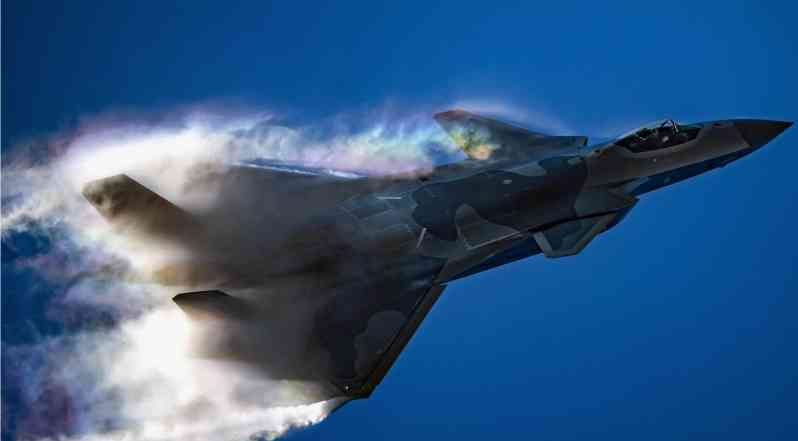
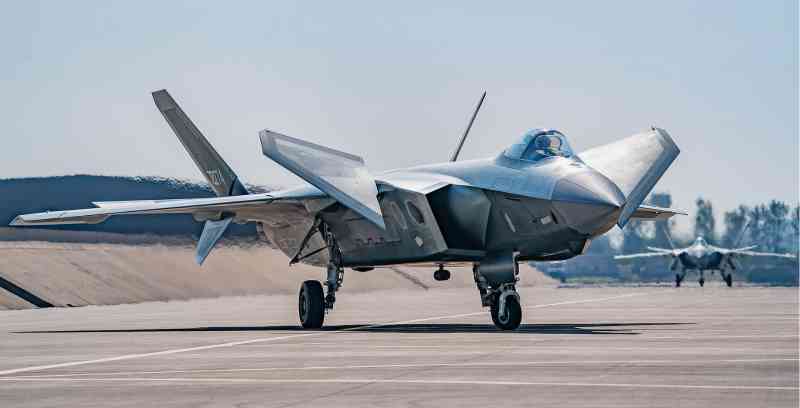
j20 stealth fighter is the first stealth fighter in service in China. Its appearance has an immeasurable impact on the Chinese Air Force and even on the entire world strategic pattern. The appearance of j20 enables the Chinese Air Force to compete with the US Air Force.
This series has a total of 7 articles that analyze the various performances of j20 in detail. Knowing yourself and the enemy will ensure victory in a hundred battles. I hope this article can help readers solve their doubts.
The standard of the fifth-generation aircraft
Before introducing the J-20, it is necessary to first talk about what the fifth-generation aircraft is. Today, jet fighters have developed to the fifth generation. The fifth-generation aircraft has four major technical characteristics that form a generation gap with the previous generation: supersonic cruise, super (sonic) maneuverability, ultra-low radar detection area, and high information advantage.
Supersonic cruise
It means reaching a higher supersonic cruise speed without afterburner. The second-generation aircraft has reached twice the speed of sound, but conventional fighters need to turn on the engine afterburner when flying at supersonic speeds, and fuel consumption soars several times. Therefore, supersonic flight can only last for a short time and distance, and is generally used for sprinting before an attack, or quickly disengaging after an attack. Actual air combat is still carried out in the subsonic area. The MiG-25/MiG-31 is said to be able to supercruise, but they rely on the huge internal fuel capacity and afterburner to achieve a long period of supersonic flight. Moreover, it is an interceptor configuration with poor maneuverability and almost no combat capability. The British Lightning and Typhoon are also said to be able to exceed the speed of sound without afterburner, but this is a slight increase in the speed of sound without external attachments and has no practical significance. The representative of the fifth-generation aircraft, the F-22, optimizes the overall aerodynamic design according to supersonic cruise, has an excellent supersonic lift-to-drag ratio, and can achieve a long-term cruise of Mach 1.5 with military thrust. Moreover, because it uses an internal bomb bay, it retains full air combat capabilities during supercruise.
After the F-22 entered service, it conducted a large number of simulated air combat tests with the F-15/F-16. In the confrontation, as long as the F-22 entered the high Mach number supercruise state, the game was over immediately. Whether it was acceleration or cruising, the third-generation aircraft could not keep up with the F-22, which was far ahead of the others, even if the afterburner was turned to the maximum. The F-15/F-16 had to withdraw and find a refueling aircraft after chasing for a while, while the F-22 still had a lot of fuel left in the tank.
Supersonic maneuvers
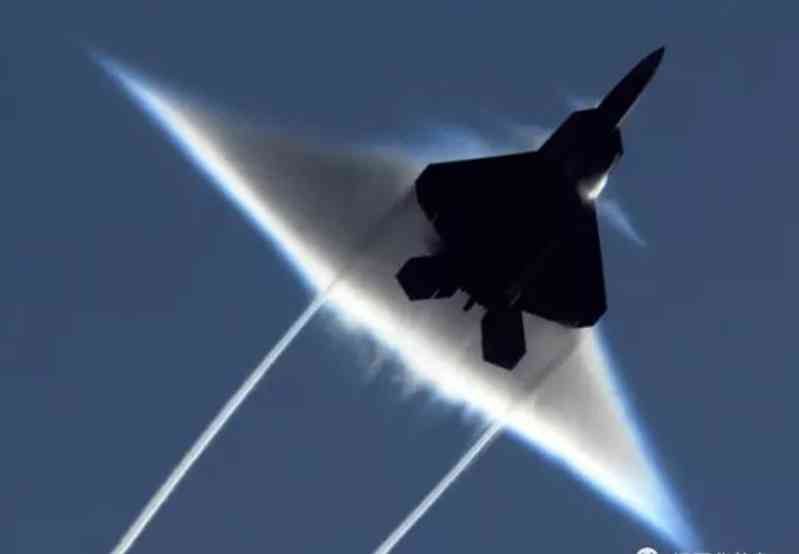
Including acceleration, climbing, circling, rolling and other performances under supersonic conditions, as well as controllable post-stall maneuverability. The third-generation aircraft, which is famous for its maneuverability, can actually only maneuver under subsonic conditions. Once it enters the supersonic area, the maneuverability drops sharply and it can basically only maintain straight flight. The fourth-generation aircraft can make large-scale maneuvers under supersonic conditions. For example, the Su-27 needs to reach 6.5G in stable hovering, which requires conditions such as mid-altitude and below Mach 0.9. The supersonic state can reach 3G at most. Some people jokingly say that the supersonic rolling performance of the Su-27 is similar to that of a tractor; while the F-22 can maintain a speed of Mach 1.7 when it reaches 6.5G. This is the generation gap. The fifth-generation fighter uses supersonic maneuvers at Mach 1.6 and launches air-to-air missiles, and the third-generation aircraft basically cannot get rid of it; while the third-generation aircraft uses subsonic air-to-air missiles to attack the fifth-generation aircraft, and the fourth-generation aircraft can easily get rid of it with supersonic maneuvers.
Not only is the supersonic maneuverability strong, the fifth-generation aircraft is also highly maneuverable in all speed ranges and can perform controlled post-stall maneuvers. The Cobra maneuver that made the Su-27 famous is actually an uncontrolled flight at a specific altitude and speed. After entering the Cobra stunt state, the pilot almost loses control of the aircraft until he exits this state. The F-22, with its vector thrust, can achieve stable control of the aircraft and precise nose pointing in a huge elevation range from positive 100 degrees to negative 40 degrees.
Ultra-low radar detection area
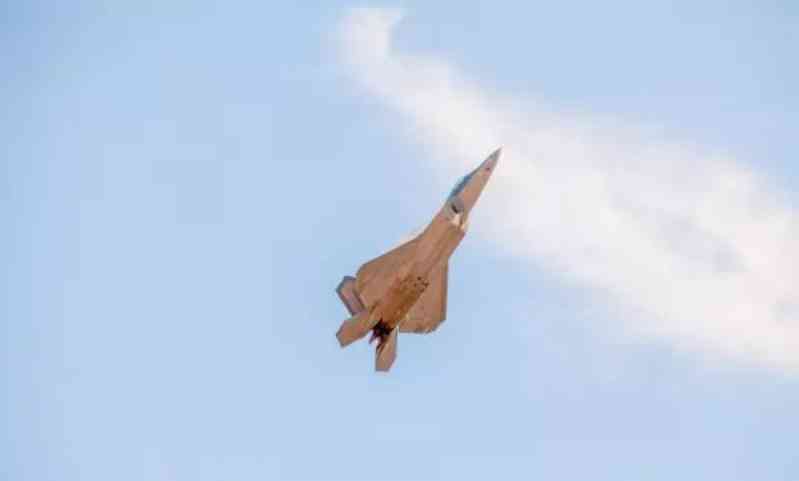
That is what is usually called stealth. The third-generation aircraft without stealth design has a frontal radar cross-section (RCS) of more than 1 square meter. It is generally estimated that the Su-27 is about 15 square meters, the F-15 is about 10 square meters, the F-18C/D is 3 square meters, the F-18E/F is 1 square meter, the F-16 is 1-2 square meters, the J-10A is 1 square meter, the J-10B is about 0.3 square meters, and the third-generation and a half Rafale and Typhoon are between 0.1-0.5 square meters. The detection range of the radar is proportional to the fourth root of the RCS. When the RCS is reduced by 10 times, the radar detection range is reduced by about half. A radar cross-section of less than 0.1 square meters is considered to have stealth performance, and the RCS of the F-22 is said to be between 0.005-0.01 square meters. The actual data is still top secret. Lockheed Martin itself claims that the RCS of the F-22 is equal to a glass marble. Assuming that the large early warning aircraft detects the F-15 at a distance of 400 kilometers, it detects the F-22 at a distance of only about 70 kilometers.
High information advantage
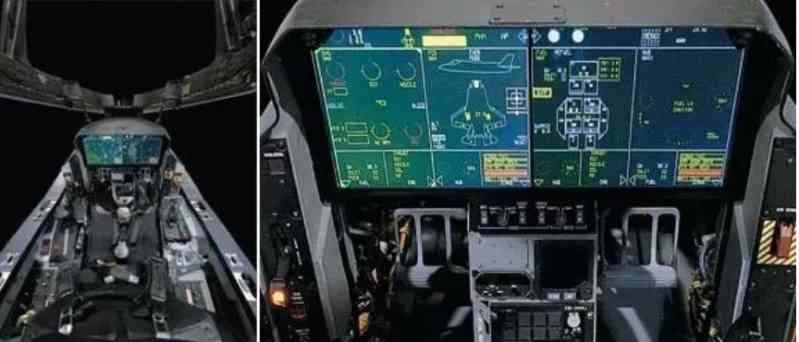
The fifth-generation aircraft adopts the latest avionics technology, with higher integration, and the radar and optoelectronic detection performance are qualitatively leapfrog compared with the previous generation. Taking the F-35 with the strongest electronic performance as an example, it adopts the "Baobaotai" integrated avionics architecture, optical fiber high-speed data bus, and APG-81 active phased array radar. The groundbreaking EODAS distributed aperture optoelectronic system, combined with the helmet display, provides the pilot with a panoramic view around the fuselage, allowing the pilot to "see through" the bottom and sides of the aircraft. The conformal EOTS optoelectronic tracking system can detect air-to-ground infrared and laser indicate targets. The integrated core processor has a computing speed of up to 1 trillion times per second, which is ten times that of the F-22. It processes the information of radar and various sensors in a highly integrated manner, greatly improving the pilot’s ability to perceive the situation and reducing the intensity of work. All kinds of navigation, forward-looking infrared detection, laser indication and electronic warfare pods that the third-generation aircraft need to hang on are highly integrated into the fuselage, and the electronic warfare performance is not inferior to the dedicated electronic warfare aircraft that needed to accompany the attack aircraft group into the battlefield in the past.
Existing fourth-generation aircraft
There are three fifth-generation aircraft in service: the United States’ F-22 and F-35, and China’s J-20. There are two more under development: Russia’s T-50 and China’s J-31. Among these five fighters, strictly speaking, only the F-22 and J-20 can meet all four standards of the fifth-generation aircraft. Due to the extremely high technical barriers and high development and procurement costs of the fifth-generation fighter, in the foreseeable future, no other country or group, except China and the United States, has the ability and financial resources to develop a fighter that fully meets the fifth-generation standard. Whether enemy or friend, the future dominance of the sky lies in China and the United States.
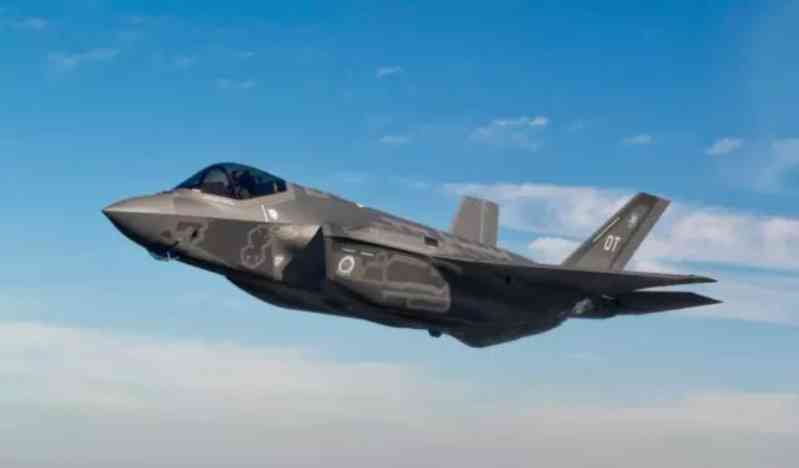
F-35 is a multi-purpose fighter mainly used for ground attack. Because it is a universal design for three services, it is a vertical take-off and landing type that takes into account the Marine Corps. It has a very strong body and a maximum take-off weight of 31 tons, which has reached the standard of a heavy aircraft. It basically does not have supersonic cruise capability, and its maneuverability is only at the level of the third generation, or even worse, making it the slowest fighter in 50 years; the wing load is higher than that of the second-generation F-105/F-104, the thrust-to-weight ratio is equivalent to that of the F-4, and the stealth is also worse than that of the F-22. Only the electronic equipment has reached the highest level in the world by relying on the latecomer advantage. In addition, it pioneered the use of DSI air intakes, which reduced the structural weight, reduced resistance, and enhanced stealth performance.
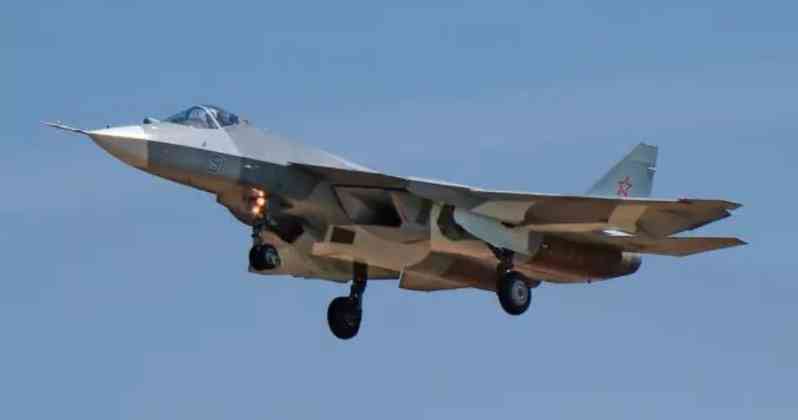
su57, which was praised by Russia, but laymen can see that it is like a flattened Su-27 wearing a fashionable stealth vest. There is no air intake blocked by anything. You can even see the engine blades, the huge tunnel between the two engines, the frame-type windshield and the separate canopy, the rough surface of the fuselage, and various protrusions. It has no stealth capability at all. The engine of the T-50 is far inferior to the two engines of the fourth generation in the United States. The aerodynamic design basically follows the framework of the Su-27, focusing on maneuverability below transonic speed. The cross-sectional area of the fuselage is too large, and the supersonic drag is quite large. It is questionable how much the supercruise speed and range can reach. The electronic equipment is even more backward. Just look at the exposed photoelectric detector to know that it can only reach the level of the third generation + at most.
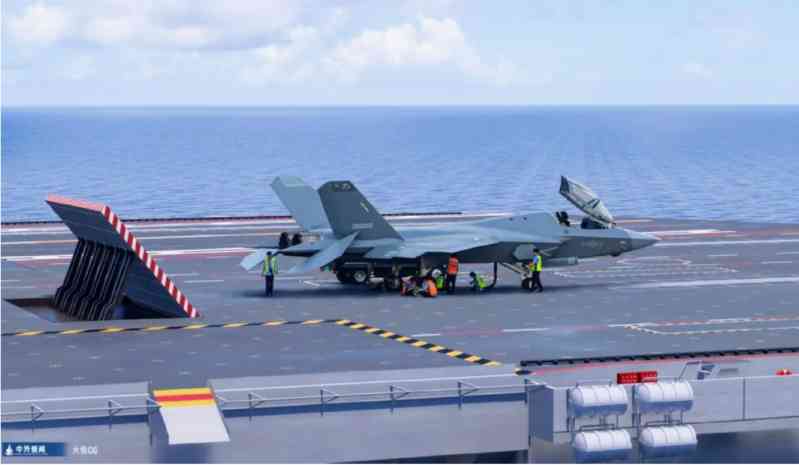
J31, a medium-sized aircraft developed by Shenfei, is the smallest of the fifth-generation aircraft. With a weak engine (currently using the Russian-made RD93 medium thrust of Xiaolong), a mediocre aerodynamic layout, small fuselage space, unclear avionics configuration (no other advanced detection equipment has been found except for the possible active phased array radar), and overall development without military support (AVIC self-developed), it is not very optimistic about what level the J-31 can achieve. It may have some of the technical features of the fourth generation, but they will not be too prominent. Of course, it is still being improved, and the double-wheel structure of the front wheel also has the possibility of being put on the ship.
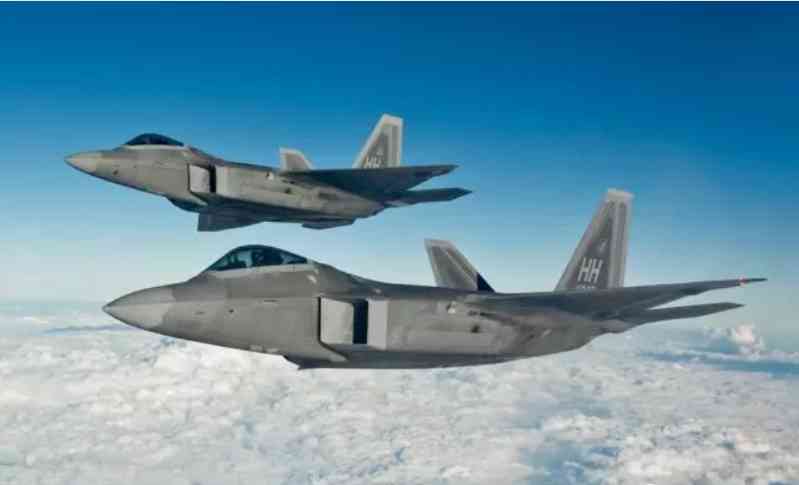
F-22, the benchmark of the fifth-generation fighter, has achieved omnidirectional stealth, supersonic cruise and supersonic maneuvering for the first time. Coupled with the advanced radar system, it has left all the fighters in the world that have been equipped or are under development far behind in the 1990s. When the YF-22 prototype first flew in 1990, China had just mastered the MiG-21 technology of the late 1950s; the world’s last second-generation fighter, the J-8II, had not yet been mass-produced; the former Soviet Union’s third-generation fighters, the Su-27 and MiG-29, had only been in service for a few years; Europe’s Typhoon and Rafale fighters came out a few years later, and only one or two indicators barely approached the F-22, and were called the third and a half generation; even the J-10, which first flew 8 years later, only reached the level of the mid-term F-16. The generation gap constitutes an absolute advantage, and the record of 0:104 in the simulated air battle with the third-generation king F-15C made the F-22 a mythical existence.
J-20 debuts
Twenty years later, the F-22 still stands out. The United States has only made limited upgrades to its electronic and weapon systems and plans to serve until 2040, believing that it will be invincible in the foreseeable future. It was not until January 11, 2011 that the J-20 No. 2001 verification aircraft was born, which finally made the United States sober up a little.
This is not an exaggeration. On that day, US Secretary of Defense Robert Gates happened to be visiting Beijing. It is said that he was very angry and even prepared to interrupt his visit because the first flight of the J-20 was "a direct insult to him and the United States" (then US Ambassador to China Jon Huntsman). Later, he did not interrupt his visit, but disregarded diplomatic etiquette and asked Chinese President Hu Jintao in person whether China had tested the new generation of fighters during a meeting. President Hu’s answer was that this was a pre-planned test flight and had absolutely nothing to do with Gates’ visit.
Why was he so angry? Because it was precisely because Gates seriously underestimated and misjudged the speed of China’s military development that he stopped the production of the F-22 in 2010 during his tenure, causing the production of the F-22 to stop at 183 from the 750 planned by the Air Force. For this reason, he even fell out with the Air Force and fired a group of Air Force senior officials who supported the production of more F-22s. He himself also stepped down in disgrace six months later, and is now regarded by the Air Force as the sinner who killed the F-22 project.
Although various Western media have been questioning the J-20 after it was exposed, it can make the United States, the world’s number one aviation power, feel insulted. They know very well what kind of opponent this will be. Whether it is an ordinary military fan or an aviation expert, the shock in their hearts when they first see the J-20’s stunning shape like a space battleship is unparalleled.
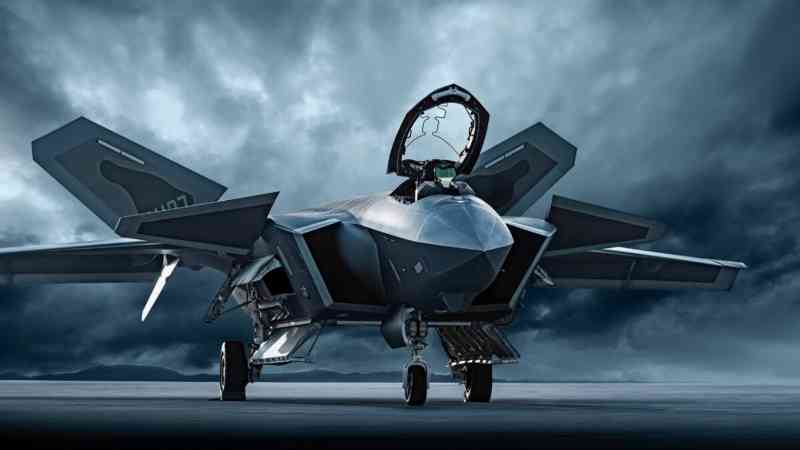
Compared with the image of the fifth-generation aircraft established by the F-22, the J-20 looks so different. In fact, the J-20 is the longest and largest fourth-generation aircraft (more than two meters longer than the F-22, and about 20% larger in volume). See the comparison of the main dimensions of the following three heavy aircraft:
F-22: 18.8 meters long, 13.56 meters wide, 78.04 square meters of wing area, 19.7 tons of empty weight, and 38 tons of maximum take-off weight (official data from Lockheed Martin)
T-50: 19.8 meters long, 13.95 meters wide, 78.8 square meters of wing area, 18 tons of empty weight, and 35 tons of maximum take-off weight (Wikipedia is quoted from authoritative media such as Aviation Week. Although the T-50 was developed from the Su-27, its actual size is slightly smaller than that of the Su-27)
J-20: about 21 meters long, about 13 meters wide, about 78 square meters of wing area, estimated empty weight of 19.4 tons, and a maximum take-off weight of more than 36 tons (No accurate data has been disclosed, both authoritative media and ordinary military fans can only make rough estimates based on satellite photos and traditional aviation manufacturing technology)
From the data alone, except for the length, the main dimensions of the three heavy aircraft are comparable. But when the data is transformed into a three-dimensional three-dimensional picture, the J-20 immediately shows its excellence. Not only is it huge, but the complexity of its aerodynamic layout is extremely rare in the entire history of fighter development. The following is a comparison of the three-dimensional pictures of several fifth-generation aircraft.
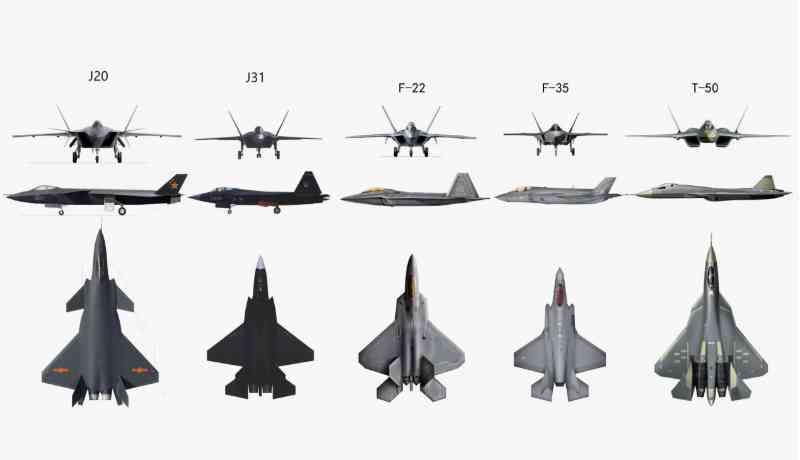
From the above picture, it can be seen that the three aircraft in the middle are almost identical, all using the normal aerodynamic layout of the traditional main wing plus horizontal tail plus vertical tail. The F-22 is the ancestor of the fifth-generation aircraft developed by Lockheed Martin, and the F-35 is developed and designed by Lockheed Martin based on the F-22. It is not surprising that they look alike; the J-31 developed by Shenfei is basically a copycat version of the F-22 plus the F-35. In addition to being a twin-engine, it is a twin brother of the F-35 when viewed from above, and a smaller F-22 when viewed from the side, especially the vertical tail is exactly the same. The new J-31 that was recently unveiled has undergone considerable changes. The raised canopy and base are more like the F-22, and the vertical tail has been changed to a backward-tilted design like the F-35, still revolving around the two.
The T-50 basically inherits the aerodynamic design of the Su-27 and has a normal aerodynamic layout. It only makes stealth modifications to the nose, wings, and engine pods, and adopts a small-sized fully movable vertical tail. The only bright spot is the movable upper edge of the air intake, but its role in increasing lift, improving maneuverability, and stealth is also quite limited.
Finally, let’s look at the J-20. It has unprecedentedly adopted an extremely complex design of lifting body + DSI air intake + fully movable canard + large side strips + tailless delta wing + fully movable vertical tail. It has been 13 years since the J20 appeared, and such a complex design has also withstood the test of time.