
The demand for artillery weapons and the application advantages of rocket launchers
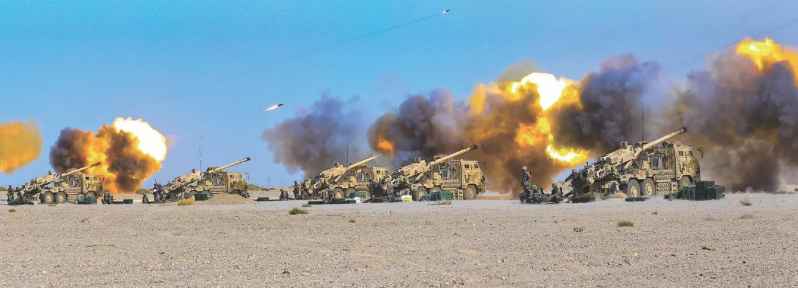
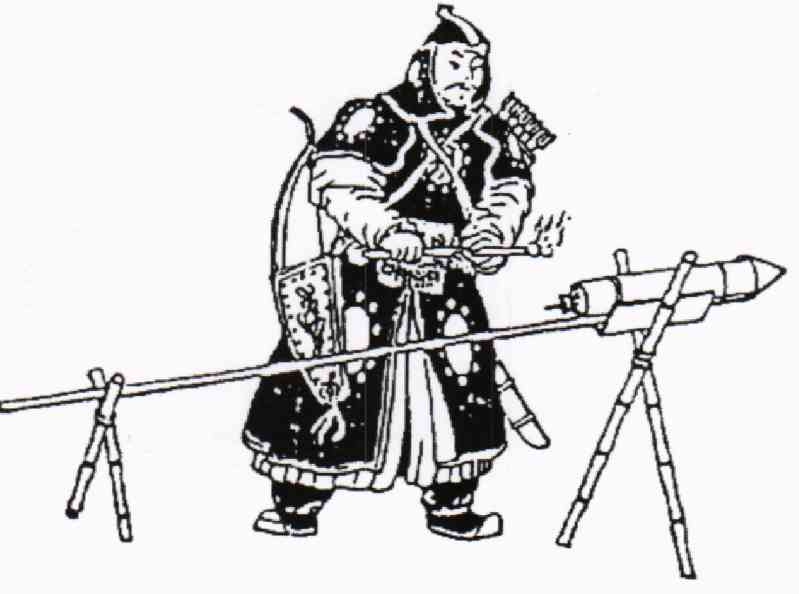
Rocket weapons are the earliest manifestation of gunpowder as artillery weapons. The original intention of modern rocket launchers was to get rid of the constraints of heavy gun bodies, and then became an effective way to strengthen firepower. Large-caliber rocket launchers were mainly used as heavy weapons for short-range assaults during World War II and the early Cold War, and began to become long-range strike weapons for artillery in the middle and late Cold War.
The demand for long-range rocket launchers mainly comes from the pursuit of firepower, and is also related to the development of actual military technology. During World War II, the artillery firepower of infantry units was restricted by equipment conditions and command and control capabilities. The total weight of divisional artillery artillery was less than 2 tons for the regiment and less than 6 tons for the division. The corresponding regimental artillery firepower range was 6 to 9 kilometers, the divisional howitzer range was 9 to 14 kilometers, and the medium-caliber cannon range did not exceed 15 kilometers. Cannons with a caliber of 100 mm and howitzers with a caliber of 150 mm are heavy artillery. These artillery with a range of more than 15 kilometers weigh more than 6 tons. The battlefield mobility conditions are poor, and most of them are assigned to division-level troops or used as independent artillery equipment.
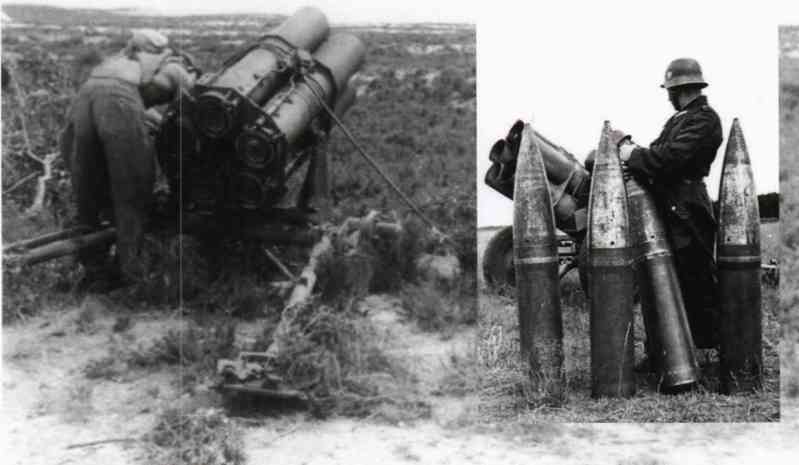
The long-range artillery equipped at the end of World War II was very heavy and required specially set positions and a large number of transport vehicles to support it. Even in the early days of the Cold War, the quality of long-range artillery was still the main problem limiting its battlefield application. The United States and the Soviet Union wanted to obtain large-caliber artillery with a range of more than 28 kilometers to meet the demand for launching nuclear weapons with artillery. The towed 280mm "Atomic Anne" artillery system equipped by the United States weighs 85 tons, has a range of only 32 kilometers, and takes 15 minutes to prepare before combat. The Soviet Union used a self-propelled 406mm 2A3 nuclear heavy artillery. Although its weight was greatly reduced to 64 tons and it was also self-propelled, the range of the rocket-assisted extended-range projectile was only 25 kilometers. In fact, these two types of artillery prepared for nuclear war have no practical value, and they lack the significance of being used as artillery weapons in conventional wars.
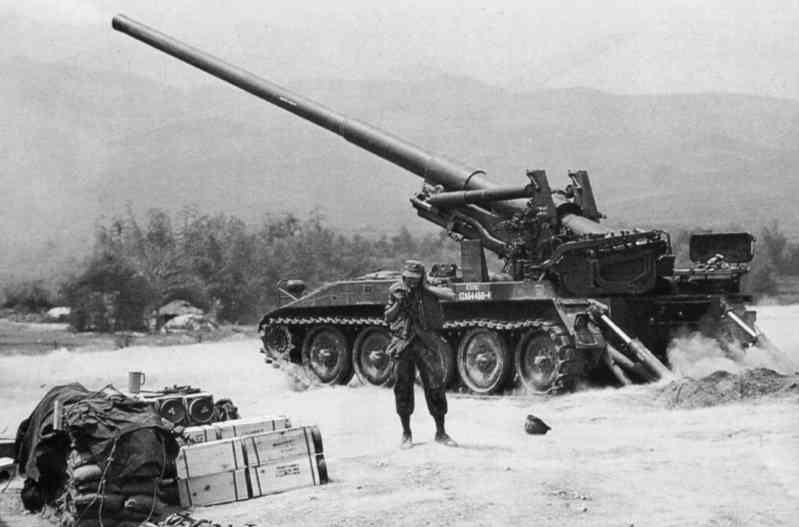
The long range of artillery has great tactical significance, but it is very difficult to increase the range of conventional artillery, especially large-caliber long-range artillery that must ensure both range and power. The size and mass of the large-caliber long-range artillery have long exceeded the limit of field artillery. The contradiction between firepower demand and battlefield mobility has become increasingly prominent. Conventional barreled artillery developed rapidly during the Cold War, but large-caliber artillery is still subject to size and mass restrictions. The US M115 203mm towed howitzer has a mass of 13.5 tons, but a range of only 16.8 kilometers. The M110 203mm self-propelled howitzer uses an open gun carriage. The mass of the launch vehicle when it only carries two rounds is 26.5 tons, and the basic range is only 16.8 kilometers. After the M110A2 barrel caliber was increased to 37 times, the range was only increased to 23 kilometers. The range with rocket-assisted projectiles increased to 29 kilometers, and the mass increased to 28.3 tons. The M107 175mm cannon, which uses the M113 main gun, is a long-range suppression artillery of the group army. It was also the longest-range ground artillery weapon of the US military before the M270 rocket launcher was equipped. The range using conventional artillery shells is only 32.8 kilometers, and the power of the 66.6 kg projectile is much lower than that of the 100 kg 203 caliber blasting shell. Although the maximum range of the M107 after the improvement of low-resistance projectiles can reach 50 kilometers, the lethality and accuracy of the projectiles have been significantly reduced, and the tactical value has been relatively reduced. In the middle of the Cold War, it began to be replaced by the M110 with a short range but high power.
The Soviet Union’s development of modern self-propelled artillery during the Cold War was later than that of NATO. The 203mm army-level 2S7 did not enter service until 1975. 2S7 was an important artillery equipment of the Soviet long-range artillery in the late Cold War. This type of long-range cannon with a mass of 43.6 tons has a range of 32.5 kilometers for conventional shells and a range of 55 kilometers for rocket-assisted shells. Its firepower intensity is not much better than that of the M110.
The range of long-range barreled artillery can basically meet the needs of the war at that time, but the mass of the barreled artillery is large and the cost is very high. Although the ammunition is cheaper than rocket shells with the same range, the full life cost advantage of launching the same projectile is not great. Considering the comprehensive cost of factors such as fuel, transportation and maintenance, it is even higher. If we compare the mass of the projectiles in the same state horizontally, the difference is even greater for barreled artillery with a single-shot charge of only a fraction of that of a large-caliber rocket.
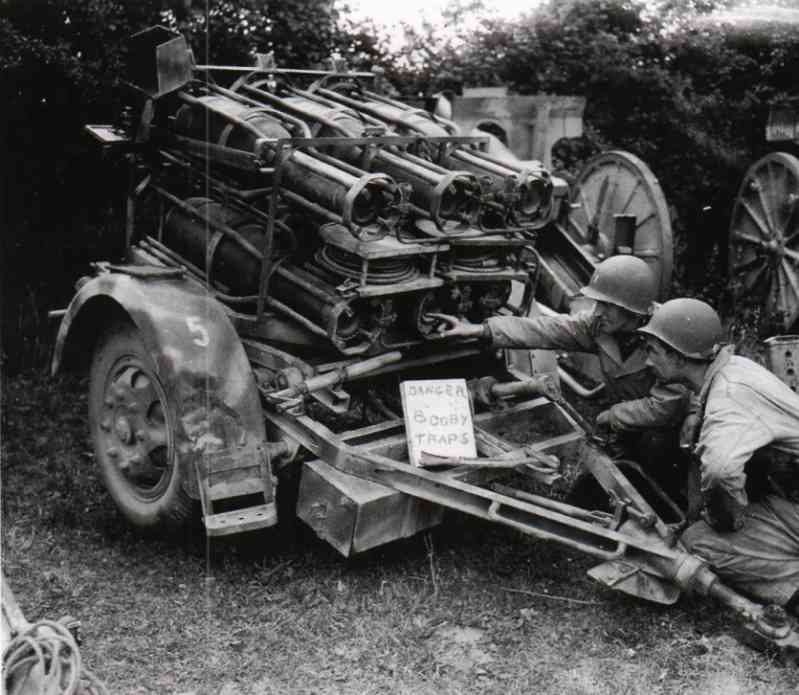
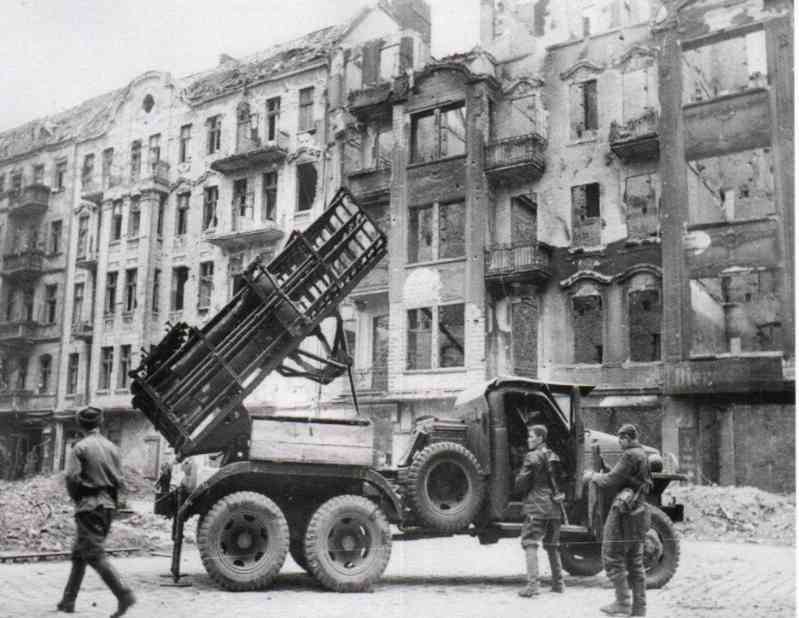
Rocket launchers are artillery weapons that rely on rocket fuel to propel the projectile. The main advantage is that high-strength materials are not required to make the barrel, and the launch tube only serves to contain and direct the projectile. Some models do not even require a directional tube. The use of rocket-powered projectiles can greatly reduce the mass of the launch system, and use multiple rapid-fire to enhance firepower. The Soviet "Katyusha" projectile during World War II was equivalent to the M30 122 howitzer in terms of power, but 16 rounds of ammunition can be carried by an ordinary medium-sized truck. The famous BM21 "Hail" rocket launcher in the Cold War can install 40 projectiles on a medium-sized truck chassis, and complete a 40-round concentrated fire in 20 seconds, which is equivalent to the salvo firepower of two 122-meter howitzer battalions. The BM27 rocket launcher equipped by the Soviet Union in the middle and late Cold War has a range of 40 kilometers. The basic mass of the ZIL 135 8x8 all-wheel drive wheeled chassis transport type is only 10 tons (the missile carrier type weighs 11.6 tons), and the marching mass with 16 rounds of ammunition (single weight 260 kg) is only 22.7 tons. The projectile dispersion of the BM27 is indeed larger than that of a barreled artillery, but the BM27 can complete the launch of 16 rounds in 20 seconds, and the rocket fragments can cover a range of 100 meters x 150 meters. The explosive killing range of the American 203mm howitzer is 72m x 18m (horizontal-vertical axis), while the killing range of the 155mm howitzer is only 44m x 23m (horizontal-vertical axis). The projectiles of barreled artillery need to withstand the high chamber pressure during firing. The wall thickness and mass of the warhead are large, and the charging space is limited. The explosive loading of the 203mm warhead with a mass of hundreds of kilograms is only a few kilograms to more than ten kilograms. The explosive killing efficiency is not good, but the smaller cross-section and high-strength projectile have better penetration. It can penetrate 20~30mm steel plates or 0.5m thick concrete fortifications at large falling angles. The thickness of the projectile penetrating dry earth and stone bunkers can reach 3 meters.
Although the BM27 cannot meet the combat requirements of attacking point targets, and its ability to destroy solid fortifications is not as good as that of tube artillery, it can fully meet the requirements of military assembly areas, artillery and anti-aircraft weapon positions, beaches or ferry-type surface targets that long-range artillery usually attacks. If the BM27 uses rockets loaded with 30 rounds of lethal submunitions, the concentrated firing of 16 rounds from a single gun can intensively kill a large range of vivid targets, and the impact of shooting dispersion on combat missions is relatively small. According to the artillery equipment organization that continued from the Soviet period, each BM27 is equipped with 2 transport/loading vehicles with 16 rounds of ammunition. The reloading time when there is a preset position does not exceed 20 minutes. Each BM27 can fire 48 rounds of 220mm rockets in 1 hour, and the firepower intensity far exceeds the 2S7 heavy artillery organized by the army group.
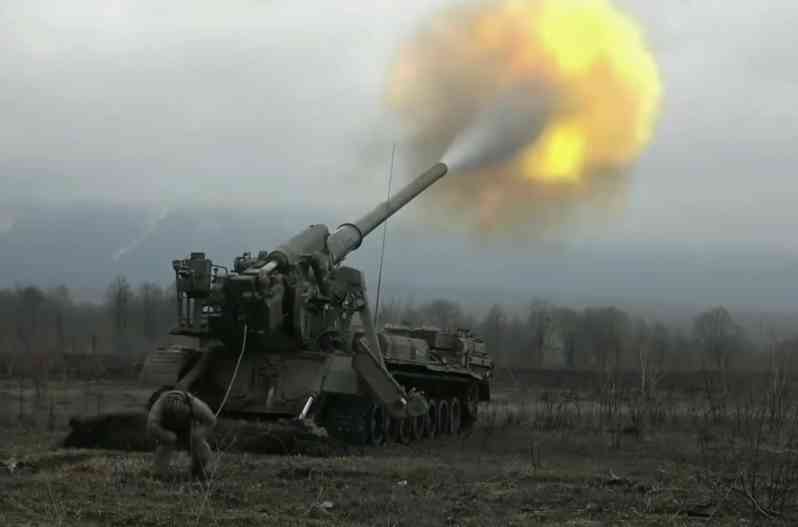
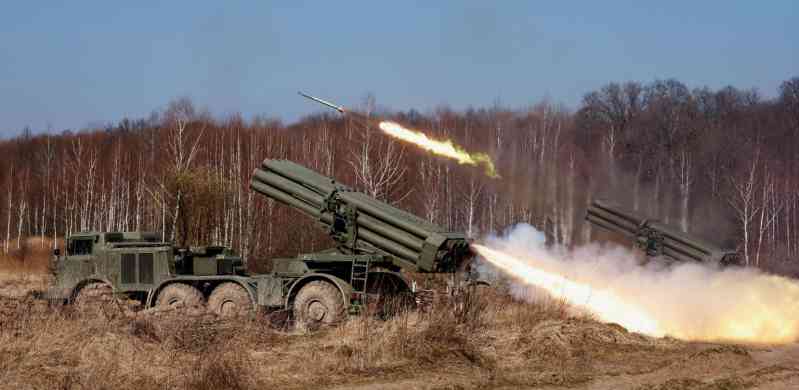
In the middle of the Cold War, due to the coverage of the C2 system, the range of the divisional artillery did not exceed 25 kilometers, and the army/group army could reach 30~35 kilometers. In the late Cold War, thanks to the development of satellite, radar and aerial reconnaissance technology, especially the widespread equipment of anti-artillery radar systems, the ground artillery firepower range of combat units has exceeded 40 kilometers, and ground artillery performing long-range strike missions can be used to attack targets close to 50 kilometers away. The Soviet Union first increased the range of long-range rocket launchers to 60-70 kilometers. A large part of the reason was that the expansion of NATO’s anti-artillery firepower range forced heavy artillery weapons to be deployed in depth. The gun positions that were originally 10-15 kilometers away from the front line had to be moved to 20-25 kilometers behind the front line. The increase in range was also an indispensable protective measure.
The firepower efficiency of rocket launchers obviously exceeded that of barreled artillery. During the Cold War, only the Soviet Union developed a full range of artillery rocket launchers. Most other countries only developed a few specific ranges. The United States did not start to equip M270 medium-range rocket launchers until the end of the Cold War. The main reason why rocket launchers are popular but not popular is that the lack of shooting accuracy is a key factor restricting the development of rocket launchers compared to their strong firepower efficiency. If the shooting accuracy of rocket launchers cannot be improved technically, the development of large-caliber rocket launchers will find it difficult to truly obtain tactical value.
The contradiction between the long-range and precision of rocket launchers
The accuracy and density of rockets used by artillery are not as good as those of tube artillery, mainly due to the restrictions of rocket launch and acceleration methods. The projectile of the artillery has already obtained the maximum initial velocity when leaving the barrel, but the launch tube of the rocket launcher does not have the function of pressurization and speed increase, and the burning time of rocket fuel is longer than that of artillery propellant. This makes the movement speed of the rocket not high when it leaves the directional tube/frame. The active section distance accounts for about 2% of the full range, and there is an acceleration process in the three-axis free state in the initial stage of the trajectory.
The shooting deviation of rocket launchers is mainly affected by the stability of the power stage. Compared with barreled artillery shells that reach the maximum initial velocity and rotation speed when they leave the barrel, the speed of the rocket when leaving the launch tube/frame is not high, and the corresponding rotation speed is not high. The efficiency of the aerodynamic stability surface is also low, and the degree of interference from the launch device and climate is very high. The dispersion value of rockets at the same range is generally more than double that of barreled guns. At close range, the accuracy defects can be compensated by quantity. At medium and long distances, not only the warhead quality advantage brought by the large caliber must be relied on, but also the accuracy of the rocket must be improved as much as possible.
The shooting accuracy of rockets consists of two aspects: accuracy and density. Accuracy is the deviation value from the aiming point when the rocket hits, and density is the mutual distance between the landing points of multiple projectiles when multiple rockets are fired at point targets. The coordination of accuracy and density is also the focus of rocket launcher/projectile design. The most ideal state of a rocket is naturally good accuracy and density. The relatively acceptable state is good accuracy, but relatively low density, which needs to be compensated by increasing the number of launchers or using bullets. The relatively poor state is poor accuracy but good density, which can be moderately compensated by fire control and forward adjustment. The worst state is naturally poor accuracy and density, which can only be partially improved by increasing the bullet dispersion range and surface coverage.
There are three main factors that affect the accuracy of rockets. These three aspects will affect each other and play different roles independently.
The first aspect is the crosswind interference when the initial velocity of the rocket is not high at the beginning of the launch. It can be improved by meteorological radar and meteorological measurement equipment, but the random changes in crosswind and wind force changes at different altitudes cannot be quantified, and the crosswind interference in the descent stage of the rocket cannot be determined, resulting in this factor can only be improved and adjusted but cannot be completely eliminated.
The second aspect is the interference between the tube and the rocket when the rocket leaves the launch track, which is affected by the limitations of the rocket launcher and the rocket structure. The synchronous de-orbit technology of the rocket is a better countermeasure, but it has high requirements for the design and dimensional accuracy of the rocket launch tube/bullet.
The third aspect is the influence of thrust, power, mass eccentricity and dynamic imbalance. The differences in this aspect mainly come from the manufacturing process of the rocket. The mass distribution when assembling the rocket, the density and uniformity of the charge, and the surface finish and dimensional tolerance range of the rocket will cause directional deviations in the ballistic consistency of the rocket during flight, and will also directly affect the speed consistency of the rocket to produce distance deviations. This deviation caused by the manufacturing process itself can only be reduced, but cannot be completely eliminated.
A comprehensive analysis of the firing method of rocket launchers and the process conditions of rockets shows that the factors affecting density and accuracy are not only the above factors, but also the shooting accuracy of rockets has a strong random feature.
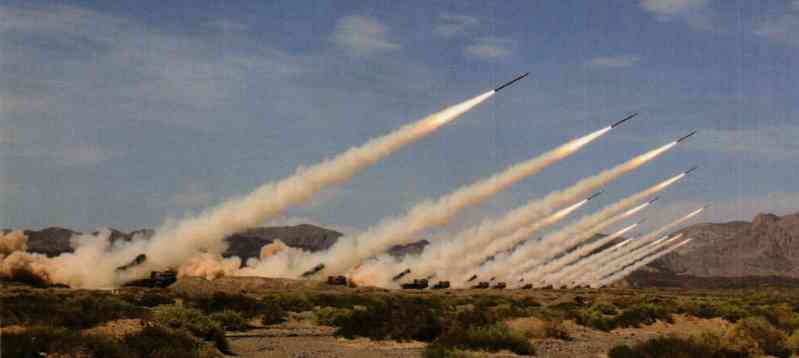
The shooting error of artillery can be divided into two parts: systematic error and random error. The systematic error has the same effect on each fired projectile in a shooting, that is, it affects the deviation of the center of projectile dispersion from the aiming point, and the random error is the deviation of each projectile from the center of dispersion. The so-called uncorrectable/random error of artillery refers to the fact that when the fire control system of the artillery is working normally, the probability of hitting the projectile after correction is not significantly improved, or there is no improvement at all. The main source of the accuracy problem of rocket launchers is random error.
The causes of random errors come from manufacturing and aerodynamic differences. These differences have different effects on each shell, which cannot be quantified, and it is impossible to correct the hit deviation caused by random errors. The more complex the structure of the shell, the more obvious the change of mass/center of gravity during flight, and the greater the random ballistic error of the shell, and random ballistic error cannot be eliminated no matter what technical measures are adopted.
The errors of rocket shells mainly come from the manufacturing stage. Whether it is the structural strength of the shell, aerodynamic design, material technology, or the unevenness of internal fuel and charge, they are all process errors that cannot be avoided in the manufacturing stage, and they are also random errors that are difficult to obtain correction parameters. Just as the accuracy of special bullets for sniper rifles is far higher than that of ordinary bullets, whether it is artillery or rocket launchers, the higher the manufacturing accuracy of the gun body and ammunition, the stricter and more meticulous the mass distribution and filling density control, the better the dispersion control effect of the projectile, and the higher the difficulty of production and guarantee.
The precision of precision parts of tactical missiles can reach 0.001~0.002 mm. This choice can be realized on missiles that emphasize accuracy, but it has no practical value on rockets that need to consider the manufacturing scale. If rockets want to reduce the aerodynamic errors caused by their own manufacturing, they must improve the process accuracy. As the manufacturing and assembly process accuracy improves, the manufacturing cost will also increase at a greater rate. After a certain level, the process level of rockets will be close to that of missiles, and rockets will lose their cost advantage relative to missiles with the same range. The reason why large-caliber guided rockets are not called missiles, in addition to some differences in function, is that rockets pay more attention to batch size in manufacturing technology. Only after ensuring the scale of production will the process accuracy be properly considered.
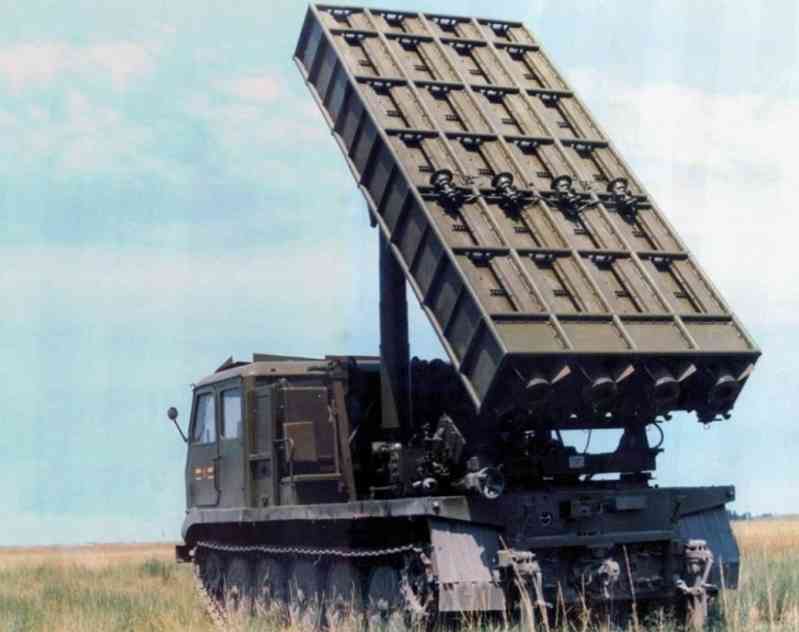
Measures to improve the accuracy of conventional medium and long-range rocket shells
The increase in the range of long-range rockets is bound to increase the dispersion range. Even if the dispersion accuracy data remains unchanged, the actual dispersion distance will increase significantly after the range is increased. When the shooting dispersion range is expanded to a certain extent, even if a submunition warhead with a large coverage area is used, the long-range rocket launcher will lose the effective strike capability of the artillery. When the rocket launcher is extended to a long distance, the lethality of the projectile must be expanded. However, whether it is a large independent blasting warhead or a larger number of dispersed submunitions, the accuracy of the rocket’s shooting at the target is still the premise of combat effectiveness. Improving the autonomous control ability of the rocket has become a basic design requirement for long-range rocket launchers.
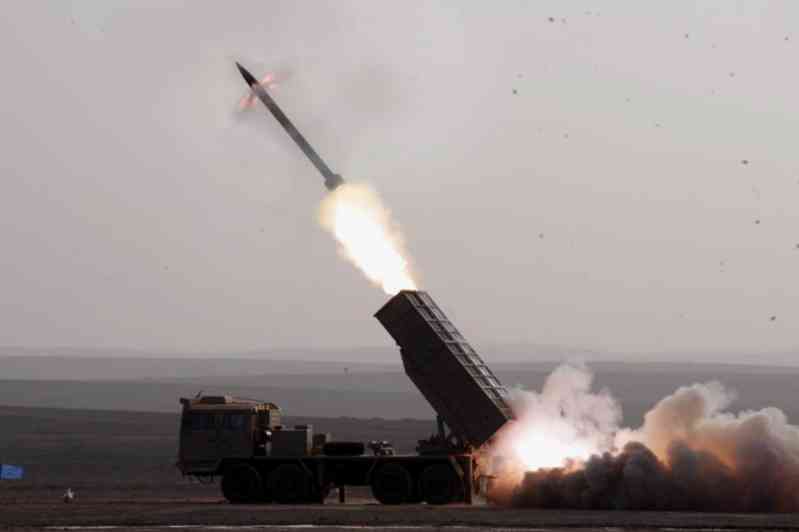
The most effective way to control the deviation of conventional rockets is rotation. Almost all artillery rockets are designed to ensure stability by rotation, but there are limitations in functional realization in actual application. The main acceleration time of the rocket is after leaving the launch tube, which makes the movement speed of the projectile not high when leaving the launch tube. The initial rotation speed provided by the spiral guide groove set in the launch tube itself is low. The low rotation speed at the beginning of rocket launch will inevitably affect the stability of the trajectory. This is easy to overcome for medium-range rockets with a range of 20 to 30 kilometers, but it cannot meet the requirements of medium- and long-range rockets with a range of more than 40 kilometers. Among the measures to increase the density of long-range rockets in the late Cold War, measures to ensure the stability of automatic control in the initial stage of launch are important technical means.
The maximum range deviation of the indirect fire of the barreled artillery is about 0.4% in distance and only 0.1% in direction. That is to say, at a theoretical range of 20 kilometers, the indirect fire distance deviation is about 80 meters and the direction deviation is about 20 meters. Correspondingly, the domestically produced Type 83 273mm rocket launcher using conventional stabilization technology has a distance dispersion of 1/134 (0.75%) and a direction dispersion of 1/83 (1.2%) at a range of 40 kilometers. The corresponding maximum distance deviation is 300 meters and the direction deviation is 483 meters. The ballistic characteristics of conventional rockets with directional deviations greater than distance deviations are exactly the opposite of the dispersion characteristics of barreled artillery, reflecting different ballistic characteristics under different initial velocities and stable states.
The Type 83 273mm rocket launcher is the first generation of practical medium-range rocket launchers in China. The WHM204 rocket used still uses a single killing and blasting warhead. The rocket weighing 484 kg is equipped with a 134 kg warhead and loaded with 33 kg of explosives. Although the rocket launched by the Type 83 273mm rocket launcher has a maximum speed of 835 m/s, the speed of the rocket when it leaves the launch tube is only 38 m/s. The low speed is very susceptible to its own structural design and the climate of the combat area.
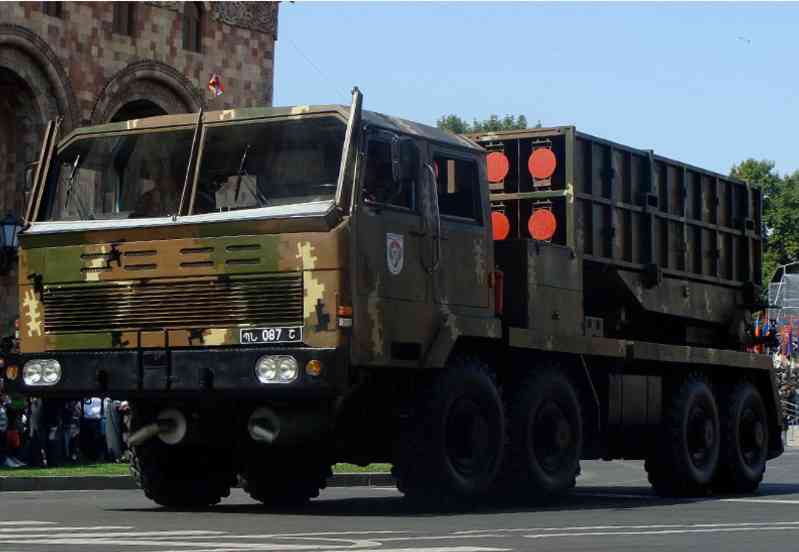
The performance indicators of the WHM204 rocket, which was designed earlier, are indeed insufficient, but the application technology direction is correct. The export-oriented WM80, which China improved on the basis of the Type 83, has the same caliber of 273 mm as the WHM204 and similar structure. Its total weight has only increased to 508 kg, but its range has been greatly increased from 40 km to 83 km, and its comprehensive density has been maintained at a high standard of less than 1%. The WM80 rocket uses the same guide-rotor engine as the WHM204 to achieve active rotation. A special guide-rotor engine is installed behind the warhead. Relying on the circumferentially arranged inclined nozzle, the rotary engine is started after the front end of the missile body extends out of the launch box, and the gunpowder gas pushes the missile body to start circumferential rolling.
The small deflection angle guide tail stabilization surface of the rocket body at the tail section adopts an active jacket structure. The outer ring of the four tail fins is constrained by the linear guide rail of the launch box. The wing surface maintains lateral stability relative to the rolling missile body, which is convenient for the rocket to use a regular box structure. The fixed tail fin also achieves a 12 rpm off-orbit speed equivalent to the spiral guide rail. The guide-rotor engine provides the initial rotation speed of the rocket at the beginning of the launch, but the existence of the guide-rotor engine also limits the layout of the missile body and the size of the combat section, affecting the further technical and load improvements of the WM80 rocket.
The BM27 (earlier known as BM22) 220mm 16-tube rocket launcher widely used by both sides in the Ukrainian War uses a similarly enlarged BM21 rotation-stabilized rocket with a maximum effective range of 40 kilometers and a slightly better dispersion accuracy than the WHM204 rocket of the 83-type 273mm rocket launcher with a similar range.
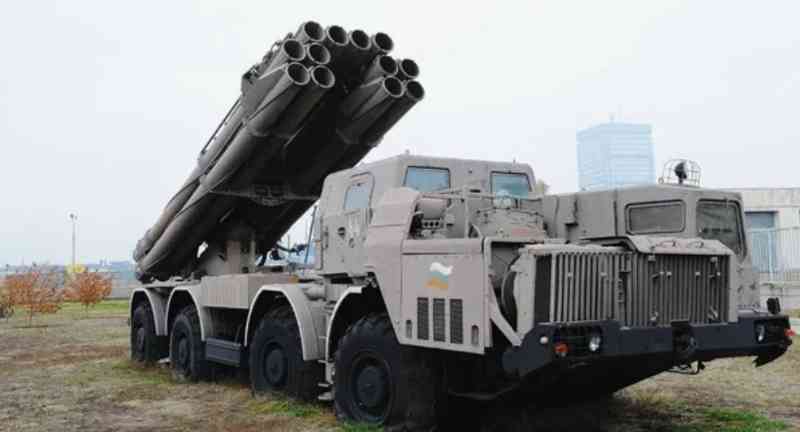
The Soviet BM27/30 rockets all use a spiral guide rail rotation method in the barrel. The inner and outer diameters of the rockets are roughly similar. When the front end of the rocket is out of the barrel, the rear end is still moving in the guide rail. The lateral interference generated does have an adverse effect on the shooting density. The BM27 rocket launcher has a relatively short range of 40 kilometers. The density range at the maximum range is about 240 meters (distance) x 430 meters (direction). The dense shooting and submunitions of the reasonably set positions can meet the basic combat needs. The Soviet Army’s front artillery has 72 BM27s, and the army artillery has 24 BM27s. In the Russian era, it began to gradually replace the 2S7 self-propelled artillery, and even in the Russian army, it has begun to replace the BM21 of the divisional artillery. The BM30 is a long-range rocket launcher that replaces the "Frog" tactical rocket of the field army, used to meet the task of striking point and surface targets at a distance of 70 kilometers. The larger range, the range and accuracy requirements of replacing tactical rockets require the BM30 to adopt a ballistic correction method to reduce the deviation value of the rocket through active control, but the need for rotation and simplified layout make the BM30 still continue the traditional rocket design of the BM27.
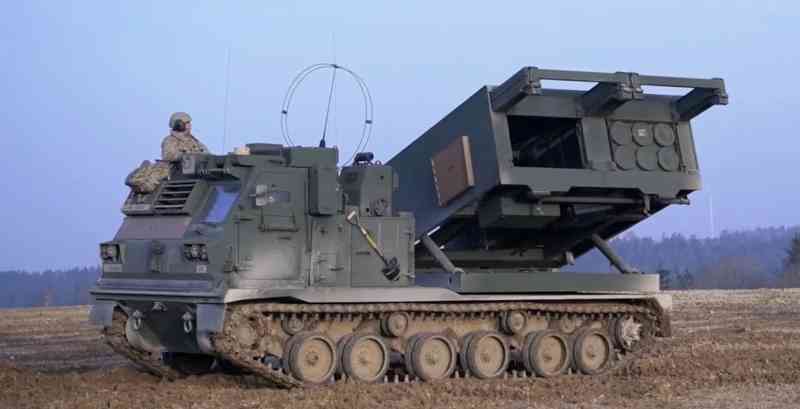
In the early days of the Cold War, the United States did not attach importance to the development of artillery rocket weapons. Most of the rocket launchers in service were used to perform chemical warfare tasks. It was not until the late Cold War that the M270 medium-range rocket launcher was developed to enhance the firepower of army and division-level long-range artillery and replace the M110 self-propelled artillery, which was gradually losing firepower efficiency. The M270 tracked chassis is equipped with two sets of launchers. Each launcher can accommodate a rocket unit tube with an aluminum alloy frame and 6 fiberglass launch tubes. The vehicle-mounted lifting device can be used to complete the loading of the rocket module. The design of the M270 adopts many new technologies that are conducive to mobile operations and flexible response, and the traditional problem of insufficient accuracy of rocket launchers has also been improved.
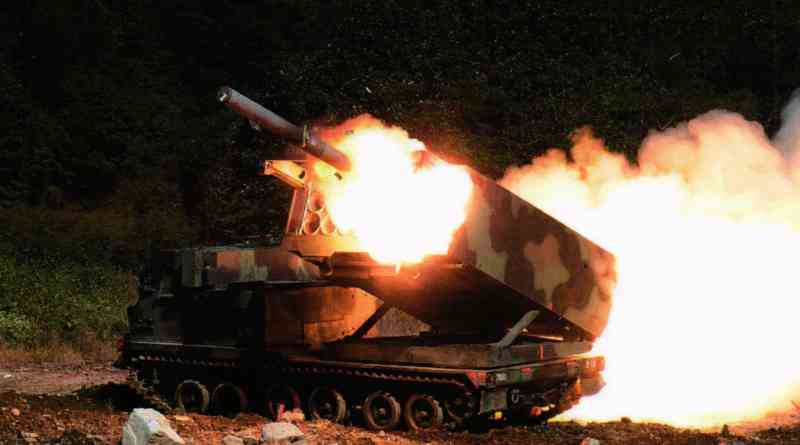
The M26 rockets that match the M270 use traditional rotation stabilization technology. Each launch tube has four guide rails with a spiral angle of 10.8 degrees, which are used to force the projectile body to rotate in the tube with the corresponding guide block jaws at the tail of the rocket. After the rocket is launched out of the tube, it is accelerated counterclockwise and rotated stably through four inclined folding tail fins. The basic technical concept is not essentially different from that of the BM27. In order to improve the accuracy of the rocket, the M270 uses a relatively novel rocket simultaneous departure technology, especially considering the elimination of the influence of the launch tube disturbance. The inner tube of the M270 rocket packaging/launch tube is different from other tube-launched rockets. The inner diameter of the front section of the launch tube is larger than the outer diameter of the rocket, and a separate sabot is set at the center of gravity of the front section of the rocket. When the M26 rocket is launched, it is forced to rotate in the tube by the guide rail. The guide rail provides the rocket with a rotation speed of 12 rpm at the moment of exiting the tube. When the tail section of the rocket is separated from the guide rail in the launch tube, the front end of the sabot is also separated from the launch tube constraint, ensuring that the M26 body is separated from the launch tube constraint at the same time before the axial direction of the M26 body is not separated from the launch tube, reducing the interference of the launch tube/frame on the lateral stability of the body due to impact or structural vibration. The dispersion value of the M26 is similar to that of large-caliber barreled artillery with similar range, and the dispersion range of the longitudinal and transverse axes is also an ellipse with relatively close circumferential length.
Difficulties and breakthroughs in rocket artillery guidance technology
Precision guidance technology has reached a high level in the late Cold War, but inertial guidance suitable for missile self-control still has the problems of large size and high cost. It is still acceptable for use in high-value cruise missiles, but it is too luxurious to use it in rocket artillery shells.
At that time, the inertial devices that could be used for missiles were very expensive. High-precision ones were used for high-value missile weapon systems, while low-cost ones were not very accurate either. They were mainly used for attitude control devices of various types of tactical missiles, and the terminal guidance system of the missile made up for the low accuracy of the inertial system. At the end of the Cold War, low-precision inertial reference systems could already be used for large-caliber rockets, but in the short-cycle large-scale equipment update phase of the Cold War in preparation for the world war, the combat effectiveness of long-range guided rockets was not as good as tactical missiles, and the cost was much higher than that of ordinary rockets. The workload of routine inspection and maintenance was large, and it was a thankless task to use them on medium-range rocket launchers. At that time, only the Soviet Union was engaged in long-range rockets, which formed the basic design of long-range rocket launchers in various countries in the late Cold War, which focused more on relying on aerodynamic and structural measures to improve accuracy. Only the Soviet Union, a traditional rocket power, tried to use long-range rocket guidance systems.
In the design of rocket artillery at the end of the Cold War, the United States and the Soviet Union controlled the density of medium- and long-range rockets with a range of 30 to 40 kilometers to a standard of 0.5 to 0.8% by adopting different technologies and application methods, which better balanced the contradiction between range and accuracy. However, under the guidance of the continuous increase in the range of rockets, conventional technical measures can no longer meet the requirements of ensuring density. The comprehensive application of guidance and control technology has begun to become a rigid demand for the long-range rocket artillery, and the emergence of guided rockets is a matter of course.
The guidance correction of rocket artillery shells directly corresponds to the progress of guided finished products. The electromechanical gyroscope at the end of the Cold War had a complex structure, a long alignment time, and high cost. The laser gyroscope was a high-tech mastered by a few countries, and the cost was not low. With the rapid development of navigation technology and finished products in the 21st century, optoelectronic gyroscopes began to be widely used in the military and civilian markets. Fiber optic gyroscopes have become efficient inertial reference components with controllable accuracy and cost. Global positioning satellite signal receiving devices have also developed from system level to board-chip level. The cost of missile-borne INS/GPS systems, which cost hundreds of thousands of dollars at the end of the Cold War, has now been reduced to a few thousand dollars. The size and power consumption of the guidance system after the application of reinforcement technology have been reduced by nearly 70% (limited by the structural requirements of the servo).
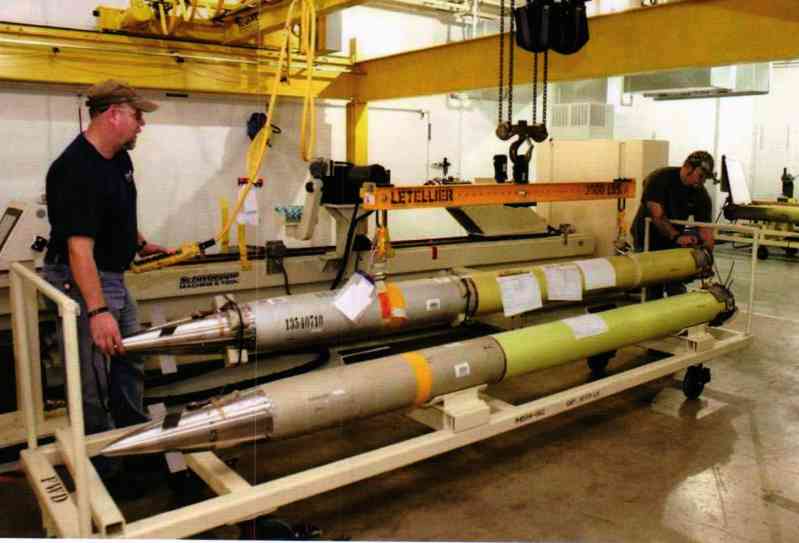
At present, there are not many countries that can design and manufacture guided artillery shells, but there are many countries that can manufacture guided rockets. This is because the shells have to withstand high overloads when fired, and the performance requirements of the guidance system components are very high, requiring high-level component manufacturing and system reinforcement technology as a basis. The speed at which the rocket detaches from the launcher/tube is not high, and the subsequent acceleration time is relatively long. The overload borne by the on-board electromechanical system is much smaller than that of the barreled artillery shells. Not only can standard military reinforcement components be used, but even civilian inertial or satellite guidance components can be used after corresponding installation design and simple reinforcement. By using reinforced civilian measurement devices and electronic products, countries with a certain military technology foundation such as North Korea and Iran can produce guided rockets with quite good performance indicators.
The development of modern rocket launcher long-range ballistic correction technology
The BM30 rocket launcher with a range of 70 kilometers equipped by the Soviet Union at the end of the Cold War was the long-range rocket launcher with the strongest comprehensive combat performance during the Cold War. Although the BM30 was equipped at a similar time to the US M270, its range is more than twice as high. And unlike the impression of most military fans, the 300mm rockets used by the BM30 all use simple guidance correction technology that can significantly improve accuracy. It is a cutting-edge model leading the development of rocket guidance technology application.
The rocket’s hit deviation mainly comes from three main aspects. The first is the initial disturbance when the rocket leaves the orbit, which is the longitudinal axis angular velocity disturbance caused by the vibration of the directional tube/box-frame when the rocket is launched. The second is the gust disturbance when the initial velocity of the rocket leaving the tube is not high. The third is the consistency effect of the rocket and the rocket engine during manufacturing/loading. According to the interference of conventional rockets, the main factor in dispersion control is the barrel disturbance at the beginning of the rocket launch. The US M26 adopts synchronous deorbit and high manufacturing precision measures, and the 9M55 rocket equipped with the Soviet BM30 goes a step further while rotating, using an active correction system that can control both the longitudinal and transverse axes.
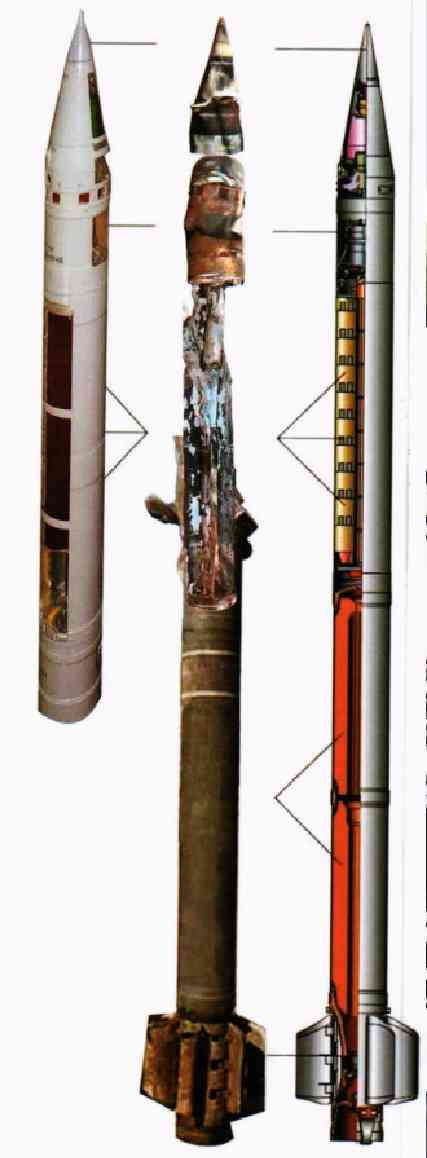
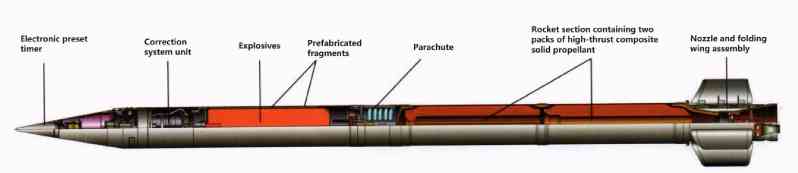
The guidance system of the 9M55 series rockets equipped with the BM30 uses two guidance devices for lateral and longitudinal control: angle stabilization and distance correction. The angle stabilization system is used to eliminate the self-and climate interference of the rocket in the initial stage, and a simple angle displacement measurement gyro device is used to measure the lateral interference. Considering the low efficiency of aerodynamic control in the low-speed and acceleration stages of the rocket at the beginning of the launch, the 9M55 adopts a gas control method with higher control efficiency. The gas control system obtains the deviation value of the axial direction of the projectile from the theoretical trajectory by the measuring device, and uses the high-pressure gas generated by the centralized gas generator to correct the disturbance deviation in this direction through the four groups of lateral nozzles symmetrically arranged at right angles to each other in the head section. The gas from the corresponding nozzles pushes and corrects the disturbance deviation in this direction. The 9M55 series rockets only make lateral corrections in the first 2.5 seconds of the launch, which can basically eliminate the influence of the initial disturbance interference in the axial direction.
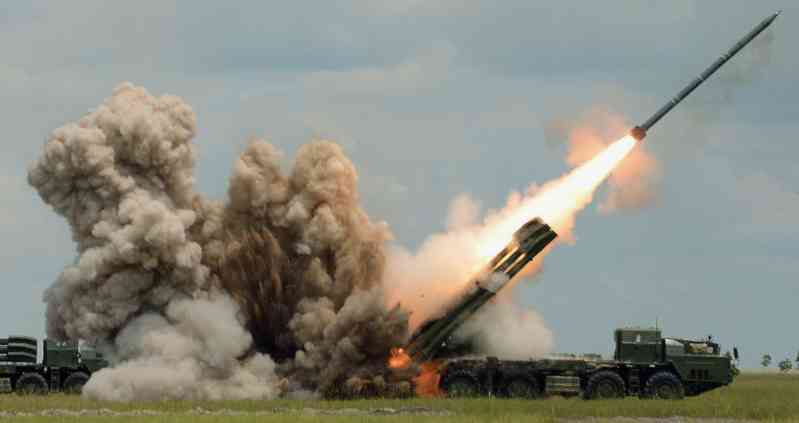
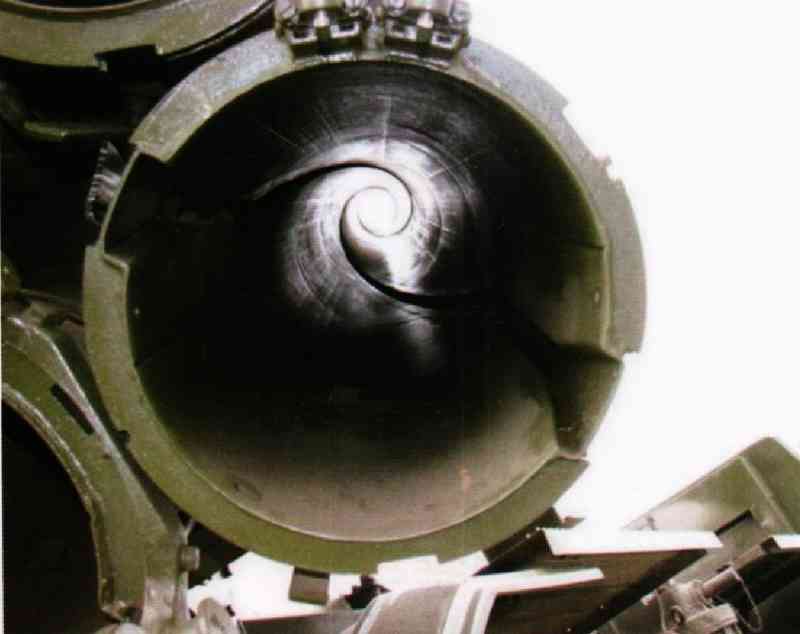
Distance correction uses an acceleration measurement device to control the time when the bullet opens. The onboard accelerometer inputs the measured acceleration into the calculation device, and the velocity value is obtained by the first integration, and the real-time ballistic coordinates of the rocket are obtained by the second integration. The opening time of the chamber is determined by the electronic time control device. The longitudinal opening time determined by the distance correction system, combined with the ballistic deviation corrected by the lateral correction system in the lateral direction, enables the 9M55 series rockets to fit the theoretical trajectory to the maximum extent and obtain the hit accuracy that meets the tactical and technical requirements. All types of conventional rockets used by Russia’s BM30 adopt a simple control system. Although the active correction system only corrects the velocity vector, it can still reduce the theoretical deviation value of the maximum range to 150 meters. The hit error at a range of 70 kilometers is equivalent to that of the M26 at 32 kilometers, which is enough to meet the requirements of accurately hitting targets with conventional rocket submunitions.
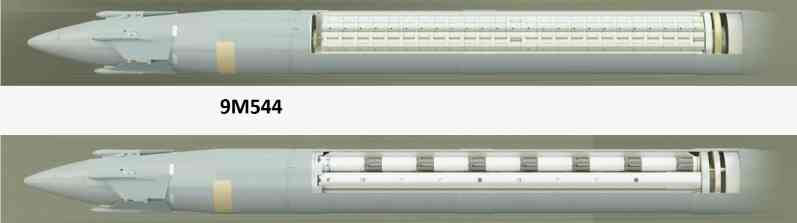
9M55 rockets can correct the trajectory in the horizontal and vertical axes, but because it has no direction control means at the end of the trajectory, the rear part of the trajectory relies solely on inertial trajectory. The dispersion value of a single warhead warhead can only be controlled within the 150-meter standard, and it does not have the accuracy of hitting point targets, but the equipment was already an unprecedentedly high-precision long-range artillery weapon at the time. If the Russian military system uses the deployable aerodynamic surfaces of the 9M544 to replace the previous gas control system on the newly manufactured 9M55 series missiles, it can maintain the original measurement system while having full ballistic control capabilities, with almost no need to make major changes to the original design and increase costs. It can ensure that the dispersion range of the pneumatically controlled 9M55 is within 50 meters, close to the 30-meter dispersion standard of the mainstream missile-borne low-cost INS.
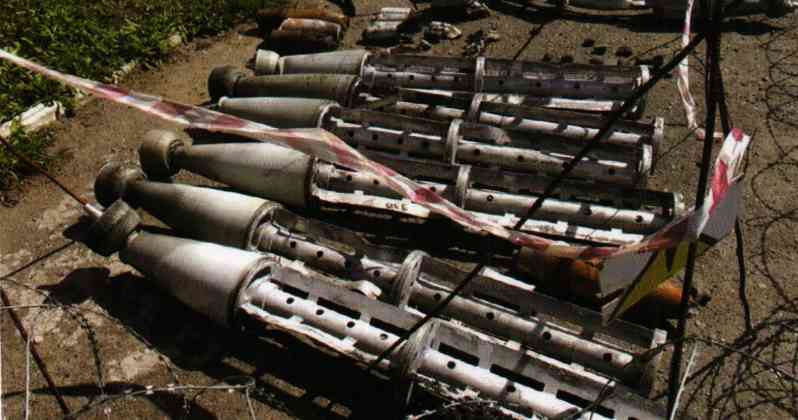
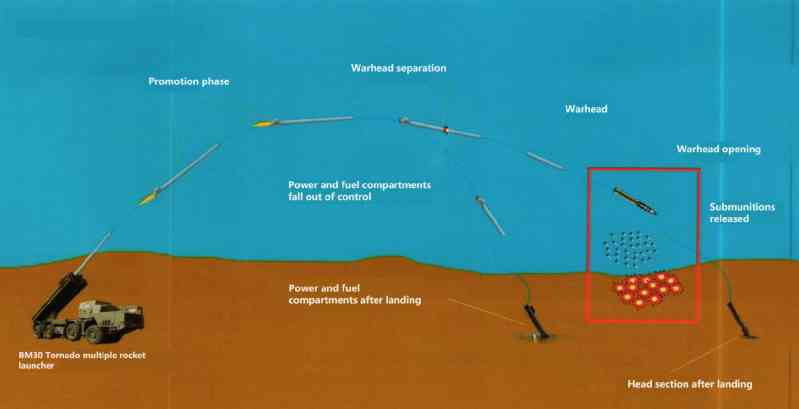
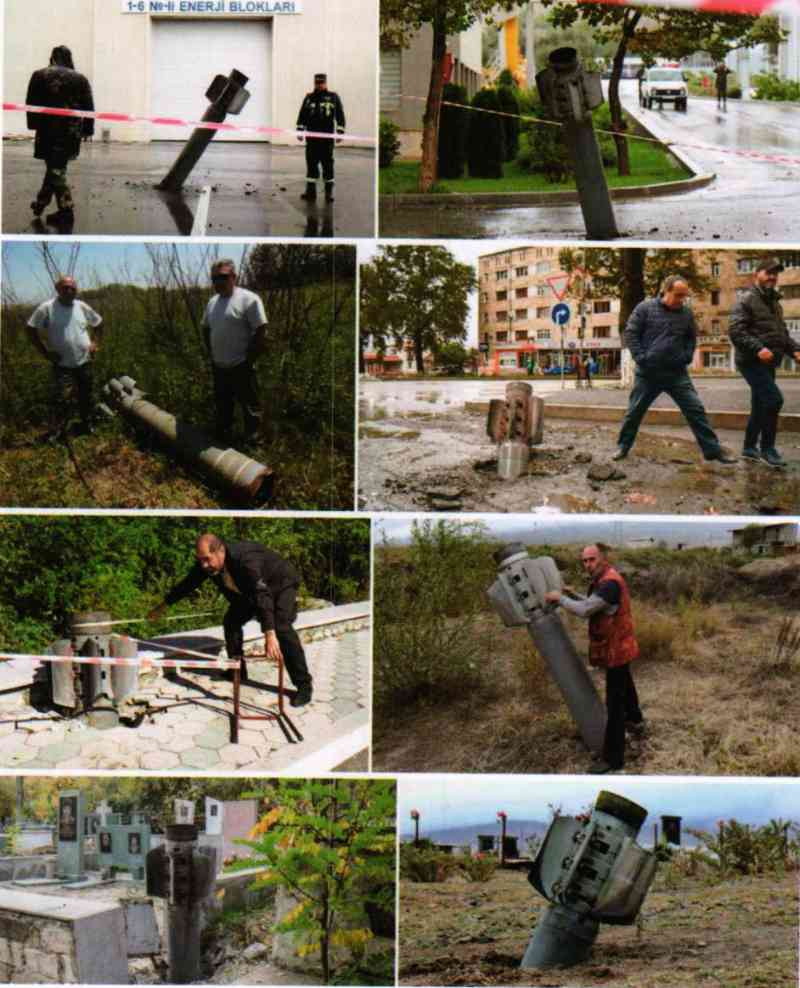
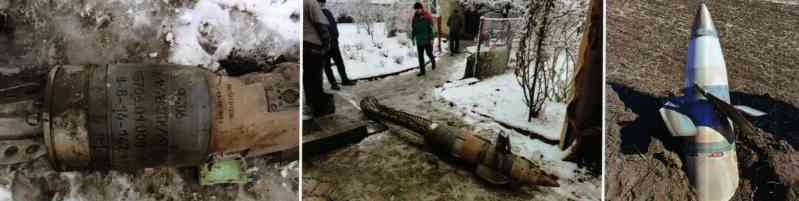
In the Soviet era, medium and long-range rockets focused on area damage effects. Independent explosive warheads were mostly used to attack surface targets, and air-dropped submunitions were the most widely used type of ammunition in artillery operations. After the submunition bay of the BM27/30 rocket was opened in the air, there was still a central fixing frame between the engine section and the head section of the missile body to land as a whole. The rocket wreckage frequently inserted into the ground on the Ukrainian battlefield is basically the steel cylinder of the rocket power section that fell after the bullet was opened in the air. At the same time, the head section after the bullet was dropped is mostly in a state of facing up when it lands because of the existence of the bullet fixing center tube. This allows the 9M55 and 9M544 guided rockets with bullet bays launched by the Russian army, and the head section/guidance device (fairing) can basically remain relatively intact after landing.
M142 "HIMARS" and 9M544 in the Ukrainian War
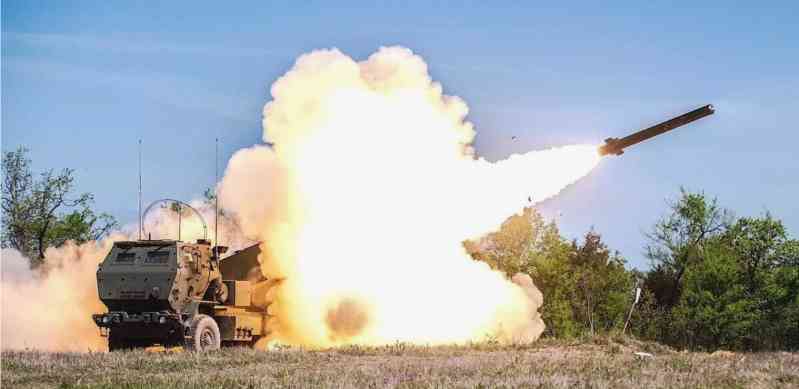
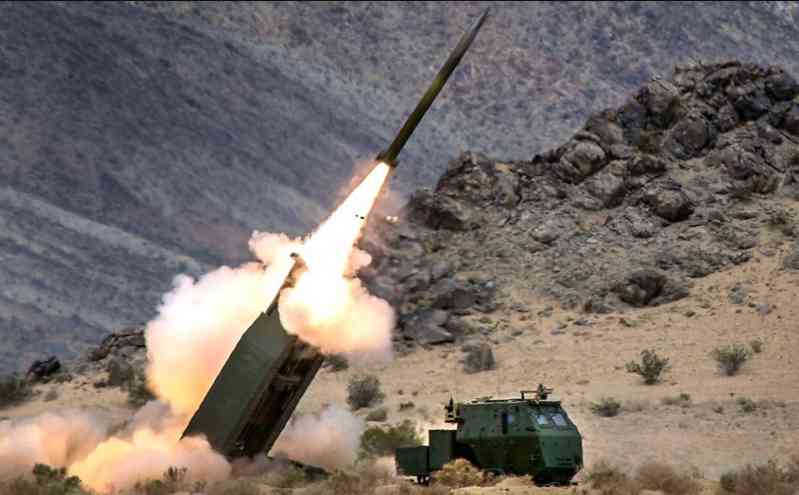
M142 "HIMARS" High Mobility Artillery Rocket System (HIMARS) is a newer model of the US multiple rocket launcher system (MLRS). It is also a wheeled lightweight modification based on the famous M270 rocket launcher system to adapt to the change of the US military’s strategic system from total war to flexible response.
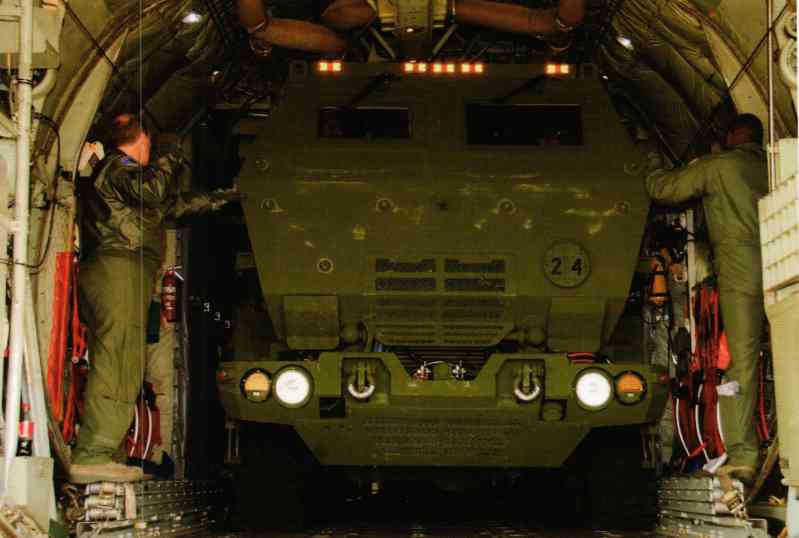
The US Army began to equip the M270 medium-range rocket launcher system in the late Cold War. The M270 integrated on the tracked chassis has two containerized 6-tube rocket launch modules, and the launcher is equipped with a device for automatically hoisting 6-tube launch modules/single-shot ATACM tactical missiles. The M270 has excellent combat performance, strong firepower, and balanced off-road and protection performance, but the M270 with a total mass of 25 tons is too large to be transported by tactical transport aircraft, and cannot adapt well to the long-range strike firepower requirements of the newly established light combat forces of the US military. The M142 uses a light armored chassis modified from a lightweight 6x6 truck, and is only equipped with a 6-tube launch module. Although the firepower is reduced by 50% compared to the M270, the total mass has been compressed to less than 11 tons that can be carried by the C130 transport aircraft. It is mainly assigned to the US airborne troops and mobile combat forces using wheeled chassis.
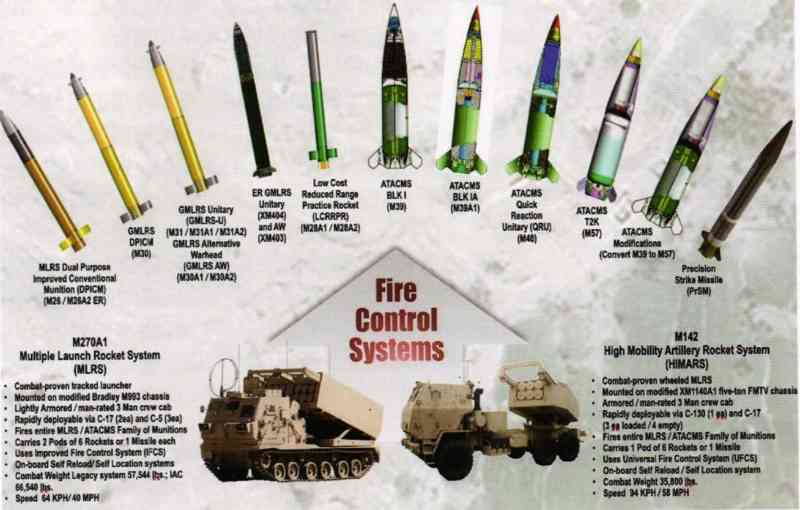
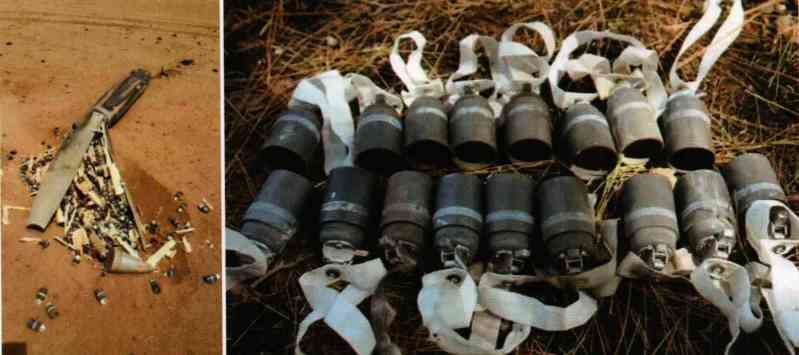
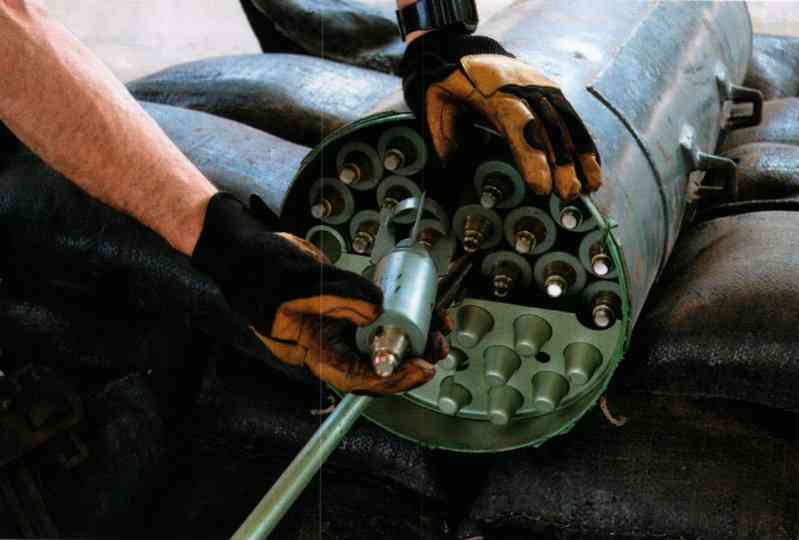
HIMARS can use M30/31 rockets with corrected ballistics, or traditional M26 rockets and ATACM tactical missiles. A single system can realize Russia’s tactical and campaign attack system consisting of BM27, BM30 and "Iskander". The M26 rocket is the standard bomb equipped for M270 at the end of the Cold War. The whole bomb weighs 310 kg. The 154 kg cluster warhead carries 644 M77 bullets weighing 0.23 kg each, with a range of 32 kilometers. The M26 bullets are divided into 8 groups in the cabin. The first group is divided into 3 layers, with 7 M77s in each layer, the second group is 4 layers, with 14 M77s in each layer, the third group is 2 layers, with 21 M77s in each layer, and the fourth to eighth groups are divided into 5 layers, with 21 M77s in each layer. The whole bomb carries 644 M77 bullets. The improved extended-range M26 has a range of 45 kilometers and carries 518 M77/85 bullets. The extended-range method is to replace the space of the 6 rows of bullets in the rear section of the M26 bullet bundle with a rocket engine. The improvement method is simple and crude, but it is indeed direct and effective. The M26 rocket is controlled by an electronic fuse to explode and open the cabin at an altitude of 600 to 1000 meters. The bullets are dispersed by the explosion effect of the central detonator. The bullet dispersion range of a single bullet is an area close to an ellipse with a diameter of about 200 meters. According to the model, the distance and direction deviation values (bullet dispersion center point) of the M26 rocket are no more than 0.7%, which is close to the deviation value of 0.4%~0.5% of the barreled artillery with the same range. Combined with the dispersion range of the air-dropped submunitions of no less than 200 meters, it can be said that as long as the aiming point of the M270 gun group has no deviation, the target aiming point will be within the bullet dispersion range of the M26. The U.S. military’s intention to equip the M270 is to replace the M110 large-caliber self-propelled howitzer. Taking into account the type of M270’s attack targets and the effectiveness of ammunition, the requirement to equip the M270 with a single explosive warhead was abandoned, and the cluster warhead was fully adopted to achieve the expected combat mission. The range of the M30/31 is 70 kilometers, and there are also parameters for a range of 75 kilometers. The improvement method is to use precision guidance technology while increasing the range. The military mission of the US military when developing the M30/31 guided rockets was mainly to meet the infantry’s needs for long-range precision strike artillery in combat situations such as public security/counter-guerrilla warfare, and to adapt to the characteristics of the widespread use of drone reconnaissance and positioning in modern local wars.
According to the theoretical data, the accuracy conditions of M30/31 are estimated as follows: the maximum deviation value at the maximum range of 60 kilometers is about 330 meters. The high-performance weather radar and new algorithm are used for trajectory correction. The deviation of the aiming point can be reduced to 270 meters, which can basically meet the damage requirements of the uncontrolled attack of submunitions. There is a high probability of covering the target range by launching 2~3 cluster bombs. The combined guidance system used by M30/31 can only be said to be a trajectory correction device, which is used to correct the deviation from 300 meters to 10~30 meters. Under ideal conditions, it can meet the hit effect within 3 meters (military standard GPS can reach 1 meter for missile load and 0.7 meters for navigation). A single warhead in this situation The M30/31 trajectory correction method is to use INS to correct the active segment deviation in the initial stage, and use INS/GPS to reduce the aiming line deviation value in the final stage, so that the actual trajectory of the rocket is consistent with the theoretical trajectory to the maximum extent.
The M30/31 (cluster/single warhead) guided rocket adopts INS/GPS active control technology, which can measure the trajectory deviation with the inertial reference system in the whole trajectory range, and use GPS to complete the intermittent correction of the short interval of the hit point in the approach stage. The theoretical hit error at the maximum range can reach a high standard of 10 meters. After the GPS signal is lost, the correction of the inertial reference system can still reduce the dispersion range of the rocket to 30 meters. The M30 carries an air-thrown warhead with 404 M85 double-acting bullets, while the M31 carries a 90-kilogram prefabricated fragmentation high-explosive combat part, which is filled with about 23 kilograms of high-energy insensitive explosives. The fuze can choose three detonation modes: air burst, trigger, and delay.
In the evaluation after the U.S. military used the M142 to launch the M30/31 rockets in actual combat in Afghanistan, it was believed that the high accuracy of the guided rockets was trustworthy. In theory, it was no longer necessary to use submunitions to increase the killing coverage. In the production of ammunition, the production of M30 with cluster submunitions was reduced, and more attention was paid to the production and equipment of the M31 with a single explosive warhead. The U.S. military currently attaches importance to the production of the M31 with a single warhead. In addition to the high misfire rate of the M30 double-acting M85 bullet, it is also because the U.S. military does not need to consider it at this stage. In order to suppress large-scale armored clusters, the demand for the M30 with a kill function is naturally lower than that for the M31 with a point kill function.
HIMARS uses M31 rockets with INS/GPS ballistic correction capabilities, and demonstrated the tactical effectiveness of guided rockets in the attack on targets behind the Russian-controlled area during the Ukrainian war. When shooting at the bridge target behind the Russian army, the M31 rocket used the GPS active correction method of the impact point, and determined the landing point of multiple M31 rockets before launching. After launching, the designed hit point is formed within the predetermined range, achieving an ideal damage state where the landing point and explosion point of multiple rockets can be designed. According to the performance of the photos, when the M31 rockets were fired at the bridge target, multiple rounds were distributed at nearly equal intervals on the horizontal axis of the bridge, and small craters (the warhead mass was not able to destroy the strong concrete building) formed transverse damage, which fundamentally affected the bridge’s bearing structure and forced the Russian side to interrupt vehicle traffic while the main body of the bridge deck was intact. The effect of the Ukrainian army using M31 to attack the Russian army’s rear key points was obvious, but this fighting method was more similar to the city attack in the Iran-Iraq War and was not very suitable for tactical and campaign attack missions. The key to using guided rockets to attack important targets is to determine the location of the target, which was not difficult during the Russian-Ukrainian War. After all, both sides originally came from the Soviet Union, and the locations of many key targets were clearly recorded in small notebooks. The locations of the Russian bridges and railways behind Kherson were fixed, and civilians were not prohibited from passing. Intelligence personnel could easily conduct satellite positioning of key points and guide the targeted attacks of guided rockets. Although Ukraine’s attack on the Russian command system and warehouses lacked intelligence support, it was able to roughly analyze the type and location of the target through information support provided by drones or NATO satellites and electronic intelligence systems. Even if the judgment was wrong, it would not have much impact. At least firing rockets could add points in terms of publicity.
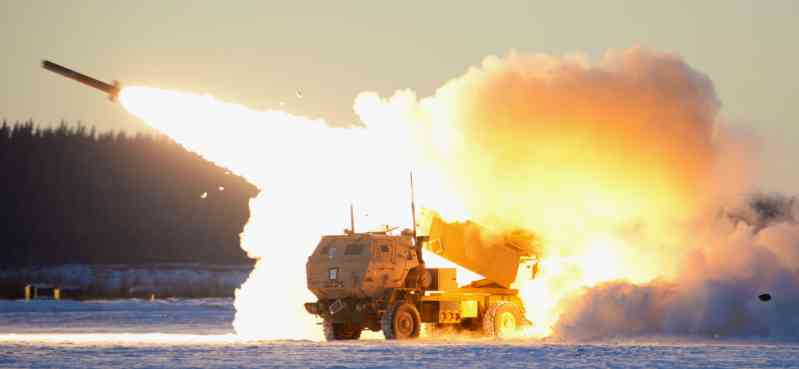
The most effective damage stage of artillery firepower is the first 1~2 minutes of shooting. After that, the targets under fire have reaction time to take concealment measures. The advantage of rocket launchers in covering shooting is quite obvious. The M26 conventional bullet is used to perform anti-infantry/equipment and artillery tasks. The firepower effect is far greater than that of ordinary barreled artillery. The firepower efficiency of a single M142 exceeds that of a complete 155 artillery battalion.
If the firepower evaluation is carried out according to the actual situation of the war, the tactical killing effect of the M26 rocket fired by the M142 is extremely good. A single round covers an area of about 5,000 square meters. Although the theoretical killing range is only four times that of a 203mm shell, the M26 is equivalent to dropping 644 fragmentation grenades almost evenly within this range. Even after taking into account the reduction of 15% of the bullets that do not explode, the killing density of the bullet head is far greater than that of the barreled artillery shells that explode at a point. The actual killing effect of a single M26 rocket on exposed/semi-hidden live targets is more than 13 times that of the shells fired by the M110/2S7, and the killing range for armored targets is more than 30 times. The only drawback is that the M26 does not have the effectiveness of anti-bunkering, and cannot effectively fight against covered trenches and shelters. The bullet misfire rate on soft ground such as grass and sand is also high. The M77/85 bullet has less charge and smaller fragments. Infantrymen wearing modern protective gear can effectively protect themselves from bullet fragments with helmets and soft bulletproof vests, and their lethality is significantly lower than that of large-sized fragments of conventional artillery shells.
Both the US M26 and the Soviet/Russian 9M55 use cluster warheads, but the 644 bullets of the M26 far exceed the 72 bullets of the 9M55. Does this mean that the design level of the M26 is higher? Not really. Different bullets represent different considerations of both sides on the lethality of the bullets. When the United States developed the M26, the target it was fighting against was the Soviet armored cluster. The lethality requirement of the bullet was that at least one bullet could hit the projected area of each armored target, and the number was the key to ensuring the lethality. The mass of the M77 bullet loaded in the M26 is only 0.23 kg. It uses a flexible ribbon to slow down and a trigger fuse to detonate. The effect of each M77 is equivalent to that of a dual-purpose gun-mounted 40 grenade. The fragmentation killing radius can only barely reach the level of a hand grenade. The blind fire rate of the Zhan army is also high. In the 9M55 series of rockets developed by the Soviet Union for the BM30, the anti-armor relies on the 9M55KI type with 5 self-seeking terminal-sensitive bullets. The 9M55 loaded with 72 bullets is a pure lethal bullet. The body mass of each bullet is about 1.9 kg. The bullet has a raised trigger fuse and mechanically deployed stabilizing wings at the head and tail. The outer layer of the cylindrical projectile is a prefabricated fragmentation sleeve. Although the loading density is obviously not as good as the M77 with a head and tail sleeve, the charge, explosion and killing effect of a single bullet can be compared with the 82-caliber mortar shell. The fragmentation coverage of a single 9M55 bullet is much greater than that of the M77, and a larger and denser killing zone can be formed with fewer bullets.
The Ukrainian army currently has a small number of M142s. They basically use M31s to carry out deep-target campaign attack missions. Frontline fire support still relies on Soviet-era rocket launchers. There is currently no clear record of the Ukrainian army using M26/M30 rockets in combat, but there are videos of Russian troops using BM27 bullets to kill Ukrainian skirmishers. The field killing effect of rockets at medium ranges is quite impressive. As the combat situation in Ukraine develops, the United States is likely to provide Ukraine with M26 or M30 rockets and gradually put M142 into fire support for field offensive and defensive battles. The M142 can indeed effectively suppress the combat operations of the Russian army by launching rockets with cluster warheads in fire support, but fire support will inevitably limit the range of M142 activities. Compared with the deep raid with M31, the battlefield threat environment of M142 direct support will be significantly improved. After all, no matter how good the mobility of M142 is, it can’t outrun Ka-52. This may be one of the reasons why Ukraine is eager to get NATO’s new medium and low altitude field air defense system.
If it is simply used for tasks such as destroying point targets, long-range guided rockets are indeed a good weapon. Although the range, warhead power and penetration ability are not as good as short-range ballistic missiles, it is better in that the ammunition is cheap and easy to use. However, if rockets are regarded as the basic task of tactical weapons, the combat effectiveness of guided rockets may not be so ideal. In modern warfare, rockets are very effective area-killing weapons. When dealing with targets such as infantry, mechanized clusters and artillery positions in field battles, or even semi-covered targets such as field positions and individual bunkers, is there really any difference between the M26 that releases 644 dual-purpose bullets and the 9M55 that releases 72 anti-personnel bullets in the killing area with a radius of hundreds of meters? It is difficult for rockets to quickly and accurately locate targets in field operations. What is the basis for determining the aiming point required for precision guidance?
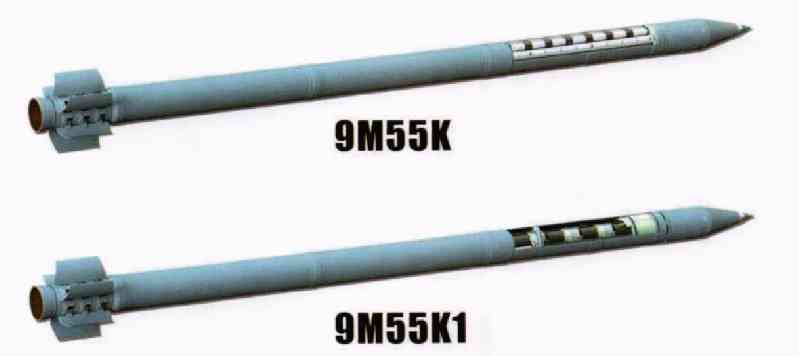
BM30 equipped with 9M55K1 is equipped with 5 terminal-sensitive bombs with infrared search devices. After being dropped from the air, it can destroy 5 (theoretical) armored targets within a radius of several hundred meters. The 300 kg warhead of the 9M55K can hold 72 bullets. The high charge and prefabricated fragments form a considerable killing radius. The radius of nearly 200 meters from the center of the impact point is an effective killing zone, which is very suitable for damaging scattered soldiers and technical weapons. The charge of the 258 kg warhead of the independent blasting warhead model reaches 92.5 kg. Although the 150-meter dispersion range is not enough to hit point targets, it is still very effective for area targets such as ports, warehouses and airports. Mixing multiple types of bullets can cover and shoot at targets in fuzzy positions, and comprehensively obtain considerable point and surface combined damage benefits.
Ukraine currently uses M142 to launch M31 in combat, which is closer to using M142 as a campaign strike weapon: replacing tactical missiles such as SS21, which are already scarce in the Ukrainian army. In contrast, the Russian army widely uses BM27 to perform tactical fire support missions, and BM30 mainly uses conventional rockets for long-range area killing. The long-range rocket launchers organized by the Russian artillery are basically used to perform tactical combat missions. Although Russia has just been equipped with precision-guided rockets, the Russian arms industry, which has independent manufacturing capabilities, can provide a relatively sufficient number of SS26 "Iskander" and 2S14 "Caliber" tactical missiles to the front line. There are even videos of restoring the sealed SS21 tactical missiles. However, the Russian army has also used guided rockets on a limited basis on the Ukrainian battlefield.
Russian military has found examples of satellite-guided 9M544 rockets in the Ukrainian controlled area, including the remains of the representative aerodynamic control device at the end of the rocket warhead, and photos of the parachute attack after the warhead and the propulsion section separated in the air. The 9M544 uses four aerodynamic control surfaces to replace the lateral thrust system of the 9M55. Although the effectiveness of lateral correction is reduced in the initial stage, the aerodynamic control surfaces can achieve full ballistic direction and pitch correction, reducing the rocket’s hit deviation from 150 meters of the 9M55 to within 15 meters. If in areas with a better degree of perfection of the "GLONASS" satellite positioning system constellation, the theoretical minimum deviation of the 9M544 can also reach the standard of 7 to 10 meters, and the hit accuracy of the parachute-decelerated warhead model will be even better.
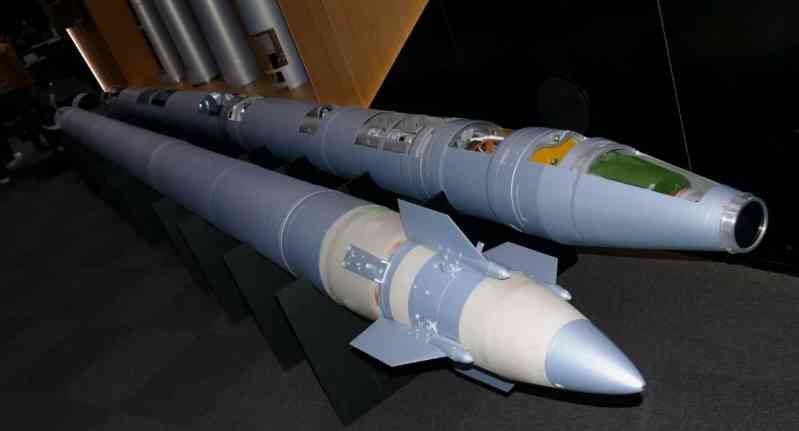
9M544 rocket has a mass of 850 kg, and the original gas control section at the front end is replaced by an INS/GNS guidance module. The control section numbered 9B706 has a fully controlled 4-sided folding rudder, and the basic model can carry a warhead of 250 kg. The specifications and layout of the 9M544 are basically the same as those of the 9M55, and the original ammunition manufacturing and maintenance system can be used. The gas correction system of the prototype is replaced by aerodynamic control surfaces, and the original lateral measurement gyro and accelerometer design can be used. The GNS satellite navigation antenna is added by using the cavity section of the bullet tip. The advantage of 9M544 is that the aerodynamic surface is controllable over the entire range. Although it is not as efficient as the gas correction in the initial low-speed stage of the launch, the aerodynamic rudder can still play a role until the last moment of the impact compared to the gas control device that can only correct for 2.5 seconds. The manufacturing and assembly process requirements of the aerodynamic correction section are even lower than those of the gas correction device. In the case of a large number of civilian electronic devices, the production cost will not increase significantly on the basis of the original 9M55.
Although the warhead mass of 9M544 is about 50 kg less than that of 9M55, the range increased to 120 kilometers and the application of guidance and aerodynamic control systems have reduced the deviation value of the full guidance state of the rocket to 5~15 meters. According to the information released by Russia for equipment export, the 9M544 can carry 552 dual-purpose bullets similar to the M26 (similar in size and power), and the 9M549 carries 72 3B30 prefabricated fragmentation personnel-killing bullets equivalent to the 9M55, with considerable killing range and killing efficiency. Russia widely uses civilian electronic devices in the guidance section of guided rockets. On the one hand, it is true that Russia’s own electronic industry level is not high. More importantly, as large-scale consumable artillery ammunition, the equipment compartment has sufficient space and does not need to withstand the launch of large overload rockets. Civilian devices can meet the use requirements as long as they are reinforced and packaged. The fully automatic electronic system does not require high device requirements, and the low cost of civilian devices can rapidly expand the scale of manufacturing and equipment. Non-critical devices in the ammunition guidance systems designed by the United States and China also widely use civilian devices to reduce costs. Although the overall design of Russian guided rockets is not advanced enough, the system composed of civilian devices is stable and can meet almost all battlefield combat requirements. The application of civilian devices cannot be said to be of high level, nor can we conclude that the design is backward because of the use of civilian devices. After all, the cost control requirements for rockets are much stricter than those for missiles.
The Russian army plans to use guided rockets on the new BM30 modular modified rocket launcher, but compared with the number of BM30 rocket launchers equipped on a large scale, the Russian army’s current equipment of guided rocket systems is indeed limited. The Russian army does not use guided rockets on a large scale on the battlefield, not because the current Russian army lacks this ability, but in the military thinking inherited from the Soviet Union, the long-range rocket launcher is a tactical strike weapon, and the precision strike in the campaign mainly relies on the tactical missiles in the army group. Since the 9M544 with a range of 120 kilometers blurs this boundary, it is naturally necessary to establish a new combat use plan, but the Ukrainian battlefield does not have sufficient conditions to exert the effectiveness of the 9M544.
According to the existing equipment technology development conditions and the Russian army’s choice, guided rockets are regarded by the Russian army as tactical weapons, mainly used to shoot targets similar to 9M55, but with simplified composite guidance technology to improve accuracy, in order to reduce the number of rockets needed to kill unit targets. The main equipment type is still various types of cluster bombs, and single-warhead guided rockets are mostly used for tactical/campaign target attacks. Most of the so-called "missiles" shot down by the Ukrainian air defense system, except for the distinguishable low-altitude cruise missiles, are mostly guided rockets such as 9M544 based on their flight trajectories. There are almost no examples of shooting down ballistic "Iskander" and comparable wreckage. In the use of equipment, the Russian army takes into account the imperfect networking of its own GNS satellite positioning system and the fact that the satellite positioning system is easily destroyed in a full-scale war. It focuses more on the use of the self-corrected INS system, and comprehensively uses gyroscopes and accelerometers to obtain a 30-meter dispersion effect. It uses more bullet-scattering to cover the target. The target types of attacks are mainly vehicles and personnel scattered in the field. The important weapons for the Russian army to carry out precision strike missions for campaign attacks have always been short-range tactical missiles with relatively large warhead power, penetration effectiveness and range, and relatively stable use effects. Relying on ballistic missiles to perform some tactical aviation tasks is also the main difference between the Russian army’s campaign strike system and the West.
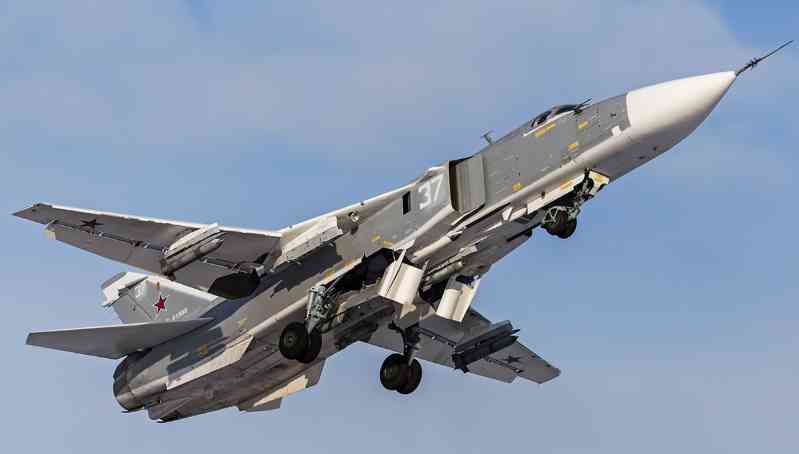
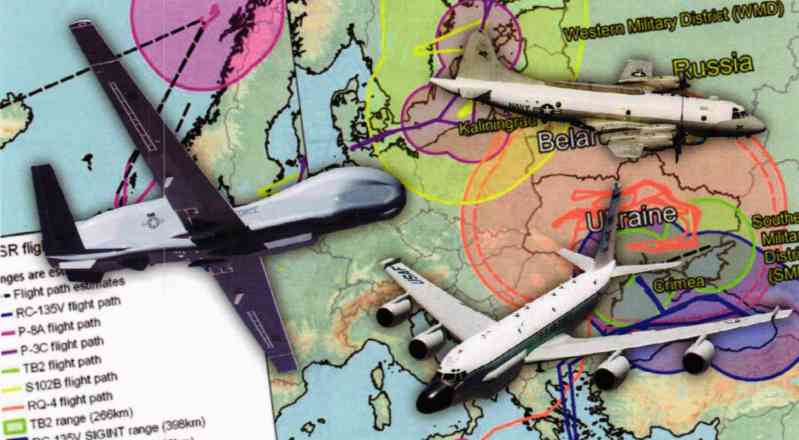
The reason why "HIMARS" is widely declared on the Ukrainian battlefield is not only because the West has the basic discourse power of the Ukrainian war, and the propaganda channels are basically controlled by Western media, but also because compared with the large number of tactical missiles launched by Russia, the news color reflected by guided rockets is indeed stronger. After all, "HIMARS" has been made into a symbol of Ukraine’s military capabilities by Western countries, replacing the main propaganda weapons "Javelin" anti-tank missiles and M777 howitzers in the early stage of the war. "HIMARS" is a kind of propaganda for Ukraine! Guided rockets are just conventional "victory weapons" of great significance to the Russian army, and the combat equipment of the Russian army. Except for the "dagger" that was put into the battlefield for the first time, which has some news value, the Russian side will not even describe what strike weapons were used in the battle.
New breakthroughs and new channels
The aiming method of rockets is the same as that of artillery. Both determine the position of the target while measuring their own position, and use the fire control system (or manually calculate the trajectory data) to set the ideal trajectory. Rocket artillery determines the launch direction and the elevation angle of the launch tube according to the ideal trajectory, so that the rocket flies along the ideal trajectory and hits the target area. The deviation of the rocket can occur at any time period of the trajectory, and the accumulation of deviations ultimately forms the shooting dispersion range.
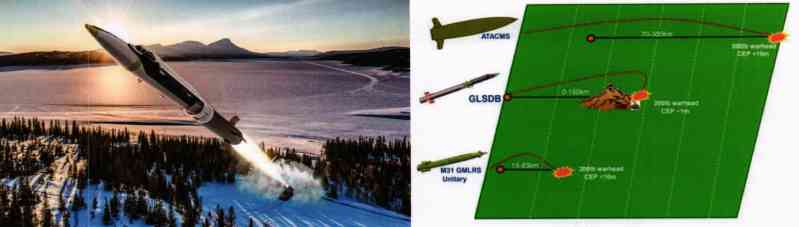
Guided rockets are not a kind of artillery weapon with a very high technical level. Existing guided rockets are all based on mature rocket artillery weapon systems. On the basis of the M26 or 9M55 rockets that can originally meet tactical requirements, INS/GPS guidance modules and pneumatic control units are used to provide rockets with full-range ballistic correction capabilities. The rocket relies on the guidance system to measure the ballistic deviation value, and uses the pneumatic control surface (gas control can also be used) to zero the deviation, thereby maximizing the rocket’s accuracy. The flight trajectory is consistent with the set ideal trajectory, and the aiming point and the hit point finally coincide at the landing point.
The guided rocket itself also flies along the trajectory inertia. Limited by the cost and application efficiency of the missile-borne system, the correction range provided by the missile-borne guidance system is limited. It can meet the correction of the deviation between the rocket’s hit point and the aiming point, but it cannot use the control system to achieve a large range of flight trajectory adjustment. This is also the fundamental reason why guided rockets, although they look similar to ballistic missiles and can partially exert the combat effectiveness of ballistic missiles, are difficult to regard as real missiles.
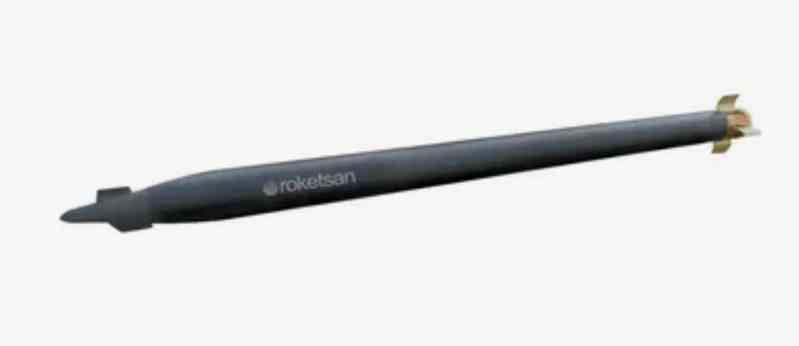
Guided rockets have a long range , great power and high hit accuracy. It has been widely used in the development of long-range artillery and rocket weapons in various countries, and has also achieved good combat effects in exercises and actual combat. The existing low-cost guidance system is mainly a GPS/INS combination, and a separate GPS or INS guidance method can also be used. The accuracy of the existing fiber optic gyroscope and electronic accelerometer can control the accuracy of a rocket with a range of 100 kilometers to 30 meters. The civil code GPS can also improve the theoretical accuracy to a similar standard. The advantage of the inertial reference system is the high anti-interference capability of the entire process. The application of the civil code GPS has a very good low-cost performance. The air-drop parachute drop in the combat phase can also improve the measurement accuracy of GPS by reducing the speed of space movement. Both low-precision inertial navigation devices and civil code satellite positioning devices It is a shelf product that can be obtained in batches at low cost in the existing international market. It is neither sanctioned nor blocked, nor is it easy to find the source. It has become the preferred option for many countries to develop guided rockets.
The guidance system uses civilian devices. Although the dispersion range is slightly larger than that of the military system, the difference in hit accuracy has been expanded from 3 to 7 meters to 10 to 30 meters. The damage effect is roughly the same when it is matched with submunitions. The damage efficiency of using large single explosive warheads is also completely acceptable. There is no essential difference in the actual combat damage effect. If you feel that the hit accuracy is not enough, increasing the warhead charge can effectively make up for the lack of accuracy. If you feel that the caliber of 300 mm is not enough, you can make a 400 mm caliber guided rocket (such as North Korea’s KN25).
In addition to continuing to reduce costs and improve anti-interference capabilities, the subsequent development goals of guided rockets will also require the ability to strike time-sensitive targets, that is, the ability to continuously update the hit point required to attack moving targets. The United States has tested the combination of airborne SDB guided bombs and M270 standard rockets into GL-SDB, which has a maximum range of 150 kilometers and a hit accuracy of up to 1 meter. The subsequent improvement plan also includes the ability to autonomously search and relay target positioning from other platforms.
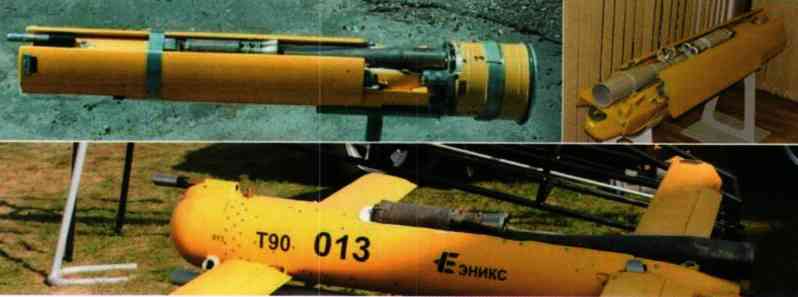
Russia, based on the early BM30 rocket type that can carry drones, combined attack drones with rockets to develop a rocket-extended attack drone system, and also has the equipment conditions to combine small guided glide bombs with rockets.
The existing guided rockets of various countries all use head-end control, using conventional aerodynamic control surfaces for full-range ballistic control. The 300mm guided rocket developed by Ukraine uses a thruster engine and adopts a thruster engine group similar to the Patriot PAC3. Although it can significantly reduce flight resistance and improve control efficiency, the high technical difficulty and system cost make it unsuitable for guided rockets. The control surfaces of guided rockets using pneumatic control internationally are generally small in size. After the rocket’s head section is unfolded, most of them are smaller than the diameter of the projectile. Most models of control surfaces can even be left unfolded in the storage tube. Russia’s 9M544 uses a "huge" aerodynamic control surfaces in guided rockets. The larger wing area and span of the 9M544 are restricted by the diameter of the launch tube. Not only is the diameter of the barrel section of the guidance section slightly smaller than the body of the missile, it also has a typical Russian missile wing folding mechanism, which can provide stronger ballistic correction performance than ordinary control surfaces. After the guided rocket has a sufficiently high control efficiency, other means can be used to improve the maneuvering range of the rocket, and the function of the rocket guidance system can be developed from basic ballistic correction to the direction of truly fully functional ballistic reconstruction, creating a guarantee of basic platform control efficiency for attacking moving targets.
When guided rockets are used to attack moving targets, in addition to the conventional use of large special aircraft for radar/optical tracking/positioning, drones can also be used as a means of long-range target tracking and positioning.
The air platform uses airborne equipment to locate moving targets and sends target position information to artillery through data links. In theory, it can also continuously update the aiming point to enable the guided rocket to continuously update the hit point within a relatively limited range, thereby increasing the accuracy of attacking moving targets to within the warhead killing range. Reconstructing the aiming point during the flight of guided rockets through external information platforms. If guided rockets are equipped with low-cost terminal guidance devices on board, such as optical/uncooled infrared and low-cost tracking (no search required) systems, and autonomously locking the target by fuzzy target recognition, they can make active corrections at a relatively short terminal distance (2 to 3 kilometers), so that the rockets can search and attack moving targets with obvious signal characteristics within the aerodynamic control range, such as continuously moving vehicles or ships, in the mid-course correction state, or rely on the high flight speed of the rockets to carry out fixed-point attacks on random targets within a limited range. For example, on the basis of the rapid positioning of the aiming point by the anti-artillery radar, the terminal automatic search system is used to actively attack the M142 launch vehicle that has just started to move.
The application of guided rockets on the battlefield in Ukraine has established the tactical advantage of guided artillery weapons, but in actual combat, it has also shown the limitations of insufficient ability to attack moving targets and over-reliance on the C3 system for target positioning support, and the tactics and technology cannot be called truly mature. The successful battlefield application of guided rockets is bound to increase the attractiveness of equipment, and the speed of diffusion of similar equipment will also increase rapidly, but in the absence of real-time and efficient C3 system support, the effectiveness of guided rockets is still limited, and there is still a long way to go behind the vigorous development of equipment technology.