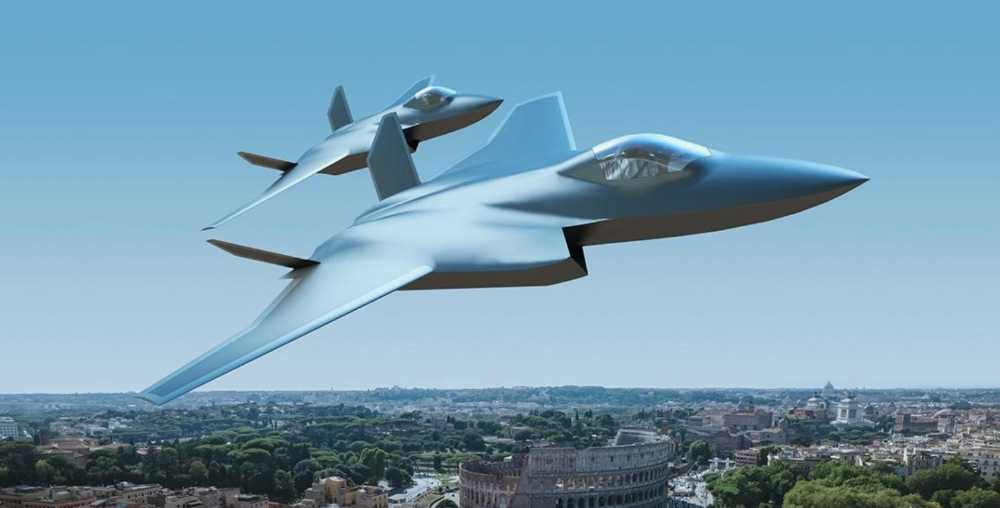

The United Kingdom, Japan and Italy jointly announced that they will jointly develop the next generation fighter jet, and the project is named "Global Air Combat Program" (GCAP). This is actually a merger of the UK’s "Future Air Combat System Program" (FCAS) and Japan’s F-X project. On March 15 this year, at the International Military Police Defense Exhibition held in Inuiye Prefecture, Japan, GCAP announced the latest news that the United Kingdom and Japan will each bear 40% of the research and development work and costs as major participating countries, and the remaining 20% will be borne by Italy.
The last fighter jet project in Europe was launched in the 1980s before the end of the Cold War. Britain, France, Germany and Italy jointly developed the "Eurofighter". Later, Britain and France parted ways due to differences in technical leadership and positioning. Britain: Germany, Italy and Spain jointly developed the European "Typhoon" fighter; France worked alone to develop the "Rafale" fighter.
The European "two winds" are both 4.5 generations, close to the level of the fifth generation in avionics and weapon systems, but still fourth generation technology in aerodynamics and engine technology. This is also the era when the US F-22 has been put into service and the F-35 has begun to be developed. But Europe has no strength. The dividends of the end of the Cold War have made Europe put its weapons into storage and put its horses in the mountains, focusing its resources on long-standing social and economic development issues. Europe’s social and economic problems are like a big black hole. The debt seems to be getting bigger and bigger, but the Russian threat has re-emerged.
This is also the era when air force technology has entered the fog. Will the dominant technology in the future be stealth or drones? These two routes do not conflict, but they are not the same thing. The United States once vowed that the F-35 is the last generation of manned fighters, and Northrop Grumman’s X-47B seems to guide the future of air power. Europe has also enthusiastically launched its own corresponding development plan.
The high cost of stealth technology is already clear to people, but the technical bottleneck of drones has been underestimated. UAVs are not a problem in terms of aerodynamics, structure, power and basic flight control, but they cannot rely on remote control. The intelligence level of autonomous flight is still low, and autonomous combat is far from being practical.
X-478 was originally intended to be integrated into the U.S. Navy’s unmanned carrier-based aerial reconnaissance and attack aircraft program (UCLASS). The shipboard evaluation and aerial refueling evaluation were completed, but the autonomous combat capability was still an insurmountable obstacle. The unmanned combat aircraft had to be changed to an unmanned tanker, which was later the Boeing MQ-25 "Stingray". Northrop Grumman did not participate in the unmanned tanker bidding at all because the X-47B platform cost too much.
Europe has not gone as far as the United States. Both the French Dassault "Neuron" and the British BAe "Taranis" ended in disgrace.
After more than 20 years, Europe has also understood that in the future air battlefield, stealth is not omnipotent, but it is absolutely impossible without stealth; drones are important, but manned aircraft are still the soul of the air battlefield. The sixth-generation fighter must be manned.
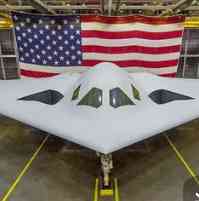
The US Air Force and Navy are both promoting the development of the sixth-generation fighter, and may eventually merge under the pressure of the US Congress.
Unlike the fanfare in the ATF era, the United States is now quietly developing and keeping the development of the sixth-generation fighter highly confidential. The reason is that China’s aviation technology is advancing too fast, and the United States brags about too many things that China has achieved.
Europe plans to skip the fifth generation and go straight to the sixth generation 6th generation Due to the rift over the "Eurofighter", France no longer cooperates with the UK. Germany mainly paid for the development of the "Typhoon", and its share in aviation technology and manufacturing was too small, so it didn’t want to do it anymore. After Brexit, Germany was quite resentful of the UK, and the political needs of the Franco-German axis also determined that it would be more beneficial to turn around and cooperate with France, so Merkel and Macron signed an agreement for the joint development of the next generation of fighter jets by France and Germany.
After being left out, the UK was unwilling to lag behind in aviation technology and launched the "Tempest" fighter program. But from the beginning, the UK was clearly looking for a partner. The UK is very clear that relying on its own strength, it is difficult for the "Tempest" to even enter the prototype stage, and it may be destined to be a PPT. Fighter aircraft.
Italy is easy to deal with. Italy’s aviation industry has long been a side business, and has its own strengths. For example, Leonardo is one of the strongest avionics companies in the West, and it also has high-level skills in helicopters, trainer aircraft and aviation manufacturing. But it is powerless to cook "aviation hard dishes" such as fighter aircraft and large passenger aircraft. Italy is entangled in whether to be affiliated with France and Germany or with the UK. Considering the close relationship between Leonardo and BAe, Italy finally decided to invest in the UK.
From the beginning, the UK was interested in cooperating with Japan, and Japan was also interested in cooperating with the UK, but the two countries had their own ulterior motives.
For decades, the UK’s aviation technology has lagged behind the United States, and the UK has suffered from insufficient budgets and can only maintain itself bleakly. Japan is just the opposite. Compared with the UK, it still has more money, but it only has sporadic strong technologies and lacks a complete and sustainable aviation technology foundation.
In the 1980s, Japan wanted to promote aviation technology and industrial base through the F-2 fighter, but it was too dependent on the United States both politically and technically. In the end, the F-2, which was improved from the General Dynamics F-16, did not meet Japan’s needs. Japan is an island country and needs a twin-engine heavy fighter. After the United States refused to sell the F-22, Japan had another idea and launched the F-X plan, and finally launched a new generation of fighters in the form of F-3. In the past two decades, digital models have been one after another, and the ideas have been changing, but the tone is stable: the difference between heavy, twin-engine, and long-range lies in the weight of stealth and supercruise.
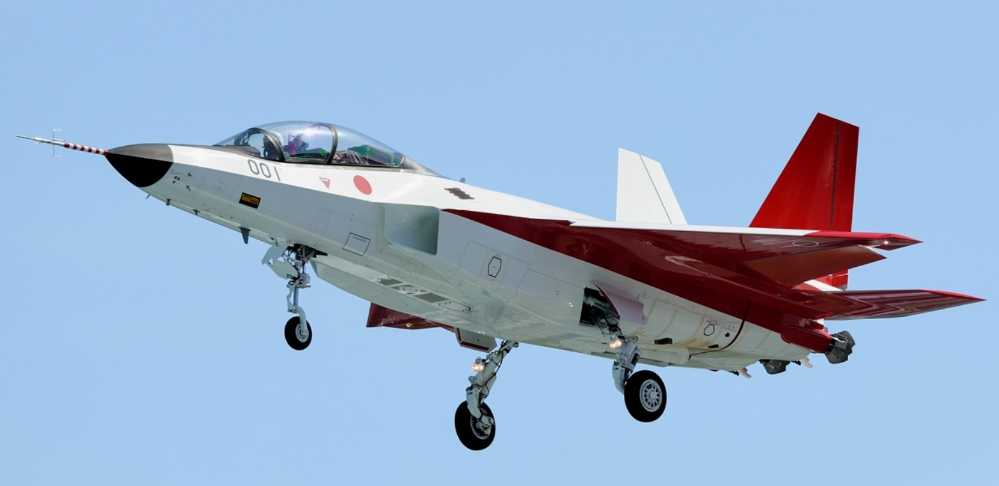
Mitsubishi Heavy Industries, which led the F-X, launched the "Mindshine" research aircraft at the beginning of this century and made its first flight in 2016. In appearance, the "Shinshin" can be seen as a smaller and simplified F-22, but in many aspects it also shows that Japan’s aviation technology is still at a relatively early level and is still a long way from being a commercialized fifth-generation fighter - the gap between the "Shinshin" and the F-22 is even greater than the gap between the Korean KF-21 and the F-22. The "Shinshin" program was terminated two years after the test flight, and there was no news about the development of fighter jets based on the "Shinshin".
Japan is also working hard on engines. The XF9 series of high thrust-to-weight ratio turbofans developed by Ishikawajima-Harima Heavy Industries has very beautiful performance parameters and claims to have reached another milestone from time to time, but there is no plan for finalization and mass production. It is no wonder that the fighter jets have not been determined and the engines cannot be finalized too early.
On the other hand, Japan ordered 42 F-35A in 2011, and again ordered 63 F-35A and 42 F-35B in 2020. After all are delivered, it will become the largest F-35 user outside the United States. But the F-35 It is an excellent fighter-bomber, but it is not of much help to Japan’s maritime air defense situation. The remaining life of the F-15J in service has not only entered the countdown, but also lacks the active phased array radar upgrade like the US F-15C. Japan’s demand for a new generation of air superiority fighters is quite urgent.
Relatively speaking, the British "Typhoon" is relatively new, and the later models also have radar and system upgrades. The British air defense pressure is not heavy, and the NATO mission is anyway supported by the "tall United States", so it is not too urgent now. The situation in Italy is similar.
Interestingly, the BAe "Tempest" is also a bit similar to the latest Mitsubishi F-X, both of which are single-seat, twin-engine V-shaped tails. However, the "Tempest" uses a large delta wing with a W-shaped trailing edge modification, while the F-X is a simple truncated delta wing; the "Tempest" uses a DSI air inlet, while the F-X uses a Garrett air inlet; the "Tempest" uses a narrow-pitch twin-engine, while the F-X uses a wide-pitch twin-engine.
These aerodynamic differences reflect the different starting points of the two companies. BAe continued the design experience of the "Typhoon", starting from the tailless delta wing, the single vertical tail was changed to an outward-inclined double vertical tail, the rectangular adjustable air intake on the belly was changed to the DSI air intake on both sides, and the narrow-spacing twin engines have a smaller fuselage cross-sectional area, light weight, and low resistance.
Although the Mitsubishi F-X borrowed the aerodynamic characteristics of the F-22 and YF-23, it actually did not have a clear starting point and was more imaginative. The Garrett air intakes on both sides were obviously borrowed from the F-22, which was verified in the "Mind". Judging from the relative position of the wing and the V-shaped tail, it is better to say that this is a V-shaped tail of a tailless delta wing than a V-shaped tail of a conventional layout four-wing tail. The wide-spacing twin engines have a larger central body, which is not only a lifting body but also provides a larger internal weapon bay space, which is conducive to carrying more weapons in a stealth state.
But in terms of not emphasizing supercruise and supermaneuverability, the two companies have reached the same conclusion.
The United States is ambiguous about the characteristics of the sixth-generation fighter, and Europe has also followed suit and defined it, but whether it meets the definition is not a hard indicator for modern fighter generations. For example, supercruise and supermaneuverability were once considered essential features of the fifth generation. The F-35 obviously does not have supercruise and supermaneuverability, but if you say that the F-35 is not a fifth-generation fighter, not only military fans will not accept it, but Lockheed Martin and the US Air Force will be even more anxious.
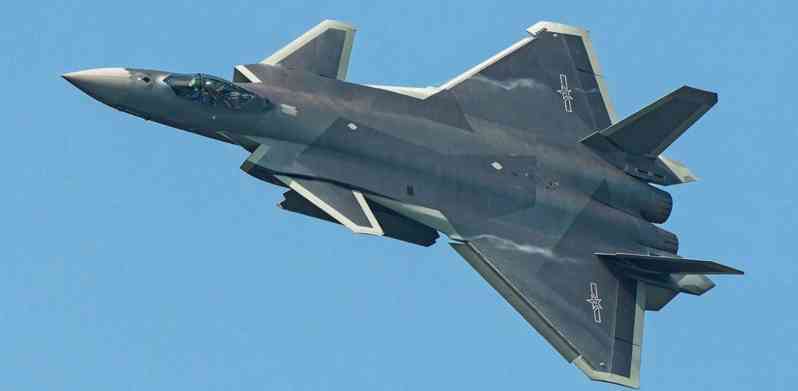
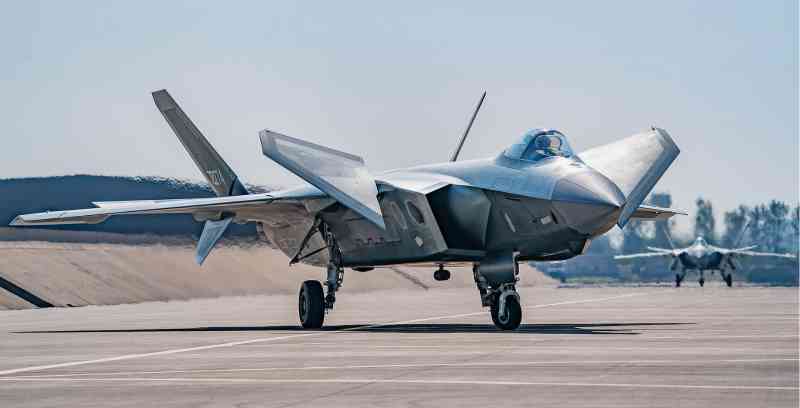
However, supercruise and supermaneuverability are useful. The dogfight between the J-20 and the F-35 over the East China Sea illustrates this point.
But high altitude, high speed and high maneuverability are not only a strong challenge to aerodynamic design, but also a greater challenge to power. GCAP is now just an intention of cooperation between governments. The technical positioning and design plan have not been determined, and there is still a lot of room for maneuver in specific operations.
Rolls-Royce will certainly be the power provider of GCAP. Ishikawajima-Harima Heavy Industries has made great achievements in high-temperature alloy and ceramic-based composite technology, and Italy’s Avio is very experienced in manufacturing aircraft engine parts. But the indisputable fact is that Rolls-Royce has no experience in developing high-thrust fighter turbofans - the EJ200 of the "Typhoon" is still medium-thrust, and Ishikawajima-Harima and Avio have no experience in developing complete fighter engines at all.
Medium-thrust to high-thrust is not a simple enlargement. Rolls-Royce knows its shortcomings and tries to make up for it through cooperation with General Electric of the United States on the F136 turbofan. However, the US Air Force decided not to compete for the engine of the F-35 and locked in the Pratt & Whitney F135 as the only power system, and Rolls-Royce’s wish was unfulfilled.
Fighter engine technology is also entering the three-duct era. Rolls-Royce once participated in the three-duct plan of the US Air Force early on, but was eventually kicked out. This is also the reason why Britain and Japan huddled together for warmth and did not turn to the United States. The United States does not want to share the most cutting-edge aviation technology, even with close allies such as Britain and Japan. Britain understands this, and Japan understands it even more. GCAP is an attempt by Britain and Japan to get rid of their dependence on the United States in terms of fighter technology. Unless they use the previous generation of F110 to deal with it like Turkey’s MMU, it is almost impossible for the United States to provide the latest engine technology.
In terms of radar and weapon systems, the UK, Japan, and Italy all have a certain foundation, so the problem is not too big. The UK claims that this will be an artificial intelligence fighter, and one of the key technologies of "Storm" is augmented reality display technology. Japan has a foundation in video games and digital technology, which will definitely help research and development. If we see the scene of Nintendo controlling the "Meteor" air-to-air missile in the future, it will not be too surprising.
It can be expected that after the real launch of GCAP, there will be a lot of wrangling in basic positioning and technical routes. However, GCAP does not have much room for maneuver in time. After all, Japan’s aging F-15J can’t wait.
GCAP is not only involved in joint research and development, but also has the tradition of wrangling among countries. It may take a lot of time to reach a consensus on the basic positioning. GCAP is planned to be in service in 2035, which is a highly optimistic expectation. Let me put it this way, with the scattered organizational capabilities of Europe and Japan and the spirit of cooperation that seems to be in harmony but is actually far away, GCAP will not be successful. The final outcome is to buy the sixth-generation aircraft from the United States.