The British Navy has a very long history in the field of ocean surveys. As early as 1681, the "Merlin" conducted a comprehensive survey of the British coast and became the first British warship dedicated to ocean surveys. 1795: The British Navy established the Hydrographic Office and sent hydrographic survey personnel to conduct ocean surveys around the world. Among the early ocean survey missions of the British Navy, the most well-known was the global ocean scientific expedition of the "Challenger". The ship was converted from a cruiser and launched on December 7, 1872. It was 68 meters long and had a displacement of 2,300 tons. It was equipped with the most advanced ocean survey instruments at the time and had relevant laboratories. From 1872 to 1876, the "Challenger" finally completed the first global scientific expedition to the Atlantic, Pacific and Indian Oceans after 713 days of sea voyages, 1,606 days of uninterrupted sea surveys and a voyage of 1,275,845 kilometers. It was hailed as the foundational survey of modern oceanography.
Ocean survey ships after World War II
After World War II, with the emergence of various advanced ocean survey ships, ocean survey ships transformed from old ships are increasingly unable to adapt to the tasks of the new era. The navies and marine departments of various countries have begun to build new ocean survey ships, and the British Navy is no exception.
"Vidal"
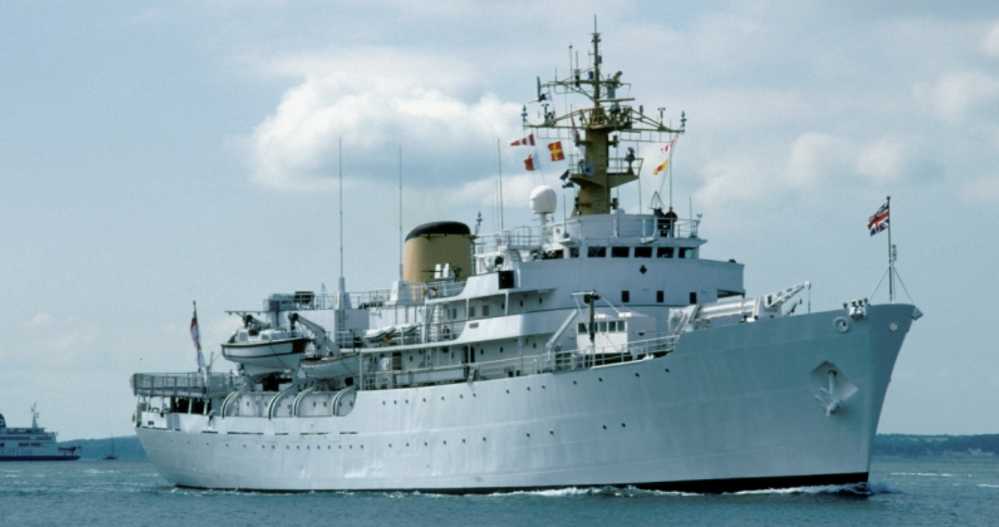
In 1953, the British Navy built the first professional ocean survey ship "HMS Vidal", which was launched on July 31, 1951, entered service in 1954, and retired in June 1976. The ship is 91 meters long, 12 meters wide, has a displacement of 1,940 tons, is driven by four engines and two propellers, has a speed of 16 knots, and has a staff of 161 people. "Vidal" is the last ocean survey ship built by Chatham Shipyard and the first small warship of the British Navy that can carry helicopters. The helicopter deck at the stern can take off and land "Dragonfly" and "Wasp" helicopters.
Echo Class
At the same time as the completion of the "Vidal", the British Navy built three more Echo Class offshore survey boats and formed an offshore survey squadron to perform tasks such as surveying ports, waterways, rivers, estuaries, and charting. The Echo Class was converted from a minesweeper, 32 meters long, 6.7 meters wide, 2.06 meters draft, 163 tons full load displacement, the main engine is a Paxman 1103 kW diesel engine, twin propeller propulsion, maximum speed of 14 knots, endurance of about 8340 kilometers/12 knots, with a staff of 5 officers and 34 soldiers, and a daily staff of 4 officers and 18 soldiers. The first ship, Echo (hull number A70), was completed by White Shipyard on September 12, 1958, and the Enterprise (hull number A71) and Eglia (hull number A72) were completed in 1959:
All three Echo-class ships were retired in 1985. After the Echo was scrapped, it became a spare parts warehouse, and the Enterprise and Eglia were sold to the British Marine Association. The Enterprise was renamed the Earl of Romney and the Eglia was renamed the Jonas Hanway. Later, they were resold to private individuals and have been in a state of suspension for a long time.
Ton class and Ham class
In 1964, the British Navy converted four minesweepers into offshore survey ships. The four boats were the Ton class "Sarrington" and "Edderton", and the Ham class "Bodham" and "Axum".
Among them, the Ton class was built in the 1950s and mainly performs minesweeping tasks in shallow waters such as coastal areas, rivers, and ports. It is 46 meters long, 8.5 meters wide, 2.4 meters deep, and has a displacement of 447 tons. It has a dual-axis propulsion, a total power of 4,400 kilowatts, a speed of 15 knots, a crew of 33, a range of about 5,556 kilometers, and a main weapon of 1 "Bofors" 40 mm gun "Sarrington" and "Edderton" joined the survey squadron and were renamed "Mermaid" and "Squire" respectively.
Ham class displacement 167 tons, twin propeller propulsion, main engine power 820 kilowatts, speed 14 knots, main weapon is a "Bofors" 40mm gun, "Bodham" (hull number M2720) and "Axum" (hull number M2780) were renamed "Water Witch" and "Woodlark" respectively.
Hekra class
In 1962, the British Marine Research Institute built The 3,100-ton "Discovery" was one of the most advanced oceanographic survey ships in the world at the time. In the same year, the United States decided to provide the United Kingdom with the "Polaris" ballistic missile system. On this basis, the British Navy began to develop the first generation of ballistic missile nuclear submarines, the Resolution class. In order to ensure the normal cruising of nuclear submarines, ocean-going survey ships for drawing sea charts are indispensable. Therefore, the British Navy built three ocean-going survey ships based on the "Discovery" and named them the Hekla class. The funds came from the "Polaris" ballistic missile program.
The Hekla-class ship costs 1.25 million pounds, has a displacement of 2,800 tons, is 79 meters long, 15 meters wide, and has a draft of 4.9 meters. The main engine is 3 Paxman Vilenta 12 YJCZ diesel engines with a shaft power of 1,470 kilowatts, and the auxiliary engine is 2 Paxman Vilenta 6YJXZ diesel engines. The maximum speed is 14 knots and the endurance is about 22,238 kilometers/11 knots. The bow is equipped with a bow thruster to improve maneuverability, the hull has an ice-strengthened design, and there is an air-conditioning system on board, which can be used for measurements in cold and tropical waters. In addition, the ship is equipped with a dry/wet laboratory hydrographic winch and a seabed sampling system. In the later stage, a multi-beam sonar depth sounder was modified and a towed side-scan sonar was installed, which can detect targets within 300 meters on both sides of the route, improving the mapping efficiency.
In 1964, the first ship "Hekla" was completed, with the hull number A133. In 1997, it was sold to an Irish private enterprise and renamed "Bucai", mainly performing hydrographic survey tasks in the Irish Sea.
In 1965, the second ship "Hekate" was completed, with the hull number A137. On April 21, 1971, when the ship was docked at the Port of Baltimore, Ireland, and jointly carried out marine survey missions with Ireland, the small survey boats on board were attacked by the Irish Republican Army, and one of the small boats was destroyed; during the Falklands War, it was changed to gray paint and equipped with weapons to patrol the Antarctic waters, serving as a temporary polar patrol ship; in 1990 Retired in 1962.
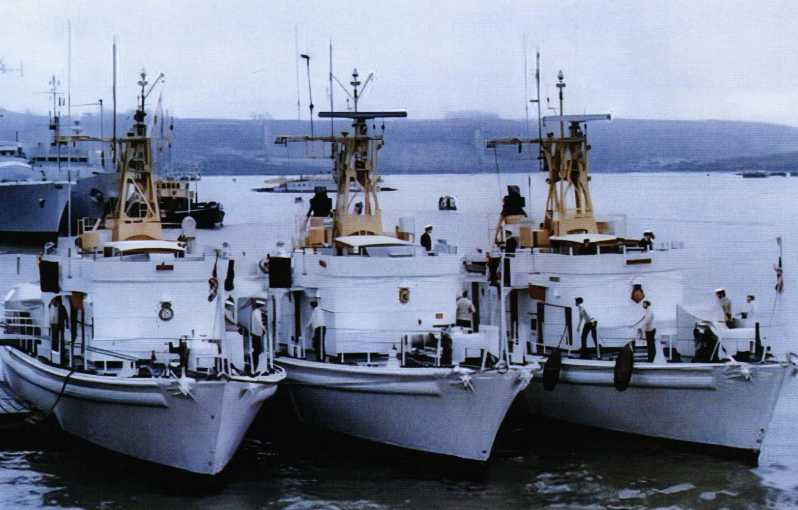
On May 4, 1966, the third ship "Hydra" was built by Yarrow Shipyard, with the hull number A144. Shortly after entering service, the ship went to the southern waters of Iceland and the North Sea Channel for hydrological surveys; at the end of 1969, it began to survey the Strait of Malacca, and during this period it also participated in the rescue mission after the typhoon disaster in East Pakistan; in March 1971, after completing the survey mission of the Strait of Malacca, it went to Hong Kong, China to survey the waters south of Lantau Island; on April 6, 1971, it set sail from Hong Kong, China , returned to the UK via the Panama Canal, and conducted channel mapping and navigation surveys along the way; in early 1976, it cooperated with the Iranian Navy to survey the Persian Gulf waters, and returned to the UK in September for modernization; in September 1977, after re-commissioning, it went to Iran to continue surveying the Persian Gulf and Iran’s surrounding areas; during the Iranian Revolution, it performed the task of evacuating people in Bandar Abbas, and after returning to the UK for routine maintenance, it began to perform survey tasks in the waters near Scotland; in 1981, it visited Africa and performed survey tasks.
During the Falklands War, the "Hydra" was converted into a hospital ship at the Portsmouth Naval Base, mainly responsible for transferring the wounded from the "Uqinda Hospital Ship" to Montevideo, Uruguay, and then transported to the UK by the British Air Force VC-10 transport aircraft. The ship carried out 4 missions and transferred 251 British soldiers. On September 24, 1982, the "Hydra" arrived at Portsmouth Port and was warmly welcomed. On March 31, 1986, the Hydra was decommissioned and sold to the Indonesian Navy, renamed the Twin Gods, hull number 932.
In 1974, the fourth ship, the Pioneer, was completed, hull number H138. During the Falklands War, it and its sister ship, the Hydra, served as a hospital ship to transport the wounded, and also participated in the Gulf War. From 1991 to 1992, it patrolled the Antarctic waters as a temporary patrol ship. It was decommissioned on May 31, 2001, and then sold to a private enterprise and renamed the Somerville: used for hydrographic surveys in the Irish waters.
The South African Navy also ordered a Hecla-class ship from the UK, named "Protea, hull number A324; in 1978, the ship participated in the international krill research project and became the first South African Navy ship to reach Cape Horn; in 1981, it participated in the South African special forces raid on the refinery outside Luanda, Angola, code-named "Candlelight" operation.
Bulldog class
While the Hecla-class was being built, the British Navy also built four Bulldog-class medium-sized oceanographic survey ships. The main dimensions of this type of ship are between the Hecla-class and the Echo-class, designed to meet the needs of the British Navy’s overseas deployment. The Bulldog-class has a displacement of 1,067 tons, a length of 57.76 meters, a width of 11.40 meters, a draft of 3.7 meters, and four engines with dual adjustable propellers and dual rudders. The main engine power is 1,950 kilowatts, the maximum speed is 15 knots, and the endurance is about 7,412 km/12 knots: The crew consists of 4 officers and 34 sailors. The ship is equipped with a roll-stabilizing tank, a variety of measuring equipment such as multi-beam depth sounders and side-scan sonars, and two 9.5-meter small survey boats for shallow water surveys.
The Bulldog class was built by Brooke Maritime Company according to merchant ship standards. On March 21, 1968, the first ship "Bulldog" was completed, with the hull number A317; on May 9 of the same year, the second ship "Beagle" was completed, with the hull number A319; on July 11 of the same year, the third ship "Fox" was completed, with the hull number A320; in October of the same year, the fourth ship "Deer" was completed, with the hull number A325.
4 After the completion of the first ship, the UK discovered the North Sea oil field, so the Bulldog class was mainly used for ocean surveys in the North Sea oil field area. In October 1991, the "Fawn" was decommissioned and sold to Germany. Around 2000, the "Bulldog" and "Beagle" were successively decommissioned and sold to private individuals and converted into luxury yachts.
"Roebuck"
In 1986, the British Navy developed the "Roebuck" medium-sized ocean survey ship based on the Bulldog class. It was commissioned on October 3 of the same year with the hull number H130. The ship has a displacement of 1477 tons, 64 meters long, 13 meters wide, 4 meters draft, maximum speed of 15 knots, 52 people, main engine is 4 ES8 diesel engines, driven by 2 gearboxes 2 adjustable propellers. The ship is equipped with hydrographic survey equipment such as multi-beam depth sounder, side-scan sonar, and a survey boat for shallow water work, with a 20mm gun on board.
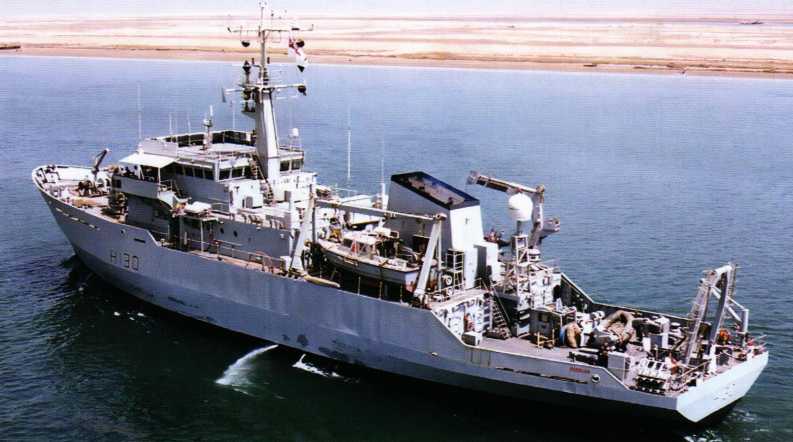
The "Roebuck" mainly performs marine survey missions in the UK’s exclusive economic zone, and also performs overseas deployment missions after later modifications. After being decommissioned on April 15, 2010, the British Navy sold it to the Bangladesh Navy for 5 million pounds.
"Collector"
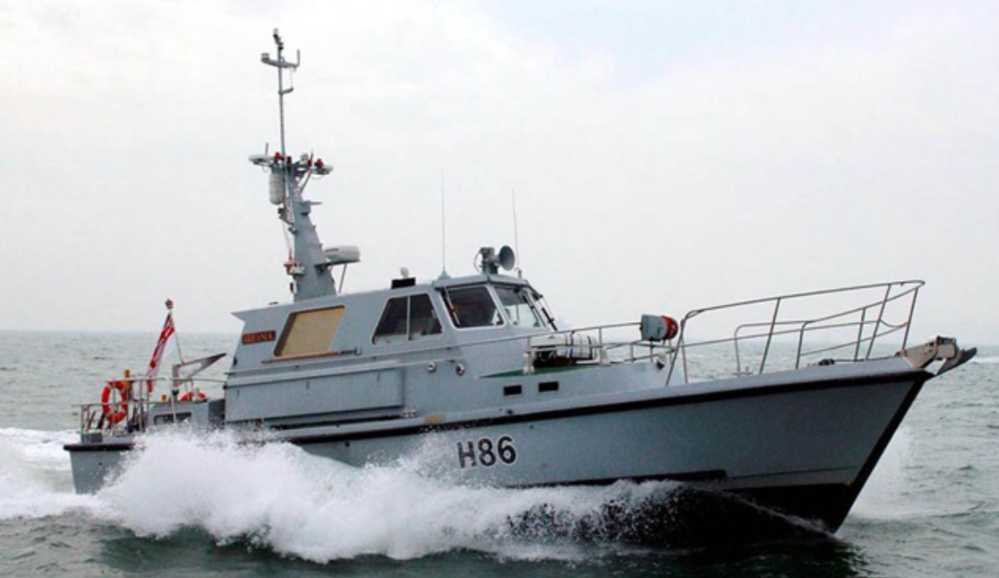
In the mid-1980s, the British Navy developed a near-shore survey boat to save costs, and the remaining mission requirements were changed to renting commercial survey ships. The boat was named "Collector", hull number H86, and was completed on December 5, 1983. "The Collector is 14.8 meters long, 4.7 meters wide, 1.6 meters deep, and has a displacement of 22 tons. The main engine is two Volvo TAMD 122 P-A diesel engines, with a speed of 14 knots and a crew of 9 people (3 officers and 6 soldiers). The ship is equipped with Kongsberg EM 3002 multi-beam echo sounder, EA 400 single-beam echo sounder and side-scan sonar and other survey equipment, mainly performing survey tasks along the coast and estuaries of the UK.
In 1990, the UK Ministry of Defense established the UK Hydrographic Office (UKHO) to provide services for shipping and marine scientific research in the UK and around the world through commercial channels. From 2017 to 2018, the UK Hydrographic Office’s commercial operations achieved a turnover of approximately 150 million pounds and a profit of 29 million pounds.
21st Century Ocean Survey Ships
In the late 1990s, the Hecla-class and Bulldog-class ships were aging and in urgent need of replacement, but the British Navy was strapped for cash and could not maintain a large survey fleet. It could only build two types of ocean-going survey ships as replacements, namely the "Scott" and two Echo-class ships (named the same as the Echo-class ships half a century ago). The newly built survey ships have basic self-defense capabilities and can be used as mine warfare logistics support and command ships when necessary, or perform humanitarian assistance and disaster relief missions.
"Scott"
"Scott" was built according to merchant ship standards and is one of the first ships of the British Navy to meet Lloyd’s Register. Construction began at the Appledore Shipyard on January 20, 1995, and it was launched on October 13, 1996. Mrs. Caroline Portillo, the wife of then British Defense Secretary Michael Portillo, threw the bottle at the ceremony. Completed on June 30, 1997, the home port is Plymouth, hull number H131, International Maritime Organization (IMO) number 9127289. The ship has a full load displacement of 13,500 tons, is 131.1 meters long, 21.5 meters wide, has a draft of 8.3 meters, a maximum speed of 18 knots, and 23 ballast tanks at the bottom of the ship can hold 8,000 tons of water, which is convenient for adjusting the trim and improving stability. The ship has a high degree of automation and uses an unmanned engine room. The main engine is two 9M32 diesel engines, with single adjustable propeller propulsion, and a retractable propeller at the bow to improve maneuverability.
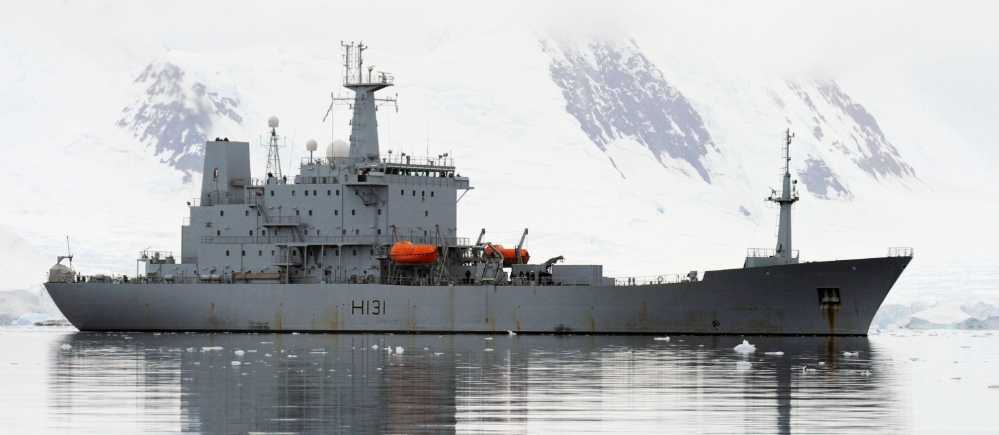
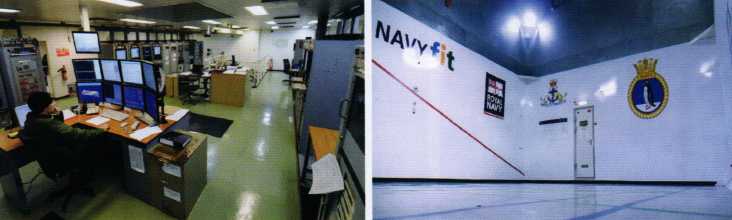
The ship is equipped with measurement and navigation equipment such as ARPA 1626 navigation radar, sonar array, magnetometer, multi-beam sonar depth sounder, etc., which can independently perform channel measurement and chart mapping tasks around the world, and can also perform minesweeping tasks when necessary. The sonar array located at the bottom of the ship is 10 meters long and can emit 90 adjacent beams in a 120° fan-shaped sound band mode. Its echo is received by a large independent hydrophone containing 144 elements. The return signal is processed by a digital signal processing algorithm to form a lateral profile of the seabed. At the working speed, it can draw a 150 square kilometer seabed map within 1 hour.
The "Scott" is the third British naval ship named after it. When it was in service, it was the largest survey ship in Western Europe. The crew consists of 72 people, and the rotation system ensures that there are 42 crew members on board at any time. Normally, each crew member will be on duty on board for 70 days and rest on shore for 30 days. This cycle is repeated three times a year. This rotation system allows the ship to be deployed at sea for up to 300 days a year. The huge displacement and small number of people make the living environment on board very superior. Each crew member has a separate cabin, and every 2 people have a bathroom. The cabins are all in the superstructure, most of which have portholes, large gyms, and even squash courts.
After the Indian Ocean earthquake on December 26, 2004, the "Scott" carried out a seabed topography survey mission in the nearby waters in February 2005 and found that the earthquake had a huge impact on the seabed topography; in 2013, it surveyed more than 11,587 square kilometers of sea in the Red Sea and the Gulf of Aden to support maritime security operations against piracy; from November 2013 to May 2015, the "Scott" underwent a large-scale modification, including the installation of a new sewage treatment equipment and 2 new lifeboat davits, and overhauled the shaft system, propeller and port main engine; in December 2019, it participated in the search for the missing Chilean Air Force C-130 transport aircraft; in April 2020, after carrying out a 9-month Atlantic survey mission, it began a life extension transformation and the transformation was completed in June 2021. At the same time, the British Navy claimed that "Scott completed 3.7% of the world’s ocean surveys.
Echo class
On June 19, 2001, the British Ministry of Defense authorized VT to develop two new oceanographic survey ships as the main contractor, named "Echo" and "Enterprise". Half a century has passed since the last naming of "Echo" and "Enterprise". The total contract amount is 130 million pounds, including comprehensive technical support over the 25-year life cycle. Once the survey ship goes out to sea to perform missions, VT will assume management and spare parts supply, maintenance and other support services. According to the British Navy’s calculations, the average operating cost of each Echo class is about 550 per year. Million pounds.
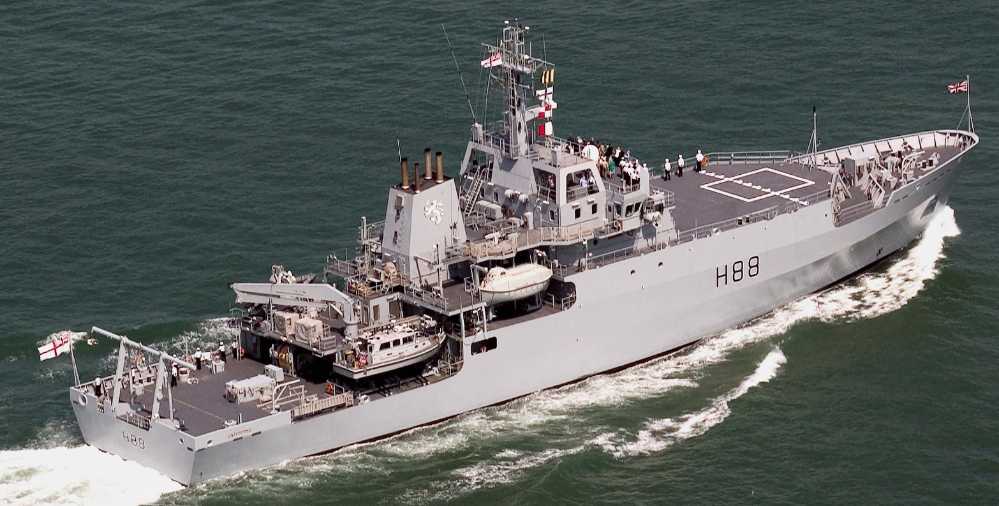
On March 2, 2002, the Echo was launched with the hull number H87; on April 27, the Enterprise was launched with the hull number H88. The Echo was supposed to be completed in August 2002, but the plan was delayed due to problems with ABB’s pod propulsion. Later, the Echo had to use the pod propulsion originally planned to be installed on the Enterprise to speed up its service. For this, ABB compensated the British Ministry of Defense for overdue expenses.
The Echo class has a displacement of 3,470 tons, a length of 90.6 meters, a width of 16.8 meters, and a draft of 1. 5.5 meters; diesel-electric propulsion, the main engine is 3 6-cylinder RK270 1600 kW diesel engines, there is also a 550 kW auxiliary diesel engine and a 350 kW emergency diesel engine, there are 2 1.7 MW pod thrusters at the stern, a 0.4 MW side thruster at the bow, the maximum speed is 15 knots, the endurance is about 17235 kilometers/12 knots, and the self-sustaining capacity is 35 days; the crew consists of 72 people, including 13 officers, 21 senior crew members and 38 junior crew members, 48 people on duty on board at a time, the work cycle is 75 days on board and 30 days on shore. This rotation system allows the Echo class to be at sea for up to 330 days per year. In addition, there are 2 20 millimeter gun, and can also perform minesweeping tasks when necessary.
The Echo class adopts a variety of vibration and noise reduction designs to improve the sensitivity of the measurement system. The propulsion system is controlled by the integrated navigation system (INS), which can flexibly control one or more thrusters. All workstations can monitor and control the generator, propulsion system and auxiliary power system. The pod thruster and bow thruster cooperate with each other to enable the Echo class to rotate in situ, and the dynamic positioning system can achieve a positioning accuracy of 20 cm at a speed of 6 to 8 knots. The ship is equipped with EM 1002 and EM 3000 multi-beam sonar depth sounders, EA 500 three-frequency single-beam sonar depth sounders, EA400 single-beam sonar depth sounders, seabed sampling equipment and flow velocity profilers produced by Kongsberg.
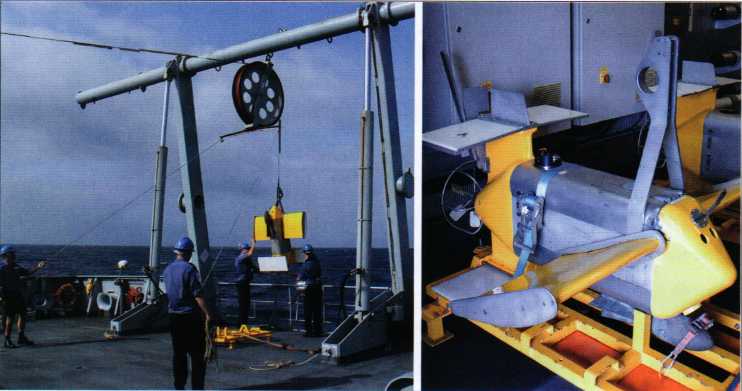
Among them, the multi-beam sonar echo sounder is the most important, with the ability to measure seabed topography with high efficiency, high precision and high resolution. Compared with the traditional single-beam echo sounder, the multi-beam echo sounder system has many advantages such as wide measurement range, high speed, high precision, digital recording and automatic mapping. The ship can also retract and release towed measurement equipment through the stern A-frame or the starboard crane, including CTD temperature and salinity depth meter, side scan sonar, seabed grab, ocean data recorder, etc. The ship also carries a 11.6-meter small survey boat to perform shallow water measurement tasks.
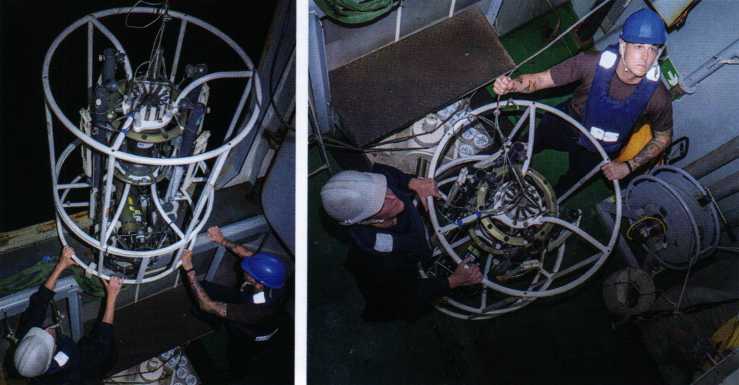
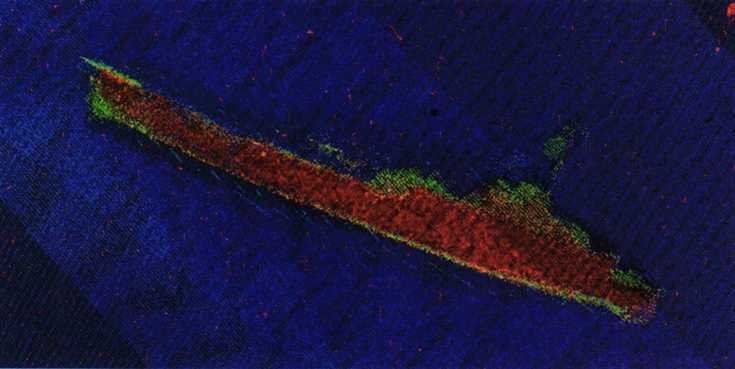
Starting in 2008, the "Echo" carried out a five-year Far East Ocean survey mission. In August of the same year, it visited Hong Kong, China, and later visited South Korea, Bangladesh, Malaysia, Singapore, Brunei and Indonesia. In 2014, it participated in the search mission for the crashed Malaysian Airlines plane MH370; in 2016, it carried out the Mediterranean refugee rescue mission; at the end of 2018, it went to the Black Sea to visit Ukraine and Georgia to support "freedom of navigation" against Russia; in February 2021, it went to the Baltic Sea and discovered the 1945 Ships such as the Goya and Gustloff that sank during the German "Hannibal" operation in 2004.
In 2004, the Enterprise was deployed to the Mediterranean for the first time; in September 2005, it went to the Gulf of Aden to carry out survey missions and conducted joint marine surveys with the Saudi military; in 2007, it went to West Africa, South Africa, the Indian Ocean and the Persian Gulf for a 19-month mission; in 2014, it went to Libya to evacuate Chinese nationals; from 2015 to 2016, it rescued more than 9,000 refugees in the Mediterranean; in 2019, it began a long-term deployment in the Asia-Pacific region, including In December, it crossed the Taiwan Strait to obtain the latest hydrological data of the South China Sea and the Taiwan Strait; in 2020, it investigated the waters around the Beirut dock after the explosion.
The British Navy’s Echo-class and "Scott" have long been active in the world’s waters, providing support for its sea-based strategic nuclear forces and ship navigation. However, the Echo-class has been in service for nearly 20 years and will soon face retirement. The British media has called for the replacement of survey ships in related reports, but at present, the British Navy has no relevant plans.