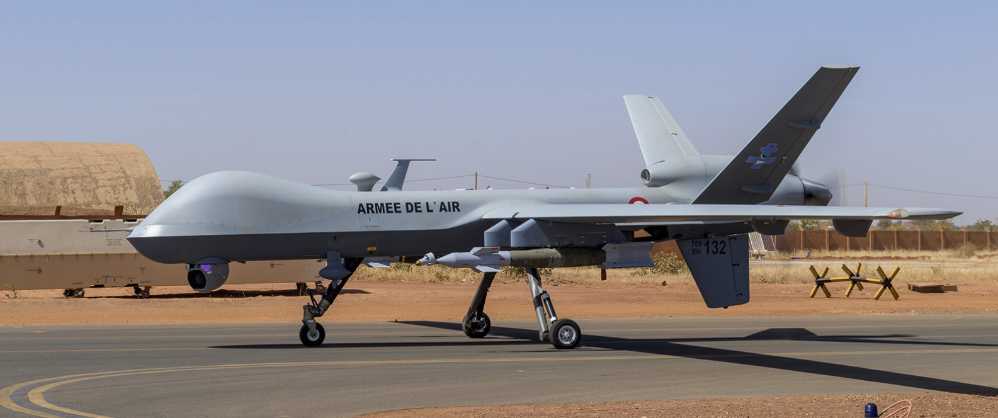

On March 14, a US military MO.9 "Reaper" drone was intercepted by a Russian fighter jet while performing a mission over the Black Sea. The "Reaper" then fell into the seabed not far from Sevastopol, the base of the Russian Black Sea Fleet. After the incident, the United States and Russia each had their own opinions, and the mass media compared it to the "Barents Sea Scalpel" of the year and talked about it with relish. However, little did they know that the involvement of unmanned systems has quietly changed the nature of the matter.
Review of the incident
The fall of the "Reaper" over the Black Sea seemed like a Rashomon. On the morning of March 14, 2023, local time, a US MQ-9 drone fell into the Black Sea. At first, the US said that the MQ-9 "Reaper" drone was conducting a routine flight in international airspace over the southwest of Crimea, and the Russian army sent two Su-27SM fighters to intercept it, and like the "Barents Sea Scalpel" incident of the year, it hit the propeller of the drone. The Russian side said that "the Russian fighter jet did not use its onboard weapons and did not come into contact with the US drone", and the US drone "lost control during violent maneuvers and then fell into the water". According to the Russian Ministry of Defense, on the morning of March 14, the Russian Aerospace Forces’ airspace monitoring equipment discovered a US MQ-9 flying towards the Russian border over the waters near Crimea in the Black Sea. During the flight, the drone turned off its transponder and challenged Russia’s temporary airspace use restrictions set for special military operations. In order to identify the identity of the intruder, the Russian Aerospace Forces’ on-duty fighter jets took off,
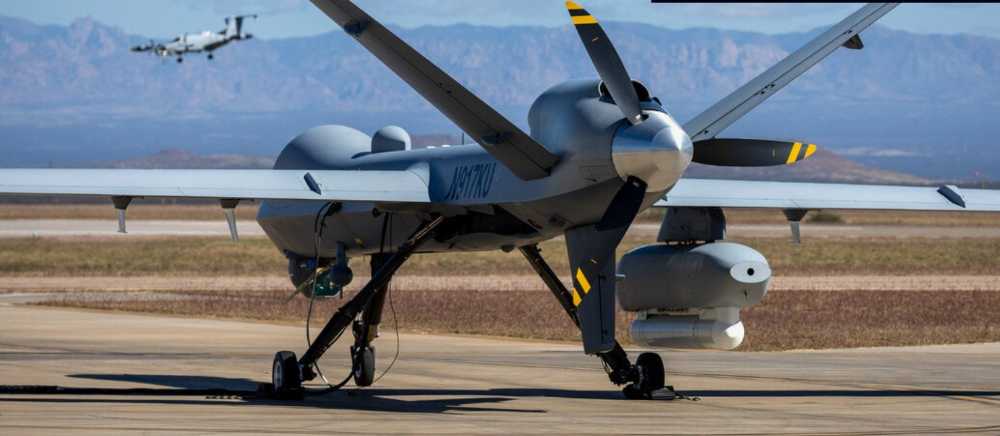
The videos released by the United States and Russia afterwards gave people the opportunity to learn more details. For example, Russian media released a video shot by the Russian military interception aircraft. Through analysis of the video footage, the intercepted "Reaper" drone is a more advanced MQ-9B (also known as "Sky Guardian") with an added ISR module, which can carry a SAR radar system in a pod mode to perform battlefield situation awareness tasks. The video released by the US side shows that Russian fighters flew close to the Reaper and performed several "approaching actions". Then a Su-27SM flew in front of the MQ-9B and poured aviation fuel. The Reaper’s normal flight suddenly stopped and fell into the Black Sea in an uncontrollable manner. From the current information, Russian military aircraft and the US MQ-98 drone, in There was a confrontation over the Black Sea on March 14, 2023, which should be certain. As for why the U.S. military’s "Reaper" drone crashed, it is now a matter of public opinion. Naturally, this has given people a lot of things to talk about. But the public media’s relish for this is just to watch the fun. From the perspective of professionals, the crash of the "Reaper" over the Black Sea is actually meaningful...
Unmanned systems join the friction between major powers
In peacetime or in a non-war state, air friction between major powers is not a new topic. During the Cold War, the air battles between the United States and the Soviet Union were the norm, and sometimes even very excessive. The most famous one is the "Barents Sea Scalpel Incident". On September 13, 1987, the Soviet Union’s Su-27 fighter, which had just been put into service, intercepted a Norwegian American P-3B patrol aircraft over the Barents Sea. Then the Su-27 used its vertical tail to cut through the P-3B engine nacelle, almost causing the P-3B to crash. The plane was destroyed and the crew members died. Since the Su-27 uses a vertical tail to "operate", it is called the "Barents Sea Scalpel Incident". The US claimed that the crash of the "Reaper" over the Black Sea was caused by a Russian plane hitting the propeller, so it was also called the reappearance of the "Barents Sea Scalpel Incident" by many mass media. However, it should be noted that both sides of the fight over the Barents Sea were manned aircraft. But today’s "Black Sea Reaper Crash", although the Russian aircraft has not changed much, it is still a Su-27. series, but the falling "Death God" is a drone rather than a manned aircraft. This makes things subtly different.
It is generally believed that the large-scale application of unmanned systems is one of the main characteristics of the new round of military technological revolution. However, unmanned systems are widely used in the military field as a technical means, and they have two sides. On the one hand, unmanned systems can help people, replace people, or even complete more and more difficult combat tasks for people. In particular, the outstanding feature of avoiding casualties determines that it will gradually replace many traditional forces and become one of the main combat forces in future information warfare and intelligent warfare. This kind of Combat forces with forward-looking, traction and universal significance will surely promote the adaptive development and evolution of war forms and combat styles. On the other hand, unmanned systems with the characteristics of "zero casualties" may create more uncertainty in the confrontation and friction in a non-war state. For example, some people believe that the emergence and large-scale use of unmanned war equipment will make it difficult to determine the responsibility for conflicts. Of course, this may blunt the sharpness of the struggle to some extent. After all, since there are no casualties involved, there will be much more room for political mediation.
In fact, in the "Death Fall" incident, both the United States and Russia did downplay it, and they were very tacit. For example, after the incident, Russia and the United States did not seek top-level contact on the matter, and many details indicated that there was no possibility of direct conflict between the United States and Russia. In particular, the attitude of the "victim" of the United States is very intriguing. Although the reaction from the United States seems to be great, and even summoned the Russian ambassador to the United States, there are several details worth noting. The US media quoted US Air Force officials as saying that Russian fighters did interfere with the MQ-9, but "the collision seemed to be just a mistake." James Hecker, commander of the U.S. Air Force in Europe and Africa, Air Force General, only said in a statement that "this unsafe and unprofessional behavior on the Russian side almost caused the crash of two planes." This obviously listed the Russian fighter jets as an object of safety consideration. The U.S. also characterized the crash of the "Reaper" over the Black Sea as Russia’s "unprofessional" response, and tried to avoid the word "shot down", which further shows that the U.S. does not want the situation to escalate further. However, there are also views that because of the "zero casualties" feature of unmanned systems, it may also lower rather than raise the threshold for the outbreak of conflict. After all, the extensive use of this military means will significantly reduce the cost of operations and reduce casualties of combatants, thereby lowering the threshold for conflict decision-making and stimulating the possibility of arbitrary use of force by military powers.
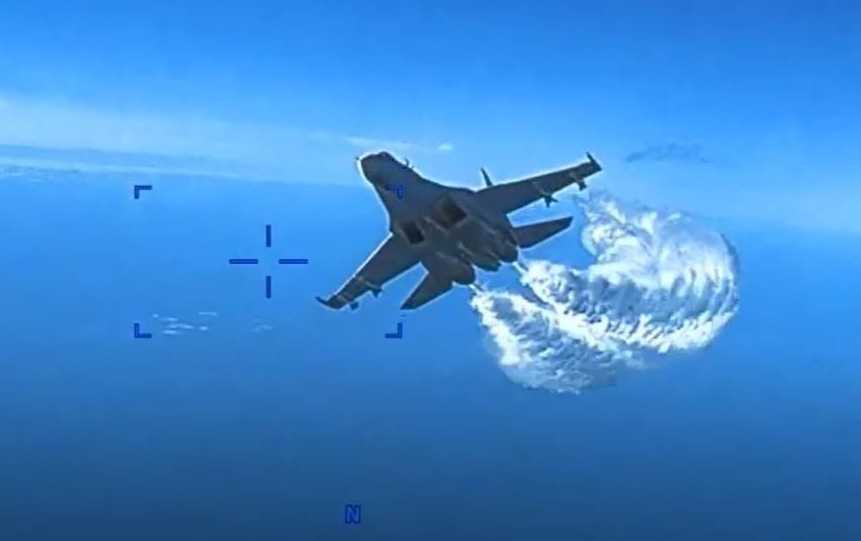
In fact, some disturbing clues have appeared in the "Black Sea Reaper’ crash" incident. For example, during the Russian-Ukrainian conflict, although the US military and NATO had a large number of early warning aircraft and reconnaissance aircraft flying over the Black Sea, they were mainly concentrated in the safe airspace near Turkey, Bulgaria, and Romania. Judging from the location where the Reaper fell, the aircraft was flying almost close to the coastline of Crimea. According to the Russian side, "it violated the boundaries of the area demarcated in accordance with the temporary airspace use system established for special military operations." This is obviously due to the fact that compared with the manned U-2S and RC-135, the Reaper can be used boldly without considering casualties. Moreover, even if the Reaper falls, the US military does not intend to stop such operations. CNN reported that the Pentagon intends to analyze the costs and benefits of such missions, weighing the potential intelligence value obtained from this approach and the risk of escalating tensions with Russia. Then another US official revealed that shortly after the Reaper crashed, the US military quickly dispatched a drone of the same model to continue flying in the same area over the Black Sea. The drone will survey the crash site and observe the Russian military and their attempts to salvage the wreckage of the drone from the seabed. It is entirely conceivable that if a manned aircraft crashed over the Black Sea, the seriousness of the matter would definitely be another matter, and such recklessness would be incredible...
A deeper level of war ethics
Aerial friction between major powers has never stopped However, from the "Barents Sea Scalpel" to the "Black Sea Death Fall", the times have changed dramatically. The fall of the "Death" over the Black Sea will not be an accidental event. To put it bluntly, this means that the participation of unmanned systems in wars or quasi-war operations will become the norm in the foreseeable future and will be more in-depth and universal. However, in a highly mixed confrontation environment between manned and unmanned systems on both sides of the enemy, it will also inevitably bring a series of deeper war ethics issues. War ethics is the moral cornerstone supporting modern war law. However, with the large-scale use of unmanned systems in war, some recognized war ethics will be challenged and impacted unprecedentedly. For example, some Western robot warfare experts believe: "We have technology that can eliminate the last political obstacle to waging war. The biggest attraction of unmanned systems is that we don’t have to send someone’s children to the battlefield. But when politicians can avoid the political consequences of condolence letters and the impact of military casualties on the public and the news media, they no longer treat the once serious issues of war and peace in the same way. "A U.S. Air Force official was even more blunt about this: "I don’t want to see a large number of American soldiers die on the battlefield, but I don’t mind machines being destroyed on the battlefield. "Obviously, unmanned combat technology will "lower the threshold for the use of violence" and the use of unmanned systems may make war more likely to occur. Such concerns are not unfounded.
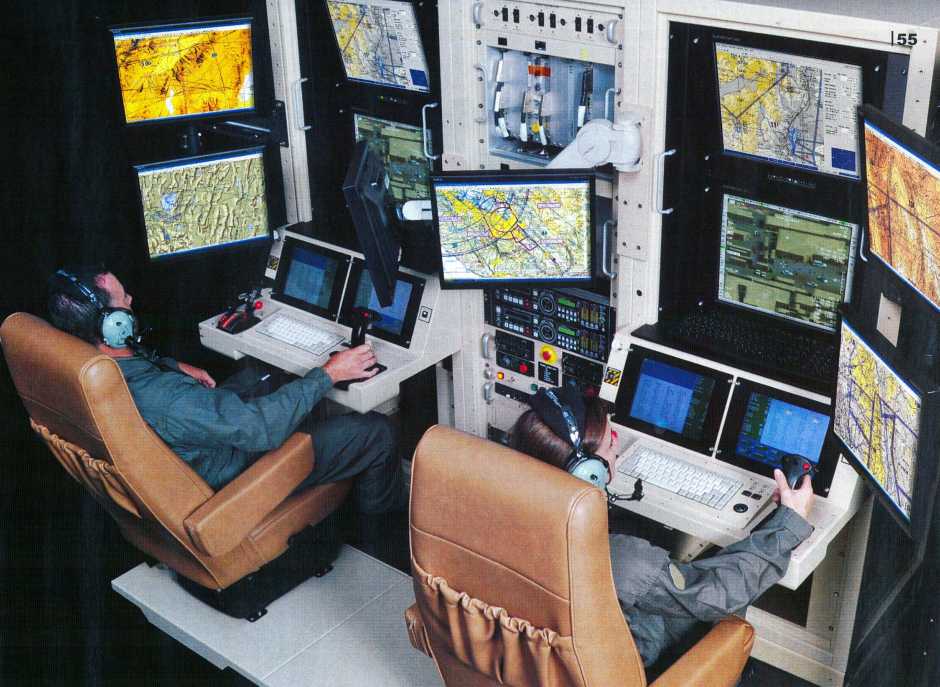
The extensive use of unmanned systems in military operations may also result in the weakening of battlefield moral constraints. Many studies by war psychologists have shown that being absent from the scene makes people more likely to commit atrocities such as murder and abuse. However, because the operators of unmanned systems are far behind, they are not only spatially separated from the unmanned combat platform, but also the distance between the combatants of the two hostile parties is getting farther and farther. This makes the operators of unmanned systems not affected by anger and emotional factors, but also has no intuitive feeling of the battlefield environment, and the perception of the cruelty of war is reduced, and the psychological and moral barriers to killing are also weakened. This will further weaken the human constraint on war, leading to unlimited attacks and killing. This is in line with the basic principles of human society. This moral code is contrary to the law. You know, the reason why war is war is because both sides of the war involve life and death. The ultimate purpose of war ethics is to prevent the war between the two sides from developing to an irreversible point, so that there is still a trace of humanity in the war, so as to reduce the cruel consequences of war. However, military operations with a large number of unmanned systems are likely to make wars reach the peak of inhumanity.
The bigger problem is that with the development of artificial intelligence technology, highly autonomous unmanned combat systems will be produced. For example, the US Air Force is vigorously promoting expendable drones, which are a new generation of drones that are more advanced than medium-altitude, long-endurance, limited autonomous drones such as the "Reaper". Cletos, General Atomics, Boeing and Northrop Grumman are all developing them. This will be an unmanned combat aircraft with limited stealth, high modularity and high autonomy, which can perform various tasks from ground attack, air combat to electronic reconnaissance, electromagnetic attack to battlefield surveillance, communication relay, etc. The unit price of the bare machine is required to be controlled at The price of an unmanned combat system is about $2 million, but after being equipped with a mission module, the unit price can reach $20 million per aircraft. The U.S. Air Force believes that it is still expendable even at this price. In other words, the expected service life is only a few to a dozen times, but it is still acceptable to lose it after one sortie. However, once an unmanned system has both high autonomy and high expendability, more acute war ethics issues will follow - is it ethical to give robots the decision-making power on whether to kill humans on the battlefield? In addition, people are also worried that once the intelligence of a fully autonomous unmanned combat system exceeds that of humans, a real version of "Terminator" may be staged, and humans will be completely excluded from the "combat chain" and helpless. For this reason, some people believe that it seems crucial to keep people in the combat "loop" as much as possible and retain the power to "pull the plug" at the end...
Conclusion
Humans use the same technology to make tools as they do to make weapons, and they use the same method to produce as they do to fight wars. The "Death" falling into the Black Sea should lead to deeper thinking. The flight performance of medium-altitude long-endurance drones is actually quite mediocre. In the friction between major powers, "taking them down" is not a technical issue, but a military-political issue and even a war ethics issue for unmanned systems to participate in military operations. The deep integration of unmanned systems, artificial intelligence and military activities will not only inevitably lead to subversive changes in the way military operations are carried out, but may also invisibly break the delicate balance in the fields of global politics, military economy, ecology, etc. while actually exerting their military benefits, bringing many new situations to the current principles and norms of international law, and even forming new challenges to human war ethics. "